

BMW Reveals New Models And Updates.
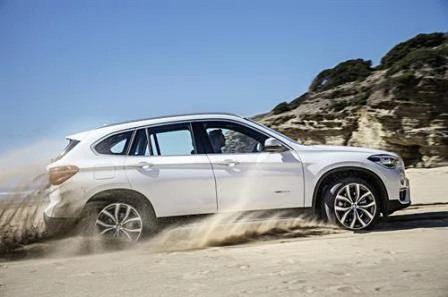
BMW’s popular X1 sports Activity Vehicle and X2 Sports Activity Coupe have received value added updates for the 2019 model year. Apple CarPlay has been added across all models in the X1 range, along with Navigation Plus and Head Up Display. An 8.8 inch touchscreen allows access to an app look interface, plus there is a voice interface called Natural Voice recognition. The X2 range also receives the Head Up Display and the Navigation System Plus. As with the X1, the X2 gets the Apple CarPlay interface as standard across all trim levels. To visually identify the entry level X2, 19 inch diameter wheels, up from 18s, are fitted.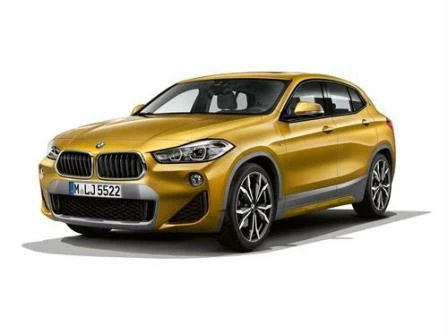 Like any company that does an update in such a broad reach, pencils have been sharpened too. The entry level BMW X1 sDrive18i is $45,900 plus on-roads (price includes GST and where applicable the LCT). The rest of the range is BMW X1 sDrive18d $49,900, BMW X1 sDrive20i $50,900, and BMW X1 xDrive25i $60,900. The X2 also gets the calculator waved over the top. The three trim level range now looks like this: BMW X2 sDrive18i $46,900 (includes GST and LCT where applicable plus on-roads), BMW X2 sDrive20i $55,900, and BMW X2 xDrive20d $59,900.
 The new M2 and M5 Competition models have also been released. The M2 has the grunty straight six from the M3 and M4. The twin turbo powerplant develops 550Nm between 2350rpm and 5200rpm, meaning throttle response is almost instant and brings great driveability. The peak power of 305kW comes in straight after that and runs until 7000rpm. The soundtrack is backed up by a twin exhaust system and electronic flap control. The whole package sees the M2 reach highway speeds in 4.2 or 4.4 seconds, depending on the M-DCT or six speed manual transmission chosen. Top speed is controlled to 250km/h, or 280km/h if the M Driver’s package is added. The price to pay for this is reasonable, with consumption rated at around 9.0L/100km on the combined cycle.
If the M-DCT is optioned in the M2, switches on the centre console provide control of drive characteristics for the engine, steering, and BMW’s Drivelogic functions. Personalisation is the key, allowing the driver to save customised settings.
Toyota Hybridises The RAV4 And Ditches Diesel.
Toyota‘s RAV4 has been given a hefty whack with the overhaul stick. A hybrid drivetrain, new AWD systems, and a revamp of the exterior, will see the 2019 RAV4 head twoards the third decade of the 21st century with the same verve it brought when first launched a quarter of a century ago.
Currently scheduled to hit Aussie showroom floors in the second quarter of 2019, the Recreational Active Vehicle 4 wheel drive will have both hybrid and non-hybrid drivetrains, new engines, and a new eight speed auto. Engine capacities will be either 2.0L or 2.5L, with the smaller engine producing 127kW and 203Nm. Pick the bigger donk and there is 152kW and 243Nm. The hybrid package is slated to produce 155kW and a as yet unannounced amount of torque. The battery system will be located under the rear seat so no loss of storage space will occur. However, there will be no diesel engine to be made available as Toyota moves across to a hybrid SUV future.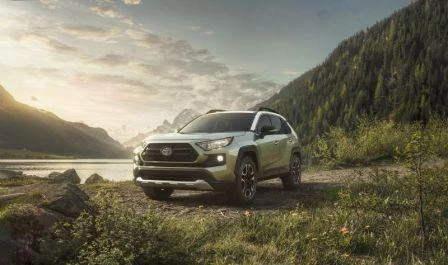
2019 Mitsubishi Triton Is On The Way
Mitsubishi have released details of the forthcoming Triton. Largely unchanged mechanically, the Triton has been given an extensive external makeover. Front and centre is the addition of the “Shield” design, the deletion of the forward angled tail light design in favour of a more conventional design, and a signature crease from front to rear. Also gone is the arcg between the rear doors and tray, replaced by a straighter angled line from side step to tray top.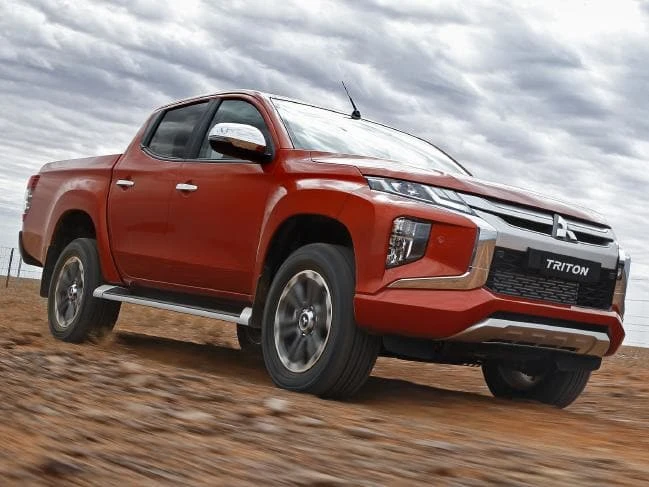
It must be said that the front bumper’s design does bear a similarity to that sported by Toyota’s HiLux, with a rectangular look to the extremities that house globe lit driving lights. However the overall design is closely related to the Pajero Sport, itself based on the Triton.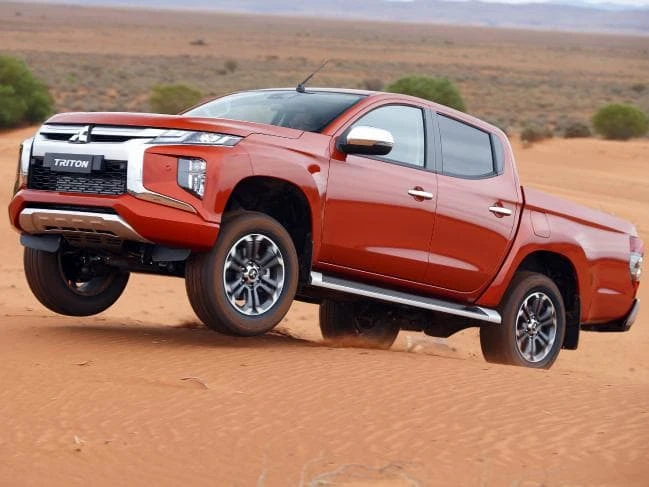
Power comes from a 94kW/194Nm 2.4L petrol four or the diesel with 133kW/430Nm. The entry level GLX still comes with a manual, a dying breed of transmission choice. Manuals are five or six coggers, and Mitsubishi adds a new six speed auto, replacing the archaic five speed. Staying with six is a choice that on the face of it seems to be behind some of the Triton’s opposition, such as Ranger.But where the Triton will stand tall amongst its peers will be in safety. Autonomous Emergency Braking with variable speed speed recognition levels will be fitted, and it will use camera and laser sensors.
Surround view cameras are becoming more common and the Triton will have these. Blind spot detection and rear cross traffic alert will also feature. One unique safety system is also looking be be onboard. Called Ultrasonic Misacceleration Mitigation, it’s designed to read forward and reverse hard acceleration and act appropriately by momentarily cutting engine power. How this works with deliberate hard acceleration in a safe environment is yet to be seen. Ride and handling has also been fettled with 4WD versions of the Trion now getting a drive system selector so off-road work can be better utilised and enjoyed.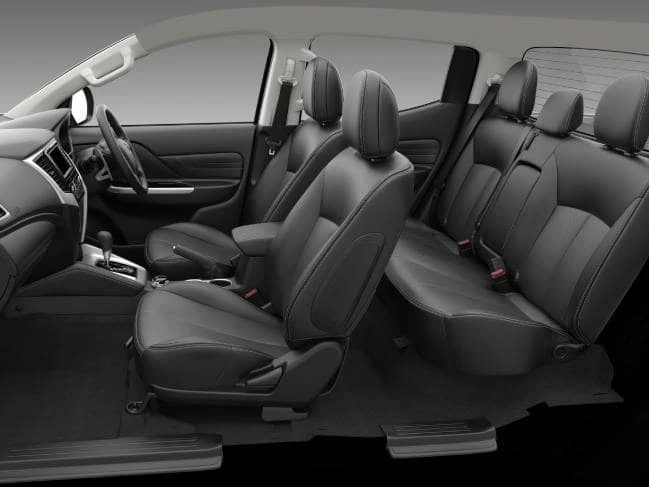
Interior trim levels have been lifted. Soft touch materials, slightly darker in tone, complement higher grade looking silver accents. Rear seat passengers now have a USB socket for charging and there are now aircon vents for the rear, and the upper level models now have smartphone mirroring apps. Hill descent control has also been added, along with sensors front and rear.
BabyDrive: Everything You Wanted To Know About Kids In Cars In One Handy Place
 If you’re about to become a parent for the first time – or if you’re revisiting parenthood after a long break (it happens) – then you might be wondering what sort of car is right for your new family. It’s not a stupid question. Once upon a time, it might have been all right to sling the carry cot across the back seat and make the older siblings share a seatbelt and/or ride in the boot, but you’d get in major trouble if you tried that today. They’re serious about car seats for children these days and the law says that children under the age of seven can’t wear an adult seatbelt – and even then, this depends on their size and height and some children may need a booster seat until they’re 12 or so. (As an aside, I’m kind of glad that they didn’t specify a particular height or weight for using a booster seat – some petite adult women, such as my 18-year-old daughter, may not meet these and who wants to sit their license while sitting in a booster seat?).
Anyway, if you’re a parent-to-be, you mind may be buzzing with questions about what sort of car you need to get. And if it isn’t, it should be! A lot of first-time parents fall into the trap of putting a lot of thought and care into the birth plan and how they want the birth of their new baby to go. While this is all very well, what they don’t tell you (and what I wish I had known all those years ago) is that labour and birth only last (at most) one day. All the other bits about parenthood and life with a small child go on for months – years! So if you haven’t started thinking about what sort of car you need as a new parent, it’s time to give it some thought.
 Level 2, 9 Help Street