

Car Review: 2019 Kia Sportage SLi Petrol & GT-Line Diesel
Kia updated their Sportage range in mid 2018 and although mainly cosmetic in nature, it keeps the range fresh. The new for 2019 Kia Sportage SLi with petrol and the diesel fueled 2019 Kia Sportage GT-Line graced the driveway for a week each and both showed why they are ideally suited for their respective target markets.
 The GT-Line is listed at $48,210 plus on roads, the SLi at $37,310. There is a very well specified equipment list for both, including Autonomous Emergency Braking and Lane Keep Assist now standard across the range, and a suite of GPS linked voice alerts for speed cameras, narrow roads, schools, and more. Apart from the different energy sources there are two different transmissions. Kia has kept the six speed auto for the petrol with its higher rev points for power and torque, The diesel has a new eight speed, and It’s a cracker. The 2.0L diesel has 400Nm of torque and the eight ratios are well spread to take advantage of the power and torque delivery. Torque is on tap from idle with that peak available from 1750 to 2750 rev. Peak power is 136kW and that’s at 4000rpm. The SLi is a front wheel driven unit, the GT-Line an all wheel drive setup and comes with a centre diff lock for soft-roading.
 The Sportage is a four model range, being Si, Si Premium, SLi, and GT-Line. The first three have a choice of 2.0L petrol engine or 2.0L diesel. The GT-Line is 2.4L petrol or 2.0L diesel. The 2.0L is a nice enough performer, with 114kW and 192Nm. This comes standard with the six speed auto. The petrol is a free revving unit and its own power and torque curve has the six speed auto running slick and smooth. Power for the 2.4L petrol is virtually identical to the diesel at 135kW however that’s at 6000rpm. Torque, naturally is a lesser peak figure and higher up the rev range, with 237Nm at 4000rpm. Kia quotes 7.9L/100km for the 2.0L, 8.5L/100km for the 2.4L, and 6.4L/100km in the diesel. The SLi finished on 8.3L/100km and the diesel finishing on 7.1L/100km, with both results from a 98% urban run. All models have a 62L tank.
 Driving the diesel and the new auto sees a new level of refinement from Kia. There is a distinct lack of the agricultural sound, a real feeling of smoothness, and a wave upon wave surge of torque from the engine. Cogs swap swiftly, quietly, and smartly, with the throttle sensor responding instantly to both pedal movement and information from the drive system itself. Kia has stayed with the three mode drive choice which, for both, is superfluous. From a standing start the diesel pulls the 1700kg machine away with minimal effort and minimal noise. Although front drive biased, there’s a noticeable shift of torque to the rear when the go pedal is punched. The result is rocketship acceleration, with a flicker of the needle on the tacho at around 3200 revs for the change. The extra two cogs over the six add so much extra flexibility and helps get the GT-Line to 100kph rapidly. Stopping power comes from 305mm and 302mm discs.
 Inside the SLi the petrol’s sound is a distant thrum, barely audible, and feels smoother than silk on ice. From a standing start it’s quiet and sometimes so inaudible there’s a glance at the tacho to ensure it’s actually spinning. Punched hard enough there’s a chirp from the front, but otherwise it’s a friendly, forgiving, machine to drive, Steering on both is a delight, with a beautiful balance and heft on the pair. There’s the barest hint of torque steer from the diesel and only under load in corners.
 Suspension on both is tuned to suit the audience. The SLi and GT-Line share McPherson struts and a multi-link rear, but the dampers are slightly softer on the GT-Line. Rubber is different at 225/55/18s for the SLi, 245/45/19s on the GT-Line. That extra width on the GT-Line provides a more sure footed and tenacious feel on road too. Not that the SLi is any slouch. It’s a fun car to drive too. Hit it up into a tight corner and speed and it’s flat, composed, almost begging to see more numbers on the speedo as it dares the driver. Both settle even more with a week’s worth of shopping in the 466L cargo space. That increases to 1455L if the superbly comfortable pews are lowered.

There’s a modicum of extra space inside the Sportage, with an increase of wheelbase and overall length. Wheelbase is up, from 2640mm to 2670mm. Length grows by 45mm, to 4485mm but that includes a front overhang increase of 20mm to 905mm and a rear overhang decrease of 10mm to 910mm. Overall internal measurements have headroom up by 5mm to 997mm and 993mm from 977mm front and rear. Front legroom has grown by 19mm to 1129mm, and 7mm to 970mm in the rear.

Private Fleet Car Review: 2018 Holden Trailblazer LTZ
Holden‘s 4WD ute and people mover range has had a chequered history, with the latest incarnation of a ute based people mover now known as the Trailblazer. Once known as the Colorado 7, it’s a curious choice as the front end looks like the current Colorado, the interior looks like the Colorado’s, and the profile is effectively unchanged. Perhaps to separate the two lines more effectively? The Trailblazer comes in seven colours, two and four wheel drive, three trim levels (LT, LTZ, Z71), and seats seven in relative comfort. The Trailblazer LTZ, at the time of writing, is $53,990 driveaway. Premium paint is a $550 option. There’s plenty of standard kit to come with that price, too like auto headlights front fog lights, and powered folding mirrors . Sound wise there is a DAB tuner, and smartphone connectivity via both Android Auto and Apple CarPlay. Holden’s MyLink is a user friendly interface on the eight inch screen. Safety is delivered in the shape of Forward Collision Alert, Lane Departure Warning, Blind Spot Alert, and Rear Cross Traffic Alert are standard on the LTZ. No Autonomous Emergency Braking though. The range also gets seven airbags including the driver’s knee ‘bag. With towing of up to 3,000 kilograms available having Trailer Sway Warning is standard too. However the large tailgate is not a powered version and that’s an item found on cars of similar or lesser value. But there is Remote Engine Start for those that like to pre-cool or pre-warm the interior.
 The front pews are covered in machine made leather and are heated, not vented, again an oversight for Australia’s climate. The driver’s seat is powered but really only adjustable for height and fore/aft. The dash itself is squared off and lacks in visual appeal. A flat fascia, rather than the Euro style wrap around that even the new Forester has adopted leave the Trailblazer’s design well behind. A bright spot is the vibrant and easy to use touchscreen. It responds rapidly to touch, has a sensible layout, and the DAB tuner is sensitive enough but the speakers lack real depth, with a lack of soundstage quite noticeable.
 A mix of dark and light greys and a lustreless alloy look trim around the gear selector and centre vents just don’t pull in the eyeballs. The front seats can see a 12V and USB socket, with the middle row getting just the single 12V. The rear seat passengers have access to cup holders on both sides and in the centre. There is a 12V socket on the left side and there is rear seat aircon as well, with roof vents and a switch in the front centre console for On/Off. The driver’s dash and switchgear are familiar GM in look, feel, and operation, with the multi-function tiller itself sporting simple to use buttons for audio and cruise control.
 Leg room up front is plentiful at 1045mm, as is the mid row seats, thanks to the 2845mm wheelbase. Use all seven seats and cargo space is a relatively small 205L. Use it in the more likely five seater mode and there is 878L in total. With all seats down there is up to 1830L to use. The seat are adequate for most people in size, shape, and support. The squab or the bumrest, seemed a little lacking in support for the thigh towards the front of the seat but a compromise of seat position and angle was sufficient to deal with it.
 Power and torque are courtesy of a 147kW/500Nm diesel of 2.8-L in capacity. Economy came in at 8.6L from the 76-L tank for every 100 suburban kilometres driven. The diesel is more agricultural sounding than others under load but off throttle it’s quiet enough. That 500Nm is rated at being available between 2000 to 2200 rpm but there is oodles on tap both below and above that up to around 3200rpm.
 Standard transmission is a six speed auto which means that Holden is behind the market here by not offering an eight or nine ratio ‘box. The four wheel drive models have a “shift on the fly” selection choice which is available via a centre console dial. With 500 Nm to play with a transmission able to really utilise that amount of torque would be better and just six cogs isn’t enough. Having a kerb weight of just on 2200kg matters too. The six speeder is a slick unit being mostly smooth in its changes, will hold gear nicely on downhill runs, and when the accelerator is punched it’s boom boom boom through the ratios. An eight or nine speed auto though would offer a better spread of ratios, making the Trailblazer more driveable overall, and potentially contribute to an even lower consumption figure.
 On road behaviour is refined enough given its ostensibly ute based origins. The LTZ tested has meaty rubber from Bridgestone at 265/60/18 and on tarmac they provide plenty of grip. It’s a coil sprung front, with a double wishbone design. The rear is a five link “live” or non-independent setup. It has the effect of the Trailblazer feeling noticeably but not unpleasantly tauter than the front. It feels a tad soft at the top of the suspension travel, which given its off-road ability is understandable. With 28 and 25 degree approach and departure angles, it provides a chance for most average drivers the ability to trial the high and low range transmission ability.
Steering on tarmac is not as tight as expected, with a slightly rubbery feel on the straight. Off centre it loads up quite well but never feels as if winding it on actually has the nose just where it feels it should be pointing. On gravel the suspension allows a little more communication to be fed through.
Household Appliances And Cars From The Same Maker?
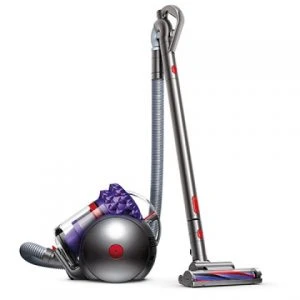
Don’t worry – Dyson’s proposed EV probably won’t look like this.
I heard the other day that a household appliance manufacturer is going to have a go at the electric car game. Although my first reaction (and possibly yours) was to snigger, I then realised that it’s possibly not all that loopy after all. For one thing, it’s not the first time that a company has had a go at making household gadgets and motor cars: Toyota makes sewing machines as well as their very popular cars and they’re not bad (the cars or the sewing machines – and I can vouch for the sewing machines, as I’ve got one). Peugeot also started out making coffee grinders, umbrellas and crinolines.
Kia Really Goes To Rio and Hyundai Nexo Goes Five Star.
Turbo or not turbo, that is the question. Kia seems to think the answer is yes, with the petite little Rio getting a rejig both in the mechanical and model sense. Finally the four speed auto has been given the flick and will be replaced by a six speed. The Si and SLi have also been discontinued and replaced by a model called Sport which will take the new six speed. The GT has a revvy 1.0L three cylinder and Kia’s own seven speed dual clutch auto.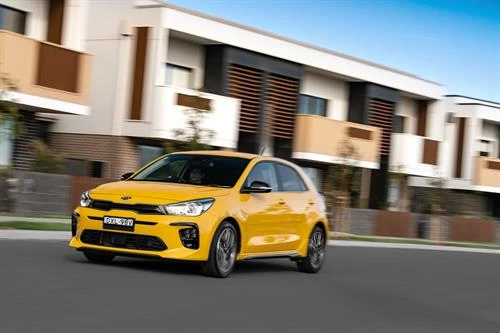 It’ll still be a three model range. The S kicks everything off with the unchanged 74kW four with six pseed manual or, sadly, the four speed auto. There’s a pretty good list of standard equipment including the expected stability and safety programs, reverse camera, reverse sensors, six airbags, and the smart apps of Apple CarPlay and Android Auto. The Sport goes up a notch with a leather trimmed tiller, the aforementioned transmission choices, leather trimmed gear selector, and electric folding mirrors. It’ll also roll on stylish 17 inch alloys.
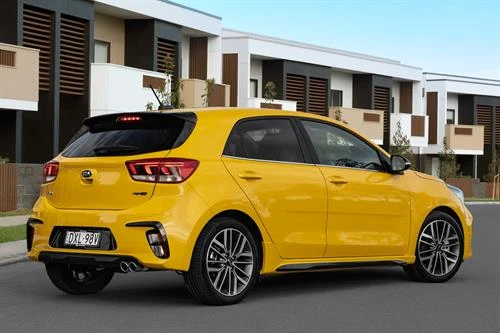
The top of the range GT-Line features a three cylinder turbo engine. It pack a fair bit of a punch for the size, with 88kW and 172Nm of torque on tap. The new seven speed dual clutch auto should take advantage of that and make the GT-Line the car it’s deserved to be. Autonomous Emergency Braking, Idle Stop and Go, and Lane Keep Assist enhance the appeal. The funky GT-Line body kit, LED driving lights and position lamps, LED rears and LED fog lamps add to the visuals of the pert Rio GT-Line.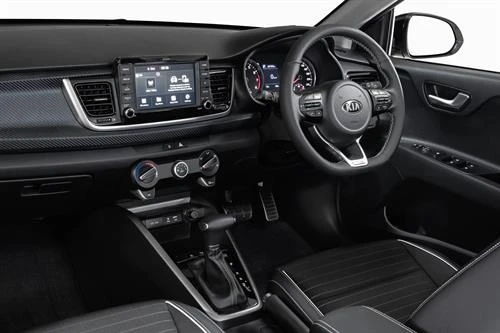 Along with Kia’s standard seven year warranty comes some sharp pricing. The S manual is a steal at $16,990 driveaway, and just $500 more for the S auto. The new Sport will start at $17,990 for the manual and $18,990 for the auto, with both also a driveaway price. The GT-Line remains super competitive at $21,990 and with the new seven speed DCT promises fire cracker performance in its price and class. Contact Kia for more details.
 A car due to land in Australia in the first half of 2019 is the hydrogen fed Hyundai Nexo. With the known volatility of the fuel, safety is paramount and the Nexo has achieved a Euro NCAP five star rating. This makes it the world’s first fuel cell vehicle to receive this rating. To back up the claim is a full suite of safety equipment under the Hyundai SmartSense banner. Forward Collision Avoidance Assist with pedestrian assist utilises radar and camera technology. In a three stage process the FCA will alert the driver by sound and by a visual alarm. Assessing the situation the onboard system may apply the brakes depending on the danger level. Maximum emergency braking is applied if the system feels it’s warranted.
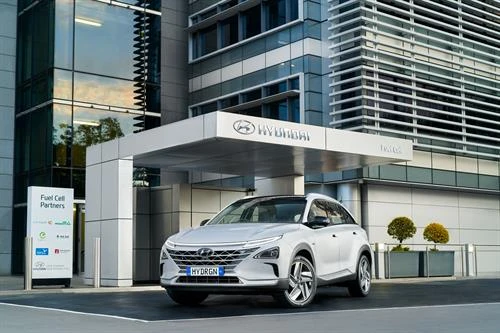 The onboard Lane Keeping Assist is part of the package that helped gain the EuroNCAP five star rating. That’s backed up by the Lane Following Assist system that’s also standard equipment. The pair keep the Nexo on the straight and narrow at speeds up to 150 kilometres per hour. Contact Hyundai for more details.
 Level 2, 9 Help Street