

Robots And Skeletons From Kia And Hyundai
As often as science fiction leads to real life science fact, the reverse applies more than expected. Robotic assistance in various forms have been a part of sci-fi lore for decades and in films such as Aliens we’ve seen what are called exoskeletons. Hyundai and Kia, with the latter a major and wholly owned sub-section of Hyundai, are working together to develop the Hyundai Vest Exoskeleton (H-VEX). AI, or Artificial Intelligence, is also recognised as a major area of growth in technology, and established a specific robotics team to work on developing the technology and where applications can be utilised. Along with the Hyundai Chairless Exoskeleton or H-CEX, which adds extra support to a user’s knee joints, the units are lightweight but offer plenty of extra assistance.
The H-CEX itself weighs just 1.6 kilos yet provides up to 150 kilograms of extra lift. It’s fitted with waist, thigh, and knee belts to provide a range of adjustment for the user. The H-VEX is an upper body oriented device, and is said to be rated to an extra 60kg of mass when arms are raised above the head. the support design here focuses on the neck and upper back.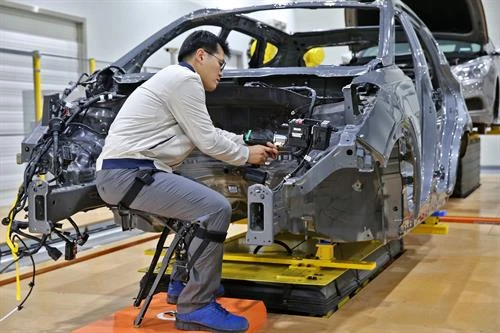
The robotics division is also investigating other forms of wearables, along with service robots and what is called micro wearability. Last years Hyundai’s robotics team showcased the Hyundai Medical exoskeleton or H-MEX. This provided a higher level of mobility for paraplegics and the infirm, with the end result being the device should be properly registered for legal use in the medical field. An extension of this is the HUMA, or Hyundai Universal Medical Assist program. This device can assist in having a human run at up to 12 km/h when needed.
Fossil Fuel, EVs or Bio Fuels?

Fossil Fuels
Is petroleum diesel still a fuel that is going to be around to power our cars in the future? On the surface, it might look like the era of the diesel engine might be drawing to a close, especially when we hear that some manufacturers are pulling the pin on building new diesel engines. The truth is that non-renewable resources, which include fossil fuels such as oil, coal, petroleum and natural gas, are all finite in their quantity available in nature for the future. Diesel fuel is a petroleum product, and so is considered to be a finite non-renewable resource. Certainly it would seem that petroleum-based diesel has a limited window of opportunity for powering motor vehicles around the globe. But is this actually the case?
MINI Adds A Royal Edition.
In line with the Duke and Duchess of Sussex arriving in Australia for The Invictus Games, MINI has announced a limited edition with royal overtones. The Kensington Edition is a proper limited run with just 60 cars to be made available. The option will be on the Cooper/Cooper S three and five door models, with fifteen each for the four trim levels. Mini are also using the internet in the order process, with an online ordering and allocation process specifically for the Kensington.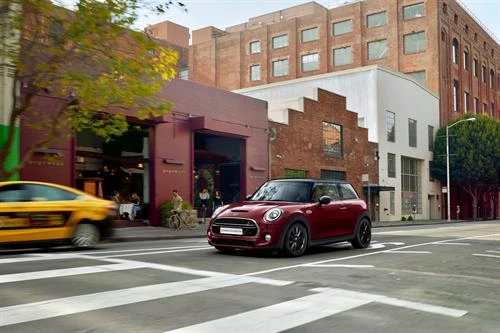 The cars will be painted in the eyecatching Pure Burgundy metallic paint that MINI has showcased previously. Extra features such as an illuminated door sill and Kensington specific badging are complemented by the extensive standard features list. The Cooper S gets a sports oriented double clutch transmission, an 8.8 inch touchscreen with Mini Navigation Plus, and a well specified safety package. The Kensington will see a Driver Assist Package, featuring City Collision Mitigation, Forward Collision Warning, High-Beam Assistant and Speed Sign Recognition. Then there’s the Active Package, featuring LED Headlights with Union Jack tail lights, MINI Excitement Package, White Indicator lenses, automatic climate control and Wireless phone charging (already standard on Cooper S).
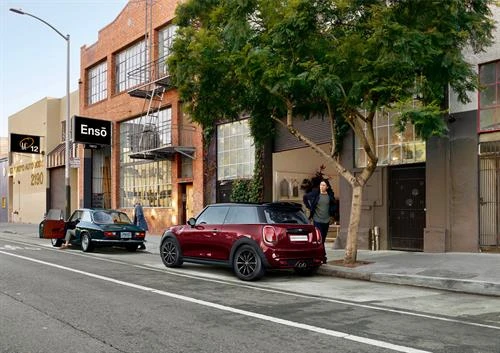 There’s a pair of different wheels, with the Cooper receiving 16 inch Victory spoke alloys, the Cooper S rolling on 17 inch Cosmos spoke alloys, with both painted black. These are matched by the blacked coated mirror caps, roof, and spoiler. Inside there is a Panoramic sunroof, black leather seating in a diamond quilt weave for the Cooper, and the “MINI Yours” carbon black package for the Cooper S. Piano black and chrome highlights are featured and the Cooper S receives heated front seats also.
Warranty is a three year and unlimited kilometre package with optionable extra warranty and servicing.
BMW Goes X-tra Large and Seven Up
BMW is not a brand that does things by halves. Rather than putting a toe in the water, the iconic German brand jumps in. In the passenger vehicle segment it’s “lacked” one entrant and that has now been resolved with the release of the X7 range. It’ll go up against the Volvo XC90, Audi’s Q7, Porsche’s Cayenne, and VW’s Touareg. BMW also don’t tag this 5151mm long machine as an SUV. It’s a SAV, a Sports Activity Vehicle. The X7 will offer a choice of six or seven seats, with the third row a confirmed two seat configuration. That third row will have cup holders, separate USB points, and armrests. The middle row can be specified with two or three seats, and all seats are power adjustable. Sitting on a wheelbase of 3105mm, the X7 offers a cargo capacity variance of between 326L to 2120L. To take advantage of the space available, the X7 goes on a luxury cruise with Vernasca leather as standard, four zone climate control, a three part panoramic roof, and a high end ambient light system. BMW never skimps on the option list either, with a five zone climate control system, a Bowers and Wilkins Diamond Select audio system, an an entertainment system for the rear seat passengers. BMW’s M Sport package and the Design Pure Excellence equipment line are also offered.
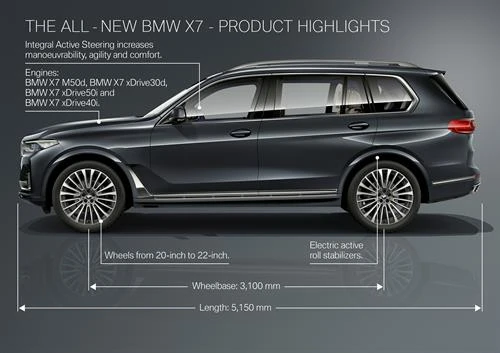 Choosing an engine won’t be hard. At launch a a 340 kW/462 hp petrol V8 in the BMW X7 xDrive50i will be available although not available in Europe. The xDrive40i will receive a six-cylinder in-line petrol unit with an output of 250 kW/340 hp and a rated combined fuel consumption at 9.0 – 8.7 l/100 km. The X7 xDrive 30d will be powered by a pair of six-cylinder in-line diesels with outputs of 195 kW/265 hp. Fuel consumption for a combined cycle is rated at 6.8 – 6.5 l/100 km with CO2 emissions combined: 178 – 171 g/km) and 294 kW/400 hp in the BMW X7 M50d. The quoted fuel consumption on the combined cycle is 7.4 – 7.0 l/100 km with CO2 emissions combined: 193 – 185 g/km). All of the power units in the line-up meet the requirements of the Euro 6d-TEMP emissions standard.
Every powerplant will be bolted to an eight-speed Steptronic transmission. The BMW xDrive intelligent all wheel drive system, complete with optimised efficiency and rear-biased set-up, is how the power and torque gets to tarmac or dirt. Ensuring even more dynamic handling is the M Sport differential at the rear axle, which brings electronically controlled locking. It is fitted as standard on the BMW X7 M50d and as an option on the BMW X7 xDrive50i and BMW X7 xDrive40i.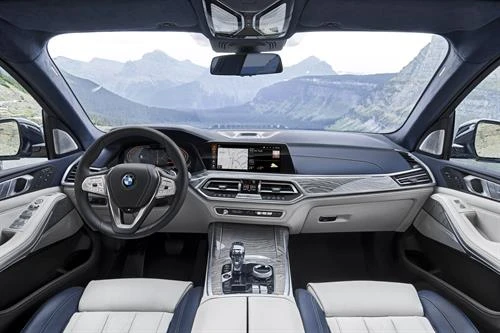 The chassis tech is typical high end BMW. There’s Adaptive Suspension and electronically controlled dampers, air fed springs and an adjustable ride height of up to 80mm. Extra suspension ability can be optioned, such as Integral Active Steering, and the Executive Drive Pro system. An off road option package can be specced for all models bar the M50D. A four mode drive system includes xSands, xGravel, xRocks, and xSnow. The selection of each mode has the X7 adjust automatically for ride height, transmission response, and the stability control systems.
 Level 2, 9 Help Street