

Niki Lauda.
Speed, we are told, is a dangerous thing to deal with. It is, therefore, a true oddity that so few Formula 1 drivers, people that are amongst the fastest drivers in the world, die. It then makes the passing of a driver, current or past, all the more poignant and tragic. Just days before the 2019 F1 race at Monaco, possibly the most picturesque location in the F1 calendar, Niki Lauda, well up there with Brabham, Schumacher, Fangio, and of course Hunt, passed away from complications following lung surgery in 2018, the flu earlier this year, and kidney dialysis. The Austrian born Lauda was, tragically, best known for his unexpected survival from a crash at the 1976 German F1 Grand Prix. His car exploded, trapping him in the cockpit, with rescuers taking close to a minute to extricate the badly burned driver from the cabin. Lauda said of the crash that it ripped his helmet from his head, leading to the horrific scars he bore. Taken to hospital he was not expected to survive, with last rites performed. Somehow, he was out out of bed and competing just 42 days later and would go on to win again.
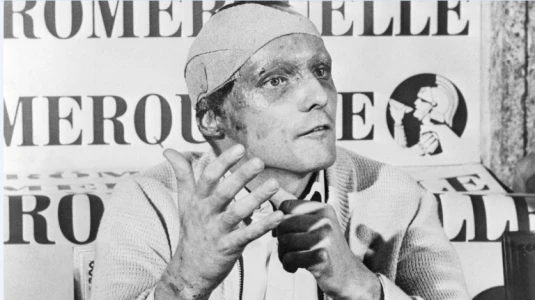 Lauda celebrated his 70th birthday in February of 2019. Born in Vienna, Austria, Lauda found his calling in motorsport and by 1971 was racing in Formula 2. Sadly, his family, a wealthy one with his grandfather being a Viennese industrialist, saw his racing as unworthy of the name, leaving Lauda with little option but to cease contact with them. Progress came in the form of bank loans and willing assistance from The March team in 1972, before a change to the BRM team in 1973. This team was also in the doldrums, looking at collapse.
His then co-driver at BRM, Clay Regazzoni, left BRM to join Ferrari for 1974. This would prove fateful for Lauda. The great Enzo Ferrari had asked Regazzoni of his opinion of Lauda. The response was so favourable that Ferrari hired the Austrian. He quickly found form with a second place in his debut race. He would win the Spanish GP a few races later but reliability issues aw Ferrari’s lightning start fizzle. 1975 started slowly with no wins for the first four races then it all clicked for Lauda and the team. Driving the Ferrari 312T Lauda would win four of the next five GPs. he would also bag his first world championship after a win at Monza and Ferrari would also take out the constructors championship that year.
Getting It Right In A Roundabout Way.
Using an indicator seems to be the ONE major issue that the overwhelming majority of Australian drivers have. Pulling away from a curb, merging lanes, entering and exiting roundabouts, the little bit of flash seems to elude drivers on Aussie roads.
From the NSW Roads and Maritime Services website are the following regulations for indicating at a traditional four point roundabout.
Turning left: On your approach to a roundabout you must select the left lane, signal left, stay in the left lane to exit.
Going straight ahead: Do not signal when approaching the roundabout but always signal left before exiting a roundabout.
You may approach the roundabout from either left or right lanes (unless there are road markings with other instructions), drive in the same lane through the roundabout and exit in the same lane.
The Legend Returns: Toyota Supra Prices Confirmed.
It’s a good thing when rumours persist and become fact. So it is with the Toyota Supra, reborn for the 21st Century. Toyota Australia has confirmed the release and the associated dollars required. There will be two trim levels, GT and GTS, and initially will be available via a process of online reservations via this link: https://www.toyota.com.au/all-new-supra. The online on-sale date is June 19.
Starting price for the new Supra, powered by a 500Nm/250kW BMW-sourced straight six, is $84,900 plus on road costs for the GT. The GTS starts at $94,900. The online order process is due to one simple reason: allocation for Australia for the next twelve months is just 300 units. The website will use a random allocation process for fairness in regards to the online expressions of interest, with 100 customers initially getting the green light from the thousands already lodged with dealers. Sean Hanley, Toyota’s vice president of sales and of marketing says: “”The new centralised online sales process handled by a dedicated Supra concierge will ensure we keep customers updated at every step of the way and provide a bespoke and very personal experience, which is fitting for a vehicle of the Supra’s calibre.”
Those selected will received a follow up phone call from a dedicated Toyota Supra representative to advise them of their successful registration. From here they’ll be taken through a process to finalise the order, with first deliveries currently scheduled for September. For those that miss out, there will be repeat ballots and they’ll be timed to be released with forthcoming vehicle availability.
Car Review: 2019 Hyundai Kona Highlander & 2019 Hyundai Tucson Elite.Private Fleet
This Car Review Is About: A pair of SUVs from Korean goliath, Hyundai. It’s great to have to Hyundai back in the garage, and the two cars reviewed, Kona and Tucson, show the direction of one section of the car market. The Kona was the highest trim level, the Highlander, with the Tucson a mid level trim, the Elite.
 Kona comes in four trim levels with the conventional, non-electric, powertrain. There is Kona Go, Kona Active, Kona Elite, and Kona Highlander. There is also the limited edition “Iron Man” version. Tucson is Go, Active X, Elite, Special Edition, and Highlander.
Under The Bonnet Is: A choice of turbo or non-turbo engine. The Highlander spec Kona came with the Atkinson cycle 2.0L that drives the front wheels, the turbo is AWD. 110kW and 180Nm are the peak power and torque outputs, at 6,200rpm and 4,500rpm. The Elite came with the same capacity engine and front driven wheels, but slightly uprated in regards to power and torque, at 122kW and 205Nm, which are available at 6,200rpm and 4,000rpm. Tucson also has the 1.6L/AWD, and adds AWD to a 2.0L diesel. Both cars run E10 compatible fuel systems and are EURO 5 compliant. Transmission for the 2WD Kona is a six speed auto, as is the Tucson. The Elite Tucson is available with the diesel and 1.6L petrol, which gain an eight speed auto and seven speed dual clutch auto respectively.
 Consumption for the Kona is rated as 7.2L/100km for the combined, 9.7L/100km for the city, and just 5.8L/100km on the highway cycle. In 2.0L and 6 speed auto trim, the Tucson has 7.9L/100km combined, 11.0L/100km in the city cycle, and a reasonable 6.1L/100km for the highway. Weights are 1,290kg (dry) to 1,383kg for the Kona, with Tucson ranging from 1,490kg (dry) to 1,590kg.
 Level 2, 9 Help Street