


Private Fleet Car Review: 2019 Kia Cerato GT Sedan & Cerato Sport Hatch
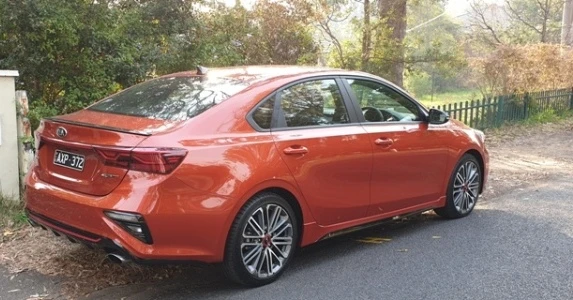 This Car Review Is About: The latest offerings from the long running Cerato range, specifically the restyled sedan and hatch bodies, in GT and Sport trim. There is the S, Sport, Sport Plus, and GT. The S and Sport can be optioned with a Safety Pack.
 Under The Bonnet Is: A choice of a turbocharged 1.6L driving a seven speed dual clutch auto in the GT, against a 2.0L non-turbo and six speed standard auto for the Sport and S. The GT gets the powerhouse 150kW turbo which delivers 265Nm of twist across a flat 1,500rpm to 4,500rpm “torque curve”. The Sport has a very good 2.0L, with 112kW and 192Nm at 4,000rpm. The S is the only version with a manual six speed available.
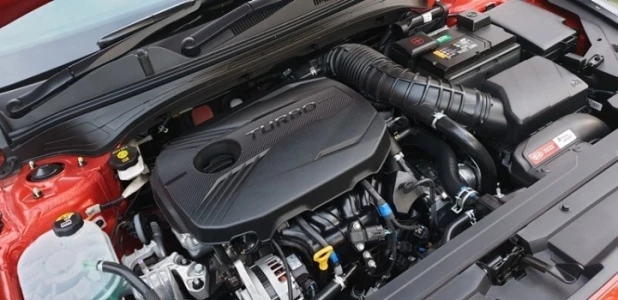 Economy for the pair is tight; the bigger engine is quoted as 7.4L/100km for the combined cycle, with the turbo 1.6L at 6.8L/100km. Our highway drives saw 5.8L/100km for the 1.6L Cerato GT sedan, the Cerato Sport hatch clocked a 6.9L/100km. Overall activity saw 7.4L/100 for the hatch as a final average on its return, with the sedan at 7.1L/100km. That’s running regular unleaded from a 50L tank.
What Do They Cost?: Kia says $32,990 plus on-roads for the GT sedan, $25,790 plus ORC for the Sport hatch, and if you opt for the Sport+, that’s $28,840 plus ORC. There are ten colours available, with the GT getting its own Sunset Orange shade. Paints classified as Metallic or Pearl are a $520 option.On The Outside Is: A choice of a sleek sedan or a sleek hatch. They’re essentially the same until the rear of the rear doors, and the hatch has a manual tail gate, a more pronounced taper to the rear roof line, and BMW-esque LED tail lights. Essentially, as the GT has a full suite of LEDs for both headlights and DRLs, whereas the Cerato Sport Plus has normal headlights and LEDs for the daytime running lights. Both ends, though, have the indicator lamps set below a driver’s line of sight, rather than being up in the head and tail light clusters.
Tesla Model 3 Pricing Confirmed For Australia.
Tesla Australia has confirmed the range and pricing structure for the forthcoming Model 3. Built upon a two model range to start, the Standard Plus and Performance, the new entry level range for the electric car makers starts at $66,000 plus on-road costs and government charges. Expected 0-100 time is 5.6 seconds, and expected range from the supercharger capable Model 3 Standard Plus is 460 km. The Performance is listed as $85,000 plus charges. 0 100 is 3.4 seconds and a range of 560km. 20 inch wheels roll around red alloy calipers, with a subtle carbon fibre spoiler providing extra stability when driving in Track Mode.
 Five colours will be made available for the expected August launch timeframe; Solid Black, Midnight Silver Metallic, Deep Blue Metallic, Pearl White and Metallic Red multicoats. The metallics are $1,400 and the multicoats $2,100 and $2,800 respectively.
The Model 3 will also receive the over-the-air software updates. A major update is the Autopilot facility, which enables the Model 3 to effectively drive itself albeit still under active human supervision. It enables the Model 3 to to steer, accelerate and brake for other vehicles and pedestrians within its lane. The Standard Plus also gets a 12-way 12-way power adjustable, heated, front pair of seats, with premium seat material and trim, an upgraded audio system, plus standard maps & navigation. There is also centre console with storage, 4 USB ports, and docking for 2 smartphones. Entry is via the Tesla keyfob or a new smartcard system. LED fog lamps, Automatic Emergency Braking, Automatic Emergency Braking, Forward Collision Warning and Side Collision Warning will be standard. Buyers of the Model 3 Performance will receive what Tesla denote as the Premium Interior Package. Live traffic notifications with satnav maps, a 14 speaker audio system with music streaming, heated rear seats complement the standard equipment in the Standard Plus. Both cars will allow for customisable driver profiles, and everything is set up from a spare looking dashboard, dominated by a solitary touchscreen in landscape orientation.
 An extra feature to be released later in the year is traffic light and stop sign recognition. This will enable the Model 3 to further enhance its autonomous driving ability, and it’s forecast that the Model 3 will be able to do so in a full city environment. The Autopilot feature is also intended to allow autonomous driving in situations such as vehicle overtaking and on/off-ramp driving.
Car Review: 2019 Hyundai Kona Iron Man Edition.
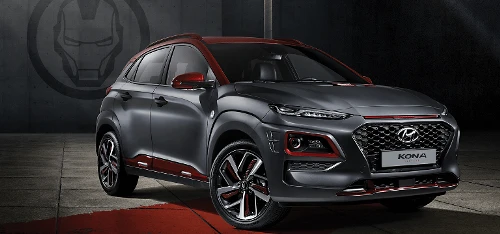 This Car Review Is About: Hyundai’s funky little SUV called the Kona. They’ve gone a little rogue here and given the world a limited edition, 400 vehicle, “Iron Man” version, complete with body styling that evokes the Iron Man look, and a couple of nifty interior changes too. It’s powered by the 1.6L turbo engine, has a seven speed dual clutch auto, and puts drive mainly to the front but will split torque to the rear on demand.
What Does It Cost?: Hyundai list it as $39,990 plus on road costs. That’s $990 more than the Highlander with the same engine spec. And What Do I get For That?: There is some visual highlights for the Iron Man Edition. Inside there is a Tony Stark signature on the rippled plastic in front of the passenger, a Stark Industries style logo for the top of the gear selector and in the driver binnacle dials. There is a Head Up Display fitted and it plays a stylised graphic on engine start. The seats have an Iron Man head and Stark Industries logo embossed into the faux leather and the doors shine a Iron Man head puddle lamp.
 Outside is a bit more. There is Iron Man badging aplenty, with the front of the headlight holder having it embossed into the plastic, an Iron Man centre wheel cap, the Marvel logo on the bonnet which has also been redesigned in shape, plus the letterbox slot above the main grille has a red insert with Iron Man here. There is an Iron Man badge on the front flanks and the guards have been pumped with extra cladding.
 The bottom of the doors have the brilliant metallic red from the Iron Man suit with the silver inlays, and the exhaust tips in the lower rear bumper have a similar motif. the tail lights are full LED and the rear gate has Iron Man on the grab handle. The LED driving lights have a similar look to aspects of the Iron Man suit and the roof, also in red, has a dark grey Iron Man logo which complements the dark grey semi-matte coating for the body and the Stark Industries logo on the rear doors.
 On the Inside Is: a mix of Highlander trim and lower trim level looks. Although the seats are perforated they are not vented nor heated. The centre console around the gear selector lacks the buttons found in the Highlander and has red piping highlights. It does carry over the drive mode for Sport/Eco/Comfort, and has a lock system for the AWD. The vents have red piping highlights also and the actual aircon controls are the same as Highlander’s. There are the usual audio and smartphone connections via the Android Auto and Apple CarPlay apps and USB, but the Highlander’s wireless charge pad is deleted. The driver’s seat is powered and there is memory seating. As mentioned before there is a HUD.
 Internal measurements are identical to the rest of the range.
 Level 2, 9 Help Street