

Author archive
Goldilocks Goodyear* And The Three Tyre Pressure Bears
 Getting the tyre pressure right is a bit of a Goldilocks process – it can’t be too hard or too soft, but has to be just right. If you don’t get it right, it could result in an accident that leaves you looking like you have indeed had an encounter with three grouchy, hungry grizzly bears. Or it could turn your vehicle into a beast with one heck of an appetite for fuel. (On a complete sidetrack, wouldn’t Ursus or the word for Bear in some other language make a great name for a 4×4?)
The most common scenario is that you end up with Mama Bear’s tyres: too soft. This is because valves aren’t perfect and slow leaks happen over time, what with little air molecules being sneaky. Ideally, we ought to check our tyre pressure monthly but not many of us actually do this (and that’s me at the front of the queue for the confessional!).
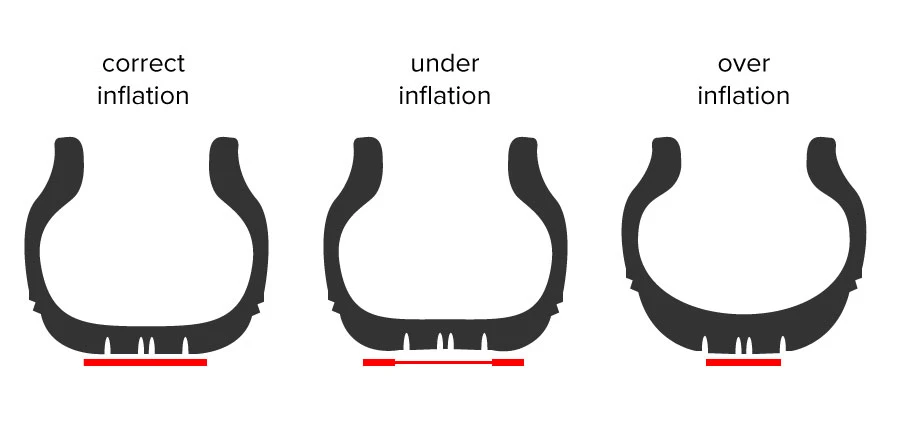
The problem with too-soft Mama Bear tyres is that they bulge out. This leads to two problems. Firstly, because the walls of the tyre weren’t designed to balloon out like that, you’re increasing the chance of the tyre going boom on you. Yes – underinflation and being too soft is what increases the chance of getting a blowout, not being too hard.
The second problem of having too-soft Mama Bear tyres that bulge out is because this increases the area of tyre contacting the road. A moment’s thought will tell you that this has to be better for grip, right? Well, yes. It does increase the amount of grip between the tyre and the road surface, and that’s just the problem. This means increased friction, and this means that your car has to work harder to get up to the speed you want to. Remember what it was like when you were a kid and your bike tyre started getting a leak so you had to pedal that much harder when the tyre was flat? Well, the same thing happens when your car tyres are flat (or your trailer tyres for that matter). What this adds up to is terrible, terrible fuel economy. If you’ve wondered why you don’t get the same fuel economy as the stats in the car ads say you should, this is one of the reasons why (the other reasons are because the vehicles are tested minus any load at all and in the lab where there’s no crosswinds or headwinds).
OK, so having the tyres too soft is a bad thing. However, is there such a thing as being too hard?
As Goldilocks would tell us, yes, tyres can be too hard. Papa Bear tyres might not increase your chance of a blowout the same way that Mama Bear tyres do, in spite of what the cartoons tell us. Papa Bear tyres are dangerous in another way. Because they make the bottom of the tyre narrower and more convex, there’s less of the tyre touching the road. This means less friction.
Less friction, of course, means less grip around corners and greatly increased braking time. If it’s wet, then proportionally less water can be channelled out of the way, so the friction decreases even further. Let’s stop and think about the implications of that for a moment, but not for too long. The results certainly won’t be pretty, especially if speed is involved. It’s a wonder that the cops don’t have random tyre pressure checks the same way they do random breath testing and random speed checks. Oops, maybe I shouldn’t have written that – I might give them new ideas and new ways to milk our wallets.
So how do you get those nice Baby Bear tyres that aren’t too hard or too soft but just right, where you’ve got enough friction to make the car handle well but not so much that your car guzzles petrol?
The answer, of course, is to check your tyre pressure regularly. Some say that you should even check the pressure every time you fill up with fuel, but this may be going a bit too far. Maybe. Most modern vehicles are very, very nice to us and have tyre pressure monitors installed and provide us with an alert when the pressure strays out of the Goldilocks Zone.
OK, so how do you know what pressure you should inflate your tyres to? The answer to that is usually provided very kindly by the car manufacturers, either in the owner’s manual or on the door pillars (either on the driver’s or the passenger’s side). In my Volvo S70, the info is in the manual. In my Nissan Terrano, the information is on a sticker on the door pillar on the driver’s side… unfortunately in Japanese where it hasn’t totally faded away. Curses and naught words! Fortunately in situations like this, you can use online tools and good old Google to help you out (here’s one possibility: http://www.tyre-pressures.com/).
Tyre pressure, like porridge, can’t be taken too hot. However, there is no such thing as too cold when it comes to measuring tyre pressure. This is because heat makes the rubber a bit softer and the air inside take up a wee bit more space.
When you check the tyre pressure, you need to be sure that you use the right units. Car tyre pressure is one of the few things that we still like to think about in Imperial units rather than metric (the others are height and the birth weight of babies). The Imperial unit is pounds per square inch (psi) but the metric equivalent is kiloPascals (kPA). The conversion formula is 1 psi = 6.8947 kPA, so if you use the wrong unit, you’ll either be underinflated or overinflated by sixfold.
Of course, getting Baby Bear tyres isn’t as simple as that. If you’ve got a heavier than normal load in your vehicle, this will press down on the tyres so they bulge out and get a Mama Bear tyre profile and will therefore act like a Mama Bear tyre. This really adds up to a beast with a big appetite, as the engine doesn’t just have to cope with the extra load, it also has to cope with the extra friction if you don’t increase the tyre pressure. And don’t forget to make like Johnny Farnham and take the pressure down once you’ve dropped off the load! Oh yes – and make sure that your tyres aren’t too worn or getting the pressure right won’t do diddly-squat.
To make things even more interesting, if you’re into off-roading, you need to adjust the tyre pressure according to the surface you’re driving on. In sand, for example, you need the extra friction, so Mama Bear might be able to help you out if you get stuck.
Catch you later – I’m off to check the tyre pressure in both cars.
* This is not the name of a blonde model in the Goodyear equivalent of the Pirelli calendar.
A Wee Rant About Road Works

I’ll slow down… if there really are road works ahead.
Yes, yes, I know that roads need to be repaired regularly so they stay safe to drive on. I also know that we need to keep the guys and girls working on the roads safe and that we shouldn’t just roar through road works at our usual speed. However, there are times when seeing those “road works ahead” signs up ahead really makes me see red.
I particularly see red when I’m on my pushbike and the road works people have decided the bike lane is the best place to put out their warning signs, forcing me to either nip into the main stream of the traffic or onto the footpath. However, there are times that even when I’m behind the wheel of a car that those road works signs arouse my ire.
Not that I’m complaining about the road works themselves. I don’t mind slowing down when something’s actually going on or there really is something I need to take care with – lots of busy people, a single lane or stacks of loose gravel. If there’s one of those traffic controllers with a stop/go sign on a pole, I’ll give them a friendly smile and wave, or even say hello if I’m close enough – after all, traffic controlling work is one of the most mind-bogglingly boring jobs out there, although it’s probably better than it was 25 years ago, seeing as one could now probably listen to a podcast or audiobook on the smartphone through one ear. And I’d much rather see a real human employed for traffic control duty than one of those temporary traffic lights that keeps going at night and will hold up a huge line of cars for no reason whatsoever thanks to its internal programming.
The problem happens when the road works warning signs are the only type of road works out there.
You know how this scenario goes. You’re travelling along and you see one of those temporary warning signs on the road up ahead of you, so you slow down. However, as you get closer to where the signs are, what do you see? Do you see bulldozers and bitumen mixers? Do you see sweaty guys in high-viz with power tools jackhammering the road surface open? Is there a massive hole in the road or similar amusements?
Nope. The only thing that you can see is maybe a single road cone marking where the road works have been… and beside that sits a tiny little patch of loose gravel over where they’ve repaired a pothole. Alternatively, all you can see is a few spraypainted marks where they’re going to repair something. Or possibly, there’s a half-done kerb on the side of the road that they’re going to finish off when it’s stopped raining or when the weekend is over. Or the road works are taking place on a side road that intersects with the road you’re driving on (but don’t affect the road you’re driving on, except indirectly).
You have to ask yourself sometimes: are the warning signs the first things that they put up before beginning a job and the last things they take away? Honestly, I’m convinced that the road signs go up as soon as they’ve decided to fix something on the road and stay there until they’ve finished the paperwork to sign the job off after it’s done.
And then they wonder why people don’t like to slow down when they see those signs. Haven’t they all heard the fable of the boy who cried wolf? You’d think that they’re trying to condition us to ignore the road signs. I know for one that my reaction upon seeing those road signs is “What road works where?” I’m probably not the only one who gets into the very bad habit of not quite slowing down to the temporary speed limit when seeing these signs.
Dear road workers, us drivers appreciate all your hard work, we really do, and we don’t want to put you in danger. However, you guys need to do your bit. Let’s do a deal: you put the warning signs up when you’re actually working on the road, not three weeks beforehand, take them down when you’re finished and maybe even lay them facedown during the weekend if the road isn’t actually hazardous. It can’t take you that long to put them up and take them down. In return, we’ll pay much more attention to the signs and really will slow down to 80, 50 or 30 as the case may be, and we’ll probably be nicer to you when we drive past.
Particularly annoying road works signs I have seen over the years (with specific locations removed) include:
- The ones on a large chunk of main road that could only be fixed on a sunny day… and the road signs went out in the rainy season when sunny days were few and far between. They stayed there for at least three weeks with no sign of action on the roads before the work began. I’m not sure when they came down, because by that stage, I’d found an alternate route on a minor road.
- The traffic control light that stopped a major highway for ten minutes (I was counting) just so they could set up a line of road cones. Honestly, after having waited that long, I was expecting to see something major going on! Couldn’t they have maybe set them out in small batches rather than letting a long line of traffic build up?
- Not quite so annoying this time: the sign warning that road marking was going on ahead. We’d kind of guessed, as the tank of yellow paint had sprung a leak and there was a thin trail of yellow in the middle of the lane near some very new, very white centre lines.
Right, that’s my rant over. Now it’s your turn. What’s your worst experience with road works and pointless signs? Have a good old grizzle in the comments and let us sympathise with you.
Which Bond Car Was The Best?
Some of the fun things about the James Bond movies (and the books) are the spy gadgets. This is especially apt, given that the author, Ian Fleming, and his brother Peter were both British intelligence agents and probably had plenty of their own real encounters with all kinds of cunning stuff. However, the gadget in the films that sticks out the most would have to be the cars. Even the James Bond rip-offs like the Johnny English films feature at least one car with plenty of bells and whistles.
The car marque that springs to mind first in a discussion of Bond cars is, naturally, Aston Martin, with various incarnations of the DB5 and DBS being used in the films. This product placement has been the making of the luxury marque, as it’s hard to think of Aston Martin without thinking of James Bond and vice versa.
However, the Aston Martin DB5 is by no means the only type of car ever driven by Agent 007 and Aston Martin isn’t the only marque that ever won the honour of product placement in the shape of being a Bond car. The very first Bond car was a Sunbeam Alpine (in Dr No), and over the many decades of Bond, the super-spy has driven a Bentley (From Russia With Love), a Toyota 2000 GT (You Only Live Twice – they had to modify this to an open-top version so tall Scotsman Sean Connery could fit into this little Japanese supercar), a Ford Mustang (Diamonds Are Forever), a handful of Lotuses, a Rolls-Royce (A View To A Kill) and several BMWs.
OK, so out of all the Bond cars, which one was the coolest and most fun? We’ll rule out the rather tame Sunbeam right away. Here’s my pick for the top contenders in roughly chronological order.
- 1963 Aston Martin DB5: Goldfinger and Thunderball. This was the first Bond car to get cool gadgets as well as being the debut of the Aston Martin. It featured an ejector seat, a smoke screen, guns and tyre slashers.
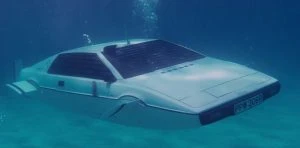
- Lotus Esprit: The Spy Who Loved Me. Nicknamed “Wet Nellie”, this one could famously go underwater like a submarine as well as being able to dish out torpedoes and cover its escape by squirting out ink like a squid. Trivia time: the original that’s used in the movie is owned by Elon Musk of Tesla (and PayPal and SpaceX and…)
- 1985 Aston Martin V8: The Living Daylights: Missiles with a heads-up guidance display system, a rocket propulsion system, tyre spikes and the ability to listen in to all police radio frequencies.
- 1963 Aston Martin DB5: Goldeneye and Tomorrow Never Dies: Outruns a Ferrari Spider 355 and has a chiller compartment for champagne.
- BMW Z3: Goldeneye: Although it’s got a parachute braking system, missile launchers, radar and an ejector seat, plus hints of other gadgetry, we don’t get to see them in operation in the movie. You don’t get them in real BMW Z3s either.
- BMW 750iL: Tomorrow Never Dies. This one can be driven by remote control operated by Bond’s mobile phone and also dispenses tear gas by remote control. Door handles that deliver electric shocks, wire cutters, caltrop dispensers, reinflating tyres and, of course, missile launchers complete the package. Again, don’t look for these in your standard 7-series BMW.
- BMW Z8: The World Is Not Enough: Another remote-controlled BMW for Bond. This one has the missile guidance system housed in the steering wheel. As well as all the usual guns and missiles, this one can also generate an EMP shock that wipes out any electronics in its vicinity.
- Aston Martin V12 Vanquish: Die Another Day. This one’s nicknamed the Vanish thanks to its invisibility cloak. It’s also got old favourites like ejector seats and guns galore. It goes head-to-head with the villain’s equally tricked-out Jag that has a thermal imaging display.
OK, people, it’s voting time. Which of these Bond Cars was the best? Are there any other hot contenders? And what gadgets would you like to see on a Bond car if they ever make another movie in the series? Leave a comment and let us know!
Are You Sitting Comfortably?
One of the things that I’m sure you’ve noticed in a lot of new cars coming out these days is all the adjustable this and that in the seats, especially the driver’s seat. You can adjust the seat angle, the seat back and how far the seat is from the steering wheel. With a lot of seats, you can also throw in lumbar support and (oh glory – one of my favourite bells and whistles) heating and even cooling in the seats. Then you’ve got the ability to adjust the steering wheel itself.
 With the ability to adjust the seat to a position that’s just right, it’s something of an irony that a lot of us don’t really adjust the seat much at all, or not really beyond how far forward or back the seat is, plus the seat angle. And if this is all you do, you could be making a big mistake.
Believe it or not, seating position is actually a safety issue. This is for at least three reasons. Firstly, where and how you are seated affects things like how well you can see the road around you, including the mirrors and what’s over your shoulder (even if you have blind spot warning sensors on your vehicle, you still need to do a head check like your driving instructor told you to, just in case). Secondly, the position of your legs and feet affects the speed of your reactions if you need to bang on the brake and/or the clutch – and the same applies to your hands and arms working the steering wheel. Thirdly, bad driving position also increases driver fatigue, which is a contributing factor in a lot of crashes.
Given the importance of proper seating position for road safety, you might wonder why cars don’t just come with one configuration. Fortunately, the powers that be haven’t decided that this is the best solution, mostly because even the densest pen-pushing analyst knows that you can’t have just one ideal seating configuration because humans don’t come with the ideal proportions of the Vitruvian Man, crash test dummies, Barbie, etc. etc. I’m thinking of the four drivers in my family. My son is tall and lanky to the extent that he nearly hits his head on the roof of little hatchbacks, but my daughter is petite. My husband is stocky with long arms and has long since traded his six-pack for a grown-up keg, and I’m average height but with a long torso in proportion to my legs. There is no way that a single seat configuration would suit every single member of the family and the mathematical average would end up with all of us sitting in less-than-ideal positions.
So you’re going to have to adjust your seat and make sure that you’re sitting comfortably – and properly. Unfortunately, for a lot of people, what’s “comfortable” for them is not the best driving position. The worst of these “comfortable” positions are the two extremes: the driver (stereotypically young and male) who has the seat as back from the pedals as possible and the seat tilted back with the steering wheel low, and the driver (stereotypically older and female) who has hunches over a high steering wheel and the seat so far forward that she could just about steer it with her boobs or teeth. These positions will be hell on your back and neck if you stay in them for a long time, and they don’t make for great road safety.
So what’s the right way to sit in the driver’s seat?
First, get yourself ready. You want to have your back and front pockets free of house keys, wallets and cell phones (and put that phone somewhere you can’t reach it so you’re not tempted!). You also want to have footwear that plays nicely with the pedals. Footwear at both ends of the formality spectrum are unsuitable for driving, with work boots, flip-flop thongs, stiletto heels and wedge heels all being atrocious. Even bare feet are better than those. Flats and low heels that aren’t at the risk of coming off your feet or jamming around the pedals. Wear comfortable clothing, too. Anything that’s too tight, too baggy or itchy will distract you.
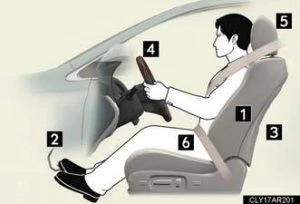
Now you can get into the car. Firstly, let’s get the seat at the right distance from the pedals and the wheel. Get it where you can rest your heels on the ground ready to operate your pedals and so your knees are slightly bent. Having your knees bent slightly but not too much reduces fatigue (a lot of us sleep with slightly bent knees) and also means that you can use more of your leg muscles if you need to bang on the brake hard and suddenly. Also play around with the seat height and tilt so that your hips are level with your knees.
Now for the seat back. You want it somewhere so that you can have your elbows bent so that your wrists are straight when you hold the steering wheel correctly. And the correct way to hold the steering wheel is the way that your driving instructor told you: 10 o’clock and 2 o’clock with your thumbs up as if you were holding wine glasses – or 9 o’clock and 3 o’clock if you want a bit of variation. What you need to avoid is 12 o’clock, or 5 o’clock and 7 o’ clock – and definitely not 6 o’clock! The seat back should be tilted somewhere so that your shoulders can press against the back – if you have to hunch forwards, your seat is too far back. Now pull the headrest forward so it cushions your head.
Your bum should be pressed all the way back to where the seat back meets the seat of the seat. You’ll strain your back if your bum is too far forward and there’s a big triangular gap between you and the seat back. Lumbar support helps but your bum should still be well back. Use cushions if you have short legs or if your car doesn’t provide you with lumbar support.
Some suggestions you see for ideal seat position go to the bother of telling you the ideal angles for this, that and the other thing. These are all very well in their way but forget that people don’t always have the proper proportions for the proper angles. I know that I don’t and if I have my seat back to the proper 100-degree angle recommended by some, I can’t bend my arms when holding the steering wheel.
Next, adjust the steering wheel. You should be able to hold it correctly as described above. It should also not be squashed against your thighs or your stomach or any other bits. You should also get the height of the steering wheel to that happy medium where it doesn’t block your view of the windscreen or of the dashboard controls. If you have to obscure some of the dashboard, make sure that you can see the important bits of the speedo so you can tell if you’re going over the speed limit.
Next, adjust all of your mirrors so you can see the road behind and around you. Never think that you can rely entirely on rear vision cameras and blind spot sensors. You may also adjust the vents on the climate control system so you get a nice cooling breeze on your face or warm air to toast your chilly toes.
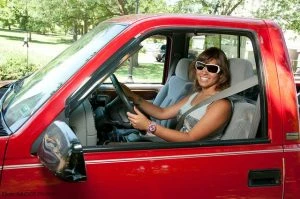 Lastly, put on your seatbelt so that the lap belt is resting on the top of your hip bones (or where they’d be if you could see them) and so the sash runs from shoulder to hip and doesn’t press against your neck when you lean forwards. This is a bit of a nuisance for female drivers with bigger boobs, as the sash part of the seat belt is continually sliding up to the throat area. The right bra helps – something that separates the girls so you can get the sash between them rather than a hoist-me-high cleavage enhancer if possible. (Yes, I’m the wowser who says that it’s best not to drive in tight clothes that enhance your cleavage and stiletto heels – change when you get to the party!) It’s another story again if you’re pregnant – but that’s worth a whole post of its own.
Now, are you sitting comfortably? Good – then you can begin.
 Level 2, 9 Help Street