

Author archive
Plastic Bags To Fuel: It’s For Real
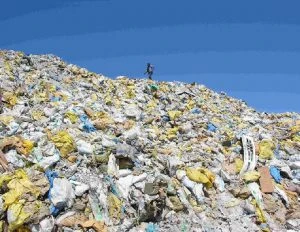 If your Facebook feed is anything like mine, you may have seen a few posts by various environmental groups kicking up a big stink about the amount of plastic that’s floating around in our oceans – and justifiably so. You might have seen a few pictures of the notorious Great Pacific Garbage Patch (floating around in the North Pacific somewhere between Japan and the USA). A lot of it is in the form of polyethelene, which is not biodegradable – the only thing that breaks it down is sunlight, which is why we deal with it by burying it in landfills underground where the sun can’t get at it. There are literally mountains and islands of it out there.
At the same time, folk are looking around at the existing crude oil supplies and realising that they aint gonna last forever. This, as well as the pollution issue, is one of the spurs driving the push towards hybrid vehicles, electric vehicles and biofuels.
Plastic is, however, another petroleum-based product. In other words, once upon a time, the lid of your coffee cup, your chip packet and your polar fleece top came from the same stuff that you put in your car to get to work this morning. What if this process could be reversed? What if you could un-refine the plastic and turn it back into oil that could then be refined the other way and used to keep our cars (and trucks and trains and ships and aeroplanes) running?
Well, they can do it. A few teams around the world have come up with ways to take all that waste plastic and convert it into something that can be used as a fuel feedstock – for diesel. I’m not a chemical engineer, so don’t ask me why most of the fun new technologies for producing greener fuel end up producing diesel rather than petrol (with the exception of ethanol, which plays nicely with petrol, as we’ve known for years here in Australia). Although one Aussie company called Foyson Resources (aren’t you proud?) has come up with a way to get petrol out of plastic.
The technology for converting plastic back into some form of oil has been around for at least 10 years, with companies in Japan, China, India, the Philippines and the US all having a go at it.
The process they use is called pyrolysis. Those of you with a smattering of Greek may recognise the “pyro” bit, which indicates that heat is involved. Literally, the process means “separating by heat”. It’s been described as a sped-up version of how oil fields and fossil fuels came to be in the first place. Basically, the long polymer strings made up of lots of carbon, oxygen and carbon atoms get split apart into shorter bits about 18 carbon molecules long.
OK, let’s ditch the chemistry and describe it simply.
1: Appropriate plastics are fed into the machine, usually after being shredded or chipped. Suitable plastics usually include polyethylene, polypropylene and a few others – but not PET (Recycling #1), which is easier to recycle.
- The shredded plastic is heated slowly and turns to a gaseous form. The exact temperature at which this happens can be anywhere from 250°C through to 400°C, depending on the pyrolysis plant in question.
- The gas is cooled to a liquid: crude oil. Bingo!
- Other gases keep going and have to go somewhere. With some pyrolysis plant designs, the gas is captured and used to heat the pyrolysis chamber. However, some of the gases can be a bit nasty, which is why the kibosh was put on a Canberra plastic-to-fuel plant last year.
- Leftover solids come in the form of “carbon black”. This can be used as a construction material or just like old-fashioned coal, which it’s practically identical to.
It seems to be early days still for the plastic-to-oil process in Australia, with the Foy Group (the ones who have got the grant to start a plant in Hume, Canberra) facing a few hurdles thanks to the possible emissions. However, given (a) the amount of plastic waste we all churn out and (b) the need to find good supplies of the crude for our petrol and diesel, I’m sure these hurdles can be cleared. I’m picking plastic-to-petrol as The Next Big Thing for greener motoring – and it won’t require any changes to our existing vehicle fleet.
If you’re really, really keen, it is apparently possible to do the plastic pyrolysis thing at home and make your own diesel. This probably comes with a heavy cost in the form of the energy input needed to heat a home-built plant, with the result that all the oil you produce will then be used to run the generator or powerplant used to heat the pyrolysis plant used to produce the oil and round it goes. At least it gets rid of plastic bags…
I personally would not try this at home and prefer to either cut down on the plastic bags I use or send them to the recycling depot. However, if you are keen and want to try, this page tells you how. No guarantees and do it at your own risk!
Roads With A Difference
There are some pretty amazing roads around our world that might just be worth going to see. Following are spectacular roads that have world record status, and you’ll see just why these ones stand out.

The Road Of Bones
1/ First of all, here in Australia we have the world’s longest road. Highway 1 circumnavigates the continent and travels around the outside of Australia for over 14,000 km. Along the way, you’ll be passing through some incredible scenery as well as some of Australia’s major cities that include Perth, Sydney, Melbourne, and Adelaide – along with a huge number of smaller towns. Northern Territory roads allow a speed limit of 130 km/h on open road travel.
2/ Head over to Saudi Arabia and you’ll be able to take yourself down the world’s straightest road: Highway 10, Saudi Arabia. This road was originally built as a private road for King Fahd and connects Highway 75 to Highway 95. It runs for almost 240 kilometres, and is the perfect straight road to try out your Lane Assist and Fatigue Warning safety features!
3/ The world’s twistiest bit of road is found on Lombard Street, San Francisco, USA. Unbelievable, the road features a 400 metre slope with a 27% gradient and a sum total of 1440 degrees to turn through and has a 5 mph speed limit.
4/ For those of you with a head for heights: you will enjoy the world’s highest roads around Uturunku, Bolivia. Not only do they have amazing views but they are over 5500 m above sea level. You will feel the lack of oxygen on this run!
5/ There are also roads that travel below sea level, and, in Israel, Route 90 is home to the world’s lowest road. The road follows the western side of the Dead Sea where the water is so salty that you can go for a swim and float unaided. No fish or plant-life are able to survive in this salty environment, either.
6/ Temperature is always a great leveller, and in Russia you’ll find the world’s coldest road that is called the ‘Road of Bones, (or M56). Not for the faint hearted, the M56 has claimed many people’s lives whose cars have broken down and they’ve frozen to death. Travelling in convoy is best. During winter the temperature is rarely warmer than -30C.
7/ The world’s oldest road is the Via Appia, Italy. Parts of this road have been preserved and are only open to pedestrians. The Via Appia is located in south east Italy and can be dated back as far as 312 B.C.
8/ Our neighbours over the Tasman sea can lay claim to the world’s steepest road which is called Baldwin Street and is found in Dunedin, New Zealand. Walking up Baldwin street can be as much fun as driving up it. If you do drive up, just make sure there is room to turn around because it can be alarming having to stop just before the top of the road – your Hill Start Assist might just come in very handy. A popular activity is to roll M&Ms down it!
9/ The world’s widest road is the ‘Monumental Axis’ found in Brasilla, Brazil. In one part it is 250m wide!
10/ You are sure to find the world’s longest road bridge called the ‘Bang Na Expressway, Bangkok, Thailand entertaining. Lasting for over 50 km, the bridge required an enormous 3.84 million tonnes of concrete in its construction. Needless to say it wasn’t cheap to build, costing as much as £770 million to complete it build.
11/ On the other hand, the world’s tallest road bridge is the ‘Millau Viaduct’, France. At its highest pint it is almost 250 m high! The views are awesome.
Who said civil enginering was ever boring. Let yourself loose on these roads, and you’ll have plenty of new conversation starters.
Australia's Solar Race
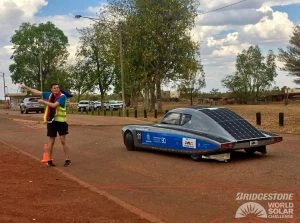
Solar Race Car
The ‘Nuon Solar Team’ continues to dominate the solar race across Australia that started in Darwin and will finish in Adelaide. Racing without conventional combustion engines, the various teams from around the world converged on Darwin having built their vehicles as completely solar-powered electric machines.
There are three categories that are completing the journey. The first being the quickest team to complete the 3000 km race distance – this race is known as the ‘Challenger Class’.
The second class is the known as the ‘Cruiser Class’, where there are points given to the teams for the number of passengers on board, the amount of energy that they are using in terms of the number of battery recharges that are occurring throughout the journey and the general practicality of the car. Being a part of the ‘Cruiser Class’, the points aren’t all about speed.
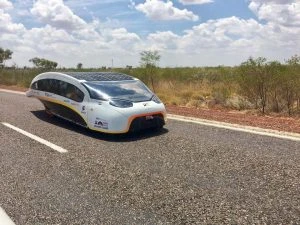
Solar Race Cruiser Class
Finally, the third category is known as the ‘Adventure Class’ which is the non-competitive class, allowing cars built for previous races of the event to run again – usually with new team members. The ‘Adventure Class’ can also be used as a catchment for those who, while meeting the exacting safety standards, may not have quite made full compliance with the latest race requirements. This is the category with the more laid-back travel style.
At the end of day three: the quickest team competing in the ‘Challenger Class’ is the ‘Nuon Solar Team’ from Holland.
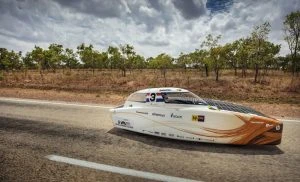
Nuon Solar Team
Second is the team from Tokai University.
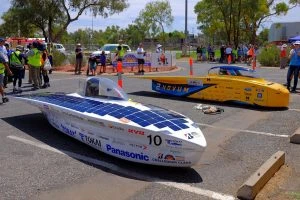
Tokai University Race Team
Third is the team from Michigan University.
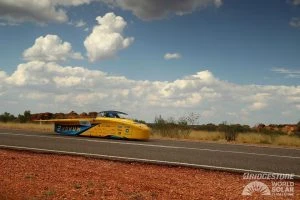
Novum Race Team
Just over halfway through the race and there will still be plenty of challenges ahead for all race competitors. One of the major influences on how well a car performs in this race is the amount of sunshine there will be. Cloudy days do impact the speed and progress of the cars.
This is an exciting race held here in Australia that is sponsored by Bridgestone, and it’s these sort of races that enable the evolution of production cars being run on electricity and solar energy. If you can, get out and have a look at the cars as they silently run into Adelaide in a few days time.
Saudi Women Get The Right To Drive

The really big news in the motoring world of the past week or so isn’t GM’s plans for electric vehicles or the plans afoot for a Rolls-Royce SUV (although these are both hot issues). It’s the fact that at long last, the Saudi ban on women getting their drivers’ license has been lifted.
Up until now, Saudi Arabia has been alone in not permitting women to drive legally – even other countries operating under Shariah (Muslim or Islamic) law such as Qatar, Iran and Iraq let women drive legally (the only other country that prohibited women from driving was Afghanistan under the Taliban). Some of the reasons given included the possibility of women mixing with unrelated males (which goes against the cultural/religious norms) in the case of a traffic accident and the fact that driving can’t be done in a full burqa (although it can be done in a headscarf that’s pulled back where it doesn’t block peripheral vision much – as Western women in the 1920s knew well). 
The ban was lifted after a very long and determined campaign, mostly conducted via social media, by a group of Saudi women, who faced all sorts of possible penalties and repercussions for doing so, including one who was sentenced to a flogging for trying to drive until the King stepped in and overturned the sentence.
The ban was finally lifted on the grounds that constantly paying for taxis was putting a huge drain on the resources of many families; the rule about gender segregation was being broken left, right and centre because all the taxi drivers were men not related to their passengers; and women were finding it hard to get jobs and education, in spite of the Saudi government wanting to push tertiary education. As of September 26, Saudi women can now get their licenses.
OK, so what’s the big deal? Well, for one thing, female tourists can drive themselves around. Previously, if you had got your license overseas, you could still only drive in Saudi Arabia if you were issued with a local license… and they didn’t hand these out to women. A good chunk of us don’t have Saudi Arabia on our list of holiday destinations (barring those of us who want to make pilgrimages to Mecca for religious reasons), so why should we care over here in Australia?
We should care because it should make us stop and think for a moment about the freedoms we have here, and be grateful that we are allowed to get our drivers’ licences so easily (comparatively easily anyway!).
Do you remember the feeling of finally being grown up when you first got your L-plates, to say nothing of the feeling of independence and freedom when you got your P-plates and finally your full licence? You could go anywhere and do anything (almost) without having to sit down and negotiate timetables and the intricacies of working out who had to do what, where and when to ensure that Mum’s Taxi Service ran smoothly. You could also do your bit like a real adult when you could drive yourself to a proper job, and you felt like something of a hero/heroine who saved the day when you got a text from Dad saying that he had locked his keys in the car and needed you to drive over with the spares, or when you were able to drive your little brothers and sisters to school when Mum was sick and couldn’t do it.
Now imagine that you weren’t able do all that. And that you still couldn’t do it, even if you were an educated and intelligent capable adult with kids of your own and a proper job. Your choice of “proper jobs” would be really limited to what was within walking distance of the nearest bus stop, because if you had to pay for a taxi twice a day every day, the drain on your wallet would just about make it not worth working. And all this time, half of the members of your family do have the freedom to drive anywhere at any time, and you have to depend on their goodwill to go where you want or need to go. This situation will go on all your life.
You also have to depend on this small handful of other family members if your children need to be picked up after school, have got sports practice or if they need to get to the dentist… or the doctor. Keep your fingers crossed that your kids never need a trip to the emergency room with something that isn’t life threatening enough to warrant calling an ambulance (e.g. broken arms, saucepans wedged onto heads, sprained ankles, etc.) during the daytime when the family members with the licenses are away on business or out doing their own thing. Any doctor’s appointments, shopping trips even for basic groceries and visits to the dental clinic have to fit in with other people’s work schedules as well as your own. It’s Dad’s Taxi every time, with Mum’s Taxi not existing, which is annoying and stressful for Dad as well as for Mum.
Take a few moments right now to think about how your life would be different if your mum couldn’t drive, or your sister, or your wife (or yourself, if you’re a woman).
To take things to real extremes, if women didn’t or couldn’t drive cars, then the automotive industry might never have got off the ground in the first place. Karl Benz was on the point of giving up his experiment with the horseless carriage and was despairing that it would ever catch on, but then Bertha Benz loaded the kids into the new car and drove off to visit her mum as a publicity stunt to show that this new-fangled invention was so simple that even a woman could drive it with ease.
It’s also a good to take time to appreciate the fact that we can get licenses. Even if you live in the city and can commute by foot, bike or public transport, or if you work from home in a telecommute, be sure to get your licence, because you never know what the future might hold or when you’ll need to drive. Learn to drive and get that licence, and encourage your daughters to enjoy cars and driving just as much as you teach your sons.
 Level 2, 9 Help Street