

Archive for 2022
Young Drivers

Safety Tips for Young Drivers.
- Get supervised driving experience in all types of weather conditions and road surfaces (clear weather, dawn/dusk, rain, high winds, dust, gravel, hill climbs, descents, etc.).
- Get someone who is an experienced driver to supervise you lots while driving town/city rush hour traffic, around roundabouts, out on the motorway, changing lanes, urban and rural driving. etc. Don’t just practise in an urban area, make sure you get experience driving on all types of roads with a confident driver alongside to guide you as and when you may need it.
- Be courteous when driving and think of other road users.
- Look as far ahead as possible, and not just at the taillights of the car in front of you, which is how nose-to-tail accidents happen.
- Put your phone away when you’re driving, or at least where you can’t see or reach for it. Driver distraction is a leading cause of crashes.
- Don’t let passengers push you beyond your comfort zone. It’s your responsibility as the driver to stay alert, ensure how safe is safe for you, the safety of yourself, the safety of passengers, and the safety of others while driving.
- When choosing a car, look for solid cars with technology like ABS, airbags, and pre-tensioning seatbelts.
- Get a car with great visibility about the car.
- Parents, family members, and those with driving experience should supervise you (the young driver/learner) as much as possible.
As a parent or guardian, let your young learners drive, even if it’s just for short distances each time. It is so important to help them get experience behind the wheel while being supervised as much as is possible and practical.
In 2008, OECD data revealed that the United Kingdom (UK) had the lowest fatalities per billion vehicle kilometres travelled when compared with other countries who were OECD members. In this survey, the graphed data showed Australia as being 9th out of the 13 countries involved in the survey. Where the UK had 4.9 fatalities per billion vehicle kilometres travelled, Australia had 6.9. Denmark held the highest with 8.22.
Recently, Top Tests, UK, revealed data on various driving statistics. Top Test’s 2018 data showed that drivers aged 16–19 were still 38% more likely to be killed or seriously injured than drivers aged 40–49, and drivers aged 20–29 were 65% more likely to be killed or seriously injured than drivers aged 40–49. When 1000 drivers were quizzed in 2018, Top Tests found that 42% of the drivers aged 18–34 admitted to experiencing road rage at least once a week, and 14% of younger drivers experienced road rage every day that they drove. (Source: https://toptests.co.uk/driving-statistics/)
Across the ditch in NZ, AMI insurance claims data reveal that drivers under the age of 25-years old are most at risk of having an accident. In the United State, motor vehicle crashes are the second leading cause of death for U.S. teens. Here in Australia, the government has kept a close eye on road statistics as well, and rightly so. According to 2021 reports, there were a total of 1133 road fatalities for the 2021 year, where speeding remained the top cause of accidents; this was followed by driver distraction, and then driver fatigue. Those aged 17 – 25 year old were the second-highest age bracket impacted by road deaths. The 40 – 64 age group had the most road accident deaths, however it was young men who were more likely to be involved in a crash.
By March this year (2022), New South Wales had recorded the most fatal road accidents for the year (25), an increase from 2021 with (19). Queensland followed (20), Victoria (18), Western Australia (15), South Australia (7), Tasmania (6), Northern Territory (3), and the Australian Capital Territory (0)
Whether it’s travelling too fast for the conditions, using smartphones, vaping or smoking, eating, applying makeup, checking the texts – all while driving – these are the leading causes for road fatalities on Australian roads. Driving while fatigued and, of course, drink driving or driving under the influence of some drug also causes road fatalities.
It’s sad that anyone should die, however it is the young drivers that are the top culprits for using their mobile phones while they are driving, which leads to serious and tragic accidents. In Australia, 18 – 24 and 25 – 39 age groups reported the highest application of using mobile phones while driving. 18 – 24 year old drivers are twice as likely to receive a speeding fine.
Hamish Piercy, Fleet Risk Manager for AMI, and former New Zealand Police Officer with the serious crash unit, has over 33 years of crash investigation experience. Hamish was unsurprised that, in New Zealand, AMI received such a high number of claims for drivers under the age of 25. He commented: “There are a lot of great young drivers out there, and some excellent driver education programmes, but these statistics show that we can’t be complacent when it comes to driver safety. It’s an unavoidable fact that to gain experience, you have to drive. So, as a society we need to look at how we can enable that in safe ways.”
If possible, try to enrol your young family member that’s embarking on getting a driver’s license to run through a local driver training course. Good driving courses will focus on key areas like core driving skills, reading the road ahead, distraction, inattention, and speed. Courses that can impart crucial driving skills will enable your youngster to gain confidence, gain good driving skills and driving habits, and get plenty of positive encouragement. These are all essential for getting out on the road to drive as safely as possible.
Safe driving everyone!
Basic Tips to Keep Your Car’s Paint in Top Condition
We’re not that far out from summer now, which means plenty of hot days – and the odd thunderstorm as well!
Perth is known for its dry, baking heat. The northern half of the country has a reputation for its humidity and tropic-like downpours. On the other hand, Sydney has a mix of heat and rain, while the likes of Melbourne, Hobart, and Adelaide are somewhat unpredictable.
Nonetheless, the change of seasons make it important to look after a car’s paintjob. Depending where you live, it could cause deeper issues with your car. Here’s a few tips that may help.
Protecting the Paintjob
Although it’s not always possible, a garage or carport is a great start to protect the paint on your car.
This is a great investment against the number one harm for a car’s paintjob, which is ultra-violet rays. These can fry the clear coat that cars rely on to seal the layers of paint underneath.
An added layer of protection can come from a car cover. This not only keeps the sunlight and UV off, it keeps dirt, dust, rain, and anything else at bay. These days you’ll find a number of these covers include vents that allow air flow, preventing moisture from building up mould, which could leave to mould or rust.
Washing Your Car
Washing a car the right way can go a long way towards looking after the paintjob.
Never wash the car in the heat of the day. Whenever possible, a morning wash is the best time to get the job done. This stops heat shock on the car’s metal and paint, and it also prevents water from drying too quickly, which could leave to spots on the paintwork and glass.
You will want to wash from the roof down as gravity pulls the dirty and clean water downwards so it doesn’t pool. Circular motions with a cloth aren’t recommended, use a straight pull from front to rear on the roof, bonnet, and boot, and downwards on the doors and fenders. This will go some way towards minimising the apperance of micro-scratches on the surface.
There are some products that are a spray-on foam. These work quite effectively by keeping the paint moist and lift away dirt particles as the foam expands upon contact. Clean micro-fibre cloths are required, but you’ll basically eliminate the prospect of scratching the paint.
Why is this important? Any opening to the paint below the clearcoats can lead to water and dirt getting in. If this transpires, it may lead to deteriorating paint on the surface as the clear coat is lifted, resulting in a dull or faded paintjob underneath.

Polishing Your Car
A good polishing method is vital to round things out. Again, a clean micro-fibre cloth is your best friend. Refrain from pressing hard onto the car’s surface, instead, let the polish do the work.
You will want to do this on a cooler day, not when the sun is bearing down. Regardless, each polishing product will have its own formulation and method of application, so follow the instructions to ensure the product does its job.
A Shout-out To Formula One

Formula One is an exciting motor racing competition that races the fastest regulated road-course racing cars in the world. It has been one of the premier forms of racing since its first official season in 1950.
Australia hosts one of the current racing locations in the Formula One Championship, the Australian Grand Prix, which is contracted to host Formula One up until 2035. Although the Australian Grand Prix has been held at many different locations since it was first run at Phillip Island in 1928, currently the Australian Formula One race is held at the Melbourne Grand Prix circuit, Albert Park. The next race scheduled to be held at the Melbourne Grand Prix circuit will be on 30th March – 2nd April 2023. Get you tickets now!

Albert Park, Melbourne F1 Grand Prix Circuit
There have been various changes to the Formula One racing rules since the races began. A major rule change in 2014 axed the 2.4-litre naturally-aspirated V8 engines in favour of the smaller 1.6-litre turbocharged hybrid power units. This change prompted Honda’s return to the sport in 2015, where they were the championship’s fourth engine manufacturer for the competition. Mercedes has emerged as the dominant force since that major engine rule change.
Renault came back as a team in 2016 after buying back the Lotus F1 team. In 2018, Aston Martin became Red Bull and Alfa Romeo became Sauber’s title sponsors. Sauber was rebranded as Alfa Romeo Racing for the 2019 season, while Racing Point’s part-owner Lawrence Stroll bought a stake in Aston Martin to rebrand the Racing Point team as Aston Martin for 2021.
In August 2020, a special new Concorde Agreement was signed by all of the ten competing Formula One (F1) teams, which further committed them all to the sport until 2025. This agreement also included a $145-million budget cap for F1 car development, which also supported equal competition and a sustainable journey of development into the future of F1.
Formula One has also launched a plan to become carbon neutral by 2030, and by 2025, all F1 events should become “sustainable”, which will include eliminating single-use plastics and ensuring all of the race’s waste products are reused, recycled or composted. 2022 sees all F1 cars increasing the bio-component of their fuel, using E10 fuel rather than the 5.75% Ethanol fuel that is currently used. The percentage of ethanol in the fuel is expected to increase again in the future. By 2026 we should see a fuel with 100% sustainability; this occurring at the same time that the new engine regulations come into force.
Some Interesting F1 Info
The modern Formula One car is mid-engined and hybrid-powered. They have a semi-open single-seater racing cockpit, and all four wheels are out in the open. An F1 car’s chassis is made up using mostly carbon-fibre composites, thus making it very light but also extremely stiff and strong. The whole F1 car, including the driver but not the fuel, weighs just 795 kg (the minimum weight set by the current regulations). If the construction of the car is lighter than 795 kg, it can be ballasted up to make the necessary weight requirement. Each driver may use no more than thirteen sets of dry-weather tyres, 4 sets of intermediate tyres, and 3 sets of wet-weather tyres during one race weekend.
For much of the sport’s history, qualifying sessions differed little from the practice sessions. The drivers would have one or more sessions in which to set their fastest time, with the grid order being determined by each driver’s best single lap time. Predictably, the driver with the quickest lap got first place on the grid, which is also referred to as pole position.
The Formula One race begins with a warm-up lap, after which the cars assemble on the starting grid in the order that each driver qualified. This warm-up lap is often also referred to as the formation lap because the cars lap the circuit in formation, with no overtaking allowed. The warm-up lap gives the drivers the chance to check the condition of the track as well as their car, ensuring that the tyres get a chance to warm up to race temperature, thus increasing traction out on the tarmac at high speeds.
The winner of the race is the first driver to cross the finish line having completed a set number of laps. The points system gives 1st place 25 points, 2nd place 18 points, 3rd place 15 points, 4th place 12 points, 5th place 10 points, 6th place 8 points, 7th place 6 points, 8th place 4 points, 9th place 2 points, and 10th place 1 point.
All points won at each race are added up, and the driver and the formula 1 constructor team with the most points at the end of the season are crowned World Champions. The points system occurs regardless of whether a driver stays with the same team throughout the season, or switches teams. Therefore, all the points earned by a driver during the season count toward the Drivers’ Championship title.
Who is driving for which team in 2022?
| Mercedes | Lewis Hamilton | George Russell |
| Red Bull | Max Verstappen | Sergio Perez |
| Ferrari | Charles Leclerc | Carlos Sainz |
| McLaren | Lando Norris | Daniel Ricciardo |
| Alpine | Fernando Alonso | Esteban Ocon |
| AlphaTauri | Pierre Gasly | Yuki Tsunoda |
| Aston Martin | Sebastian Vettel | Lance Stroll |
| Williams | Alex Albon | Nicholas Latifi |
| Alfa Romeo | Valtteri Bottas | Guanyu Zhou |
| Haas | TBC | Mick Schumacher |
Formula One is a very exciting high-stakes race to watch. High speed and loads of drama often play out in front of your eyes, so make sure you book yourself a ticket to the next Melbourne Grand Prix. And, if you’re wallet’s plump, why not get around some of the other amazing Formula racing locations around the globe come race day.
Destination Freedom and Vehicles for the Physically Challenged
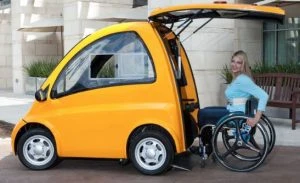
There are many wonderful people with some sort of physical disability that they’ve had since birth or from an incident later in life which caused the disability to come about. All are inspirational people.
Being allowed to drive when you are physically challenged offers you so much more independence and heaps more confidence. Driving offers a sense of freedom to do what you want whenever you can, so it gives you more opportunity to find a job and get to work, volunteer for others, and go to the other side of the continent solo, or with family and friends, when you want to just as you see fit.
Being physically challenged is on its own a significant hurdle to overcome on all fronts when it comes to being able to do life like a person with a fully functional body. There are many difficulties for a physically challenged person to deal with, and one of those is simply getting from Place A to Place B on time.
If you were/are a person with a physical disability who wants to be able to drive to your own Destination Freedom, then finding and owning the right vehicle that’s just right for you will be the first box to tick. Sometimes the vehicle may need to be modified to suit your own unique requirements. My Uncle Frank, a 2nd World War veteran who has since passed on, suffered a war injury from flying shrapnel. This brief fateful moment caused Uncle Frank to become paralysed in his left arm as well as partially in his left leg. He was still able to walk with a shuffle, drive a car (an always-shiny brown Toyota Corona) with an automatic gearbox, and give everyone a good laugh with his great sense of humour. A small bracket with a fixed swivelling knob was attached to the steering wheel of the car so that he could turn the car with ease, using his good hand and arm to steer.
Many other people have had accidents that even left them a paraplegic and confined to a wheelchair for mobility. Any accident can be life changing, none more so than a spinal cord injury. Yet still it is possible for these people to drive. A former New Zealand equestrian champion, Catriona Williams, who is now a tetraplegic after falling from her horse in 2002, still enjoys an independent life filled with fun. Enjoying adventurous road trips with family and friends is made possible with her modified Volkswagen Caravelle van, which has been set up for her to be able to drive securely from her wheelchair.
There are clever people who have the engineering skills enabling them to modify a vehicle for many people with physical challenges.
Some of the special equipment you can use to modify a vehicle include:
- Infrared remote control systems that enable easy access and operation of a vehicle from a wheelchair.
- Controllers for wheelchair movement (i.e. ‘Slip and Puff’ systems via sucking and blowing through a straw-like device.).
- Headrest indicators the indicators are activated by head movement on the head rest.
- Mini steering wheels that enable people with limited upper body strength to steer the car with ease.
- Joystick or foot steering, which can be combined for steering, acceleration, and braking.
- An array of hoists and roof racks for various reasons.
- Seatbelt modifications, harnesses, and special seating.
- A left foot accelerator pedal instead of a right foot one.
- Various hand controls that can of themselves incorporate up to seven unique functions – i.e., steering, high beam lights, horn, wipers, indicators etc.
These are just some of the possibilities. Pretty much any car can be modified, new or old. MPVs and vans are ideal for a person who is looking to drive the vehicle from their wheelchair. It’s awesome there are great opportunities out there for enhancing quality of life.
 Level 2, 9 Help Street