

Archive for 2022
Why You Need a Dashcam (or Two)
Consumer electronics are now embedded in just about every facet of our lives. From smartphones to tablets, watches, health monitoring devices, and much more – as technology has improved, each of these devices have gotten smaller, allowing them to play a day-to-day role in what we do. This has also extended to dashcams, which are now more common than not.
The Rise of Dashcams
Why is this particular piece of tech so important? In certain countries, circumventing the law is so commonplace that without hard evidence, motorists involved in an accident were engaged in “word against word” in order to prove their story.
Strangely enough, the use of dashcams have also provided us with footage of other incidents and events, such that they now play a much broader role in capturing things than originally intended. This has only fuelled their popularity, with online communities even sharing dashcam content with one another.

The Basics of Dashcams
Like just about everything these days, the more you spend, the better a product you’ll get. So when it comes to dashcams, which are video cameras affixed to your windscreen or dashboard, one of the first things you should focus on is the camera’s resolution.
Think of digital cameras like new televisions. The higher the amount of dots the camera will see, the better quality the footage. You’ll see terms like 720P, 1080P, and so on.
P stands for progressive, as in progressive scan – showing one line of picture after another. The numbers mean how many lines from top to bottom, as in 720 lines or 1080 lines. So 1080P means 1080 lines of picture information. You generally need to buy a memory card for storing video footage from your dashcam, and the more gigabytes, the more space you have to store footage.
Depending on the sophistication of the dashcam, it may record footage in one continual file, or break it down into smaller chunks. However, one you run out of space on the memory card, new footage should overwrite existing footage, starting with the oldest footage first.

How Dash Cams Function
Quite a few people buy two dashcams for their car – one for the front, and one for the back.
The benefits of this effectively boil down to the wider field of view you have, which in insurance terms, gives you more vision to prove your claims should you have an accident.
Take note, some cameras enter standby mode when you turn the engine off, before restarting when your car kicks back into gear.
If your dashcam is one of those that includes a speedometer reading – you typically need a GPS unit built-in – then this will provide you with even more data to justify any claims you might have.
The Bottom Line
It is a sad indictment of our society that dashcams are a necessity, rather than a luxury. But given the legal nature with which so many disputes are settled these days, and a general willingness for people to avoid responsibility, dashcams have become vital for the majority of drivers.
One upside, albeit unintended, is that car insurers are generally offering lower premiums due to the fact dashcams make it easier to conduct accident investigations and come to a conclusion.
Just make sure you do your research before buying a dashcam, which should save you time and money.
How Much is Too Much for EV Driving Range?

How long should an EV be able to travel on a full battery? ‘Neue Klasse’, from BMW, suggests that 1000 kilometres is about right. BMW’s New Class of vehicles are not far off the runway now, said to be arriving in 2025. And they are going to be the first BMWs-ever that have been designed from the ground up to be specifically all-electric, EV through-and-through.
That does raise an interesting question: How far should we expect our brand spanking new EVs to go on a full charge (a full tank of electrons instead of a full tank of gas)? Should we be able to drive from Sydney to Melbourne (877 km), Sydney to Adelaide (1374 km), Sydney to Cairns (2430 km), Sydney to Perth (3932 km), or just Sydney to Wollongong and back (about 175 km) on a full battery?
Most of us are probably sick of driving non-stop after 6–8 hours max in a day. So, say most of that was done at 100 km/h, then 100 × 8 hours would get you to 800 kilometres before you’d be needing a proper cup of coffee in a proper coffee cup! It would be then you’d want a rest and a sleep, right?
Perhaps Neue Klasse has got it bang on then. 1000 km would cover an all day blast up the coast from Sydney to Brisbane, which is approximately a total of 911 kilometres via the coastal route. Get to the end of that journey, and you could pull up at a mate’s place for tea, or a motel, and plug in your EV overnight ready for the long drive back home.
According to Thomas Albrecht (BMW’s head of Efficient Dynamics), in 2025, New Class EV BMWs are set to have “thirty-percent or more” range than what’s currently available now. That means that the brand-new BMW EV platform with lots of fresh pieces of technology, including 46 mm cylindrical battery cells, should push the Generation 6 batteries out to around 1000 km before they run out of electron juice. Even though BMW could go further than this 1000 kilometre range, Albrecht suggested that this would be the maximum that BMW will offer because they don’t think that such a long range is necessary.
BMW will debut the new Generation 6 batteries in the 2025 BMW 3 Series EV. How much do you think we should be able to get out of the battery packs in any new EV bought in 2025–2030? I’d be interested to know – remembering that battery tech and recharging times will likely have vastly improved by then.
Power Pole EV Charging Points
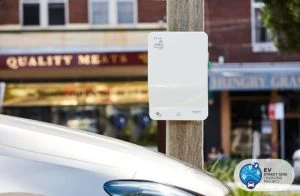
It is easy enough to transform your garage into a recharging point for your new electric vehicle (EV). There are other public recharging points around many of our main towns and cities now that are easily accessible. So, for a large number of relatively new EV owners, life is relatively straightforward when it comes to having to top up their EV with power. But what happens for those EV owners who live in an apartment that has no off-street parking or garaging for their car?
New commercial recharging stations of various types and in various situations are beginning to appear in Australia’s larger cities and their adjacent suburbs. You can find EV recharging points located at public buildings, service stations, kiosks, shopping centres, and even in an EV owner’s garage. The number and need for EV charging points is expected to undergo exponential growth as the demand for such recharging facilities grows along with uptake of EVs. Currently, one in four Australian households do not have off street parking. EV ownership for these people is a less attractive proposition. There is a need, therefore, to provide easy access to a recharging point for households who don’t have access to off street parking.
An Australian- and New Zealand-based utility services company called The Intellihub Group is in the business of providing innovative power metering and power data solutions to maximise digital and new energy services. One of the interesting projects that they currently on-the-go is providing power pole recharging for EVs. This is a perfect solution for the one in four households with no access to off street parking.
Intellihub is in the process of using local power poles in a trial for street-side recharging points, particularly catering to these less fortunate EV owners. According to Intellihub, there are significant gains to be made in the provision of these power pole recharging facilities for EV owners. Not only will the trial provide easy power access, but it will also help to understand the impact of EV chargers on the electricity network. Researchers will monitor how many people use the chargers during the trial and their impact on the electricity network.
Via the Australian Renewable Energy Agency (ARENA), $871,000 of Australian Government support has been given to Intellihub. Intellihub has contracted the first deployment of 50 EV chargers to be installed on street side power poles for a group of EV owners without off-street parking. These lucky EV owners live throughout New South Wales in either apartments, townhouses or units without any direct localized access to EV charging on-site.
The power pole project is a trial valued at $2.04 million, so it is also supported by Schneider Electric, the providers of the EV charging infrastructure and Electric Vehicle Supply Equipment (EVSE). Schneider Electric will manage the charging service for the trial. Origin Energy will ensure that 100% of all the energy required to charge the EVs in the trial project will be matched with the equivalent amount of certified renewable energy resources that will be added to the grid.
The idea of power pole charging an EV is not a uniquely Australian concept. Power pole charging is already being rolled out across the world. Some major global cities, including London, Toronto, Los Angeles, New York, and Hamburg are installing tens of thousands of power pole or streetlight EV chargers.
Power pole charging an EV in a city/town environment seems a rather straightforward solution to making living with an EV a whole lot easier. Intellihub CEO Wes Ballantine said: “It’s expected that as many as 10 per cent of new car sales in Australia will be electric vehicles by 2025. That equates to an extra 120,000 new EVs on our local streets each year. It’s likely that many of these car owners may be unable to charge their EVs from home. Power poles line most of our public streets and that presents an opportunity for the EV charging market. They’re an accessible, safe, and practical option for EV charging.”
The EV owners will use a third-party app to manage their recharging service. They will be able to get information about charging costs, time limits, billing, and other tools for interfacing with the electricity grid.
This is a big step towards a practical recharging infrastructure across Australia. It seems that owning an EV in a congested city/town environment might be getting a whole lot easier.
Can Road Accidents be Eliminated?
In recent years, car developments have largely upped the game when it comes to safety aids. From AEB being a standard inclusion nowadays, to other items like rear-cross traffic alerts, lane assist, and the like now being regular sights.
Manufacturers have focused on safety in an effort to appeal to more buyers, but also address the issue of fatalities on our roads. And for the large part, historically, auto makers have played a notable role in reducing the road toll. Further innovations and developments are now being spoken of to maintain this momentum, and possibly, eliminate accidents on our roads all together. But is this really possible?
Future ideas
There are no shortage of measures being designed as a direct response to car accidents. To name a few:
- Forward collision systems that detect an impending crash;
- Adaptive headlights which provide visibility around corners;
- Magnetic roads that ‘guide’ vehicles;
- Communicative vehicles that ‘speak’ with one another;
- And the most prominent innovation, fully autonomous vehicles
While each of these innovative measures could help reduce road casualties even further, there’s still a very obvious facet missing from the discussion here. That is, we seem to be doing everything to modify technology, but we’re not actually addressing driver behaviour. In fact, we’re looking to bypass the driver to achieve desired results. Is this really sustainable? Some of the early indications from autonomous vehicles are that they are far from perfect.
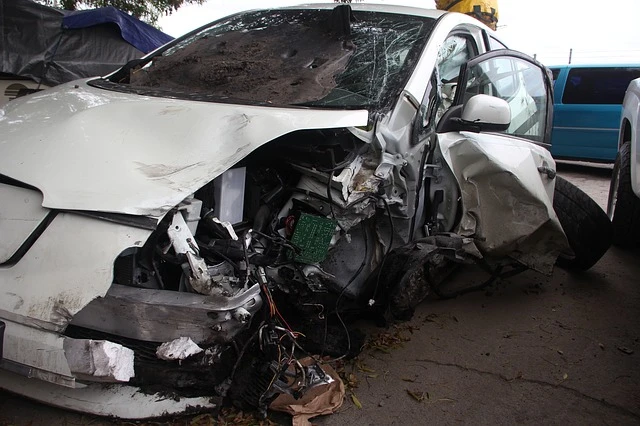
Equity and equality on the road?
Although making technological changes is all well and good, they introduce a disparity between road users. Those who are driving the latest cars equipped with such technology, and those who are holding onto older vehicles.
Even though many innovations eventually become mainstream across all levels of new vehicles, the time for this roll out is often such that new technology features come along. That is, by the time one feature becomes standard across all vehicles, the next ‘must have’ technology is being fitted into top of the line vehicles. Then the cycle continues.
We’re also not at a level where we can begin to depend on technology at all costs. That is, drivers should not be taught to become ‘dummies’ in their cars, oblivious to their surroundings. The fact is, things can, and sometimes do go wrong when technology is involved, and this is unlikely to be any different when installed in a car where external factors can cause a hazard.
This is where an emphasis needs to return to the person behind the wheel, who ultimately, can still cause an accident on our roads by way of being distracted, poor driving habits, a mistake, or through reckless actions. Today’s licencing requirements are indeed far too lenient. Sure, the burden has increased for new drivers who are on their P plates, but the focus is still misdirected.
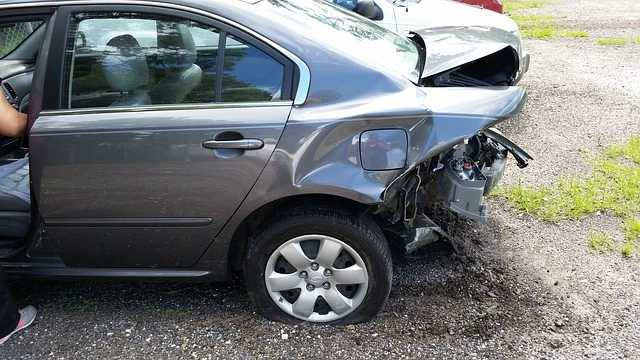
Improving new driver skills
It is important that new drivers are tested on their ability to drive cautiously and defensively on our roads. This is not a matter for dispute. However, reactive mechanisms have largely been overlooked. That is, if one finds themselves losing control of a vehicle, or in danger of causing an accident, drivers need to be equipped with the necessary motoring skills to avoid, or at least mitigate, the impact of a crash.
Therefore, as we proceed down the rabbit hole where we increasingly rely on technology doing all the driving for us, we need to be considerate about the impact this will have on driver behaviour. Technological developments will save countless lives, but until we also address the skills and mindset of the person behind the wheel, we’re still some time away from getting anywhere near zero road fatalities.
 Level 2, 9 Help Street