

Archive for 2022
Old Features We’re Happy (Or Maybe Not) to Say Goodbye To

A topic we were talking about the other day was about how the features in the cars we drive today differ from the cars of yesteryear. It was interesting discussing this subject because it made us more thankful for the newer vehicles that we can drive on the road. I love classic cars, even cars that were built a couple of decades ago, still believing that there is a place for them on our roads – especially with one or two upgrades that can be carried out on a classic, thus making them fit for today’s purpose. Here are just a few of the features that were raised:
Cigarette Lighters
A definite feature that we were happy to say goodbye to was the smelly old cigarette lighters, and their companion ash trays which inevitably broke or popped out of their position while travelling. And what about the burn holes in the seat fabric, the stains, and the stale cigarette smoke smell that got into all the interior fabric of the car? Saying goodbye to smoking inside cars is a feature that can stay dead and gone in my book. Vaping isn’t that much healthier either as they add more and more chemicals to the vape. Just thinking about the health issues that arise with inhaled cigarette smoke in a confined space – let alone for the person who does the lighting up – is enough for me to say “Good riddance”!
Manual Heating and Cooling System
Older cars had simpler manual switches and dials for heating up or cooling down the interior. I have to say that these work pretty well when combined with a nicely positioned open window and howling fans. That said, you could only cool the interior down to what temperature the air outside happened to be, so when the temperature soared to over 30°C, at best, this might be what you could cool the cabin down too. However, old school heating systems still heated up a cold cabin very easily – on most cars anyway –when heat from the engine could be blasted neatly through to the occupants inside the cabin area. Old systems are usually less expensive and easier to fix if they do go wrong – like when the fan unit wears out or the vents get blocked. That said, a cold air conditioning system blowing sweet icy-cold air into a cabin on a sweltering hot day is exceptionally nice and hard to beat!
ABS and ESC
The laws of physics can’t be messed with. Even a brand new car still has four wheels which can only grip onto the road as much as the pad of rubber that is in contact with the road will allow. Yes, the fancy ABS and ESC systems are awesome and definitely help save lives, especially in the wet, yet once these systems fail what happens next?
Power steering
Love this one!
Tape deck/CD players
Tapes did have a habit of getting chewed up in the head unit, especially when the favourite songs were played over and over again! I still like a good CD player. CD players work really well up until the little laser wears out as or the CD gets far too scratched because it was left on the floor of the car for two months with people accidentally stomping on it, before being rediscovered on car cleaning day.
Alternative Power for Motoring
Electric vehicles, hydrogen-powered vehicles, bio-fuelled vehicles, solar-powered vehicles, and they all have their place on the roads. The thing I like the most about them is that they lower poisonous emissions like carbon monoxide and nitrous oxides in a congested city environment. We all like to breathe clean air. Introduce them gradually, in a way that’s environmentally and ethically sustainable, and affordable for people to buy. Batteries still need lots of resources to make them, and cars aren’t the only things consuming precious metal for all the electronics and battery sysems. The tech for capturing harmful emissions from fossil fuels has also improved massively as well. Classic cars aren’t that hard to convert over to electric, and this could be encouraged and be much less expensive to do, not to mention sustainable.
Safety Ratings
Car safety ratings have improved out of this world! Thanks to the ongoing work and input of engineers and research, a modern day car is miles safer than an old one – especially if involved in a major accident. I’m always going to be thankful for seatbelts, airbags, crumple zones, more safety cage rigidity, and crumple zones. Buy a decent new car today, and it will come fully kitted out with all the latest active accident avoidance technology to keep you (the driver or passenger) safe as well as the other road user(s) around you at the time.
Book Maps
I still love a good paper map in booklet form. There is something about navigating old school that appeals to the challenge and satisfaction of getting yourself A to B while map-reading. There is more satisfaction gained by being involved rather than passively letting the GPS do all the work for you.
What have I missed?
Automotive Finance Tips for Private & Commercial Buyers
In the market for a new car? Buying for yourself or your business? In most cases, you’ll have to get a loan of some kind to finance it. Though it may be exciting to look at utes and cars to buy, saving money on finance can make all the difference to the bottom line. Here are some tips to finance your car, whether you’re a private or business buyer.

Setting a budget
You’ll need a clear idea of the sort of vehicle you’ll require for the job—or one that you want—as well as your budget. List your top priorities, including things like towing capability, safety features, fuel efficiency, and storage capacity.
You may now narrow down your selection of vehicles and determine how much you’ll need. This can also help when you’re looking for finance – knowing answers to your broker’s questions can be favourable.
New or used?
Buying new can actually mean lower interest rates due to the lower risk of the vehicle breaking down. Though it depreciates quickly, you can claim this back if you’re a business buyer. Used cars have lower prices but higher ongoing costs, such as maintenance and servicing.
Commercial finance – chattel mortgages
If you’re looking to get finance for a new work vehicle, a chattel mortgage (or hire purchase, which is similar) is the usual choice. A chattel mortgage is a business-oriented loan with tax perks and funding choices, suitable for financing your new car. For example, you can claim the GST, interest, and depreciation back.
Flexibility is its main virtue. A chattel mortgage might have a 12-month to 7-year loan period, or seasonal repayments as the case may be.
Next, you can finance more than the car’s value. Chattel mortgages let you to borrow additional money to pay for service, registration, insurance, and other expenses over time. This improves cash flow instead of paying for various on-road charges up front and using operational capital.
Chattel mortgages might have balloon payments, which reduces your repayments but requires a lump sum payment at the end of the loan.
More documentation may mean lower rates
If you can provide more documentation to support your application, brokers and lenders may pass on lower rates. This means demonstrating you’re a low risk – and lower risk means more competitive rates in kind. It may be worth gathering tax returns and profit and loss statements (or payslips) just for this purpose.
Loan pre-approval – your bargaining chip
You should also look into getting pre-approved for a car loan. This is the same as putting your car loan on hold until you find the right vehicle. Most brokers give you a month or two to find a car before you have to decide. It also gives you a price cap, which gives you an advantage with dealers or private sellers.
If you’re going to buy a used vehicle, it shows sellers you’re ready to buy (not just a tyre kicker.) With dealers, if you approach them right, you can get a car for your pre-approval amount – you can’t spend any more, so they have to meet your price. Dealers have to make sales – so use this to your advantage.
Remember, this advice is general in nature. Consult a financial adviser before taking on a loan of any kind.
Carbon Fibre’s use in Cars
It may come as no surprise to you that the amazingly strong and lightweight material – carbon fibre – has been used in some of the high-end sports cars and racing cars. Cars like the Koenigsegg Agera, the McLaren Senna, Porsche’s 918 Spyder, the Ferrari LaFerrari, Alfa Romeo’s 4C, and BMW’s i8 use a carbon-fibre monocoque body shell in their design. Even BMW’s recent i3 EV city car boasts a carbon-fibre monocoque cell.
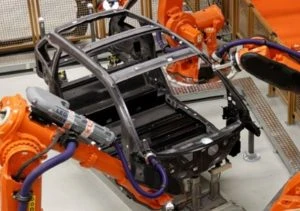
BMW i3
Of course, there are many pieces that make up a car’s whole, many of which there are components which can also be made up of carbon fibre, and these are actually more prevalent in different forms and measures throughout the motoring industry, particularly in high-end luxury cars. In some of BMW’s and Porsche’s latest premium cars, carbon fibre has been introduced in various arrangements within the vehicles’ body components. Obviously, the rarer the part, then it will have quite an expensive price tag attached.
Then there are multiple smaller workshops and larger businesses dedicated to creating special automobile parts and designs made from the composite material carbon fibre. Some of these components might be a certain air diffuser or spoiler to make the car look more aggressive or more aerodynamic. Some of these businesses even make carbon fibre interior wraps with a distinctive pattern to make an individual’s car stand out from the crowd.
So, what is carbon fibre?
A quick science lesson first to help us understand: Carbon is number six on the periodic table, and so the carbon atom consists of 6 protons, 6 neutrons, and 6 electrons. Two of the 6 electrons fill up an electron shell close to the carbon atom’s nucleus, while the other four electrons sit in a half empty electron shell around the outside. These electrons running about on the outside shell are known as valence electrons and are the key to carbon’s amazing and incredible properties. Any electrons in an atom’s outer shell are involved in taking part in forming chemical bonds. How many bonds these electrons are involved with depend on how much room there is in the outside shell. What makes carbon so amazing is that it has got space for four other electrons to make its outer shell full. This attribute makes carbon a four-way connector that can link atoms together.
A polymer is any material that is made of long, repeating chains of molecules. So, carbon can build up straight chains of carbon atoms, carbon chains with branches, and even carbon chains that are joined end to end to make loops! So, a carbon polymer is made up of chains and chains of carbon molecules that are linked up in a scaffolding-type structure. Carbon can bond to itself, but, when it doesn’t, the end of the carbon chains can terminate with other elemental atoms. For example, a carbon chain can finish up with a small hydrogen atom, which makes these chains slippery like in oils. Carbon chains can also connect to other groups of elements, making them a specific ‘functional group’, each group having a different chemical property.
Graphite is a crystalline form of the carbon element. Individual layers of graphite are some of the strongest structures that we know about in the universe. Carbon fibre material is made up of individual layers of graphite, which on their own are quite slippery. Carbon-fibre-reinforced polymer (CFRP) composites (also known as carbon-fibre laminates) are made up of woven layers of nearly pure carbon fibres that are bonded together by a hardened plastic like an epoxy resin. CFRP composites are therefore extremely strong and stiff.
A stretched carbon fibre is up to five times the strength of steel, as durable as steel, but only a quarter of steel’s density. Being this strong and much less dense than steel makes carbon fibre a lighter and stronger material than steel. On top of being extremely strong and lightweight, carbon fibre is also high in chemical resistance, has a high stiffness, has low thermal expansion, has a low weight to strength ratio, and is tolerant of excessive heat. These are the reasons why carbon fibre is so sought after in the motor racing arena and in high-grade luxury sports vehicles? These amazing properties make carbon fibre a very popular material for use in aerospace, military, recreational, as well as in automotive industry applications.
As CFRPs become more readily available, the trickle down effect will see it being more and more a part of a new mainstream motor vehicle, EVs included.
Travelling with a Roof-Top Tent

Got your trusty Outback or Forester, maybe a Patrol or even a new Cherokee? Then you’re likely ready for a bit of an adventure! Haven’t we got the country just for you? Australia is filled with many wonderful things to see, places to explore, and amazing wildlife and flora to enjoy. It’s surprising how many decent vehicles we can actually use to get around Australia; space and practicality being the main factors contributing to the type of vehicle we end up using.
Of course, the other factor will be how 4x4ish and AWDish you’ll want/need the vehicle to be – because the further you go off-road, then the more likely you’ll be driving an SUV with 4WD ability or even a true blue 4×4 brute to get you anywhere.
Next question I’d be asking would be: Will you want to be staying in motels and B&Bs, towing a caravan, or staying in a tent? If you want to ditch the vacancy/no-vacancy signs for a lot more freedom and a lower price tag, then caravanning and tenting are very decent options.
What I wanted to focus attention on was the types of tents that can be mounted on the roof of a vehicle. Roof-top tents are a means of accommodation that are great while you’re on the move around Australia. They keep you up off the ground and away from the creepy crawlies, or at least minimalizing their access! A pop-top roof tent is a neat and inexpensive way of giving you your sleeping space while travelling around Australia.
Some of the advantages of having a roof top tent include:
You can camp in as many places as your vehicle can take you – think off-road and a rugged 4×4 vehicle!
The roof-top tent is usually designed to be fast and easy set up and store away at a campsite. Usually, they can take as little as 1 – 5 minutes to set up. This is a brief!
The roof-top tent is off the ground, thus keeping you off the wet ground and mud, and away from insects, snakes, and other animals.
Many pop out roof-tents are designed with the mattress already included in the fold out design. This makes camping life even easier.
The biggest disadvantages of a fold out roof tent would include:
Older folk may struggle getting in and out of the tent via the ladder.
The tent’s maximum body capacity and height are limited, so there’s no way for you to stand up to your full height. You also won’t be able to hold a party of any great number inside.
Lifting the tent to the roof of the car can be a little more challenging depending on the set-up and weight involved.
Unfortunately, not every vehicle is made for carrying a hefty weight on the roof, and some simply cannot handle the additional weight. As a general rule of thumb, your car should have cargo racks and be able to withstand at least 80–100 kg of weight. They should accommodate for the weight of your tent and everyone inside. However, if you’re thinking of buying a four-person roof top tent, you’ll need a sturdier SUV or a pickup truck/ute. Some sedans and town cars may be able to handle one- or two-person pop-top roof tents.
Roof-top tents have been an Australia thing for many, many decades, but the first one was invented between 1957 and 1958 by Giuseppe Dionisio. Roof top tents are now available right around the world, and the variety of roof-top tent models is staggering.
For your first ever roof top tent experience, a softshell tent might be the best choice. It is lighter, cheaper, and more familiar to most people for setting up at a campsite. However, if you’re ready to go all in and have the money to spare, a hard shell roof top tent is a more luxurious (and usually more convenient) option.
Thule and Kings roof-top tents would be a great place to start if you want to take a look and try out the camping lifestyle with a view. Camping life with a bit of freedom is hard to beat!
 Level 2, 9 Help Street