

2017 Subaru BRZ: A Private Fleet Car Review.
The joint venture between Subaru and Toyota to produce a low slung, two door, coupe has been a raging success, in the form of the Toyota 86 and the Subaru BRZ. On Subaru’s side, with the car being the sole entry in an otherwise all wheel drive family, it’s been a standout. 2017 saw the single trim level car receive a mild refresh. The car itself remains largely untouched; there’s a sole powerplant choice, being Subaru’s own horizontally opposed four cylinder, and a choice of six speed manual or six speed auto. There’s slight differences between peak power and torque, depending on which transmission you choose, with either 152 kW or 147 kW and 212 Nm or 205 Nm available. It’s the torque figure that makes for curious reading, as peak twist is on between 6400 rpm to either 6600 or 6800 rpm.
  The engine is a snob, too, preferring 98 RON inside the 50L tank. Economy is rated at 8.4L/100 km on the combined cycle, a figure pretty well matched in the week long drive.That torque figure also belies the sheer tractability of the BRZ. It’ll rev happily to the redline figures, emitting a raspy snort somewhat at odds with the note you’d expect from a the boxer four. The gearing is such that although the PEAK torque is well over 6000, there’s plenty enough below for the BRZ to use it and use it well enough to see a zero to one hundred time of 7.4 to 8.2 seconds. The short throw, snicky, gear lever aids in this, making each gear just that much more accessible to the torque. It kinda helps that there’s less than 1300 kilos (dry) to get moving…
 There’s no change to the excellent ride, progressive and communicate braking, and handling either, with the BRZ willing to cock a rear corner when pushed yet still provide a comfortable enough ride from the MacPherson strut front and double wishbone rear suspension across a variety of road surfaces. On western Sydney’s mix of freeway and highway and residential roads, the BRZ varied between ignoring the various surface imperfections to feeling mildly unsettled without losing composure. The steering rack is also “fast” with instant response and a tight turn to lock either side, making for a real connection between driver and car. There’s skinnyish 215/45/17 Michelin tyres which, when combined with some exuberant driving (legally, of course) will have the car’s rear end liven up, skip around, feel like it’s about to break loose, and brings a smile to a driver’s dial.
 Getting in and out is still an issue, one that is not avoidable due to the low height. The roof is just 1320 mm above the tarmac, with the driver pretty much in the middle of the 2570 mm wheelbase, aiding the weight distribution and handling. With an overall length of 4240 mm it’s not the longest car in the world but with that wheelbase leaving around just 700 mm either end, it’s a long and lowish profile to drink in with the eyes.
There’s a bonnet longer than a boring conversation, a roof with a flattened vee for aero before sloping down to the new LED tail lights (which match the LED driving lights up front in Subaru’s current C shape ethos) and the stubby tail which hides the 218 litre cargo space and the space saver tyre.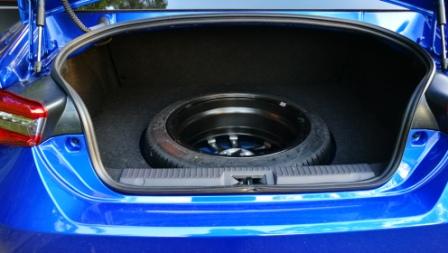 Inside…well, it’s a different story. There’s a mix of nice and not-so, with retro look tabs for the aircon, ill fitting soft touch material in the upper dash, a typical Toyota inspired blocky look to the actual dash fascia, mixed in with a simple to use yet effective touchscreen at 6.2 inches in size, backing up the 4.2 inch LCD screen embedded behind the speed and tacho dials. The sports seats are well bolstered, covered in grey and black material, and the driver gets alloy pedals for the sporting look. There’s auto self levelling headlights, steering wheel mounted Bluetooth audio controls, 2 12 volt sockets, and there’s a CD player also.
 No, there’s no room for adults behind the driver and passenger; it’s hard enough for the slide and tilt mechanism to cope with two children so adults genuinely have no hope. Even for a normal height driver, the gap between the front and rear seat makes it essentially unsafe to consider throwing anyone under 12 inches in height in the back. Although there’s the familiar (to anyone that’s had a two door car) pull strap to fold the upper seat section and slide the lower section forward, there’s just not enough leg room behind the two seats at all for genuine safety for the rear seat passengers.
 Warranty is Subaru’s standard three year/unlimited kilometre coverage, with 12 months road side assistance and the three year/60000 kilometre capped price servicing as well.
At The End Of The Drive.
Subaru lists the manual BRZ at $32990 plus ORCs, with the auto two thousand more. There’s a reasonable amount of standard equipment, enough to satisfy most in the hunt for a driver’s car and that’s the crux. It IS a driver’s car, especially with a manual transmission. It’s tightly sprung yet not so to be a teeth rattler. It’s snug inside and seriously not to be considered a family car…but you knew that, right?
For more details, head on over to here: 2017 Subaru BRZ
Hyundai and carsales Join To Clear Hail Damaged Stock.
Here at Private Fleet, we understand that shopping for a new car can be a minefield. There’s the sitting down and thinking about what kind of car you need: do I need a people mover, a sedan, a wagon? Will a diesel be better for me than the petrol? What about the servicing costs and what about the price?
Private Fleet is dedicated to helping YOU buy a new car and receiving the best price AND customer service that we can offer. But we also recognise that sometimes it’s a better thing to do by going outside the box in helping our customers find a bargain. A major competitor has something we think is pretty special, so in the interests of looking after you in finding a new car and knowing you’ll consider us for the NEXT car, we’d like to share this.
Why Driverless Technology In Cars Isn’t The Same As Autopilot Systems In Planes
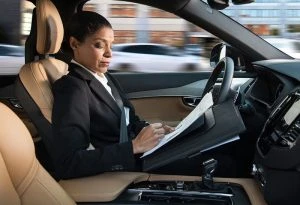 One of the more interesting and exciting developments in the world of automotive technology these days is all the research into autonomous cars (aka driverless cars or self-driving cars). They’re really trying hard to develop these and get them working. In fact, one recent news report claimed that Volvo is looking for 100 volunteers from the industry’s home town of Gothenburg to commute to work for a year in prototype driverless cars – along a selected route that don’t have bikes, pedestrians or snow. That last factor might be a bit of a challenge in Sweden: Gothenburg may have a warm climate compared to the rest of Sweden but still gets an average of 10 snowy days per month during December and January, snowfalls possible from November to April, and had a record number of snowy days in 2016.
The drive (ha ha) behind driverless cars is to eliminate one of the main causes of accidents: human error. Humans make dumb decisions, forget the road code, have attention that wanders or gets distracted, get tired and get frazzled. Humans also like drinking alcohol. Computers don’t get drunk, etc. so the thinking is that if you can get a computer to take over a lot of the decision-making with a system that can calculate distances and speeds precisely, never forgets the highway code, doesn’t get tired and doesn’t start planning dinner in the middle of the commute. Therefore, a car that uses automated systems will be safer, as the human error is eliminated.
2017 Toyota C-HR Koba: A Private Fleet Car Review.
 Toyota is responsible, some say to blame, for the SUV “craze”, after releasing the RAV4 in the mid 1990s. Just over twenty years later, Toyota has released what could be seen as the spiritual successor to the RAV4 if that car was to be released as a brand new car. A Wheel Thing looks at the edgy and funky Toyota C-HR.
C-HR stands for Coupe-High Rider. In profile there’s a distinct look of coupe, with a blunt nose, lonnnng headlights (950 mm thank you muchly), a steep arc to both front and rear glass, and a hidden rear door handle just visible. There’s a specific design ethos to the C-HR also, that of a diamond motif. There’s two massive crease lines that join front and rear, plunging sharply from the front and rear wheel arches, joining as a single line towards the bottom of the doors, and mirroring the angles seen from windscreen to roof to rear window. There’s black polyurethane at door’s bottom which echoes the roof line as well. It’s edgy, unusual, and in the eyes of the beholder for whether it works. It’s at the rear that you’ll see just who the C-HR is targeted at, if the name wasn’t enough to give it away. There’s more than a resemblance to a same segment vehicle from another Japanese maker, down to the hard, flat edged, tail light design. It’s busy, fussy, and with the strongly defined C shaped tail light design, just somewhat overdone and hides the supposed diamond look to the point it’s invisible. It also somehow manages to make the overall 1795 mm width look lost.
 What’s also lost is luggage space. With the rear seats up there’s a single person’s 377 litres, however that climbs to 1112L with flat rear seats. the rear seat passengers also have a compromided position; look left or right and you’re looking at the inside of the sharply angled rear door line. The seats are perched gher than the front’s by a considerable margin, leaving rear seat passengers looking over the shoulders of the front seats.
 Level 2, 9 Help Street