

2018 Kia Stinger Si V6 and GT-Line Turbo Four: Car Review
There’s been few cars released into the automotive market that have divided opinions as much as the new 2018 Kia Stinger. Available in three trim levels and with a choice of two engines mated to the single transmission offered, an eight speed auto, the Stinger spent a fortnight with me, in V6 twin turbo Si and top of the range GT-Line turbo four.
 The Si sits in the middle of the V6 range and is priced at $55990 plus on roads and options. The GT-Line with the turbo four is the same price and came clad in a gorgeous $695 option Snow White Pearl paint. There’s the standard seven year warranty and capped price servicing over the seven years, with the V6 being a total of $221 over the turbo 4.
 The V6 is the driver’s pick and backing up the four straight after sees it suffer in comparison. The 3.3L capacity V6 has a peak power figure of 272 kW at 6000 rpm and a monstrous 510 Nm of torque from 1300 to 4500. The four in comparison is 182 kW at 6200 rpm, and maxes out a torque figure of 353 Nm between 1400 to 4000 rpm. Although the V6 has a tare weight of 1780 kilos versus the four’s 1693 kg, it gets away cleaner and quicker, overtakes quicker, and will comfortably beat the four to the ton. Surprisingly, the required fuel is standard ULP and comes from a 60L tank.
Consumption is quoted for the V6 as 10.2L/14.9L/7.5L per hundred for the combined/urban/highway. The four isn’t much better, at 8.8L/12.7L/6.5L. AWT’s final figure for the six was 11.6L/100 km and for the four a slightly more reasonable 9.3L. These figures are slightly disturbing, in all honesty, as they’re more or less line-ball with the V8 engine seen in Holden’s VF Commodore and over the slightly bigger naturally aspirated 3.6L V6. There is a trade-off for that consumption and in the case of the V6 it’s the extraordinary driveability it offers. Off the line, and bear in mind it does offer Launch Control, it’ll see the 100 kmh mark in a quoted 4.9 seconds. There’s absolutely no doubt in that claim apart from a possibility it’s conservative. On a 48 hour trip to Dubbo in the central west of New South Wales, those 510 torques were so very useable in overtaking, with times to get up and pass and doing so safely compressed thanks to that torque.

 By having such an amount available through so many revs makes general, every day, driving unbelievably easy, with such a docile nature it’ll happily potter around the suburbs as easily as it will stretch its legs out in the country. The throttle setup is responsive to a thought, and there’s a real sense of urgency in how it all happens. There’s a bi-modal exhaust and this cracks a valve in the rear pipes allowing a genuine crackle and snarl from over 2500. Otherwise it’s a vacuum cleaner like woofle that can become wearying very quickly.
 The four, as mentioned, suffers in comparison, lacking the outright flexibility the bigger engine has. Note: “in comparison”. On its own the 2.0L turbo four, as found in the Optima GT and the sibling Sonata from Hyundai, is a belter. Paired against the big brother 330 it is slightly slower, slightly less able, slightly less quick to get going from a good prod of the go pedal as it waits for the turbo to spool up. Overseas markets do get a diesel and this is potentially the engine that Kia should replace the petrol four with. As long, as long, as it offers comparable performance to the V6.
Is The Speed Limit Outdated?
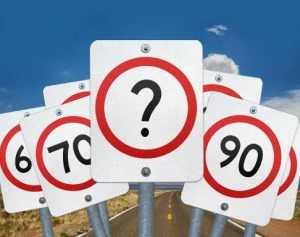 It’s been argued that because today’s cars and today’s roads are better and safer than they used to be, the old speed limits ought to be raised to reflect this. After all, they’ve got a limit of 130 km/h in some bits of Northern Territory (which, incidentally, came in about 10 years ago after having no speed restriction at all – road safety was cited as the reason for introducing limits). Why shouldn’t the rest of the country get a higher speed limit?
We’ve probably all experienced the situation when road signs seem hopelessly out of date when approaching a corner that has one of those advisory speed limits. You know the ones – those yellow signs with a number that usually accompany a curvy arrow indicating a bend in the road ahead. The number is supposed to be the speed at which you can safely go around the corner. However, in practice, we know that you don’t really actually HAVE to go at 55 km/h around a corner that’s marked 55. If your tires are in good nick and if there isn’t anything nasty on the roads (oil, water, gravel, ice, etc.) and if your car has reasonably good handling, then you can go around the corner at a somewhat higher speed. Not the full open road limit, of course – if you kept sailing around the corner at 100 km/h, you probably would come to grief and end up in the ditch. But you don’t need to slow down to 55 km/h.
Speed Doesn’t Kill People; People Kill People (aka There Are No Bad Speeds, Just Bad Driving)
In the past fortnight, I’ve seen the results of two smashes on the open road, one at least of which left a driver with serious injuries. In one, a late-model SUV had been driving in a downpour and had rolled completely onto its side, collecting another vehicle in the process. In another – the more serious of the two, where I and my family were some of the first people on the scene and hung around with a bunch of others to help before the emergency services arrived – a fairly new Mini (probably a JCW Clubman ) had drifted across the centre line on the open road and gone straight into an older Mitsubishi campervan. Both cars were a real mess, although the driver of the campervan was in better shape and was able to walk away from the accident, albeit with a nasty bruise on the leg that made her limp and a few cuts from broken glass (I know this because I was the one who did the first aid check on her). The driver of the Mini was trapped under a caved-in windscreen and was screaming her head off (we found out later she had a badly broken arm and possibly some internal injuries). The campervan was in pieces and there was diesel (thank heavens it wasn’t the more inflammable petrol!) all over the road. It was traumatic enough for me and my family, who had been setting off for a quiet weekend away. It was worse for the two drivers concerned and their passengers.
 How do we get the road toll down? Is the answer to reduce the speed limit?
Air, Apparent.
A band called “The Hollies” released a song in the mid 1970s called “(All I Need Is)The Air That I Breathe“. We humans breathe air. It’s made up of 78% nitrogen which is an inert (doesn’t react with anything) gas, oxygen at 21%, 0.93% argon and various other gases. CO2 or carbon dioxide is measured to be around 0.04%. It’s the oxygen and CO2 that we carbon based lifeforms worry about the most. But what does it mean when it comes to those other living, breathing things called cars?
Bugger all actually. Cars breathe in air via intakes or through air filters in pre- fuel injected cars via carbies. At the other end comes out CO2 and a smattering of other gases, and that’s the cycle of life. BUT, have you ever tried to push a car with a flat tyre? Yup, air inside comes out and makes rolling a car near nigh impossible. So we fill them with air and away we go.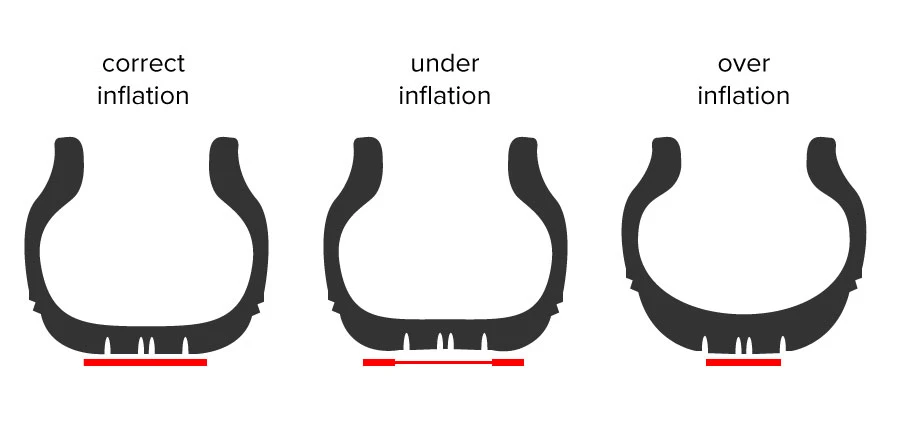 Air, I hear you ask? But that nice man at the service and tyre shop said I should get nitrogen in my tyres, right? Well, in a way, by using air you’ve already got nitrogen. 80%, remember?
But he said it’ll reduce wear and tear on my tyres? Well, no. The biggest cause of wear and tear on tyres is how we drive the cars that use them. If we also don’t check the pressures, so if the tyres are over or under inflated, either of these contributes to wear and tear. When air goes in (80% nitrogen, remember) and the pressures are right, then wear and tear should only be dependent on how you drive.
 Level 2, 9 Help Street