

2018 Holden ZB Commodore RS: Private Fleet Car Review.
In November 1948 a car was unveiled in Australia by the then Prime Minister, Ben Chifley, in front of 400 guests. Called the 48-215, marketed simply as the “Holden”, and popularly known as the “FX” the car had a 45kW 2171cc straight six and had a design from America’s Chevrolet. Thirty years later, in October 1978, Holden showed off for the first time the Opel Rekord and Opel Senator based VB Commodore. It’s now a nameplate that’s firmly entrenched in the annals of Australian automotive manufacturing history. In late 2017 Holden ceased manufacturing and unveiled its Opel sourced new Commodore. With a nod to history, its designation is ZB. It’s fair to say that it’s a car that has divided followers of the Holden brand, primarily due to a change in platform. It’s no longer available in rear wheel drive, now being front and all wheel drive. There’s no ute, nor is there a V8. There’s a turbocharged four cylinder petrol and diesel engine, turbocharged V6 engine, nine speed automatic transmissions, a slightly smaller body, and it’s a hatchback. Yes, a wagon, known now as the Tourer, stays. And our familiar designations have largely disappeared. It’s also highly likely that the ZB will be, in effect, a stand alone model in the history of Commodore, as Opel was bought by Groupe PSA in 2017 and with a mooted change to the platforms used by that organisation.
I, with a decades long personal association with Holden going back to the early 1970s and a HT Kingswood, became possibly the first fully independent car reviewer to drive the ZB Commodore, in second level RS sedan/liftback trim. Priced at $37,290 RRP it’s available at a driveaway price on promotion at just $38,990 for the liftback. The V6 AWD platform and front suspension are also available as an option at $42,490 driveaway. It’s fitted with the turbo four cylinder petrol, with 191kW of peak power and 350Nm of peak torque between 3000 and 4000 rpm. The nine speed auto is the first time such a transmission has been seen for Commodore and it’s a pearler. Combined with a instantly responsive throttle, it switches between gears as cleanly and as smoothly as one could wish for. In fact it’s so smooth as to be forgotten that it’s there. Holden’s engineering team have spent a great deal of time calibrating the two and it shows. There’s no indecision, no dithering, it’s always in the right gear for the rev range.
2019 Lamborghini Urus Unveiled For Australia.
Lamborghini‘s long awaited SSUV or Super Sport Utility Vehicle, the Urus, was unveiled to media in Sydney’s Barangaroo district today (March 13, 2018). For the Australian market it will be priced from $390,000 (with GST and LCT included) plus on road costs. Weighing less than 2250kg, it will boast a V8 of 4.0L capacity, twin turbos which will give the engine 478kW and 850Nm of peak torque at 2250rpm, all wheel steer, and should see the ton in 3.6 seconds on its way to a top speed of 305 km/h. Lamborghini video 1 Lamborghini video 2
As expected, it’s a technological showcase. The DOHC engine features cylinder deactivation, twin scroll turbos, and is bolted to an eight speed automatic transmission. A all wheel drive system is capable of splittling torque from up to 70% to the front wheels to 87% to the back wheels. In normal driving it’s 40/60 front to rear. Torque vectoring is built in and works with the selectable driving modes to apportion torque where and as needed. Operated via a smart looking “tamburo” selector switch, there’s Strada, Terra (off-road), Neve (snow), Sabbia (sand), Sport, and Corsa. Depending on which driving mode is selected, the vectoring system on the 3003mm wheelbase will reduce or add grip, provide more or less oversteer as required, and cpmbines with the rear wheel steering system to provide sporting or agile driving experiences. The rear itself will move at + or – three degrees and will have all four wheels pointing in the same or opposite directions (in-phase or counter-phase) depending on speed.Lamborghini’s DNA shines through in smaller uet as important details, such as the exhaust note. Again it’s speed and drive mode dependent. In Strada it’s quiet, almost a background thrum. In Corsa it’ll be a more sonorous and guttural note emitted through the bespoke outlet system.
 The “tamburo” (or drum) selector dial allows a progressive move through the various modes and cycles through top to bottom before returning to the top as the selector lever is moved. It’s joined with the air suspension system to have each mode lift or lower the ride height to suit. It’s an adjustable system that can be left in Anima or automatic mode. Or the driver can select Ego to adjust manually.
 Underneath its angular, aerodynamically tuned, exterior is a mix of steel and aluminuim for the chassis. The cross members are light weight, as are the door frames, plus the front axle is bolted to an aluminuim subframe. The rear is a mix of aluminuim and steel in a cell structure, with all four corners rolling on 21 to 23 inch forged aluminuim with a choice of season suiting tyres. Inside are Carbon Ceramic brakes at 440 x 40 mm at the front, and 370 x 30 mm at the rear.
 The interior is beautifully appointed and includes a pair of super clear touchscreens, a four channel eight speaker sound system, with a 1700 watt B&O system and 21 speakers an option, aluminuim framed seats, Apple CarPlay and Android Auto, Bluetooth media streaming, and a DVD player. A DAB tuner and TV tuner are optional extras.
 Exterior design reflects the DNA of Lamborghini. It has short overhangs, a muscular stance, broad rear haunches, and a roof line that slides down into the LED tail lights. Up front is a deep set spoiler with air-inlets that almost but not quite dominate the view. Also up front is that powerplant, the first front engined Lamborghini for quite some time. From above, the lines draw the eye towards the somewhat piched waistline before spreading out to highlight the tail lights and and rear panels.
 Orders for the Lamborghini Urus are being taken now for deliveries in late 2018 or early 2019.

2018 Haval H2: Private Fleet Car Review.
It’s fair to say that the Chinese company Haval doesn’t have a widely known presence in Australia. There’s some advertising on TV in early 2018 to let people know of the four model range, including the H2. It’s not unhandsome to look at, not bad to be in, and is well priced and equipped. But yes, there’s a but…. In profile there’s little doubt that the H2 is aiming at BMW, with an X1 or X2 presence. And this comes as no surprise as the designer is one Pierre Leclercq, the former head of design at…BMW. Inside it’s Range Rover’s tidy lidy Evoque, with a slightly overdone silver-grey plastic trim that won’t be to everyone’s taste. It’s cloth on the seats, comfortable, but set perhaps a little too high, which also brings in the high roofed resemblance to the Beemers.
 It’s well proportioned, and in the test car’s pearlescent white, looks good in the drive. There’s low-set LED driving lights, LED indicators, and distinctive Haval badged four bar grill, and BMW-esque tail lights in the non-powered tailgate.
 Motorvation is courtesy of a 1.5L turbocharged petrol engine with a rated fuel economy for the auto of 9.0L per 100 kilometres on the combined cycle. We finished at 8.5L/100km on a mainly suburban run. It does feel like it needs a bigger tank as it was on 1/4 to go with just under 400km covered. Peak power is 110kW at a typical small four 5600rpm. Peak torque is 210Nm between 2200-4500rpm.
  In comparison, the Holden Equinox with the same tech and capacity pumps 275Nm between 2000-4000. The Equinox tested had a six speed auto, the H2 also had a six speed auto. However there’s more to the Haval’s engine and gearbox combo than simply a comparitive dearth of torque.
It’s indecisive in its power delivery; sometimes first and second saw moving from standstill quicker than other times, particularly in a straight line move as opposed to off the line from a corner. There’s significant turbo lag at best, and a lag of urge in third or fourth in the same rev range where you’d have some pull below or above those ratios. Mash the pedal and although well within the torque band, forward motion was slower than the Titanic where she is now. Yet, at other times, the slightest touch of the pedal would see the H2 respond appropriately.
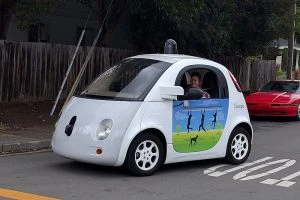
The Pros and Cons of Driverless Cars
In any discussion of road safety and keeping crash-related deaths down, you’re always going to come back to the human factor. Most times, people doing silly things are what cause crashes, whether the silly thing is misjudging the speed to take a corner at in the wet, reading a text message while driving and not noticing that the car is drifting, or getting behind the wheel when a bit tiddly. Is the answer then to eliminate the human factor altogether and adopt driverless cars, much in the same way that aircraft have adopted autopilot systems?
 Level 2, 9 Help Street