

Nissan X-Trail ST-L Petrol 7 Seater & TL Diesel 5 Seater AWD.
Twin Peaks.
Nissan is in the midst of both a SUV driven renaissance and some healthy sales. The X-Trail is at the heart of this and leads in a updated Qashqai due soon. I spend some time with the (almost) top of the tree X-Trail ST-L seven seater with the petrol engine and X-Trail TL diesel AWD.
 The seven seater ST-L sits one level below the top of the ST ladder, with the ST-L 4WD at the peak. The TL diesel AWD caps the TL range. There’s a choice of 2.0L or 2.5L petrol engines depending on the trim level in the ST. The 2.5L pumps out 126kW and 226Nm, at 6000 and 4400rpm. There’s 130kW and a very decent 380Nm from the 2.0L diesel, at 3750 and 2000rpm.
 Transmission for both is a CVT (Continually Variable Transmission) and as usual seems to sap the energy of relatively low torque petrol engines. Nissan’s not alone in this. The diesel is better but suffers from lag from idle. Tank capacity is 60L each. Consumption for the diesel is rated at 6.1L/100 km and the 2.5L petrol at 8.3L/100 km, both for the combined cycle. AWT pretty much matched the petrol figure at 8.5L/100 km. That’s reasonable for both considering the 1534kg and 1664kg tare weights.
 The petrol’s acceleration is leisurely in comparison to the diesel, even allowing for the diesel’s time to spool up into its torque range. However, the petrol is more linear, being a constant ramp up as opposed to the slightly more “build then bang” of the diesel. And although both are front wheel drive oriented, with the diesel being a switchable to Auto or All Wheel Drive, there’s little to no noticeable torque steer. That’s impressive more so in the diesel given the rev point when max torque takes effect. Once on song the diesel is a cracker and pulls the TL nicely, if with a bit more chatter than expected from modern diesels.
 The transmission is programmed with seven ratios and is quite effective in engine braking on a downhill run, and occasionally needed a nudge into Sports mode in order to drop the revs and ratio down. However the diesel’s transmission had an odd whine and a feeling of being held back, almost as if the parking brake was engaged.
Ride and handling varied between the two, with the steering in the ST-L feeling overly light, overly assisted. There’s less assistance and a more weighty feeling in the TL diesel. Actual ride comfort was almost identical, with the ST-L feeling just that SLIGHTLY less tied down, with a fraction more float and rebound. The TL diesel’s suspension is built with soft- and off-roading in mind and feels more composed and confident. The undulations found in Sydney’s freeways see both damp down quicker than other SUVs, with far less float and rebound than many other brands observed. Turn in and turning circle are better than Holden’s new Equinox, meaning shopping centre carpark living will be easier. That’s the trade off for the assistance.
 The exterior bears almost no resemblance to the X-Trail released in the late noughties. It features the new deep V nose cone now seen across the Nissan range, and a flowing, organic, set of sinuous curves from the front to rear. There’s angular headlight clusters, ineffective indicator lamps buried deep into the bottom corners near the grille, beautifully sculpted LED tail lights and a power tail gate in the TL. The ST-L rolls on 225/65/17 rubber encased in simple yet stylish ten spoke “tuning fork” alloys, the TL 225/55/19 with black painted machined alloys.
 Inside it’s a mixed reception. Overall fit and finish and trim appeal was high but visual appeal is an independent thing. Although of a rounded and mainly ergonomic design, the X-Trail’s interior from the driver’s perspective doesn’t quite feel as fresh as it could. There’s a tight gap between door trim and arm when reaching down to adjust the electric seats, the seven inch main touchscreen is a dull and uninspired design for the audio (DAB only found in ST-L and TL with Bose speakers), the driver’s info screen is a sad looking mauve and dotted affair.
 However, they are at least easy to read and use. The reverse camera is crisp and in both had a superimposed top-down 360 degree view. There’s a glass roof fitted in the TL. Oh, and those door arms have no grip handle where you’d expect to find them, but have a handle at a difficult fulcrum point. And there’s no wireless charging pad either…


 The seats themselves were spot on for support and comfort in both TL and ST-L however the rear pews in the ST-L are utterly compromised by the relative lack of useable space and can’t be recommended for anything other than short journeys. There’s heating (no venting) for the front seats in the ST-L and for front and second row in the TL. The TL’s rear space features two removeable cloth covered sections that reveal a plastic tub, one thats more user friendly for dirt work and for shopping.


 Capacity is 445L for the 7 seater, and the TL has 945L with the second row folded flat. The popular venting for cooling cans and bottles remains, with the centre console featuring room for two items side by side. The dash in the TL is of a more higher quality to look at, especially in the touchscreen surround, and both cars have analogue dials still for the speed and rev counter.
 Both review cars came fitted with a towbar ($1120 option) and the ST-L with a non-descript plastic nudge-bar (a $1200 option) at the front. The TL had a switch for trailer braking fitted in a cluster near where the driver’s right knee would be to assist in towing braking. The cluster also included an Eco on/off, stability/traction control on/off, and a switch for a heated steering wheel. There’s also a button for the rear powered tail gate.
 There’s plenty of standard equipment in both and across the range. Auto headlights, powered mirrors, sliding second row seats, Bluetooth streaming are common throughout teh range, with the ST-L and TL receiving Blind Spot Warning and Rear Cross Traffic Alert. Lane Departure Warning is standard on the TL and is somewhat sensitive, seeming to go off if you looked at the white or dotted lines.At the time of writing Nissan Australia was offering some sharp driveaway deals; the ST-L seven seater was $40817 for a 2018 model and $51192 for the diesel TL AWD. Naturally, these are subject to change so please check with your local Nissan dealer or enquire via 2017/2018 Nissan X-Trail info
Warranty is the standard three years or one hundred thousand kilometres and there’s a better than others three years roadside assistance package on offer.
Jaguar Ups The Pace.
Get used to that word. Pace. It’s part of the Jaguar triple play. Grace, space, and pace. There’s the F-Pace, a sharp looking four door mid sized SUV, and now there’s the E-Pace and I-Pace. Both are SUVs and both showcase what modern Jaguar is all about.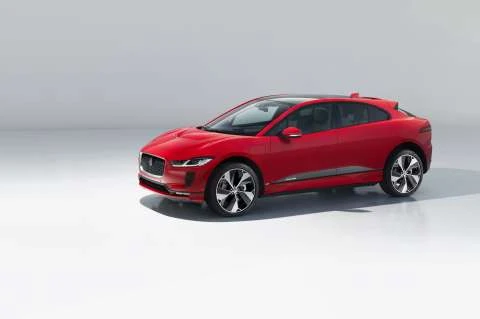
I-Pace.
It’s power to the people with the I-Pace being Jaguar’s first foray into fully electric mainstream driveability. Priced from $119000 plus on roads it showcases Jaguar’s own innovative approach as well, and here how.
Driven To Distraction
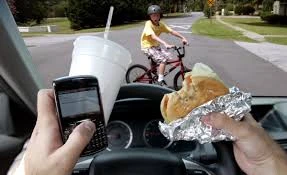
OK, so they’re cracking down on people using cellphones in cars as well as cracking down on high speeds and breaking the speed limit. Here, you’ve got to admit that there’s some justification for doing this. After all, if someone’s got their eyes and fingers all over the phone, he or she is paying less attention to the road ahead and what their vehicle’s doing.
Private Fleet Car Review: 2018 Holden Equinox LTZ-V
As Holden transitions from a builder to an importer, an important part of the plan to do so successfully is to increase and improve its model range. The new Commodore is being rolled out, the new Astra sedan and hatch is in showrooms and the long serving Captiva is slowly being wound back as the new nameplate for the mid sized SUV takes over. Here is the 2018 Holden Equinox LTZ-V. The five model range starts with the LS. With the manual it kicks off the range at $27990 RRP (plus ORC). It’s $2000 for the auto. The LS+ is a $3000 premium over the LS and the first of the LT range at $36990. The LTZ/LTZ-V are $39990 and $46290 respectively. The AWD option on the LTZ is an extra $4300 however it’s standard on the LTZ-V and selected via a button in the front centre console.
 It’s a choice of two engines available. Both have a turbo and are a 1.5L or 2.0L capacity. A diesel is due later in 2018. The 1.5L will be found in the LS and LS+ with the 2.0L servicing the LT range. The LTs come with a nine speed auto as standard with the LS getting a six speed manual and auto.
 The auto has no paddle shifters nor side movement for manual changing. The selector in the LTZ-V has a + and – rocker switch on the top of the rather long throw selector. Holden say the Equinox should see the ton in around seven seconds. It’s slick and smooth under most driving situations however was caught out sometimes from start, with hesitant, jerking, unsure decisions initially.
The 2.0L produces 188kW and 353 torques with that peak torque on tap between 2500 – 4500 rpm. The 1.5L isn’t far off with 127kW and 275Nm. The preferred tipple of the 2.0L is 95RON. Combined fuel consumption is quoted as 8.4L/100km from the 59L tank in the LTZ-V. It’s 55L in the others. Economy finished at 9.0L/100 km.The LTZ-V gets plenty of high level tech and comes well loaded with standard equipment. However there’s really not that much to differentiate between it and the other LT models. A full length glass roof is one obvious difference. Driver friendly Advanced Park Assist in the LTZ and V is another. Auto levelling LED headlamps, LED tail lights, remote engine start (all LT models) and chrome roofrails complete that. The roof itself is moved via two tabs and they don’t have the same edge feel to know when you’ve got hold of them.
 The interior of the LTZ-V is a nice place with heating AND venting for both leather front seats. They look a little slabby but aren’t noticeable in lacking support. Surprisingly, gratefully, they’re there for the rear leather clad seats too with rear seat passengers getting a pair of USB ports, a 12V socket, rear air vents and a 230V socket. It’s of a different configuration than the Aussie 240V sockets so a converter for anything like a portable fridge will be needed.
 Full colour LCD screens greet the driver and passengers in the LTZ-V and light up in vivid blue. It’s a dash mounted eight inch touchscreen with Holden’s MyLink system on board for apps and entertainment, including a Bose speaker system to complement the DAB audio and Apple CarPlay/Android Auto. The layout is clean and usage is largely intuitive. The sound itself is as expected from Bose and the sensitivity of the DAB tuner is better than that found in Kia’s Stinger. The upper dash is also Euro influenced, with the sweeping arc that runs from door to door and stitched soft material look and feel. There’s even a notch in the front console for wireless smartphone charging for compatible handsets.
 Level 2, 9 Help Street