

Private Fleet Car Review: 2019 Kia Optima Si
Kia’s once large sedan contender has been overshadowed by the Stinger, itself an excellent and vastly underrated vehicle. The Optima, though, remains the hidden gem in the bigger sedan family and the updated 2019 Kia Optima Si still impresses. The test car provided comes at a cost of $33,390, paint at $595 for premium paint, making the test car $33,985 plus on-roads. Power comes courtesy of a naturally aspirated 2.4L four for the Si or a turbocharged 2.0L four for the GT. Peak power is 138kW at 6000rpm, with peak torque a reasonable 241Nm. That comes in at 4000rpm, with a steady curve to there from idle. Powering the front wheels via a six speed auto that’s been slightly recalibrated for 2019, Kia quotes a combined fuel economy figure of 8.3L/100km from the 70 litre tank inside the 1540kg (dry) Optima.
 Rubber is from Continental, with Kia specifying their ContiPremiumContact5 at 215/55/17. It’s a grippy choice, with the front driven Optima making good use of the tyre’s adhesion. During the week’s review period, Sydney had both summer and winter driving conditions. The Continental rubber powered through both with equal levels of confidence. They also coped with the Si’s propensity to torque steer, an unusual sensation in an age where that quirk of front-wheel-drive cars is almost non-existent.
 Suspension is the proven combination of MacPherson struts up front and a multi-link rear. The suspension has been massaged for the 2019 Optima, with the dampers erring towards the sporting side, a choice that sporting drivers will enjoy. Others may find that a little too severe. Indeed, on Sydney’s mix of unsettled and undulating roads as opposed to the new and smooth tarmac found in roadworks, the Optima Si had no issue in equalising both into a comfortable and composed ride. The only time PF semi-wished for a softer setup was over the bedamned shopping centre and local residence speed restrictors.
 The setup provides a nimble and communicative chassis. Steering input is received and processed quickly, with rapid changes of direction. Body roll is minimal, and the overall feel of the body is one of connection, not isolation from the road and its varying conditions. The steering is also relatively free from bump-steer.
Overall drive response is perhaps also not for those that aren’t of a sporting bent. The throttle response is virtually instant, with a “light-switch” feel. Tap the accelerator pedal and the engine engages instantly; go off, and it responds by damping down the revs quickly. It does take a bit of practice to get the smooth and progressive acceleration less responsive systems have. It’s a free revving engine, too, eagerly spinning around and bringing with it a steady rate of urge. It’s a tad buzzy past 4000rpm but that’s a rarity in seeing those numbers in normal driving. The transmission is a simply gorgeous piece of engineering, with invisible, seamless, changes. There’s no real sense of transition between ratios at all, with zero forward and back bodily movement as the cogs swap quietly and efficiently. Kia’s efficiency in packaging is in abundance in the Optima Si. Inside the 4855mm overall length, (yep, just 8.4 centimetres shorter than a VF Commodore) is a 2805mm wheelbase. That’s just eleven centimetres shorter than the Commodore’s. This equates to ample leg room front and rear, a luggage space of 450L (SAE measurement, 510L VDA, and complete with full sized spare), and 1475mm shoulder room up front. Rear seat passengers have 1432mm shoulder room and 904mm leg room.
 The Si has manually adjusted seats up front, with the driver getting a two position lumbar support seat. Cloth is the material of choice all round in the Si and all seats are comfortable enough to have passengers egress after a long drive feeling fine. Kia’s worked hard to make sure the cabin is a good place to be, and the quality of the fit and finish is testament to this. The trim is black, with a leather look texture, and there are subdued uses of an alloy hued plastic. The Optima has the almost standard arch sweep at the upper edge of the dash., joining in one fluid line both sides of the cabin.
 Switch-gear is typically clinical Kia in layout and look. The touchscreen in the Si is a seven inch unit, the GT gets an eight inch setup. Audio is AM/FM only with no DAB tuner fitted to both. The Si also misses out on satnav. However there is Android Auto and Apple CarPlay with voice recognition, backed by Bluetooth streaming and the usual USB/Aux inputs. There are four cup holders and four bottle holders, map pockets, and back of seat pockets. Rear seat passengers also have a pair of charging sockets and air vents.
 The exterior received a mild refresh in 2018. The Schreyer grille now has an almost Maserati look to it, and the lower front bumper has been reprofiled with the lower intake now more angled in towards the corners towards deep-set cornering lights. The familiar angled headlights retain their LED driving lights and commence a long, sweeping, line to join the rear non-LED lights in the Si. The GT has LEDs here. The profile is a handsome coupe style and the test car came clad in Temptation Red.
 Safety is naturally of a high level with a five star rating. Lane Keep Assist and Autonomous Emergency Braking are standard, with the Si not receiving Rear Cross Traffic Alert. Dusk sensing headlights are standard, as are a pair of ISOFIX seat mounts. There are six airbags and the usual mandated safety equipment levels. Parking sensors front and rear take the edge off any parking problems in those tight shopping centre carparks.
 The seven year warranty is standard and Kia has a seven year fixed price servicing structure, with 15,000 kilometre or one year intervals. Year one/15,000 kilometres comes in at $289, with year four the most expensive at $559.
Best In Class: Euro NCAP Releases The Safest Cars In Each Class For 2018
It’s that time of year when a lot of us are making like Chris Rea (driving home for Christmas) and thinking about the year that’s been. The boys and girls in blue are also starting to ramp up the usual Christmas and New Year clampdown on drunk driving (fair enough) and speeding (sometimes getting a bit too picky). News announcers are going to dampen our festive mood by letting us know what the holiday road toll is for this year. In keeping with this combination of wrapping up 2018 and keeping our minds on safety in a way that isn’t quite such a buzzkill, let’s take a look at the stars that Euro NCAP rated as being the safest new cars in each class for 2018.
Euro NCAP puts out its list of Best in Class vehicles (sounds like a dog show). This list shows you who came out top out of the new vehicles in each vehicle class for that year. It’s based on a bunch of different aspects of safety: protection of adult occupants, protection of child occupants, pedestrian safety and safety assistance. These four factors have different weightings when they’re added together to get the final score. Tests are carried out on the vehicles with standard safety equipment.
2019 Mitsubishi Triton Is Ready To Rumble.
Updated, stronger, and better, the Mitsubishi Triton update for 2019 is on the way. Mitsubishi have given the Triton a new face, with their proprietary “Dynamic Shield” front and centre. The all wheel drive system has been given an update, and the level of safety has been improved even further. The design team have gone to some length to ensure that, as a 4WD capable off-roader, that design elements provide good looks and safety. This extends to the placement of the headlights and the judicious use of chrome to highlight the Shield design ethic. The rear end has been given a makeover also, with reprofiled tail lights and bumper adding extra visual appeal.
 Underneath and outside are changes to the drivetrain and body styles. There is the four door cabin or double cab, the club cab with storage space behind the seats, and the single cab, with extra tray capacity. The all terrain system has been improved with the 2WD and 4WD Super-Select now getting Mud/Snow, Sand, Gravel, and Rock in the GLS and GLS Premium trim levels, with the latter receiving a rear diff lock. Naturally there are the high and low range gearing in the drivetrain. The 4WD versions have a ground clearance of 220mm, an approach angle of 31 degrees, and a departure angle of 23 degrees. Breakover angle is 25 degrees. The suspension has been kept at the double wishbone front and double leaf rear springs, with a change to the structure and the addition of bigger dampers for better ride control.
Safety now has Rear Cross Traffic Alert (RCTA), Blind Spot Warning (with Lane Change Assist), Front Collision Mitigation (FCM) autonomous braking with camera and laser radar systems to detect cars and pedestrians;and Ultrasonic misacceleration Mitigation System (UMS) which reads surrounding areas and blanks engine power if it reads a presence. The interior has had the wand waved over it. Materials have been given a colour change to a more even toned scheme, with a alloy look plastic trim fitment and stitching on certain parts of the cabin bringing in a luxurious look. A repositioning of the console has extra storage space being made available, plus there is the addition of a USB charging point for rear seat passengers. Up front, the driver seeds a redesigned dash display with a higher definition than before screen.
 To get the Triton underway, Mitsubishi use their well sorted 2.5L diesel. Peak power is 133kW at 3500rpm, with peak torque of 430Nm coming in at a very usable 2500rpm. The engine block itself is lighter and built using a diescast alloy formula. the existing five speed auto has been bumped for a six speed, with taller gear ratios for better fuel economy. The existing six speed manual remains. The entry level model stays with the 2.4L petrol engine and five speed manual combination.
The Electric Cat Wins EV Award
Infrastructure is expanding, understanding of the technology is increasing, and more brands are getting into the electric car field. Once renowned for sports cars and luxury cars, Jaguar is one of those companies. Their new i-Pace has recently been named Top Gear Magazine’s Electric Vehicle of the year, with the car racking up 19 awards in 2018.
It’s powered by a pair of bespoke electric engines that develop 400 horsepower and 696Nm of torque. 0-100 time is 4.5 seconds thanks to its all wheel drive and lightweight architecture. Getting the car underway with a drained battery takes just 40 minutes to an 80% charge level at a charging station, or, like virtually all buyers would do, a home charger will do that overnight. Expected range is 470 kilometres, enough to travel from Sydney to Canberra comfortably and take advantage of the charging stations there.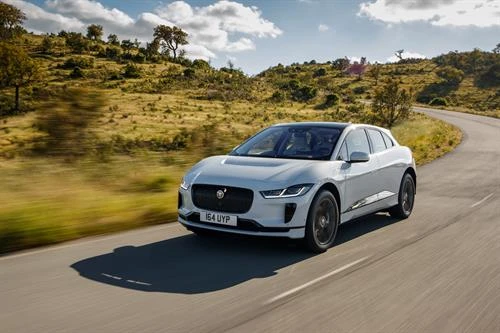
 Level 2, 9 Help Street