

BMW 3 Series Gets Makeover.
BMW‘s evergreen 3 Series has been given a substantial makeover for its impending release. The seventh generation of the car, first released in 1975, will come to Australia for a March 2019, on sale date. There’s a two model range on offer, with the 320d priced from $67,900 plus on roads (includes GST and LCT), and the 330i from $70,900. An xDrive M340i M performance model will hit our shores later in 2019.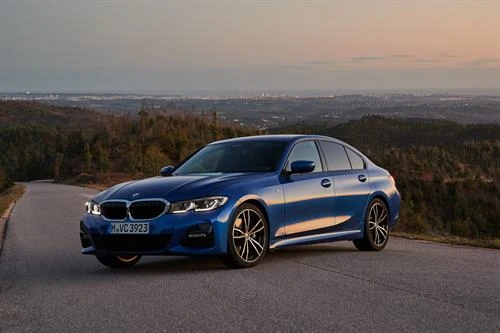 The 3 Series stays with a 50:50 weight distribution with the additional benefit of a weight loss of up to 55kg. Body rigidity has gone up by 25% to 50% which helps handling, along with the wider front and rear tracks for extra grip. A revamped suspension also comes into play, with a redesigned front end having more camber, and variable damper ratings allowing for 20% stiffer spring rates.
BMW’s Adaptive M suspension system is here, with electronically-controlled dampers. This system offers comfort- and sport-focused modes that are changeable in-cockpit. It combines the 10mm lower ride height and geometries of the M sport suspension standard in the 320d. M Sport brakes with blue callipers are standard on the 330i and have four pistons up front, and one piston rears. Handling can be further improved by opting for the M Sport differential with variable torque distribution.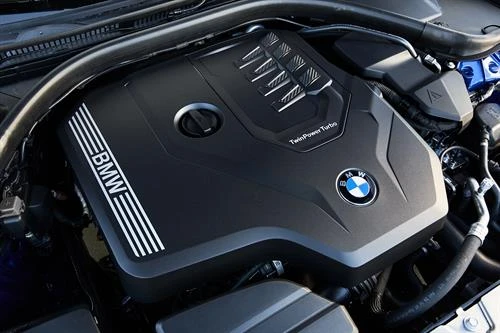 An exterior redesign has a one piece grille and the LED adaptive twin headlights up front, a redesigned and sharper look to the iconic Hofmeister kink, and reprofiled taillights with a smoky glaze. The diesel will have a choice of 18 inch diameter alloys, with the petrol fed version having 19s.
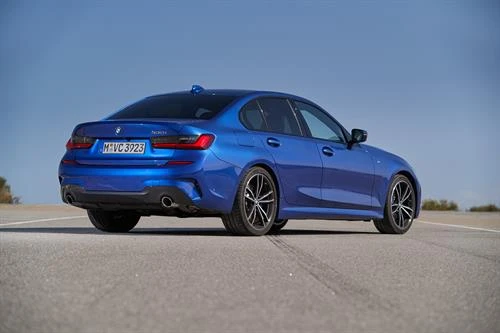 BMW have bitten the bullet on the options list too. The M Sport Package is standard and the Luxury Line package is an option at zero cost. BMW says the M Sport Package brings the following elements to the 3 Series: BMW Individual High-gloss Shadow Line, with black window frames and air breather surrounds, M Aerodynamics Package with aerodynamic front and rear bumper sections and side sills, BMW Individual interior Headliner in Anthracite, M Leather steering wheel with multifunction buttons, Interior trim finishers in Aluminium Tetragon, 18-inch M light alloy wheels in bicolour, double-spoke design (320d), 19-inch M light alloy wheels in bicolour, double-spoke design (330i), and M Sport Brakes (330i).
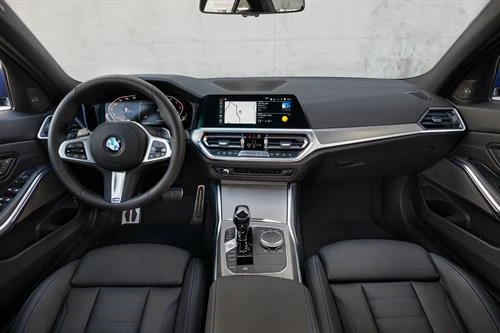 Choose the Luxury Line pack and there are: Leather Vernasca upholstery, Interior trim finishers in fine-wood, high-gloss ash grey, Sport leather steering wheel, Instrument panel in sensatec, Sport seat for driver and front passenger, 18-inch light alloy wheels in bicolour, multi-spoke design (320d), and 19-inch BMW Individual light alloy wheels in bicolour, double-spoke design (330i).
A Legend Returns: Toyota Supra Is Back.
One of the automotive world’s worst kept secrets was finally let into the public domain today. The Toyota Supra is back in the automotive spotlight and harks back to history with its classic straight six engine up front driving the rear wheels. Dubbed the GR Supra, it’s due to land in Australia in late 2019.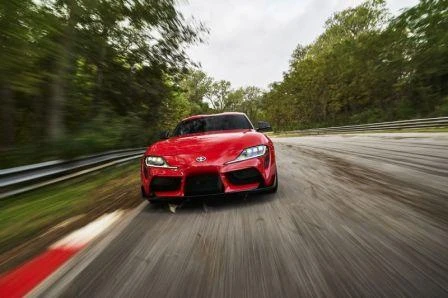 The fifth generation platform packs a 250kW/500Nm, twin-scroll turbocharged, six cylinder engine of 3.0L capacity. Power hits the tarmac via Toyota’s eight speed automatic gearbox. Toyota’s Gazoo Racing section has been brought in to work on the cars which are all to be built in Graz, Austria. Testing was held at the Nürburgring Nordschleife and included a session with Toyota’s own president, Akio Toyoda. Launch Control sees a zero to one hundred time of 4.3 seconds.
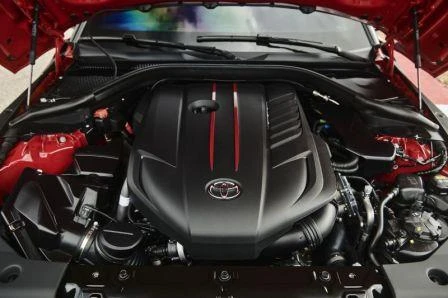 The driver can take control of gear changes using paddle shifts on the steering wheel and can select Normal or Sport driving modes to suit their preference and the conditions. The vehicle stability control has a special “track” setting that can be selected, reducing the level of system intervention so the driver has greater control of the vehicle’s dynamic performance.
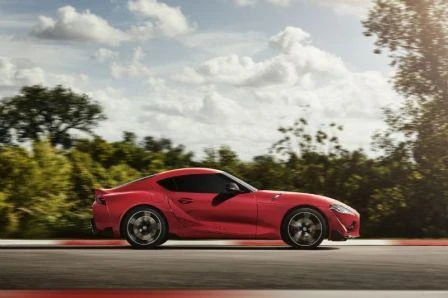 Design cues from Toyota’s heritage are evident in the sheetmetal. The S2000‘s long bonnet inside a compact body shape, with the distinctive “double bubble” roof is complemented by the fourth generation’s broad rear flanks and rear spoiler. Toyota’s penchant for pet names is here, with chief designer Nobuo Nakamura giving his team a simple brief around the concept of “Condensed Extreme“, ensuring they were free to express their vision of a pure and individual sports car in a truly original design.
There are three distinct elements to the GR Supra’s look: a short wheelbase, large wheels and wide stance; a taut, two-seat cabin; and a long bonnet with a compact body that reflects the drivetrain combination of in-line six engine and rear-wheel drive. All are embodied by the “Condensed Extreme” ethos. And although bigger than the two door 86 coupe, it’s a shorter wheelbase and rolls on bigger rubber.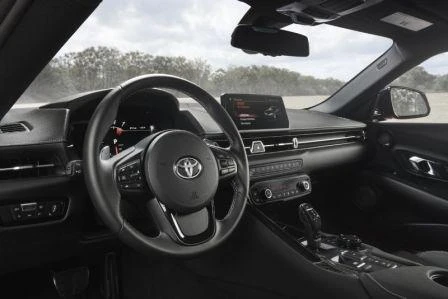 The driver and passenger are facing a distinctively designed cabin with a cockpit taking cues from a single seat race car. The seats themselves are race influenced, with thick bolsters for extra side support, holding the driver and passenger snugly. The dashboard is a low slung affair, allowing excellent forward vision, with the asymmetric centre console marking a clear division between the enveloping driver’s cockpit and the more open passenger side of the Toyota GR Supra’s cabin.
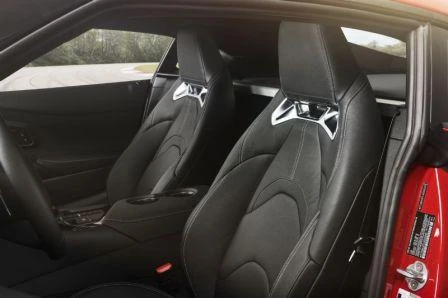 Toyota’s engineering teams have worked to give the GR Supra a superlative ride and handling package. Structural rigidity is said to be higher than the Lexus LFA supercar, with a centre of gravity lower than the 86 and a 50:50 weight distribution, with the movement of the engine rearwards to achieve that figure, contributing to the end result.
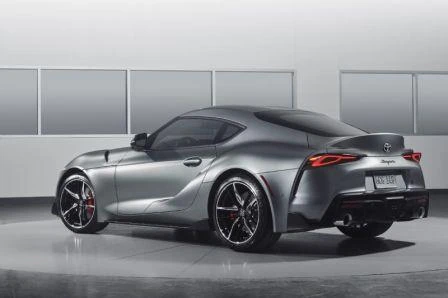 A newly designed suspension frame has a five-link rear end matched by a double-joint spring MacPherson front. Unsprung weight is helped by using aluminuim for the control arms and swivel bearings. Each corner has 19 inch forged alloys wrapping high-performance stoppers. Every Supra that will be sold in Australia will have an active differential for even better handling.
Hydrogen Fuel Cells – The Basic Facts
One of the more exciting vehicles that’s scheduled to come to Australia at some unspecified date in 2019 is the Hyundai Nexo – one of the vehicles recently awarded the Best in Class for all-round safety by Euro NCAP. This vehicle combines regular batteries with hydrogen fuel cell technology. Three vehicles made by major marques have been designed to run on HFCs: the aforementioned Hyundai Nexo, the Toyota Mirai and the Honda Clarity.
Hydrogen fuel cell technology is another option for overcoming our addiction to fossil fuels (the other two are biofuels and electricity). But what is hydrogen fuel cell technology and how does it work? Is it really that sustainable and/or environmentally friendly? Isn’t hydrogen explosive, so will a car running on hydrogen fuel cell technology really be safe?
Private Fleet Car Review: 2018 MY Isuzu MU-X LS-U Seven Seater
This Car Review Is About:
The 2018 model year MU-X from Isuzu. It’s a diesel fed engine range only, comes with seven seats, and two or four wheel drive across three trim levels. The vehicle tested was the near top of the range seven seater with four wheel drive called LS-U. Prices start at $50,200 plus on road costs for the entry level MU-X LS-M, $50,400 for the LS-U, and $56,200 for the top of the range LS-T. Under The Bonnet Is:
A low revving 3.0L diesel that produces 130kW at 3600rpm, and delivers 430Nm of torque between 2000 to 2200rpm. There is 300Nm on tap at just 1500rpm. Isuzu quote the engine as consuming, on a combined cycle, 7.9L to 8.1L per 100km, depending on trim level. The review vehicle was with us for just under three weeks, with a majority of country running (close to 2000km being covered), and generally with four aboard plus cargo. We finished on 8.5L/100km, decent considering the 2750kg gross vehicle mass (GVM). It’s rated as Euro5 for emissions and for up to 3.0 tonnes for towing. Fuel capacity is 65 litres. It’s a key start, not push button. A simple turn, the engine fires up almost immediately. The engine itself has a variable geometry turbo which is designed to alter the flow of engine exhaust in an effort to overcome the phenomenon known as turbo lag. It’s mostly well sorted here, however there were more than a few occasions where the engine felt like it was switched off, and they were invariably coming into a stop zone, and then being able to continue fairly quickly. The response was as if the turbo had stopped and needed a reboot to start spinning again.
It’s a fairly quiet unit, especially when off-load pedal wise. Hard acceleration brings out the typical diesel clatter and chatter but it’s surprisingly quiet otherwise. A good analogy is being in an aircraft coming into land, where the engine noise drops and becomes a background sound.
 Level 2, 9 Help Street