

Hyundai Kona Electric Is Revealed.
Hyundai Australia has teased and drip-fed information about the fully electric Kona, and now have provided a full overview. There are two crucial points in the information, with the first being the expected usable range from a full charge. That’s 449km. The second is the retail price. That’s $59,990 plus on road and government costs. 80% charge from zero can be reached in as little as 54 minutes when plugged into a 100kWh charger, otherwise will take longer from the more easily accessible charging stations and from a home based charger. A 50kWh charger will take 75 minutes to reach 80% whilst the onboard 7.2kWh charger will take over nine hours using a domestic current setup.
 Power and torque from the 64kWh battery powered motor is substantial. It’s rated at 150kW, and 395Nm of torque. They’re good enough to get the Kona Electric to 100km/h in 7.6 seconds. Drive is via a single gear style transmission, and the Kona Electric has a regenerative system that can be adjusted on the fly via the paddle shifters. Smart technology allows the driver to bring the vehicle to a stop simply by holding the left paddle.
 There will be two model levels, the Elite and Highlander. Both will have the same drivetrain. Both will feature the same high specification safety package as well. Called SmartSense it features Forward Collision Avoidance Assist, Forward Collision Warning, Smart Cruise Control with a Stop and Go function, and a Driver Attention Warning to alert drivers of potential fatigue.
Lane Keep Assist, Blind Sport Collision Warning and Rear Cross Traffic Collision Warning will also be standard. Also standard will be DAB+ pumping through an eight speaker Infinity system, Apple CarPLay and Android Auto, Bluetooth connectivity, and accessed via an 8.0 inch touchscreen. Highlander gains wireless charging for compatible smartphones, a glass roof, powered front seats with venting and heating, and a heated tiller. Extra tech comes in the forms of a Head Up Display, High Beam Assist, LED lighting front and rear, and a frontal park assist system. Hyundai Auto Link, a smart app, allows owners to stay in contact and monitor their car. A SIM module is required for the Kona Electric.
 The exterior has some discernible changes compared to its petrol powered sibling, notably the closed in front end. The rear bumper has been reprofiled for better airflow, and the rear lower lights have been given a change too. Wheels will be 17 inches in diameter. A choice of six colours (metallic is a $595 option), Galactic Grey and Phantom Black, Ceramic Blue, Pulse Red, Lake Silver and Chalk White, come with choices (depending on exterior colour) of interior trim. and a no cost two-tone body & roof option on Highlander will be made available.
Tesla Unveils Model Y SUV.
Tesla has released details of their Model 3 based electric SUV. Dubbed the Model Y, it slots into the mid-sizer SUV space and will be priced from USD$39,000. That price is applied to the Standard Range version. It will also come in Long Range, Dual-Motor All-Wheel Drive, and Performance variants. Tesla say the Model Y will be able to reach 62mph/100km/h in 3.5 seconds, and should see a top speed of 150mph/240km/h. Range expectations are 230 to 300 miles for the Standard and Long Range versions.
The Top Five From The Last Five
Picture Australian roads in the mid 1970s. It was the era of Holden, Ford, and Chrysler. Japanese brands such as Subaru and Toyota were known of, Korean cars simply didn’t “exist”, and four wheel drive capable utes were the end product of after-market conversion companies. European cars were largely luxury types or sports cars, with Jaguar and Mercedes-Benz up against Porsche, whilst Volkswagen was best known for its “people’s car” still.
The Kingswood and Falcon duked it out with the big Chrysler Valiant, sedans and wagons, like “light” and “heavy” beer were the only choices.
But it was also heading towards the days of the so-called oil crisis. Emissions were also becoming something that would be under the microscope, and European designs would soon start to filter their way through to the Aussie marketplace.
Kia Drops Optima, Hyundai Unveils Sister Sonata.
Kia Australia has announced that the under-performing Optima is to be dropped from the Australian lineup. With the medium car segment shrinking and Optima moving just 54 units in January and February of 2019, the handsome and stylish front wheel drive machine is destined to be deleted as a sales choice by year’s end. 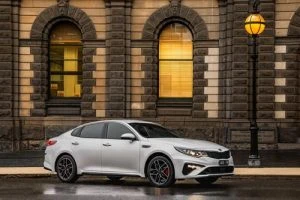 However, as good a car as it is with a superb ride and sharp handling, the fact that the sales of the bigger Stinger have increased, and with close to 2000 units moved last year, but just eight percent of those being the sparkling turbo four as found in the Optima, the Optima’s future is clouded.
Kia itself has declared its electric intent, with the Soul looking to move to a purely electric platform. The petrol version’s sales has collapsed, and rather than continue with either the petrol or hybrid versions, as another small SUV is planned for Australia, Kia Australia will trial the Soul as a battery powered option only. Kia has also waved goodbye to the almost invisible Rondo.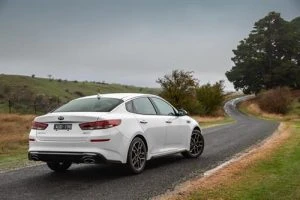 The newly updated Cerato hatch and sedan have grown in size, and by becoming closer overall to the Optima, and now packing turbo engines in the GT options, have given buyers a choice largely no longer taken up in the medium sedan segment.
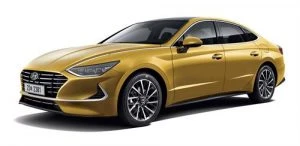 Kia’s majority shareholder owner, Hyundai, has unveiled their new Sonata though. Sister car to the Optima, the 2020 Sonata debuts a new design and features a more coupe styling. The rear features lights that do more than nod towards a Swedish influence, whilst the new nose has strong influences from the European mainland makers. Inside Hyundai have moved towards the Japanese and European high dash mounted screen as seen in Audi and Lexus, for two examples.
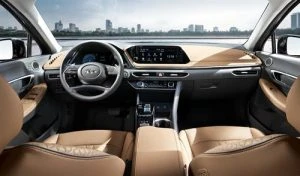 Overall height is down by 30mm, whilst overall width is up by 25mm. This gives the 2020 Sonate a sleeker and more purposeful stance on road. That’s helped by a longer body and wheelbase of 45mm and 35mm respectively.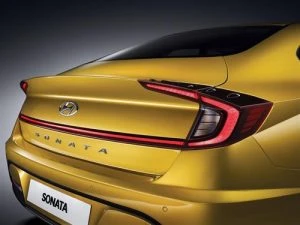
 Level 2, 9 Help Street