

Sales Are Down Again For The Aussie Market.
 The Federal Chamber of Automotive Industries, or FCAI, has released the June 2019 vehicle sales figures for Australia’s once thriving market. What it reveals is a pointer to the rest of the economy, with sales down overall by 9.6 percent. Compared to the same time in 2018, it’s even more drastic, at 18.5 percent lower for the passenger car segment at 33,864 sales.
June 2019 saw 117,817 sales in total, with SUVs and Light Commercial vehicles down to 53,509 and 26,372 respectively. These two segments saw drops of 4.7 and 7.0 percent each. The market leader in June was Toyota with 21,200 sales, followed by Mazda on 10,806, Hyundai with 10,001, Mitsubishi at 8,891, and Kia with 7,200. However it’s good news for one particular brand, with four entries inside the top ten.
Give Me A Brake
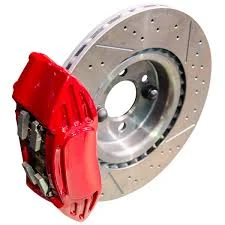 Imagine that you’re driving along a typical suburban street. A movement to the side catches your eye and you spot somebody’s dog off the leash madly rushing full tilt down a driveway, barking madly at the cat across the road. Next thing you know, Doggo is rushing into the road. Without thinking, your right foot darts off the accelerator and hard onto the brake. Your car screeches to a standstill, stopping short of that lunatic of a dog and shoving you hard against your seatbelt. You growl something about idiotic animals and people who can’t control their dogs, then keep on going, barely thinking about the mechanical miracle that has just taken place.
Brakes. We take them for granted, especially after we’ve been driving for a few years. However, they are super-important for safety. Imagine what it would be like without them. You might have had a small taste of this sort of thing as a child if you screamed downhill on a scooter or skateboard (or, in my case, a bike with worn-out brake pads) – that feeling of being out of control and knowing that gravity will accelerate you faster and that there’s no way of checking or slowing that thing down.
Private Fleet Car Review: Holden Trax LS Turbo
This Car Review Is About: the Holden Barina based SUV called the Trax. This review is on the LS spec with turbo engine. It’s part of a three trim level range (LS, LT, LTZ) with all but one the 1.4L turbo. The range starts with a LS and 1.8L and is priced at $23,990 plus on roads. At the time of writing the LS 1.4L was available at $24,490 driveaway. The Engine Produces: 103kW and 200Nm, plus a figure of 6.7L per 100 kilometres (combined) from a 53L tank filled with 91RON. Our final figure in an urban drive was 8.3L/100km. Drive is through the front wheels and a six speed auto.
 On The Inside It’s: a reasonably comfortable place to be. Cloth seats are snug and although fully manual are easy to adjust. The doors open wide enough to make getting onto the seats a doddle too. Because it’s a compact machine, at 4,264mm long and a 2,555mm wheelbase, leg room for the rear seat is adequate at 907mm, not startling and dependent on the front pews not being occupied by taller people. Front leg room is fine for all but the the giants, at 1037mm. Shoulder and hip room is also adequate and front seat head room is great at 1,005mm. The Trax helps the front seat passengers by not having a centre console storage bin, just a standard cup holder style.
 Barina origins mean the dash is the asymmetrical look found in that car. There’s a old-style looking LCD screen to the right, the speedometer dial in the centre, and the fuel and rev counter on the left. It’s a simple looking unit and as a result offers nothing more than what you see, except for the LCD’s switchable info screens operated from the right hand side of the tiller.
 The dash itself is Euro styled, with the current sweep around in an arch from door to door running at the base of the windscreen. It’s a finer looking plastic and visually more appealing than that found in the Arcadia. Faux alloy rims the air vents at each end, forms a U-loop for the centre display and vents, and highlights the steering wheel arms and centre stack verticals. The aircon controls in the LS are dials, meaning the temperature can be adjusted finitely but airflow isn’t as finely controlled. These sit above a small nook that has USB/3.5mm/12V sockets.
Audio is AM/FM only, with no DAB, which is increasingly seen in the Trax’s opposition. Smartphone mirroring in the form of Android Auto and Apple CarPlay are here. On the Ouside: It’s a strong resemblance to the Barina, if more a breathe in and hold look. It’s ovoid in the overall design, with curves everywhere especially on the front and rear flanks. 215/60/17 tyres and wheels underpin those curves. Up front are integrated LED driving lights that curl nicely around the outsides of the clusters. Driving lights are in their own housings at each corner of the lower front bumper. Out back is a manual tail gate, with an opening to just enough room to get a week’s shopping into, with 387L expanding to 1270L with the 60/40 rear pews folded.
Private Fleet Car Review: 2019 Holden Acadia LTZ 2WD
This Car Review Is About: The 2019 Holden Acadia in LTZ 2WD trim. It’s the big and American styled machine that replaces the Captiva. It has four doors, fat flanks, a dropped jaw front end, and a V6/auto combination that spins the front driven tyres at the slightest hint of provocation. It’s a seven seater, by the way. This Car Costs: $53,490 is the current sticker price according to the latest pricing guide. $57,490 is for the all wheel drive version. At the time of writing, Holden is moving the LTZ 2WD for a driveaway price of $54,990 for a Summit White body, or $55,565 for one in metallic. That includes free scheduled servicing for three years and a five year warranty.
The Engine Is: a 3.6L V6 with Stop/Start tech mated to an generally super smooth nine speed auto. It’s essentially the same pair to be found in the Commodore. Economy was average, with a final figure of 10.0L/100km. Peak power is 231 kilowatts, with peak twist of 367Nm coming in at 5000rpm. On the Inside It’s: One of the most mundane looking looking interiors currently going. A dull, slabby, semi-gloss, fine-grained black plastic with no visual appeal whatsoever dominates the front seat area and it’s little better heading rearward. The driver and front seat passenger stare at a dash that has a generic a look as can be found. There are silver coloured air vent surrounds at each end, a basic looking centre dash screen and vents with a silver surround sit above a generic looking aircon control cluster, and a pair of seat heater buttons are inserted in either side of a nook for a smartphone charging pad. Front seat passengers also get a different take on heated seats in that either the bottom or back and bottom of the seat can be selected.
 There are vents in the roof for the centre and rear seat passengers. The rear section gets its own controls and again, they’re GM generic. They do work and well enough for the centre seat passengers to make no negative noises. Said rear seat passengers have the wonderfully simple pull strap system to raise and lower the pews, and the rear gate is powered and comes with the same height adjustable feature found in the LTZ-V. There is also rear section aircon controls which, admittedly, is a rarity seen in this class of car.
 The touchscreen for the radio is, at least, well laid out in regards to usage. Although it’s a typical GM look, it is easy to read, easy on the eye, and relatively easy to use. However there was a glitch with the digital tuner. After powering up the car, there were times where the screen indicated it was searching for a signal yet would play the last station. At other times it would not play a digital station at all but would be fine when selecting FM. This is the same glitch as noted in the LTZ-V, which means either it’s a glitch that can’t be fixed or Holden is unaware of the problem which is unlikely.
 On The Outside It’s: Possibly why it seems to not have lit up the sales charts. Take a look at the offerings from Ford, Toyota, Mitsubishi etc. None of them are as overtly apple pie as the Acadia. That’s made evident by simply driving around and keeping an eye out for them. A heavy front end, broadened flanks at the rear passenger doors, a perhaps too solid C pillar and a fussy design here too. Wheels are 6×2 spoke alloys, with Continental Cross Contact LX Sport rubber at 235/65/18.
 It’s a clear three box design with the bonnet, front and centre seats, then a separate section for the rear. It’s not an entirely cohesive look.
 Level 2, 9 Help Street