

Buy A New Car
Private Fleet Car Review: 2018 Subaru WRX STi R-Spec.
Once upon a time, the World Rally Championship or WRC was regarded as highly as the Formula 1 championship. Names were known, cars were followed, and drivers were gods. Subaru looked at its small car, the Impreza, and thought that its all wheel drive system inside its roomy yet compact body would make a solid base from which to develop a WRC entry. Subaru Technica International, the motorsport arm of the car company, along with UK based ProDrive, gave us the WRX (World Rally Cross) and an icon was born. Flash forward to 2017 and the World Rally Championship is dull in lustre, with the once broad appeal now seemingly limited to hardcore motorsport fans. Subaru enters a team in the Australian Rally Championship, the ARC, with Molly Taylor the works driver. The car? The WRX STi. In road going trim it’s known as the Subaru WRX STi R-Spec and the 2018 version is now available to buy and drive. This test car was taken from the lower Blue Mountains to the Hunter Valley for a birthday (thanks for the cards and cakes, by the way) during some of the heaviest rain seen for Sydney and surrounds for some time.
 It’s Subaru’s 2.5L flat four that powers the four wheels, twisting out a peak of 407 torques at 4000 rpm, and 221 kilowatts at 6000. There’s oodles of torque on tap from idle and is well and truly felt when rifling through the close ratio six speed manual via the short throw gear selector. There’s a pair of twin chrome tipped exhausts that deliver the characteristic boxer four thrum which is audible inside the cabin, even over the roar of the Yokohama Advan 235/35/19 (first time this diameter has been fitted) tyres pumping litres of water.
 When it was dry, the R-Spec showed exactly what it can be capable of. Tenacious grip, speed into and out of corners that frighten lesser chassised cars, the sheer ability to be put into a situation that had the Advan tyres shrugging as if to say “Is that all?”. The racing creed of slow in, fast out is put to good use as the torque slingshots the R-Spec towards lightspeed.
 Being an all wheel drive car is one thing, being a premium sports oriented all wheel drive car is another, and Subaru continues to offer its DCCD or Driver Controlled Centre Differential system to back that up, along with Subaru’s variable engine mapping system. Accessed via a toggle switch mounted in the centre console, the system allows the driver to tailor the proportion of drive between front and rear from 50:50 to 41:59. Under normal driving you can feel the torque tugging at the front and in circumstances such as shopping centre car parking, its a bit of an effort to move the car around. By altering the torque split you can not minimise but alleviate some of the tugging up front. It allows manual or auto adjustment, with one step in auto and up to five in manual.
 Thanks to the weather, exploring the outer boundaries of the performance capabilities of the STi R-Spec wasn’t a safe option, but there’s no doubt the car is more than capable under thundering skies. There’s auto headlights, auto wipers and they adjust for speed as well. Being a six speed manual the R-Spec misses out on Subaru’s fabulous Eyesight collision avoidance system however does get Lane Change Assist, Blind Spot Monitor, and gains a camera for both front and left side vision enhancement, allowing more precise monitoring for parking and hopefully not scraping the 19 inch alloys. There’s also a non DAB equipped Harman Kardon sound system and here the first quibble arose. Even with the settings wound up, the audio quality, oddly and disappointingly, still sounded like AM, with a real lack of separation, clarity, depth, and bass.
 Ride quality is surprising, surprising in that something so taut is also comparatively comfortable. Yes, it’s tight and jiggly from the 2650 mm wheelbase, but there’s just enough give to provide a semblance of nice. On smooth blacktop it’s a delight, toss it onto the rutted and broken rough headed tarmac surrounding Cessnock and it’s railway locomotive in that you can count how many grains of sand on a pebble yet without feeling your spine will be shaken to dust. Pop into your local Westfields, hit those damnable yellow metal speed bumps, and instead of crash thump it’s next please. It’s a suspension tune that doesn’t detract from the outright capabilities of the R-Spec nor does it overly frighten in comfort loss.
 You’ll not lack for comfort inside either, with grippy and supportive heated Recaro seats, Subaru’s wonderful triple screen information systems, and plenty of room in the current Impreza bodies. However, this STI R-Spec is still built around the just superceded Impreza design, meaning it’s the fiddly touchscreen, smaller centre console bin, not quite as good as now ergonomics, and a flat dash look.
 Outside there’s a slight change, with the front bumper relocating the globe driving lights and indicators to inside the headlight cluster, and replacing them, in the lower corners, with a vented black plastic insert. At the rear is the STi’s trademark landing pad that masquerades as a wing for the handy 460 litre boot and designed so it doesn’t obscure rear vision from inside.
 What the STi does do extraordinarily well, whether it’s bright daylight or blown out grey skies, is simply DRIVE. There’s plenty of torque to launch the car off the line, and you can rifle through the gears with a silky snick snick, listening to the raspy throb rise and fall, feel the body of the car bobbing around, whilst feeling that the hand and feet and part of the road underneath.The torque allows an immense amount of drive-ability in all gears bar sixth if you’re traveling at eighty kph or less, where fifth and then fourth comes into play.
  In gear acceleration is nothing short of stupendous and overtaking, safely, is how it should be. Done quickly, not a ludicrously ponderous move for fear of being pinged. There’s a price to pay for this exuberance, with 98RON the only tipple the car will drink, and at a figure of over fifteen litres per one hundred kilometres covered in an urban environment. Even driven with as gentle a right foot for the weather demands, the lowest was still 9.4L/100 km.
 The steering, although heavy, isn’t strenuous, and does an excellent job of communicating to the driver just what kind of road and the condition of the road, the car is on. It’s twitchy at times yet never hints at instability, and can be easily held with one arm, but two is better as you’ll think a direction and the nose goes there. It’s ratioed for quick response so it’s definitely not suitable for a driver that tends towards the lackadaisical in their driving style.
  Thankfully there’s plenty of safety equipment on board in the form of airbags, pretensioning seat belts and the like and Brembo brakes that didn’t work terribly well. Yep, that’s right. Instead of hauling up the 1532 kilo machine in a fingersnap, there was a worrying, and occasionally puckerworthy, lack of retardation in this particular car. Even good shoving of the centre pedal, needed in the wet and vision obscuring conditions of the Pacific Highway on a rainy day, offered little resistance.
 At The End Of The Drive.
As a driver’s car, brakes aside, the STi R-Spec delivers a joyous experience. As a piece of technology, it delivers something tactile and connectable. Even based on a now slightly outdated base, the Subaru WRX STi R-Spec commands attention and stokes the driving fires. If there’s a final question mark, it’s the value of the asking price at $57K. Balanced against newer and cheaper metal such as offerings from Ford, VW, perhaps even the new Kia Stinger GT, it’s no longer as much a value add as it once was. But when it continues to emotionally connect to you as a driver then there’s no price that can be put on that.
Web yourself to Subaru WRX/STi info to book a drive and spec up your own WRX STi R-Spec.
Nissan Leaf Wins Award.
Nissan‘s small electric car, Leaf, has won, at the hugely prestigious Consumer Electronics Show, CES Best of Innovation award winner for Vehicle Intelligence and Self-Driving Technology.
Each year, the Consumer Technology Association announces its CES Best of Innovation award winners as part of the buildup to the January CES in Las Vegas. Nissan and the association will put on a special display of the new Nissan LEAF at the 2018 show. As confirmation of Nissan’s leading investment in innovation, the Nissan LEAF 100 per cent electric vehicle with ProPILOT (and e-Pedal technologies also won the following honour: CES honoree for Tech for a Better World.
Daniele Schillaci, Nissan’s executive vice president for global marketing and sales, zero-emission vehicles and the battery business, and chairman of the management committee for the Japan/A&O region says: “It is a great honour to have this early and important recognition for the new Nissan LEAF.  This award recognises products and technologies that benefit people and the planet, so it is fitting that the new LEAF has been honoured. It is more than just a car. It is the icon of Nissan Intelligent Mobility, our vision to move people to a better world.”
The new Nissan LEAF brings a compelling package of everyday-useful innovations and technologies to more people worldwide than any electric vehicle has done before. The car is helping make the world a better place not only through innovation, but also through accessibility to more people.
Additional capabilities such as vehicle-to-home and vehicle-to-grid integration (availability depending on market) help owners know they can waste less and give back more.
Head to The Nissan website for more information.
Hyundai Conquers The COTY Small Cars.
Winning a Car of the Year award is no small thing and drive.com.au, one of the country’s respected publications, has seen fit to award their COTY for Best Small Car of 2017 to Hyundai’s rampaging i30 SR.
After a solid week of testing against its peer group, Hyundai’s best-selling car came up trumps, showing off its refined dynamics, lively engine and new technology by beating the best from Europe and Japan.
The six-strong judging panel, comprising Drive’s editorial and road test team, put more than 50 cars through their paces at Wakefield Park Raceway to determine the class winners. Judges used the raceway to compare handling, vehicle dynamics, ride quality and braking ability, before embarking on an extensive road drive program to assess each car thoroughly in urban, rural and highway driving environments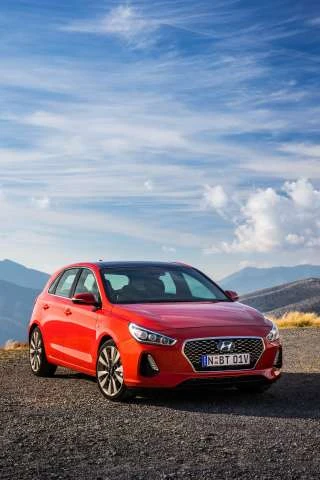 “Our finalists are the best of the best in their respective classes and the small car class is very competitive,” said Drive editor Andrew Maclean. “Hyundai i30 represents great value-for-money in that class and i30 SR is a genuine pocket rocket. Its 150kW, 265Nm, turbocharged 1.6-litre engine delivers real hot hatch performance in a sub-$30,000 car. It has fantastic dynamics and the local chassis tuning stands it apart from everything else in its class.”
Hyundai Motor Company Australia Chief Executive Officer, JW Lee, said “i30 SR’s win in the Drive Car of the Year awards just six months after its launch here is a great result. Our confidence in the new, third-generation i30 range has been bolstered by this win in one of Australia’s most prestigious Car of the Year competitions.”
“The i30 offers a comprehensive suite of technology across the range and its beautiful design – coupled with outstanding chassis dynamics and real value for money – makes our affordable premium small car a winner with Aussie customers as well,” he added.
Updates For Jaguar, Haval, Hyundai, and Citroen.
Heading into the 2018 market, a number of companies have released details of updates and changes to key models.
Haval.
The Chinese brand has been maligned for its safety factor in its vehicles however the H2 has been given a five star rating by ANCAP, the Australia New Car Assessment Program. Haval Australia’s Chief Marketing Officer, Tim Smith, says: ““I would like to thank each and every one of the hard-working team of engineers at HAVAL for their efforts in so quickly developing a five-star car for the global market.  Customer safety is paramount for the continued development of HAVAL as a global brand and this recognition by ANCAP is just reward for the company’s efforts.We will continue to develop our safety systems, with the introduction of key features such as autonomous emergency braking and lane assist systems in the next wave of HAVAL SUVs.”
Hyundai.
A substantial makeover has been delivered to Hyundai’s big medium sizer, the Sonata. The nose is now more aligned with Hyundai’s new corporate look, with a more hexagonal looking “Cascading Grille” and the headlights have a more slimline appeal.  It’s perhaps at the rear, though, that the redesign is more obvious, with a complete change of look to the structure. Underneath there’s a 180 kW/353 Nm 2.0L turbo four in the Premium with the Active retaining the familiar 2.4L four potter, and a new eight speed auto in the Premium.
  The range has been streamlined, with Active and Premium the two variants available.Inside there’s an uprated eight inch touchscreen with Apple CarPlay, Android Auto, a wireless mobile phone charging pad in the Premium, switches have been relocated for better ergonomics and piano black plastic has been added for a more premium feel.
2018 Sonata builds on its reputation for safety by featuring a host of advanced safety systems and technologies including Electronic Stability Control (ESC), Anti-Lock Braking System (ABS), Brake Assist System (BAS), Electronic Brakeforce Distribution (EBD), Hill-start Assist Control (HAC), Traction Control System (TCS) and Vehicle Stability Management (VSM), Emergency Stop Signal (ESS), Rear-view Camera with dynamic guide lines and four sensor rear Park Assist System (PAS) as standard. Premium ups that further with Blind Spot Detection, Driver Attention Alert, Lane Change Assist, Lane Departure Warning, Rear Cross Traffic Alert, Smart Cruise Control and four sensor front Park Assist. Pricing starts at $30990 for the Active and $45490 for the well specified Premium, with metallic paint an option at $595.
Jaguar.
The iconic British brand has unveiled a new version of its superb flagship model, the XJ, called the XJR575. Powered by the venerable 5.0L supercharged V8, the machine will see the ton in 4.4 seconds thanks to the engine’s 700 Nm and 423 kilowatts. Built on the standard wheelbase XJ, the car will come in two colours, Velocity Blue and Satin Corris Grey. Pricing has not yet been confirmed for the Australian market ahead of the car’s expected Q1 release in 2018.
The XJR575 will receive bespoke sill plates, Intaglio and diamond quilted seating in a two colour range, an enhanced body kit, and and twenty inch diameter wheels.
The XJ range itself receives a huge amount of updates, including 4G wifi, an uprated ten inch touchscreen with customisable interfaces, plus extra safety programs such as Forward Traffic Detection and Autonomous Emergency Braking. There’s also a torquey (700 Nm) 3.0L V6 diesel available, complete with an astounding 221 kW.
Citroen.
The quirky French brand has released the quirky C4 Cactus for 2018. In the same vein as the C3 Aircross and C5 Aircross variants, the Cactus, a compact five door hatchback, rides on a 2600 mm wheelbase and features 12 on-board driver assistance systems. It has unique styling also, with 3D effect tail lights, “Airbump” on the lower half of the doors, plus offers 9 external colours and four colour packs.
The C4 Cactus will also feature Citroen’s legendary hydraulic suspension, with a technology called Progressive Hydraulic Cushions and Advanced Comfort Seats. The car is due for the Australian market in late 2018.
 Level 2, 9 Help Street