

Buy A New Car
Car Review: 2018 Mitsubishi ASX XLS Diesel AWD
Mitsubishi has a long and proud history with off road capable vehicles and continues that with the ASX range. Private Fleet spends time with the top of the range 2018 Mitsubishi ASX XLS, complete with the same 2.2L diesel as found in the Outlander, and seven speed CVT plus a six speed manual lower in the range. The range itself also offers a petrol 2.0-litre engine, and will power down via the front wheels or come with an all wheel drive system. It’s a mid-sized five seater, in the same bracket as theToyota RAV4. Mitsubishi is offering driveaway pricing deals at the time of writing, with the range starting at an easy on the wallet $24,990 for the LS 2WD petrol. Our test car is priced from $39,990.
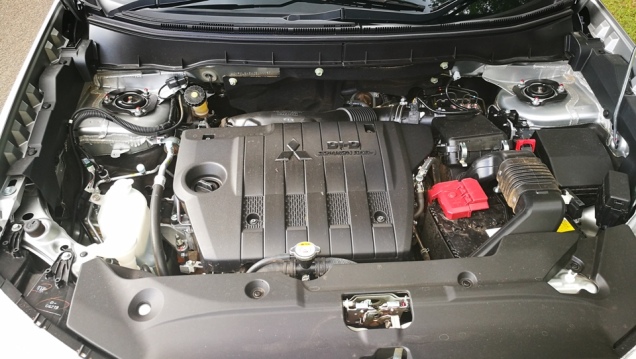 The engine is good for 110kW, and 360Nm between 1500 to 2750 rpm, making normal driving as easy as blinking. The CVT is well sorted, taking the right foor command and turning it into forward motion easily. The torque allows quick acceleration however doesn’t seem to be as comfortable with overtaking as Suzuki’s Vitara. Economy is good too, with a final figure of 5.9 litres of diesel consumed per 100 kilometres.
Inside, the ASX clearly shows its family oriented design, with leather accented cloth seats, digital radio, a sliding cloth screen for the full length glass roof, plenty of bottle and cup holders, USB charging ports BUT dips out on rear seat air vents and ventilation for the from seats, an almost unforgivable oversight for the Australian market. The plastics are hard to the touch, needing a more modern feel with padding and a softer feel where padding isn’t required.  Also, the ovoid design of the console is now showing its age, needing a move to a more human encompassing design. However, cargo room is also looking good, with room for shopping, bags for the weekend way and suchlike, with 393L available with the rear seats up and increasing to to 1143L with the seats folded. Being a compact car in overall length, rear leg room is slightly compromised, with anyone from 180 cm and up maybe feeling a little cramped, but there’s plenty of head and shoulder room, front and rear.
 Apple CarPlay and Android Auto are available, as are DAB/AM/FM (no CD) as is Bluetooth streaming via the 7.0-inch touchscreen. But the reliance on the two smartphone apps means no built in sat nav, even though GPS, showing the coordinates but no navigation, is there. And currently the apps have to be accessed via the phones being connected with cables, a somewhat clunky method and untidy as well.
 Being the top of the range means loading up with plenty of safety features and the ASX XLS gets the supreme pizza, with Forward Collision Mitigation, Lane Departure Warning, and Euro style flashing brake lights for the Emergency Stop System. Autonomous Emergency Braking is not yet fitted to the range however. A reverse camera is standard across the range, as are the ISOFIX child seat mounts and pretensioning seatbelts, Hill Start Assist, and seven airbags including driver’s kneebag.
Back to the driving habits and it’s a typical diesel; floor it and it’ll hesitate as the turbo spools up before kicking the tyres into action. Breathe the right foot over the throttle and you can watch the numbers change quickly and quietly. Economy is rated as 6.0L/100km on a combined cycle from a 60-litre tank and with the ASX being a middleweight, at 1540kg before fuel and passengers, there’s a useable torque to weight ratio. As a result it’ll get off the line, even with the CVT, with a solid rush. When it comes to dimensions, there’s a 2670mm wheelbase hiding inside that compact body, meaning you’ll get a sure footed handling and composed ride in combination with the struts and multi-link suspension. Rubber is from Bridgestone, and they’re 225/55/18s. Exterior styling owes much, like the original Outlander, to the Lancer sedan, with the ASX sporting the same sharp edged, bluff prow. At each corner up front are almost vertical LED driving lights and there’s splashes of chrome. It’s assertive and appealing.
 The ASX is easy to live with on road, with the steering being light, but attached enough so you don’t find you’re missing out on contact with what’s happening up front. Point and shoot style is how the ASX XLS works and the flexibility of the peak torque makes city driving an absolute doddle. The CVT has no manual mode available via the gear selector, so if you use the paddle shifters you’ll need to quickly slide into Neutral and back out (NOT recommended) to bring it back to Drive, or, when stopped, pulling both paddles back until it re-engages Drive.
  Although the AWD system is front wheel drive biased, the AWD button mounted in the centre console will direct drive to the rear on demand. If you wish to utilise all of that torque for towing, the ASX XLS will do so up to 1400 kilograms.
 At The End Of The Drive.
The ASX has received a nip and a tuck here and there over its life however it’s now, like its “doner” car, showing signs of age. Yes, it’s still comfortable and roomy enough for a family of four however the dash design and plastics now lag behind competitors. It’s a fantastic city oriented car with a frugal, punchy, diesel but the value of the Mitsubishi ASX XLS is also beginning to be questionable. In no way is it a bad car, it’s just now not as good as other choices.
Here is where you can get more information: 2018 Mitsubishi ASX range
Private Fleet Car Review: 2018 Mitsubishi Outlander LS AWD Diesel With Safety Pack
Revelations 2.2, Reading from the Book Of Diesel, Chapter: Mitsubishi Outlander LS AWD I had an epiphany whilst piloting Mitsubishi’s Outlander LS diesel seven seater (with safety pack) early on a Sunday morning to Kurrajong, a pretty area of the lower Blue Mountains and home to the start of the famous Bell’s Line of Road, the northern western bound access to Lithgow. The epiphany courtesy of the fact the reason we were on the way there was for day two of the little athletics carnival that our two kids were participating in.
 The epiphany itself? That little athletics can be a metaphor for a car and this car in particular. Truly. The Outlander diesel has a 2.2L capacity, offering a maximum power of 110 kilowatts and a very handy 360 torques. They’re available between 1500 to 2750 and ideal for the easy run from home to Kurrajong, via the sometimes curvy, sometimes twisty, but mostly straightish Hawkesbury Road into the southern reaches of Richmond, a few kilometres from the RAAF base, before the westbound journey into the lower reaches of the Blue Mountains.
 This means that it’s like a long distance runner, cruising along in a ten thousand metre race. There’s the get off the line grunt before settling into economy mode, barely breaking a mechanical sweat as you ease towards the finish line. Economy figures back that up with just 7.8 litres of dino juice imbibed after a predominantly urban 440 kilometres.
 Whilst you’re inside the seven seater, there’s plenty of room to enjoy, both for legs and heads. That means that you’re leading the race and by a good margin. There’s even space to stretch the legs up front, the same as being in that final twenty metres of a sprint and needing that extra pace. Those seven seats could be likened to an athlete that excels is more than just one discipline, with flexibility the key.
 One thing that stands out about the LS is just how comfortable it is. There’s cloth, not leather covered, seats, making getting back into the curvaceously bodied machine a lot easier to deal with on a hot day with hot and sweaty children. The rear row of seats fold up and down at the simple pull of a strap, with 128 litres of cargo (plus a 12V socket) with the rear seats up, enough for some esky bags and camp chairs, and when flat along with the middle row, allow 1608 litres of room.
 The steering is well weighted, and quite precise, just like a well practiced discus thrower. Think of the spin and throw and landing the disc in the same spot every time, precisely. Or a javelin, as you pick up the spear, judge its heft, the same as you would the steering into the tight turns of the Hawkesbury Road, and hurl it ensuring it buries itself nose first, just as you’d have the steering tell the nose of the Outlander exactly where to go. And it does.
 Then there’s that engine. It’ll purr along like a long distance runner, as mentioned, but it also has the sheer outright oomph that a hammer thrower, or shot putter, needs to launch the weight of the thing far and away. Wind it up into the torque zone, select 4WD lock from the three mode 4WD system, and it’ll happily pull itself up hill, over rocks, through puddles up to around 20 cm in depth nicely on the 18 inch diameter 225/55 tyres.
 This particular Mitsubishi Outlander LS AWD is fitted with Mitsubishi’s “Safety Pack”. Parking sensors front and rear complement the reverse park camera and airbags, then there’s the Lane Departure Warning system, Forward Collision Alert and Adaptive Cruise Control, which measures the distance ahead of the car whilst in cruise control and adapts speed to suit. Think of doing a long jump and adjusting your run up to the jump knowing you have centimetres more to achieve.
 Lob in Autonomous Emergency Braking, or pulling up if your run up is misjudged and before you cross the jump line, and it’s a well featured package. For extra additional enjoyment there’s the seven inch touchscreen with Apple CarPlay, Android Auto, and DAB radio, just like a pair of lightweight running shoes that aid performance without being intrusive.
 As an everyday transport, the Mitsubishi Outlander LS (priced at the time of writing at $41990 driveaway without safety pack), with seven seats, diesel with oomph, the safety extras, and comfortable ride, is a revelation and as adaptable as a good athlete. With a five year warranty, 12 months roadside assistance, and three years capped priced servicing, it’s as good value as seeing your kids make their way through to the next level of little athletics.
Moving On: Toyota Unveils First Non Aussie Built Camry For Decades
Just weeks after Toyota Australia finalised manufacturing operations in Australia, the Japanese goliath has unveiled the vehicle that will delight cardigan wearing lawn bowlers everywhere. Yes, it’s the new for 2018, and beyond, Toyota Camry. Toyota says the chassis has been overhauled for better ride and handling characteristics, with a fifty mm longer wheelbase that hides a lower and shorter body overall. There’s new safety tech, and an overhauled engine and transmission range. It’s the first sedan from the company to adopt Toyota’s New Global Architecture (TNGA) which changes the process in design, engineering, and packaged inside and out. There’s 30% more structural rigidity, the hip points for the seats have been lowered and moved rearward for more legroom, whilst the body itself is made using a hot-stamping process and laser screw welding.
 Engine wise there’s a return, for the Camry nameplate, to a V6 engine with direct injection and a new eight speed automatic, plus a direct injection four cylinder engine for the hybrid models and a new selectable drive mode system. Underneath there’s 19 inch wheels (SX), a fully independent rear, electric parking brake, whilst inside there’s pre-collision safety systems with autonomous braking, adaptive cruise control across the range, a ten inch head up display system and a new panoramic roof whilst the front end gets both a redesign and LED headlights.
 There’s been some name changing too: Ascent, Ascent Sport, SX, and SL. The first two will be four cylinder or hybrid powered, the SX a four or six, whilst the range topping SL will option all three engines. The six cylinder now offers a maximum power of 222 kilowatts and offers both an Atkinson cycle and Otto cycle combustion process, producing 362 Nm of torque at 4700 rpm.
  The 2.5L four offers two slightly different engine tunes, with the Ascent weighing fifteen to sixty five kilos less that the SX and SL getting 133 kW versus 135 and torque is different too, with 231 Nm vs 235 Nm. Transmission here will be a six speed. The hybrid cops a combined 160 kW setup that runs in series and parallel.
 Naturally fuel economy figures should be better and Toyota say the hybrid should be the best, with the Ascents under five litres per one hundred across the board bar the SL on an urban cycle at just 5.2L/100. The SX and SL with the V6 are quoted as 8.9L and 8.7L per 100 for the combined cycle however the urban cycle, its natural home, may be a bit of a concern for some at 12.7L and 12.5L per 100 km.
 Pricing for the new Camry:
Four-cylinder petrol
| GRADE | PRICE | DIFFERENCE |
| Ascent | $27,690 | $1,200 |
| Ascent Sport | $29,990 | -$200 |
| SX | $33,290 | -$200 |
| SL | $39,990 | $2,550 |
Hybrid
| GRADE | PRICE | DIFFERENCE |
| Ascent | $29,990 | -$500 |
| Ascent Sport | $31,990 | -$1,200 |
| SL | $40,990 | $550 |
V6
| GRADE | PRICE | DIFFERENCE |
| SX | $37,290 | -$6,700 |
| SL | $43,990 | -$6,450 |
Options:
All grades: premium paint $450
SX: panoramic roof $1,950
Private Fleet Car Review: 2018 Mitsubishi Outlander LS PHEV
PHEV. It’s short, sharp, sounds like an ex AFL player but with vastly more substance. It stands for Plug-in Hybrid Electric Vehicle. In layman’s terms, it’s an electrically powered car that you can plug in to your home power system to charge a battery inside the car. What it doesn’t tell you is that the petrol engine that’s also fitted can be used as a generator and that the brakes can be used to harvest the kinetic energy generated and recharge the battery on the go. Private Fleet trundles the Mitsubishi Outlander LS PHEV from the lower Blue Mountains to Temora, in the central west of NSW, via Bathurst, and home via Yass and Goulburn. It’s readily identifiable as a PHEV thanks to the three subtle (ahem) badges on the rear door and front flanks. Oh, there’s a Tesla style fast charge port so you achieve approximately 80 percent full charge from empty in just half an hour, as long as you have the appropriate equipment, including the transformer the PHEV comes with for the everyday single phase household which is best left overnight to really give the “tank” a full charge. Hence the Plug-in part of the name.
 Mitsubishi currently only have the Outlander as a hybrid vehicle and it’s a kinda cool one with three distinct hybrid modes, EV, Series, and Parallel modes. When the EV Mode is chosen you’re driving purely on battery power alone. You can also drive with the 2.0L petrol engine as a charging unit or as a paired situation where the petrol engine kicks in as required. Transmission is a single or fixed speed transaxle unit.
There’s a big silver EV button in the centre console or two buttons either side of the jet fighter Drive selector (no gears as such) marked Save or CHRG. Save turns off the electric option and runs purely on the petrol powerplant, the other is self explanatory. When fully charged, the battery indicator shows a range of around fifty kilometres. If you accelerate ssssllllooooowwwwllllyyyyy it will stay on battery only but give it a reasonable prod and the petrol engine cuts in. On battery it’s an eerie almost silence, with a barely audible whir as the PHEV wafts away. The petrol engine is isolated, muted, and there’s hardly a vibration in the body to alert you to it being engaged. The computer programing is seamless, as is the actual switching between modes, and the whole system is intuitive.
 Fuel consumption is still…..well, a concern. Mitsubishi’s refinement to the overall system now rate consumption as 1.7L of 91RON per 100 kilometres. That’s certainly achievable on virtually purely electric runs that cover no more than maybe fifteen kilometres or so. A Wheel Thing finished, after a week and well over 1000 kilometres, closer to 9.5L/100 kilometres. That’s from a 45L tank. Overall power is rated at 120 kW and that’s for the two electric motors fitted, one for the rear and one for the front wheels, which out put a total of 120 kW and 332 Nm. Mitsubishi says 6.5 hours for a full charge to the battery using the charger on a standard household supply.
The petrol engine is rated for a fairly measley 87 kW, but a better torque figure is usable at 186 Nm @ 4500 rpm. It’s also worth noting that you can effectively have the PHEV as an AWD or All Wheel Drive vehicle by the simple expedient of pushing a clearly marked 4WD button in the centre console. The drive west from the lower Blue Mountains sees the westbound highway rise by some five hundred metres vertically over a horizontal distance of perhaps eighty kilometres, before dropping drastically at the western edge to the Hartley Valley from Mt Victoria via one of the most picturesque yet narrow roads around. It’s here that you can tip the drive selector into B3 or B5, two different braking modes to harvest the kinetic energy, and add extra range back into the battery system. The brake pedal itself is slightly numb also but not so enough to isolate feedback to your foot when generating energy on a downhill run where the braking modes don’t slow the car enough.
There’s a couple of steepish climbs before entering Lithgow, the home of famed Australian runner Marjorie Jackson, before a reasonably flat run to Bathurst, and from here to the WW2 prison town of Cowra, where a number of Japanese prisoners staged a breakout. The roads were flat, surprisingly smooth, allowing the PHEV to build up speed slowly in order to not punch a hole in the range availability. The PHEV was also predisposed to understeer, not uncontrollable, but easier where safe to allow the nose to run wide and follow its own path. The steering itself was numb to the point of disconnection on centre, with an artificial feel to the travel either side.
On the more rough tarmac surfaces in the central west of NSW there was noticeable road noise from the 225/55/18 Toyo A25 rubber, which also didn’t look as if they’d fit the wheel well, with plenty of room between the lining and the rubber. The suspension itself is tuned somewhere between taut and not quite so taut, with initial give before firming up rapidly.  Adding to the ride query is an overly short front suspension travel, a trait found in some other cars where riding over a school lane speed hump at exactly the legal speed has a crash thump that sounds as if the struts are about to pull out from the body mounts. It’s disconcerting and at odds with the mooted soft road ability the Outlander is marketed with. On the upside directional changes are dealt with well, on smooth roads, with a centre of gravity well below the driver’s seat meaning body roll is minimal.
 Economy here varied between 4.0L/100 km where the Charge tab was engaged, as once underway the drain on the system isn’t aware as much (naturally) as accelerating constantly. There’s a centre of dash display, as is standard in all Outlanders, in this case showing the range from purely battery and both battery and fuel.
 In Temora itself, the car was charged up overnight. The purpose of visiting Temora was to watch their Remembrance Day airshow, as Temora is a former working WW2 airforce base and home to aircraft such as a Gloster Meteor, Spitfire, Hudson, and more. The show itself was a quickish 3.5 hours but wrapped with the tarmac being opened for visitors being able to meet the pilots including Red Bull Air Race and former RAAF pilot, Matt Hall.
 An overnight charge has the battery in the PHEV topped up and Sunday’s return trip via the township of Harden (seriously), via Yass and along the monumentally boring Hume Highway past Goulburn. The roads here were again most straight and corners rated between 75 to 95 kmh meaning that most of them were well within the abilities of the drivetrain to gently ease off and gently accelerate up.
Straight line stability in the Outlander is wonderful, lateral stability not so, with both front and rear, time and again, skipping left and right on rutted and broken surfaces. There’s an instant feeling of uncertainty before either corner cocks a leg and then there’s the sideways movement. A quick lift of the right foot, the chassis regathers its thoughts, and it’s business as usual. In the greater scheme of things it’s a minor annoyance but shows that underneath it’s not quite as settled compared to some of its rivals. Final consumption figures are a long way from the claimed 1.7L/100 km which would be spot on for short distance, flat road, driving. But along the way you can enjoy the decently velour covered comfortable seats, the DAB equipped sound system, with plenty of punch and clarity. Being a largish SUV (call it 4.8 metres in length) means plenty of head (1030 mm), leg (1039 mm for the front), shoulder (1437 mm), and cargo space, with the five seater allowing 477 litres.
  There’s a parcel shelf that covers the spare and has a small locker for the charge cable. However the dash and overall cabin presence is dating and needs a makeover to bring it up to the perceived level of quality as seen in the Korean and European rivals. Outside it’s no different, apart from the badging, to the currently design ethos of Mitsubishi, with the broad and chromed “Shield” nose, curvaceous body that would shame some super models, and a rounded in profile but square from the rear…rear.
 You’ll not want for safety in the form of airbags, hill start assist, and the basic traction control systems, forward collision alert, lane departure warning, and something called an Ultrasonic Misacceleration Mitigation System….what you don’t get is satnav, as the seven inch touchscreen interface has apps for Apple CarPlay and Android Auto, has GPS, but not a navigation facility.
 At The End Of The Drive.
At the time of writing Mitsubishi didn’t list a price for the PHEV on their website, stating it was “Price on application”. Given the standard Outlander range starts at $27990 and goes up to $47990 for the Exceed version (also available as a PHEV) it’d be fair to say somewhere in the mid $30K bracket for the LS. It’s different in that you get a petrol power generator and a back up driver unit at that, with the main focus being that it’s a plug in unit and less reliant on the petrol engine. The fact that it’s a SUV is also different, with very, very few other companies offering anything similar and bear in mind the Outlander isn’t aimed at the luxury car market.
Unfortunately that shows up mostly in the interior, and on road the unsettled feeling it exhibits just a little too often. Measured up, on these two standards, against the Santa Fe, Sorento, Fortuner, and the Euros such as the Tiguan, its lagging. Where it scores the brownie points is in the drive tech, so click here: 2018 Mitsubishi Outlander PHEV for specific information and contact your local dealer for pricing.
 Level 2, 9 Help Street