

Buy A New Car
Private Fleet Car Review: Car Review: 2018 Subaru XV 2.0i & S Comparison.
Subaru’s continued product updates continue with a revamp of their XV, first released in 2012 and a car that immediately shook up an already crowded market place. Complete with a higher riding look, black cladding and some cool colours, Private Fleet compares the 2.0i and 2.0i-S Subaru XV level machines, providing an entry and top level comparison.
 There’s little doubt that the external tweaks have sharpened up an already good looking hatch. The tail lights are the newer C shaped LED style and the front gains the slimline look for the 2.0i and the Impreza LED DRL enclosed style on the S. The 2.oi was clad in a funky Sunshine Orange and the 2.0i-S in Cool Grey.
 The XV started with the wheel arches getting some extra urethane cladding and the 2018 version stays with it, making the machine look more capable of off-roading, along with the 220 mm ground clearance. There’s a rear spoiler on top of the rear window as standard and the 2.0i-S cops a sunroof.
 All XV’s are loaded up with roof rails as well, making the once shortish hatch a more imposing 1615 mm in height. That extra ride height lends itself to easier access, both getting in and out, as do the wide opening doors. The tailgate though is manual, even in the top of the range S, meaning people with shorter arms may struggle to reach the door handle when open. There’s a handy 310 litres of cargo space; handy but somewhat compromised also with the space saver spare seemingly located higher in the overall cargo space.. Seats down, you’ll be seeing 765 litres inside the 2665 mm wheelbase machine.
 Both have the familiar 2.0 horizontally opposed or “flat” four cylinder boxer engine. It drinks from a 63 litre tank standard unleaded and produces peak power and torque of 115 kilowatts and 196 Nm. Transmission is Subaru’s very well sorted CVT which, in the car at least, has less of the slipping clutch feel found in many others. A gentle throttle to start will have the XV hooking up and motorvating much easier… However it’s good for a 0-100 kph time of 10.4 seconds, so any expectation of something approaching rapidity should be put aside. There’s a win in the economy stakes though, with a worst of just 7.2L/100 km and a best of 5.3L/100 km.
 Although it’s the flat four, the standard exhaust lacks the throb this engine’s aural characteristics are known for. There’s hints of it when pushed hard from standstill but otherwise it’s somewhat lacking in appeal. There’s little road noise as well, allowing the car’s Apple and Android apps fitted system to do its job and, sadly, that’s not that great. The tuner sensitivity was below par with drop outs and static in areas there should be clear signal. The actual audio quality was ok, not great, and DAB tuners would be a nice addition.
 The audio system is accessed via touchscreen, with the 2.0i having a 6.5 inch screen with the S receiving an 8.0 inch. Naturally there’s auxiliary inputs, in this case awkwardly tucked away in a nook ahead of the gear selector. Bluetooth phone connectivity is standard through the range as well. Inside the centre console storage bin are two five amp USB sockets and another 12V socket. You’ll use these whilst seated in cloth trimmed seats in the 2.0i and gorgeous looking grey/black leather in the S. Yes, the S gets heating but again no venting, a huge oversight for a hot Australian market.
 The S also gets a sunroof and there’s a tweak here with tabs for the Lane Departure Warning and Collision Warning located in the EyeSight housing. It’s an odd choice given the other tabs, including the off switch for the swivelling headlights, along with tyre pressure monitoring and more, are located in a cluster near the driver’s right knee.
 All models have Hill Descent Control and X-Mode, with all models bar the entry level having a swag of safety features including Adaptive Cruise and Lead Vehicle Start Alert. There’s the now standard info screens in the top centre dash and centre driver’s binnacle, accessed via tabs on the steering wheel arm and lower left, covering tyre pressures, fuel usage, drive display and the like. There’s also different plastics with the S getting a carbon fibre look garnish and orange stitching.
 It’s on the road when the fettling of the XV shines…mostly. The rear end is too soft, hitting the bumpstops too easily and even more so with a week’s shopping loaded in. The front end’s travel is too short, with a legal school zone speed over the school zone speedhumps feeling and sounding as if the front end will pull itself out. It’s not a comfortable feeling.
 Thankfully the handling balances it out, with one noticeable benefit being a lack of need to constantly adjust the steering in a long and sweeping corner. It’s beautiful in weight, requiring some effort to move but not so that it’s going to give you Popeye forearms. It’s well ratioed at around 3.5 turns lock to lock, meaning you won’t be endlessly spinning the wheel for turns and makes shopping carparking so much easier to deal with.
 The S feels better on the road than the 2.0i, with a tauter ride and more damping in rises and falls. The tyres may have something to do with it also, with the 2.0i having Yokohama BluEarth 225/60/R17s and the S the sole 18 inch entrant, with Bridgestone Dueler 225/60s. The tyre pressures were higher in the S, adding to the firmer ride. There’s plenty of grip from both, with the symmetrical all wheel drive system that Subaru is famous for powering down through all four paws, allowing confident and intensive driving. There’s no lift off oversteer either, as you’d expect, it’s a simple and neutral resettling of the chassis.
 Although the engine isn’t the gruntiest around, it’s partnered with that very well sorted CVT, which responds quickly to throttle input and is programmed to feel more like a traditional six speed. It’s smooth, shifts quickly, and using the manual change does little, if anything, to improve .
 The XV starts at around $32500 with the 2.0i and tops out at a recommended price of a few dollars short of $40K. It’s a step up, literally, from the Impreza hatch and represents damned good value. There’s the standard three year warranty and perhaps it’s here that Subaru may need to consider upping that to five as standard rather than an extended version of an extra two years. However it’s nice to know there’s 24/7 roadside assistance.
 Subaru positions itself as a niche player. A Wheel Thing feels it’s now mainstream as the XV range stands alongside the Liberty sedan, the Impreza range, the Outback wagons, the BRZ and sporty WRX and STi, as offering a car that provides everything the discerning small to mid-sized SUV buyer would want.
Here is where you’ll find the XV and where you can configure one to suit your needs: 2018 Subaru XVBridgestone Dueler
Kia Sorento Updates For Better Value.
Kia‘s award winning large SUV, the Sorento, has been given a mild makeover however it’s enough to provide a fresh look both inside and out. There’s also been some model changes. Here’s what’s been done.
Exterior.
There’s revised front and rear bumpers, new LED head-lamps for the now top of the range GT-Line (Platinum has been discontinued) and tail-lamps for SLi and GT-Line, and a new dark metallic finish to the iconic “tiger-nose” grille. Kia says the result is a more sophisticated and purposeful front-end appearance. A new Gravity Blue exterior paint finish is now available, as well as a new design for the Sorento’s 17-, 18- and 19-inch aluminium alloy wheels. The GT-Line gains bespoke enhancements, including four-lamp LED fog lights, red brake calipers, a more prominent sill step, and subtle GT Line badging designed to distinguish it from other Sorento models, plus a distinctive chrome twin exhaust tip.
Interior.
Inside, the cabin features a newly-designed steering wheel and driver instrument cluster, as well as a new climate control LCD display. The dashboard also features a new Audio Visual Navigation (AVN) system which has increased in size from 7 inches to 8 inches. There’s also an increased proportion of soft touch materials and leather for a more premium cabin ambience. Optional black and stone leather upholstery is also available for Aurora Black and Gravity Blue SLi models. The GT-Line driver’s seat is equipped with four-way lumbar support, plus gains unique paddle shifts and satin chrome highlights. The SLI gets two-way adjustable lumbar support to enhance seating comfort.
 The new Sorento also offers Apple CarPlay and Android Auto for full smartphone integration. Android Auto is designed to work with Android phones running 5.0 (Lollipop) or higher whilst Apple CarPlay is best suited for iPhone 5 or newer.
The existing Infinity premium sound system in Sorento has been replaced with a high-end Harman/Kardon® sound system in SLi and GT-Line trim levels. The powerful 640-watt, 10-speaker surround-sound audio system features QuantumLogic with surround sound technology extracting signals from the original recording, redistributing them into an authentic, multi-dimensional soundstage. The final sound result is clear, refined and detailed playback of a driver’s favourite tunes.
Drivetrain.
The new Sorento is the first SUV from Kia available with the company’s new eight-speed automatic transmission. Designed in-house by Kia and launched in 2016, the transmission boasts 143 newly-patented technologies and delivers a slick-shifting, more decisive drive, while reducing emissions slightly, from 205g/km to 190 g/km. The new eight-speed automatic transmission requires fewer control valves, enabling a more direct mechanical link to the engine and is available on Sorento models powered by the 2.2-litre diesel engine and the 3.5-litre petrol engine, replacing the six-speed automatic transmission and the previously available 3.3L V6 petrol engine.
The new transmission offers four different drive modes: Eco, Comfort, Sport and Smart. Drivers can select their preferred mode with the Sorento’s electronic Drive Mode Select system. Each mode enables the driver to customise the powertrain’s responses to driver inputs, enhancing fuel economy or acceleration characteristics depending on driver preference. The Drive Mode Select also adapts the weight of the rack-mounted power steering system, for more relaxed or more immediate, engaging steering responses.
Pricing.
Pricing for the petrol variants is: Si $42,990 (+$2000); Sport $44,990 (previously Si Limited +$1000); SLi $46,990 (+$1000). Diesel pricing is: Si $45,490 (+$1000); Sport $48,490 (previously Si Limited +$1000); SLi $50,490 (+$1000); GT-Line $58,990 (+$500).
Tesla Powers Up Across Australia.
With the continued growth of the electric car segment, driven (no pun intended…well, maybe a little) by Tesla, the ability to travel further and further across the wide brown land has grown even more. Tesla has expanded its charging network further across Australia with the addition of five Superchargers across Victoria, South Australia and Western Australia and there’s rapid growth of Destination Chargers across the country.
The Supercharger link between Melbourne and Adelaide is complete with the opening of Horsham in Victoria, and South Australian locations Keith, Clare Valley and Adelaide city centre. These additions allow owners to drive from Adelaide to Brisbane emissions-free.
Western Australia’s first Supercharger is now open at Eaton Fair Shopping Centre. Located two hours from Perth and just a few kilometres north of one of W.A.s oldest seaside cities, Bunbury, Eaton is a convenient stop on the way to Margaret River’s picturesque wine region. Tesla owners can enjoy the centre’s retail, food and 24/7 amenities while charging up to 270km of range in 30 minutes.
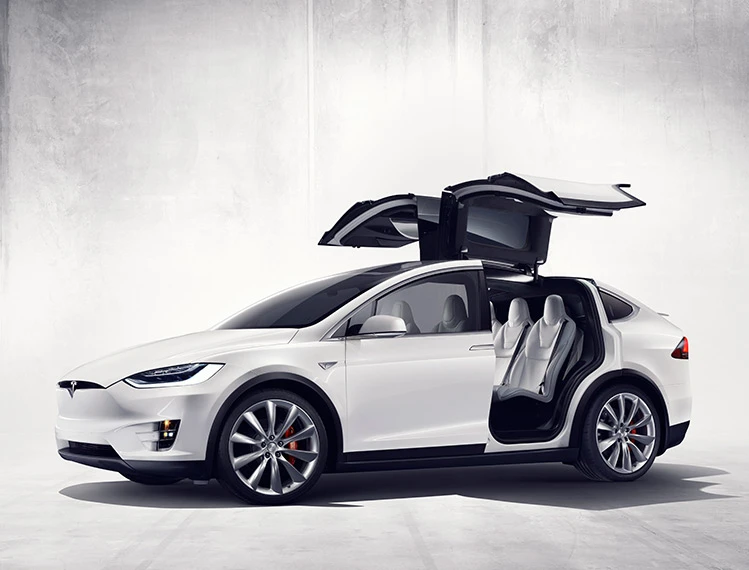 Australia now has a total of 18 Supercharger stations, with another 17 planned for installation. In just the last four months more than 80 Destination Chargers have been installed bringing the total number of sites around Australia to 384. Recent additions include South Australia’s Barossa Pavilions, a 75-acre hillside retreat located in the , and Deep Blue Hotel and Hot Springs in Warrnambool offering luxurious accommodation and coastal views along Victoria’s famous Great Ocean Road.
These Supercharger and Destination Charging locations are part of the largest electric vehicle infrastructure supply in Australia and Tesla’s continued effort to double the size of charging sites by the end of the year. Tesla Superchargers have a higher power output than the Destination Chargers, with up to 120 kilowatts of power providing up to 270 kilometres of range in just half an hour. Planning for the locations looks at easy to access sites that also provide food, beverage, facilities, shopping centres to allow for drivers to have a rest stop in a pleasant environment whilst recharging themselves and their cars.
Destination Chargers work on the same basis as the charger you’d have installed at home. These allow longer stops for drivers whilst they charge at 40 kilometres of range every hour on single phase or double that on three phase. Tesla provides a map of their Australian charger bases here: Tesla Australia charging locations.
A Prancing Horse SUV and Sweden Gets Plugged In.
It’s now confirmed that Ferrari, one of the world’s great luxury sports car makers, will also release an SUV. This brings Ferrari into line with companies such as Bentley, Maserati, Jaguar, and Lamborghini.
Sergio Marchionne, Ferrari’s global chairman, dubbed the vehicle a FUV, a Ferrari Utility Vehicle, during an address in the US recently.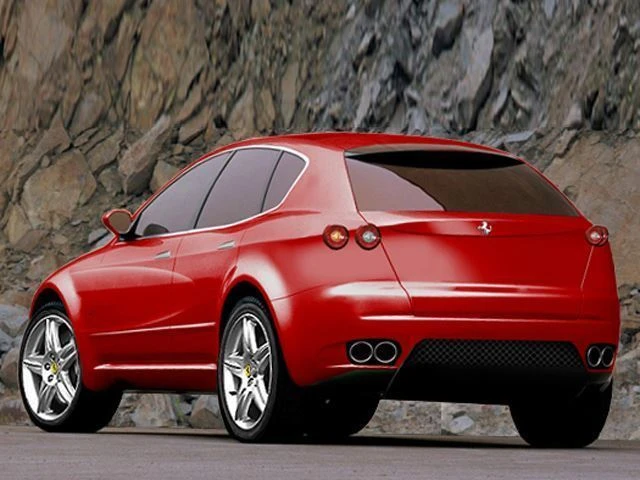 With a mooted release date of 2020, currently, Marchionne said: ““We’re dead serious about this. We need to learn how to master this whole new relationship between exclusivity and scarcity of product, then we’re going to balance this desire to grow with a widening of the product portfolio.” Australia’s Ferrari representative, Herbert Appleroth said: “He has certainly given everyone some information on where he is thinking.”
When questioned if an SUV model would be an appropriate addition to Ferrari’s Australian range, Mr Appleroth said any future product would be embraced by the local arm and its customers. “Look, any new model that enters this market is highly popular, whatever that is,” he said. “As Enzo always said, he was asked once, ‘What is your favourite Ferrari?’ And he famously quoted, ‘The next one.’ And I think that is the same for us.
It’s said that the vehicle, in line with Ferrari’s business model model, would be exclusive and limited in release numbers.
Volvo‘s performance arm, Polestar, has unveiled its concept car, Polestar 1, and in a first for the Swedish icon, said that future cars would be exclusively electric. Polestar 1 will be manufactured in a new factory currently being built in Chengdu, China. The engine will be a super- and turbo-charged petrol engine assisted by two 80 kilowatt electric motors. Total power and torque is quoted as being 440 kW and 1000 Nm.
Thomas Ingenlath, Chief Executive Officer of Polestar said; “Polestar 1 is the first car to carry the Polestar on the bonnet. A beautiful GT with amazing technology packed into it – a great start for our new Polestar brand. All future cars from Polestar will feature a fully electric drivetrain, delivering on our brand vision of being the new standalone electric performance brand”.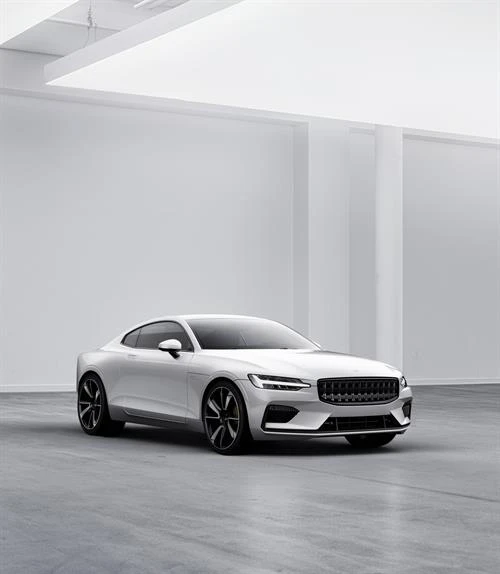 Also, Polestar cars will be ordered 100% online and offered on a two or three year subscription basis. The zero-deposit, all-inclusive subscription will also add features such as pick-up and delivery servicing and the ability to rent alternative vehicles within the Volvo and Polestar range, all incorporated into one monthly payment. However, Polestar will open shopfronts where people can visit and physically interact with a vehicle, enhancing the tactile experience. Polestar commenced taking orders from October 17, 2017.
 Level 2, 9 Help Street