

Buy A New Car
Tracks To Follow: Ripsaw.
In a car based culture it’s understandable to overlook that there are other ways of motorvating yourself around. No, we’re not talking boats or bikes or hovercraft. They’ve been done.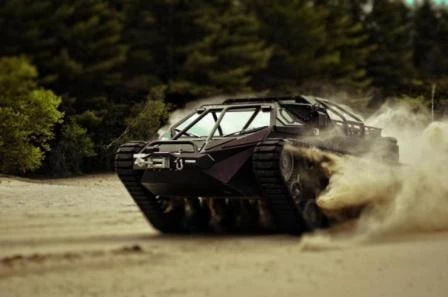 What we’re talking about is a tracked vehicle. You know, like tank tracks. American based company Howe and Howe Tech has the answer. Enter, stage left, the Ripsaw.
The easiest way to view this in your head is like this: think of a tank, take away the body and turret, replace it with something vaguely resembling a car body and that, in essence, is the Ripsaw. The vehicle is available in four specification levels and be warned, if you ask for the EV2 or EV3 (EV stands for Extreme Vehicles, by the way) it will take the firm around the six month mark to build. There’s the EV2, and now the EV3 in three levels, being the F1, F2, and F4. Simply put, they’re built to carry one, two, or four people.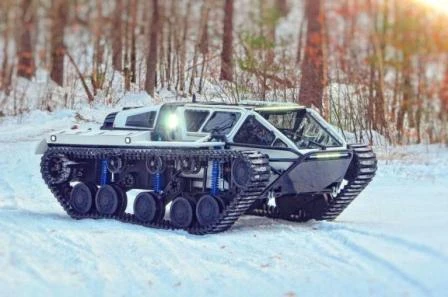 Price? Upwards of a half million US dollars.
But what do you get for your hard earned? Well, you can go for a powerplant that’s either petrol or diesel, and choose a power range that can go to 1000hp or 1500hp depending on an oiler or gasoline engine. You’ll get sixteen inches of suspension travel and air suspension for the cabin. There’s a choice of one or two 32 gallon fuel tanks in the F1, with 85 gallons in the heavier F4, which provide a range of up to 250 miles.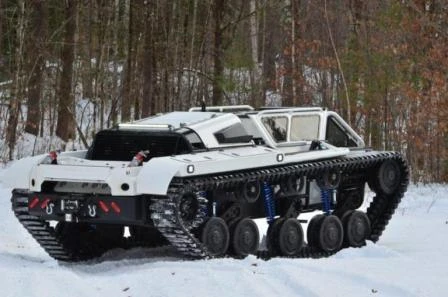 Originally designed to be a small and fast attack vehicle, the Ripsaw was quickly (pun only slightly intended) recognised as being a worthwhile base upon which to build a luxury oriented vehicle. And by using both in-house supplied and readily available commercial truck parts, repairs and spares are easily performed and obtainable.
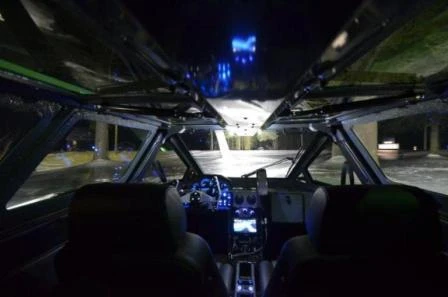 Built with military grade tracks, going off-road is as easily done as thinking about it. With a low centre of gravity and that torque, angles of fifty five degrees are achievable, as long as you have a strong stomach.
Should your bank manager be agreeable, here’s some video of what the Ripsaw can do: Ripsaw on The Grand Tour
Official Ripsaw Footage
The vehicle also featured in the Fast and Furious 8 film.
2017 Was A Car-razy Year For Sales In Australia
Car sales people in Australia should have cause to sit back and enjoy a cold one after VFACTS said that 1,189,116 vehicles were sold in 2017. That includes record numbers for Japanese niche filler, and a brand that really should be considered mainstream, Subaru. Korea should also celebrate as Kia saw record numbers as well.
But there’s also signs of a continuing trend that’ll have some smiling and others pensive, as 2017 marks the first year that SUVs outsold the traditional passenger car. Federal Chamber of Automotive Industries (FCAI) Chief Executive Tony Weber said: “2017 marks the first full year in which the sales of Sports Utility Vehicles (SUVs) have outstripped those of passenger cars. Australians bought 465,646 SUVs during 2017 for a 39.2 per cent share of the total market, compared with 450,012 passenger cars with a 37.8 per cent share. The shift in industry dynamic we observed last year has now become entrenched in our market. It is a growth pattern that we expect will continue.”
Even light commercial vehicles saw an increase; 2017 has that category with a market share of 19.9% in 2017, up from 18.8% in 2016.
The Toyota brand will be celebrating as both brand and a Toyota badged vehicle took the number one sales position. Toyota had a 18.2% market share and the HiLux was the winner for both 2017 and in December, selling 3949 units, just ahead of Holden‘s Astra at 3533.
Mazda, Hyundai, Holden, and Mitsubishi rounded out the top five, with Kia cracking the 50,000 mark for the first time ever and seeing 54,737 cars roll out from the showroom for ninth. Subaru claimed tenth, also with a plus 50K figure at 52,511. Ford, Volkswagen, and Nissan filled the remaining places with Ford’s Ranger at 3458 just pipping Holden’s revamped Colorado on 3222. It should be noted that the Colorado had an increase of 165.6% for December 2017 over the same period the year before. On 2807 for December 2017 was the petite Mazda3, a decrease of 10.6%. It was an upswing for the next highest selling vehicle and the gong goes to Mitsubishi‘s Triton, with 25.6% and 2645 sales.
Toyota’s evergreen Corolla had a backwards step, with a minus figure of 9.8% but still saw 2641 versions find new homes in December. With local manufacturing wrapping up, Holden still managed to see the VF series 2 Commodore into 2229 homes, a slight increase of just 4.6%. A facelift and some sharp pricing for the Mitsubishi ASX, in need of an interior overhaul, take ninth with an increase of 43.4% and 2128 sales. Tenth overall in December was Mazda‘s CX5, just behind the ASX on 2113 and a mild increase of 10.9%
Kia’s Cerato was behind the push to crack the 50K mark.With an increase of just under 43%, at 18,371 sales. Big numbers for Sportage as well, with 13,448 being sold and that’s an increase of 23.1%. The baby Picanto, itself receiving an update, dominated its category with a whopping 46.5% market share, as Carnival also dominated, with virtually half of the People Mover market under $60,000 wearing the Korean badge. December 2017 saw thirty six consecutive months of growth for the Subaru brand. Leading the way was the Forester, rolling into 12,474 new homes in 2017. The Liberty wagon based Outback was a close third, on 11,340, whilst the new for mid 2017 XV had increases of 22.6% for the year and 69.9% for December, with 10,161 and 1069 sales respectively. A slight revamp for the BRZ coupe saw an increase of 137.5% for 786 sales.
 It was the facelifted Impreza range that snared second place for Subaru sales in 2017, with a massive increase of 151.9% over 2016 sales and 11,903 cars saying goodbye to the showroom. Both Liberty and Outback are due for updates in 2018 and Subaru have also flagged a major revamp for the Forester which will be due in the last quarter of 2018
Private Fleet Car Review: 2018 Renault Captur Intens
It’s rare nowadays to find a vehicle that can be kindly described as loathed by automotive writers. Technology in the form of entertainment, engine management, transmission variants, and the like, means cars drive, perform, cosset, and are generally regarded as nothing less than good. Then there’s the revamped for 2018 Renault Captur. The Intens is the range topper and is fitted with digital radio, a turbocharged three cylinder, and dual clutch auto. Sounds good so far. But, the gap between expectations and reality for this particular vehicle is Grand Canyon sized. Priced from $22,000 to $31,590, it’s got a lot to live up to.
 The Captur comes with a choice of two engines and neither are what could be considered…big. There’s a 0.9L or, in the case of the Intens, a turboed 1.2L, with power and torque to match the relatively tiny motor. Peak power of 88 kW arrives at 4900 rpm, with peak twist of 190 torques at 2000 rpm. Thanks to the small size of the car itself, it’s good enough to see just on eleven seconds for the 0 to 100 kph stretch.
 Because it’s such a small body at just 4122 mm in length and a wheelbase of 2606 mm, the fuel thimble holds just 45 litres of 95 or 98 RON. Renault quotes a combined figure of 5.8L per 100 kilometres. We lobbed at 7.0L/100 km with a more non-suburban drive. Power and torque hit the tarmac via the front wheels only. Also, also ostensibly resembling a SUV, it’s not intended to go off-road.
Transmission: dual clutch autos are pretty good once a vehicle is in motion. It’s the getting from stopped to going that is the issue and the Captur Intens is no different. There’s no engagement of drive from Park to Drive, or Reverse to Drive and vice versa. In Drive and at a standstill, there’s easily a second before the clutches engage and that’s time enough for oncoming vehicles that were a safe distance away to not be. There’s a dial in the centre console that offers three drive modes, one of which is Expert. It didn’t appear to change the feel of the Intens at all. The interior: flat, slabby looking, hard to the touch, black plastics mix with a 1980s style monochrome dash display, truly odd button placement, and wasted design opportunities imbue a sense of WTF in driver and passenger. For example, the dial on the centre air vents didn’t move the louvres for better airflow, it closed them The small centrally mounted touchscreen also hails from the last decade and, as the radio (DAB through the optional Bose sound system) and map shared space on screen, had a Home button that was ineffective, and looked like an attempt at high tech in a low budget sci-fi movie, utterly failed to visually appeal.
 Even the aircon had a quirk, with a button marked aircon off, with the end result presumably meaning the aircon is on all of the time otherwise. Safety? If you want more than four airbags, flashing brake lights in an emergency stop, and Blind Spot Warning then this is not the car for you.
The cruise control switch is mounted in the centre console and isn’t a particularly noticeable one at that thanks to being the size of a thumbnail. The steering wheel has a tab for cruise control speed changes on one arm and the on/off on the other. Audio controls are hidden from view by being built into a solid block behind the tiller’s right arm.
The otherwise comfortable and leather covered seats offered heating, not cooling (seriously what will it take for Aussie spec cars to get this?) with the miniscule buttons to operate found on the outer section of the front seat section. They were also lever adjusted, a disappointment for a range topper where electric should be the norm. Also there’s enough room for the front seat passengers to stretch the legs and not quite so for the rear seat. And such is the design that if you aim for three in the rear, that may be stretching friendships. The lower front section of the console houses a small bin and both a 12V & USB socket. The Intens is push button for Start/Stop, and the fob is credit card size in length and width, close to a half centimetre in thickness, and has a slot in the console for it for no discernible reason. Well, there was one. Every time we exited the Intens and walked just a couple of metres away, the car would lock, regardless of whether the windows were open or not, and browsing the user manual offered no joy. If left in the slot you could walk away knowing the car wouldn’t lock. But the key’s in the car….
 Thanks again to the overall small size of the Captur, the rear cargo space looks like it would hold two bags of shopping, however the parcel shelf lifts to offer an extra amount of space. Otherwise, it’s 377 litres which expands to 1235 when the seats are folded.
 Outside: here, the Captur has a shining light. It’s pretty, with a svelte look in its curves from front to rear and roof to wheels. Headlights are LED, there’s a pair of globe cornering lamps, and nicely integrated tail lamps. The test car came in a black over white colour scheme, with the sills a black as well to balance it out. It’s a family design, with the Koleos and Clio sporting the same elegantly curbed look.
 Out on the road the handling is predictable, with a slight tendency to understeer on the 205/55/17 Kumho rubber, but needs constant attention to alleviate a preference for wandering. Otherwise, it’s well mannered enough to be considered the highlight of the Captur Intens. Considered. The rear end feels too soft compared to the front, the lack of usable torque means overtaking is not going to happen and the whole feel of the suspension feels tuned more for plush than a bent for enthusiasm.
 However, Renault do offer a five year unlimited kilometre warranty, a huge five years roadside assistance package, and capped price servicing for the first three scheduled services.
At The End Of The Drive.
It’s a genuine rarity that we hand back a vehicle with the sense of relief as felt with the Renault Captur Intens. It’s the automotive equivalent of a good looking politician. Looks fantastic, has the substance of a soap bubble. The gearbox, lack-lustre engine, needlessly quirky design features, lack of safety, and $32K price thanks to the Bose audio, simply don’t do enough to put forward a convincing argument to park this one in the drive.
2018 Holden Commodore Pricing Released….And It's Good!
Since Holden announced it would be ceasing car manufacturing in Australia, there was plenty of speculation about what would replace the locally developed and engineered Commodore. That answer was given and finally, in 2018, the fully imported Commodore will be released for the Australian market. Holden has today (December 12, 2017) provided pricing details and nope, they’re nowhere near as bad as some naysayers touted, nor are the spec levels anything to be ashamed of. There’s still a Sportwagon, too.
Tech will come in the form of such things as DAB (Digital Audio Broadcast), Apple CarPlay, Android Auto, Forward Collision Alert, Side Blind Zone Alert, the aforementioned 2.0-L turbo four and the adaptive all wheel drive for the V6 models, and more.
Pricing will start at a recommended retail price of $33,690, which is $1800 lower than the preceding equivalent model. That will have the 2.0-L turbo four and even better is the drive-away pricing that will be available. $35990 drive-away is what will be presented and that’s just $65 shy of $4000 cheaper.
Holden will keep the Calais and Calais V names, and these will get the V6, all wheel drive, combination as standard, along with heating AND cooling for the front seats, a massage function, wireless phone charging and leather wrapped tiller as standard. Although the evocative SS badging has been rested, with hints of a potential return, the sporty side for Commodore goes Euro, by getting the VXR badging. They’ll also get the AWD/V6, plus Brembo brakes up front, plus continuous damping technology in the suspension. Holden’s engineers have continued to take part in fine tuning that for the wide brown land market, with something like 150,000 kilometres worth of testing so far.
With thanks to Holden, here’s the good oil on the pricing and the model range.
2018 HOLDEN COMMODORE PRICING – RRP
Liftback (sedan)
LT 2.0-litre turbo * $33,690
Calais 2.0-litre turbo * $40,990
Calais-V V6 AWD $51,990
RS 2.0-litre turbo $37,290
RS V6 AWD $40,790
RS-V V6 AWD $46,990
VXR V6 AWD $55,990
Sportwagon
LT 2.0-litre turbo * $35,890
RS 2.0-litre turbo $39,490
RS-V V6 AWD $49,190
Tourer (high-ride)
Calais Tourer V6 AWD $45,990
Calais-V Tourer V6 AWD $53,990
* diesel available – $3,000 premium
2018 HOLDEN COMMODORE PRICING – DRIVEAWAY PRICING
Liftback (sedan)
LT 2.0-litre turbo $35,990
RS 2.0-litre turbo $38,990
RS V6 AWD $42,490
Tourer (high-ride)
Calais Tourer V6 AWD $47,990
2018 HOLDEN COMMODORE FEATURE HIGHLIGHTS
LT: Liftback and Sportwagon
2.0-litre turbo engine
9-speed automatic transmission
17-inch alloy wheels
Auto headlamps with LED Daytime Runnings Lights
LED tail lights
Passive Entry and Push-button Start
Remote Start
Holden Eye Forward Facing Camera
Autonomous Emergency Braking
Lane Keep Assist
Lane Departure Warning
Following Distance Indicator
Forward Collision Alert with Head-Up Warning
Advanced Park Assist (semi-automatic parking)
Rear View Camera. Front and Rear Park Assist
Rain Sensing Wipers
Holden MyLink Infotainment System with 7-inch high-resolution colour touch-screen display
Apple CarPlay® and Android® Auto phone projection
Full iPod® integration including Siri Eyes Free
Cruise Control
Leather Steering Wheel
8-way Power Driver Seat
60/40 split-folding rear seats
Spacesaver spare wheel
Diesel engine option
RS features over LT: Liftback and Sportwagon
18-inch alloy wheels
Sports body kit
Sports front seats
Side Blind Zone Alert
Rear Cross Traffic Alert
Leather sport steering wheel
Rear lip spoiler
Handsfree power tailgate (Sportwagon only)
RS-V features over RS: Liftback and Sportwagon
3.6-litre V6 AWD engine
9-speed automatic transmission
Adaptive AWD with electric LSD
Hi Per Strut Suspension
Rear Sports Fascia
Wireless phone charging
Ambient Lighting
Holden MyLink Infotainment System with 8-inch high-resolution colour touch-screen display
Apple CarPlay® and Android® Auto phone projection
Full iPod® integration including Siri Eyes Free
Embedded Satellite Navigation
DAB+
8-inch colour cluster screen
Colour Head-up display
Leather appointed seat trim
Heated front seats
Sports steering wheel with paddles
Alloy pedals
VXR features over RS-V: Liftback only
20-inch alloy wheels
Selectable mode Continuous Damping Control (CDC) suspension
Brembo brakes (front)
Electric Sunroof
VXR floor mats & sill plates
Adaptive LED Matrix Headlights
360-degree camera
Adaptive cruise control
Performance leather sports seats
Ventilated front seats
Heated rear seats
Driver & Passenger seat power side bolsters
BOSE premium audio
Calais features over LT: Liftback and Tourer
18-inch alloy wheels
Leather appointed seat trim
Heated front seats
Wireless phone charging
Side Blind Zone Alert
Rear Cross Traffic Alert
Holden MyLink Infotainment System with 8-inch high-resolution colour touch-screen display
Apple CarPlay® and Android® Auto phone projection
Full iPod® integration including Siri Eyes Free
Embedded Satellite Navigation
DAB+
4.2-inch colour cluster screen
3.6-litre V6 AWD engine (Tourer only)
Adaptive AWD with electric LSD (Tourer only)
High-ride suspension (Tourer only)
Handsfree power tailgate (Tourer only)
Calais-V features over Calais: Liftback and Tourer
3.6-litre V6 AWD engine
9-speed automatic transmission
Adaptive AWD with electric LSD
20-inch alloy wheels
Rear lip spoiler
Adaptive LED Matrix head lights
Electric sunroof (Liftback only)
Panoramic sunroof (Tourer only)
8-inch colour cluster screen
Colour Head-up display
360-degree camera
BOSE premium audio
Driver seat power side bolsters
Massage driver seat
Ventilated front seats
Heated rear seats
Sports steering wheel with paddles
 Level 2, 9 Help Street