

Author archive
How To Get The Best Mileage Out Of A Hybrid
 One of the main reasons that people purchase a hybrid car is because they want the great fuel economy of an electrical motor matched with the backup and power of a petrol engine. More and more car manufacturers are embracing hybrid technology (including plug-in hybrids) and when they promote their vehicles, one of the features that they love to highlight is the great fuel economy figures. Who doesn’t want to save a few bucks on fuel, after all?
Then comes driving in the real world. We all know by now that the fuel economy figures that they wave around with any car, whether it’s a hybrid, a petrol or a diesel, are all derived from test lab conditions where they don’t even pop the car in question out on a real live test track – no, indeedy, folks, they do it all in the lab where annoying things like crosswinds, slopes and the weight of the driver won’t make those L/100 km figures creep up. Nevertheless, you still want to get the most out of your new hybrid vehicle and keep those figures as frugal as possible.
The car will do its best to keep those economy figures at their best but the biggest factor influencing the fuel economy figures of a hybrid is the way that you drive. Here’s how:
Tip #1: Gently does it
Accelerate gently rather than roaring off and brake gently. This keeps your engine purring or ticking over in the green zone where you can use mostly the electric motor. What’s more, gentle braking and slowing down means that you can make the most of the regenerated braking energy, keeping the battery nicely topped up. So ease up on the feet and tread lightly if you want to reduce your footprint (doesn’t that clichéd metaphor work nicely here!).
Tip #2: Reduce drag
In their quest for great fuel economy, the design team of any hybrid vehicle have carefully considered drag and air resistance. As anyone who’s ever ridden a bike for a reasonable trip (i.e. over 1 km) will know, air really pushes hard on anything that moves and the more drag you’ve got, the harder the engine has to work and the more energy it consumes. This means that if you don’t need that roof rack or if you don’t need the windows down, don’t do it. Keep the outer skin of the car smooth so it slides through the air almost as efficiently as a fish through water or a falcon through the air…
Tip #3: Lose some weight
 Get rid of the junk in the trunk. Here, I’m not talking about trimming down your waistline or your buttocks (although any weight reduction will make your car more fuel efficient) but all the clobber that tends to get stuffed in the baggage compartments. Drop off that bag of old clothes to the charity shop or whatever you need to do to ensure that you’ve only got the essentials in there (you are allowed to keep a raincoat in there just in case).
These first three tips may sound familiar, as these fuel economy tips (plus other basics like making sure the tyre pressure is right) apply to any vehicle, not just a hybrid. However, there are some other techniques that are for hybrids only.
Tip #4: Stay in the zone
Most modern hybrids, especially the ones put out by Toyota, have a handy little dashboard display so you know when the electric motor is at work and when you’re using fuel. Keep half an eye on this – as long as the traffic is light and you can do this safely – and ease off as needed. You may need to spend a bit of time if you’re new to driving hybrid vehicles getting familiar with your display at first.
Tip #5: Neutrality is not an option
If you’re in that familiar situation of crawling through lots of stop-start traffic, don’t be tempted to put the gear into neutral while you’re at a standstill. Your battery will start discharging, which means it may not have the oomph when you need it. You don’t need to put it into neutral anyway, so keep your hands off that gear lever!
Tip #6: Is it necessary?
It’s easy to just pop on all the conveniences like air-con, lights and wipers just in case. However, if it’s only a little bit warm and you’re not going too fast, how about opening the window a little to let the breeze in? (Yes, opening the window increases drag but it only does this noticeably when you’re at higher speeds; around town, it’s probably more fuel-efficient that the air-con). If there’s fog or dew on the outside of your windows, wipe it off with that junk mail in your letterbox or a tissue before you get in the car rather than popping the wipers on. If it’s only spitting lightly and the moisture falling on your windscreen is running or evaporating off quickly enough for it not to affect your vision, don’t bother with the wipers. If you can see 100 m ahead of you perfectly well and you’re not in a funeral procession, you don’t really need the lights. All these little things drain electricity from the battery, so the less you use them, the more the battery will be able to do to get you around town. Use these conveniences only when necessary.
Tip #7 Circulate
Having your climate control on recirculate is more energy efficient than having it on free-flow, because the system doesn’t have to work as hard to get it up or down to the right temperature, which reduces drain on the battery.
Tip #8 Love summer
Even hybrid engines hate getting started on cold winter mornings. Winter also increases the need for fog lights, headlights, heaters and windscreen wipers. It’s a little known fact that winter driving is less efficient than summer driving. There’s not much you can do about this one apart from being aware of it. Maybe the crafty people in your life can whip up an afghan or car rug for you so you don’t have to crank up the heater?
Six Myths About Electric And Hybrid Cars
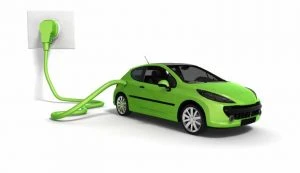
 #1: Electric Vehicles Put A Huge Drain On The National Grid
 #1: Electric Vehicles Put A Huge Drain On The National Grid
OK, there’s no denying that if you’re plugging in an electric car to recharge its batteries, you’re going to use electricity, which means that someone has to generate it. It’s also true that if there’s too much demand on the national grid all at once, then there’ll be problems with “brown-outs” (signalled by lights dipping and flickering when the new load comes on the scene – those who have lived in off-the-grid houses will know all about this). Notice those key words “all at once”? The amount of power demanded by electric vehicles – at least at this stage – is peanuts compared to the demand of air conditioning in summer in the middle of the day, especially during a super-hot summer like the one we’ve been having. In the USA, electric vehicles only account for 10% of the electricity demand. If everybody tried to (a) turn on their air-conditioning in the home and (b) charge their vehicles all at the same time, then yes, this would put too much of a load on the national grid. The answer? Charge your vehicle during off-peak times in the evenings and overnight when industry isn’t calling for as much power and air-conditioning systems aren’t working so hard.
#2: Electric Vehicles Haven’t Got Much Range
Some people are reluctant to purchase an electric vehicle because they have mental images of being stranded in the middle of nowhere with a dead battery and no way to recharge it. It’s true that if you regularly drove long expanses of open road in the middle of nowhere, you could get yourself in a mess. However, most of us aren’t driving around the Outback or around the farm on a regular daily basis: most of us are driving around the city. Most electric cars have a decent range of at least 100 km and some have a lot more. The typical city commute tends to be shorter than this – a lot shorter. Even if you live in a dormitory suburb. On top of this, the 100-km range is at the lower end of battery life and ranges for electric cars these days. The technology is improving as well, and some of the big names in electric vehicles (Tesla, Chevrolet and Nissan) are scheduled to release EVs that can get well over 300 km per charge.
#3: Electric Vehicles Are Expensive Luxury Items
This one is not quite a myth and not quite the truth. Yes, electric vehicles have a certain cachet and the early examples had quite a large price ticket. Some still do, especially the fully electric vehicles (as opposed to hybrids, which are on a pricewise par with their petrol and diesel fuelled equivalents). However, there’s a pattern that economists and sustainable energy boffins have noticed that happens with every new green technology – and even some that aren’t quite so green per se. The pattern goes like this: (a) A new technology comes on the scene. It’s hot, it’s new and it’s sexy, and everyone is drooling and excited about it. (b) The well-heeled jump on board and the new technology becomes a status symbol. (c) The manufacturers start introducing cheaper versions for the mass market (which, incidentally, are improvements over the older versions). (d) Everybody’s got one and the wealthy are looking for the next hot item. You’ve possibly already seen this happen in your lifetime with other technologies: think of cell phones. Some readers will remember back in the 1980s and 1990s with those brick mobile phones. They were one heck of a status symbol. Now it seems that the majority of teenagers have a phone that makes the old status-symbol bricks of the 1990s look pathetic. The same has happened with heaps of automotive technology, too, where what was once a luxury item is now standard: this has happened to seat belts, automatic transmissions, car stereos, cruise control, ABS brakes and airbags. Heck, even the car itself was once a luxury toy for the wealthy. The same is starting to happen with EVs and hybrids. They’re beginning to head mass-market. Given the desire for cleaner, greener technologies by many governments giving things an extra push and we’ll soon see the price tag of new EVs come down, as has already happened with hybrids.
#4: EVs and Hybrid Vehicles Are Dinky Little Hatchbacks
I wouldn’t call the Nissan Pathfinder a dinky little hatchback. Nor the Mitsubishi Outlander . These both come in hybrid variants. What about electric vehicles? Well, Audi Australia has an all-electric SUV planned for release by 2020, and that’s just one company. Yes, you can get small electric and hybrid hatchbacks. You can also get hybrid sedans and stationwagons. Land Rover has even put out some hybrid 4x4s (some of which did the rather rugged Silk Road in a publicity stunt a couple of years back). Electric 4x4s won’t be too far behind, especially as battery range improves.
#5: Hybrid and EV batteries Have Short Lives
One of the big worries about hybrids and EVs is that they would cause environmental headaches thanks to the batteries running out and needing to be disposed of – and batteries can be a disposal nightmare. However, if you keep the battery nicely topped up and don’t drain it completely out of charge all the time, it has a nice long lifespan and won’t need to be $$$replaced$$$$.
#6: There’s A Conspiracy To Get Rid Of Electric Vehicles
No. In spite of the documentary that came out in 2006 entitled Who Killed The Electric Car?, there isn’t some petrodollar-backed conspiracy to shut down production of electric cars. Yes, GM recalled its EV1 back in the 1990s and ceased production. However, you just have to look around you and look at any good car review site (ours, for example!) to see that there are plenty of hybrids and EVs out there, with more set to enter the market.
Utes are Great
What makes a good ute?
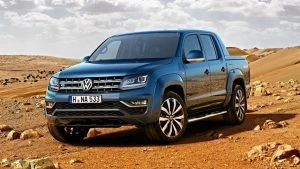
The word “ute” has its roots in Australian slang vocabulary and is a short word that describes a utility vehicle. Utes can be single or double cabs; the single cab has just the two seats or a bench seat to cater for the driver and front passenger/s, though the bench seat is less common these days. The added practicality of having an extra three seats in the rear of the double cab ute is often the reason why people prefer the double cab over the single cab. The single cab with a large tray allows you to throw all your tools in the back, and a spacious double cab ensures the whole family can come along for the ride.
Practicality is probably the number one reason many people buy themselves a ute. Being able to throw some rubbish, posts or firewood onto the deck is really easy when you have yourself a ute. The tray out the back is capable of carrying way more than you ever could in your sedan, hatchback or wagon and you’re often in hot demand when your mates are shifting house. You can often buy 2WD or 4WD models – as is the case with many of the utes you’ll find on sale. Nissan Navara, Toyota Hilux, Great Wall, Mitsubishi Triton are just some of the utes you’ll find on sale that can provide you with 2WD or 4WD alternatives.
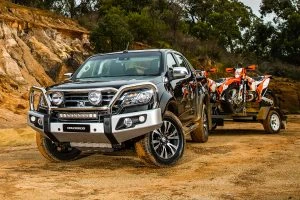
Utes are also built tougher than your usual sedans and wagons. Designed and built to work hard reliably, the chassis has been built tough to withstand heavier loads and provide strong towing capabilities. Obviously, the 4WD option will be offering a little more protection under the ute, mud plug tyres and a raised ride height – many 4WD utes can end up going some pretty way-out-there places. It’s very common to see a 4×4 ute towing the boat to the lake or a trailer full of kayacks. 4WD traction means that getting the boat down to the water and away again in slippery conditions is a breeze.
Many people opt for the dual cab ute because it can double as a work and family vehicle. Having the extra seats for the kids at school or on holidays is always going to be handy. A couple of decades ago, the ute was pretty basic and they had interiors that you could clean out using a bucket and a broom. Land Rover’s Defender still has this ability, and even some of the bog standard Japanes utes are rugged enough to be able to handle a slosh of water from the bucket and a broom to clean out the muddy interior. Most modern utes, whilst relatively tough on the inside, are actually very comfortable to drive and offer many luxuries and plenty of electronic gadgets like leather seats, fancy audio systems, satellite navigation and Bluetooth communications. Come cleaning time, these modern higher spec models need a little more care than just a slosh with a bucket of water and a broom!
I also see the ute as an asset in the safety arena. The modern ute is well equipped with safety equipment – some makes are better than others – but most provide airbags, ESC and ABS. Having a higher ride height – particularly in the 4×4 utes – is also advantageous.
The best utes are built tough while continuing to be comfortable to drive. It’s hard to go past a new Nissan Navara, Toyota Hilux, Volkswagen Amarok or Ford Ranger, as these are some of the best in the business when it comes to ruggedness and comfort.
Having plenty of torque under the hood to tow some heavy metal is a big plus. Holden’s Colorado, Ford’s Ranger and Nissan’s Navara are plenty powerful.
Choosing a new ute isn’t always an easy decision to make. In many ways, it’s tougher than picking out your average, everyday car. Not only do ute buyers want something big enough to carry their livestock, weekend gear or tools, they’re after a vehicle that’s reliable and functional enough to keep up with weighty lifestyle demands of work and play. Farmers and tradies will place a lot of trust in their utes –they are after all a workhorse.
The new Ford Ranger, Holden Colorado, Isuzu D-Max, Mazda BT-50, Mitsubishi Triton, Nissan Navara, Toyota HiLux and Volkswagen Amarok are the main rivals vying for top spot. Foton, Great Wall and Mahindra are also handy utes worth considering. Ford’s Falcon ute and Holden’s Commodore ute are immensely comfortable and powerful low profile RWD utes with a car-like drive for the long haul.
Cop Cars Around The Globe
 A couple of days ago, the Dubai police force created a bit of a stir in the automotive world by managing to scoop the Guinness World Record for the fastest police car on the roads: a Bugatti Veyron. With a top speed of 407 km/h and a 0–100 time of 2.5 seconds. The acquisition and fitting of the Veyron as a police car is something of a PR exercise for the Dubai Police; however, it joins some of the other supercars driven by the police in this country, making the United Arab Emirates possibly the country where it’s most fun to be a cop. Others in the Dubai police fleet include a Aston Martin One-77, a Lamborghini Aventador LP 700-4, a Ferrari FF and the “humbler”(?) Audi R8 , Nissan GTR and Mercedes SL 63.
Not many of the boys and girls in blue around the world are so lucky. Most of them have to put up with much more mundane machines, albeit with all the extras that cops get to play with, including the lights and sirens.
Australia:
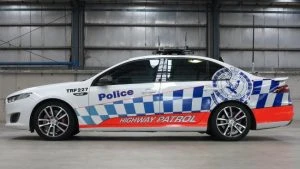
The Ford/Holden rivalry extends to the police fleet, with Ford Falcons and Holden Commodores making up the bulk of the fleet in various incarnations for the past 30 years or so. Now, however, with the demise of Ford and Holden in Australia, taking these iconic marques with them, the cops are looking for new wheels that can do the business of high-speed chases. The Kia Sorento SUV is one contender, along with the Ford Mustang, Chrysler 300 and BMW 5-series. The new Kia Stinger is also a contender – or at least it will be when it goes on sale in Australia. Watch this space!
 United Kingdom:
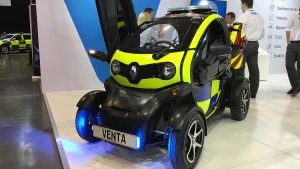
In spite of the original Top Gear Unholy Trinity sneering that the British police got about mostly in Vauxhall Astras, the modern equivalents of Robert Peel’s special troops get around in a selection of BMWs, mostly 3 and 5 series, plus a few others, including the quirky Renault Twizy (probably as a PR exercise, as this is going to be useless in a high speed chase)
Germany:
What do you think they use as police cars in Germany? Plenty of BMWs (320 Dt being popular), Audi A4s and a smattering of other local marques, including Opels and Volkswagens.
USA:
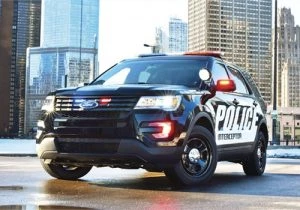
The most common are the Ford Crown Victoria and the Chevrolet Impala. However, Ford USA also puts out some cop cars that come off the factory floor ready to go on duty, the Ford Police Interceptor Utility being one of them.
France:
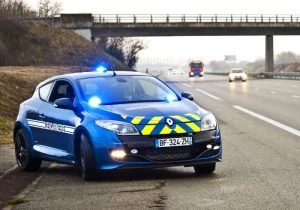
The latest addition to the fleet of the gendarmerie is the Renault Megane Coupé RS . Keeping it local and classy!
India:
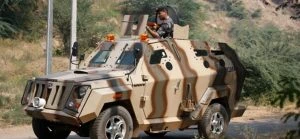
India also believes in keeping things local, which means you’re not going to pick up the equivalent in your local Aussie car yards if you have a hankering to drive what the cops in India drive. At any rate, you’ll have a hard time finding the Mahindra Scorpio and an even harder one finding the Mahindra Marksman (which comes complete with machine gun mounts).
Israel:
Without the need to keep things local and with a need for serious security, the Israeli police – which is considered to be a division of the military Special Forces – need something pretty rugged. Toyota Landcruisers, Isuzu Troopers and Land Rover Defenders all get used, as do Hummers. In urban areas, a selection of sedans get used, with Toyotas being spotted frequently.
Russia:
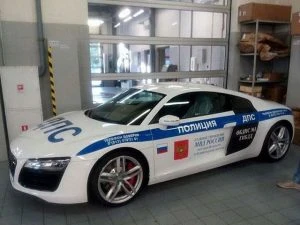
Wikipedia lists a host of Ladas as being the patrol car of choice for the Russian police. However, before you decide that this is the best place to try a heist, think again. The fleet has recently been updated with a collection of Audi R8 V8s.
Finland:
In a land where rally driving is one of the top sports and getting a license means some really intensive training including ice driving, what do the cops use? The English version of the official Finnish police site is coy about the marques used but prodding elsewhere suggests that alongside vans of various types, the Mercedes Shooting Brake is part of the fleet. See how you go with one official video – even if you speak no Suomi, you can pick out the words for “police” and “Mercedes Shooting Brake” easily enough.
Incidentally, for those who prefer a second-hand car to a new one, I’ve heard it said that getting an ex-cop car can be a good pick. They have high mileages but have been superbly maintained with speed camera fines taxpayer dollars. All the extra bells and whistles, beginning with the lights and sirens, are removed before sale, though!
 Level 2, 9 Help Street