

Author archive
Why Driverless Technology In Cars Isn’t The Same As Autopilot Systems In Planes
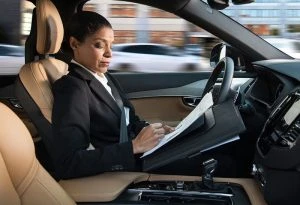 One of the more interesting and exciting developments in the world of automotive technology these days is all the research into autonomous cars (aka driverless cars or self-driving cars). They’re really trying hard to develop these and get them working. In fact, one recent news report claimed that Volvo is looking for 100 volunteers from the industry’s home town of Gothenburg to commute to work for a year in prototype driverless cars – along a selected route that don’t have bikes, pedestrians or snow. That last factor might be a bit of a challenge in Sweden: Gothenburg may have a warm climate compared to the rest of Sweden but still gets an average of 10 snowy days per month during December and January, snowfalls possible from November to April, and had a record number of snowy days in 2016.
The drive (ha ha) behind driverless cars is to eliminate one of the main causes of accidents: human error. Humans make dumb decisions, forget the road code, have attention that wanders or gets distracted, get tired and get frazzled. Humans also like drinking alcohol. Computers don’t get drunk, etc. so the thinking is that if you can get a computer to take over a lot of the decision-making with a system that can calculate distances and speeds precisely, never forgets the highway code, doesn’t get tired and doesn’t start planning dinner in the middle of the commute. Therefore, a car that uses automated systems will be safer, as the human error is eliminated.
The standard comparison is to autopilot systems in planes, which have been in use for quite some time.
The Road Isn’t The Sky
OK, let’s just stop and think about that. Although autopilot systems have been standard in most passenger aircraft since at least the 1930s (using an analogue system rather than computerised), the main idea in autopilot systems is, according to the FAA, designed to “significantly reduce workload during critical phases of flight”, not eliminate the workload of the pilot altogether. It can be turned on and off as the pilot wishes, kind of like cruise control. The big fat FAA manual for general aviation (that’s the basic flying licence level) contains guidelines on when NOT to use autopilot. Planes with autopilot function are not “pilotless planes”. Yes, drones exist, but they’re usually kept for missions you don’t want to send people on. If a drone crashes, that’s annoying. If a plane crashes with people on board… you get the picture.
What’s more, the air isn’t as busy a place as the road. Go to even the world’s busiest airport (Hartsfield–Jackson Atlanta International Airport in Atlanta, Georgia, USA) and you’ll see an average of about 2.4 thousand aircraft movements (takeoffs and landings) per day. The world’s busiest road (Ontario Highway 41 in Ontario, Canada) sees 500,000 vehicles per day go through on average. Do a simple test if you’ve got a spare day (don’t we all wish!) and pick an intersection near an airport. Count the planes going in and out, and count the number of vehicles going through the intersection, and you’re guaranteed to count more cars than planes, unless you’ve selected a tiny little airstrip in the Outback.
The sky also doesn’t have the equivalent of intersections. The closest pilots get to an intersection would be an airport. During takeoffs and landings, the pilot (and probably the co-pilot) is on full alert. What’s more, the issues to do with who gives way to whom and when the pilot can enter the “intersection” is handled by the ATC (air traffic controller), who has probably been in radio contact with all pilots approaching the airport and has had received all the flight plans about what’s going to land and take off earlier in the day. This does not happen at your nearest roundabout or traffic lights.
Driving a car also requires negotiating more intersections. In a plane, the pilot sets the autopilot function to navigate and steer, and the plane can go in a straight line, more or less, to where the pilot wants to go. This doesn’t involve turning left in 200 metres, then taking the second intersection to the right, then along the one-way system until the next set of lights and turning left, then carrying on to the roundabout and… well, you get the picture. This means that there’s less for the autopilot to do: it will make sure the heading is right, use gyroscopes to correct for any imbalances and get the attitude and altitude right.
Admittedly, there are more things that a plane’s autopilot function has to take care of, thanks to things like stall speed (go too slow and the plane will fall out of the sky), yaw, pitch, roll and thrust. The autopilot also handles some navigation issues via GPS and checks the altitude. However, these are mostly issues that are internal to the plane. Taking care of external things, such as coping with changing winds and weather, is the job of the pilot. In a vehicle, we’ve already got electronic stability control packages and nobody thinks of those in discussions of driverless cars. However, what a driverless car would need to handle is mostly external to the car: oncoming vehicles and the like.
Our roads contain pedestrians, bikes and animals. These are not governed by computer algorithms and will do things that autonomous technology can’t predict. Detect, yes. Slow down for, yes. Predict, no. This is also a problem for pilots and is one that autopilot can’t do much about. Not that there are bikes and people whizzing about up in the flight paths but there are birds. Bird strikes are some of the major hazards of flying – if you remember about 10 years ago with that incident of a big passenger plane having to do an emergency landing in New York’s Hudson River, it was a collision with a goose that made things go to custard.
Pilots have to stay alert when flying. No pilot relies entirely on the autopilot all the time – just some of the time. The pilot is always responsible for what happens. In addition, on longer flights, there is a second person or even a third ready to take over responsibility if the pilot has been on alert for too long. Pilots are in radio contact with other pilots along the route, plus the control tower(s), so everybody knows where everybody else is. It’s not the same on the road.
So what’s the moral of all this? In my opinion, our image of sitting back playing Angry Birds and sipping a latte while the vehicle takes us from our homes to work has to go when we think of driverless cars. Even if the car has good enough sensors and navigation to get you around that corner at the right speed, and can remember the give way rules for you and gun into a gap at the roundabout, the driver will still have to be on the alert to take over if things don’t quite go to plan or if the unexpected happens. Autonomous systems should be there to help and back up the driver and reduce workload, not take over from the driver completely. If you want the Angry-Birds-and-latte experience, take the bus or carpool so you get your turn at being the passenger.
French Flavour
France is, perhaps, best known for the Tour de France, fine wines, cheeses, romance and nice comfortable, stylish cars. Did you know that French cars are hugely popular in Europe and are a major player in France’s economy? Producing around 1 million vehicles each year, France’s car manufacturing businesses employ over 75,000 people. The French know how to make cars with a unique and distinctive style. Many design awards have been given to both Peugeot and Citroen cars.
Citroen has a number of very classy vehicles. Providing both passenger vehicles and vans, Citroen has a model for most market segments. Kicking it all off is the Citroen DS3, a performance hatch with hot looks and a great engine. Featuring direct petrol injection and a turbocharger, the e-THP 160 motor develops a maximum power of 121 kW at 6000 rpm and 240 Nm of torque between 1400-and-4000 rpm. This is a similar size to a new Mini, providing loads of style inside and out, while being quite cheap to run and enjoyable to drive via a slick six-speed gearbox.

Citroen DS3
Citroen C4 models are elegant (although calling the C4 Cactus elegant would be doubtful) and cover the mid-size hatch, people mover and cross over vehicle segments. These are roomy, comfortable vehicles that are extremely efficient and provide both diesel and petrol versions. The Grand C4 Picasso is one of the best people movers in the medium people moving segment. Very luxurious, stylish and safe, it’s a great way to travel in small groups.

Citroen C4 Picasso
Citroen C5 models are the large hatchback models that have standout exterior and interior design. Always good to look at, comfortable to drive and very well equipped, the Citroen C5 and C5 Tourer (station wagon version) are a dream to drive – particularly over the long haul.

Citroen C5
Peugeot cars are probably the better known French car down under. Like Citroen, Peugeot cars are highly successful with their entries in the WRC championship, and with repeated victories at Dakar, Pikes Peak and Le Mans, Peugeot cars are engineered for high performance. Offered in the new line-up of Peugeot cars on sale in Australia are some very quick and agile cars that come in the form of the 208 GTi, and 308 GTi. The 200 kW power output for the 308 GTi comes from a high-pressure 1.6-litre turbo engine that delivers 330 Nm of torque. Limited slip-differential and adjustable suspension settings make for a very accurate and fast car over any road.

Peugeot 308 GTi
There are some other striking new Peugeot cars on sale in Australia and these include the: other versions of the smallest new Peugeot 208 and the slightly larger Peugeot 308. SUV options are available in the form of the Peugeot 2008 and 4008. Big touring prowess comes from the very nice looking, roomy Peugeot 508 and Peugeot 508 Touring models. These cars are refined at high speed and very comfortable and modern inside the cabin.

Peugeot 4008

Peugeot 508 Touring
Very close to arriving in Australia is the big SUV known as the Peugeot 5008 with a panoramic sunroof, loads of luxury and technology, and good handling. Private Fleet love selling cars and we’ve had a long affinity with selling Peugeot cars to new car buyers.

Peugeot 5008
New Renault cars are very safe and comfortable cars to drive. You can buy a new Megane Hatch for a competitive price and enjoy the car’s responsive and efficient engines, comfortable seats and five-star safety.

Renault Megane Hatch
Check out the new Renault Koleos design and be impressed with the upmarket design, large interior (especially in the rear seats) and strong engine and dynamics. Both 4×2 and 4×4 versions are available for the new SUV, and it will handle Australia roads very well.

Renault Koleos
On the lookout for a nice small car to run around in, then the Renault Clio is a zippy, comfortable drive.

Renault Clio
Master, Trafic and Kangoo are names given to a fine range of Renault vans built for work. The Renault Master is one of the best drives on the market with a huge load carrying capacity and modern array of technological features.

Renault Master
Renault Megane R.S models are the best hot hatches around. These are very quick cars in a straight line and around corners making them hugely entertaining cars to drive. Engine output is around 200 kW and 360 Nm of torque.

Renault Megane R.S
Keep your eyes and hears on alert for the new range Renault Z.E electric vehicles. The small Renault Zoe is the top selling electric model, and global sales of the electric city car achieved 50,000 units in June 2016. The Renault Fluence Z.E is a nice, sporty looking electric vehicle that might prove appealing to the driving enthusiast.

Renault Zoe Z.E

Renault Fluence ZE
Renault’s involvement with Nissan is a good thing and the combined efforts has benefited both parties very well. Most new Renaults come with a comprehensive 5 year/unlimited km warranty on new vehicles.
The French love the better things in life, and maybe a French drive might add something more to your daily drive…
Italy's Finest
What do Abarth, Alfa Romeo and Fiat have in common? Cars from these manufacturers come from Italy, of course. Maserati, Ferrari and Lamborghini are the exotic sports cars from Italy. Italians are capable of producing some really eye-catching cars that ooze style and performance. What are some new cars on offer from these Italian manufacturers (just in case you’re wanting one of these) and what’s on the near horizon? Let’s take a look.

Abarth is Fiat’s sporty wing that produces exciting and affordable Italian cars. These guys could get you into a brand new 124 Spider – a really fun and exciting roadster. The Abarth 124 Spider is Italian’s version of a Mazda MX-5. Amazing road holding, lovely lines and a small Turbo engine means that this little open-top sports car can fly, and fly efficiently.
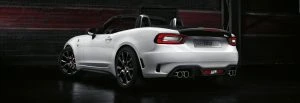
Abarth 124 Spider
Want to go as small as possible and still be able to keep up with the big boys? The new and cute Abarth 595 and 595C get power from a 1.4-litre Turbo T-Jet engine with a peak power of 103 kW and a maximum torque of 206 Nm. With a top speed of 204 km/h and an acceleration of 7.9 seconds to reach 100 km/h from a standstill are sensational for such a cute little sports car.
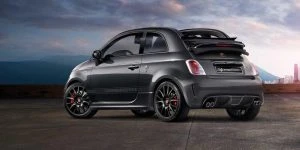
Abarth 595C
Fiat also provides some great everyday drives. One of the new standout cars is the cleverly packaged Fiat 500X. The raised ride height and bigger curves of the new 500X make the standard 500 somewhat dwarfed. AWD traction, Multijet Turbo performance and modern, unique interiors enable you to travel in style and tackle some of the less travelled back roads or city curbs.
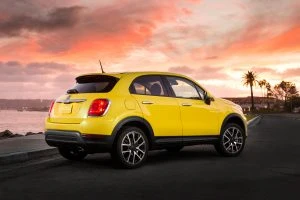
Fiat 500X
Fiats new Doblo and Ducato vans are really efficient and practical load carriers.
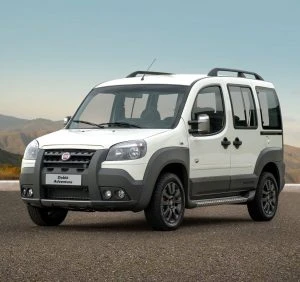
Fiat Doblo
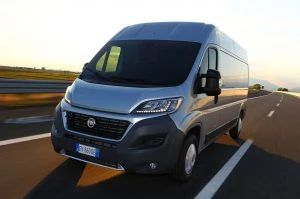
Fiat Ducato
New Alfa Romeo cars are some of my favourites. Who wants a practical car with loads of style and performance? The Giulia is a direct rival for the BMW 3, 4 and 5 Series models. The Giulietta is the hatch with style and practicality, while the brand new Stelvio is Italy’s answer to the sporty SUV.
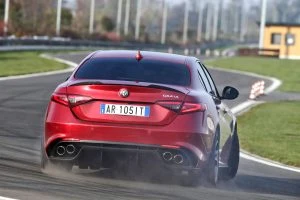
Alfa Romeo Giulia
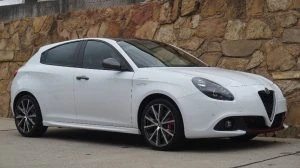
Alfa Romeo Giulietta
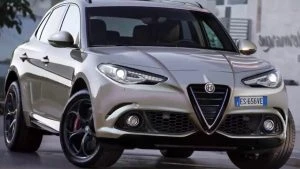
Alfa Romeo Stelvio
Rare in Australia are the Maserati range of cars. If you’re on the lookout for something really special, the Maserati range is truly exotic and covers sporty coupes, sedans, SUVs and cabriolets. A choice of two twin turbo V6 petrol engines and a 3 litre V6 Turbo diesel engine are available for the new Ghibli. Gorgeous lines are matched with the car’s sport leather interior.
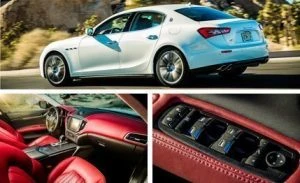
Maserati Ghibli
If you’re in the know, Ferrari and Lamborghini supercars scare the pants off the Germans! They are very good at going very fast, and look the goods time-and -time again.
The new Ferrari FF with 495 kW and 683 Nm is an AWD V12 powerhouse.
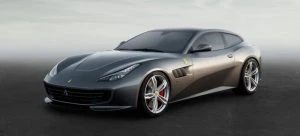
Ferrari FF
The new Lamborghini Huracan with V10 power and 600 Nm.
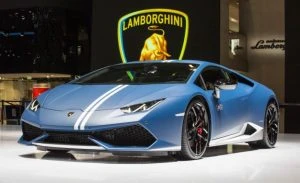
Lamborghini Huracan
Italy is a cool country not just because of its ability to make gorgeous cars but also the country’s land mass is shaped like a boot. Little wonder that Italians are excellent shoe designers, too!
The Passengers That Drivers Hate Most
 As we first discovered when we finally ditched the P-plates, one of the delights and duties of driving is taking passengers. Sometimes, your passengers are a joy and being their driver is a lot of fun. However, at other times, it’s more of a nightmare, especially with certain passengers.
Here is a rogue’s gallery of the passengers that you probably don’t want to provide driving services for unless you really can’t avoid it (e.g. if one’s your mother or if you’re a professional taxi driver).
#1: The Litterbug
According to a UK poll, messy passengers were among the worst type to cart about. You know the ones – the passengers who think nothing about sprinkling the floor of your car with empty chip packets, fast food wrappers, fingernail clippings, empty drink bottles and all the rest. The litterbug seems to consider a vehicle a mobile rubbish bin and doesn’t care that you’re going to have to clean that mess out and bin it at the end of the trip. Having a rubbish bag or car tidy on hand sometimes helps curb the bad habits of the litterbug, but much of the time, you end up gritting your teeth and feeling grateful that the litterbug isn’t dropping rubbish out of the window (which is rotten for the environment and can also end up getting on your paintwork).
If, however, you are one of those drivers who also chucks wrappers and packets into the footwell, you are more likely to be annoyed by…
#2: Donkey
This clip from Shrek 2 says it all:
Yes, it’s a cliché, but asking “Are we there yet?” really does drive drivers around the bend, up the pole and stark raving bonkers.
#3: The Map Illiterate
All good rally drivers have good navigators. A good human navigator who knows his/her way around a map (paper or on-screen) beats some of the software that tells you directions (and won’t send you round the long way, as some software has been known to).
A bad navigator – well, that’s another story! You’ve got the people who can’t or won’t read maps, who are annoying but are merely useless. There are those who use every single meaning of “right” instead of keeping it for a turn to starboard and say things like “Go right through the roundabout”, leaving you uncertain about whether you’re supposed to head straight on or turn right, or answer your question of “So I turn left after the school sports grounds?” with “Right”. You’ve got those who tell you to turn at the intersection just as you’re going through it and it’s too late to brake or indicate to go around it safely, forcing you do a U-turn or go round the block (and possibly get lost). Then you’ve got those who think that they can read maps or think they know the way from A to B and give you totally mistaken directions, sending you into the middle of nowhere.
Some navigators are competent but have bad timing. For example, they give you a screed of instructions (“Take the third intersection to the left, then second right, then go on for about a kilometre, then turn left at the roundabout, then the first driveway to the right.”) then expect you to remember it all. Fortunately, these ones can be trained to do the job properly. With the others, there’s no hope and you’d do better to stick to the computerised navigation system.
#4 Backseat Drivers
The backseat driver know exactly what to do when. He or she knows the right speed to go around every bend, the right time to indicate, the right speed to go at, the right lane to choose, etc. etc. ad nauseam. You never get it right if you have a backseat driver on board. You’re either going too fast or too slow, you’re braking too hard or too late, you’re going the wrong way, you miss all the good parking spots, and you’re either far too cautious and missing perfectly good gaps or you’re reckless.
You wonder if they’ve got a secret wish to work as a driving instructor. That would certainly get the urge to tell others what to do out of their system. Or maybe it wouldn’t.
#5 The Slammer
Whether they’re happy or sad, mad or excited, the slammer only knows one way to close a car door: give it a hefty shove so it bangs closed, shaking the whole car and making you wonder if it’s possible to slam a door so hard that you’ll set off airbags (answer: no). They make you wince when you think about what this is going to do to your car.
#6 Bigfoot
Bigfoot doesn’t like having his or her feet down in the footwell. Instead, Bigfoot puts his/her feet all over the dashboard or the back of the front seats. This is bad enough if Bigfoot removes his/her footwear first, which means that your dashboard gets marked by sweat. It’s worse if Bigfoot keeps his/her shoes on, smearing mud and grit over the dash. It’s also annoying having those great big hoofs up there in the edge of your vision.
Female Bigfoots (Bigfeet?) also attempt to give themselves a pedicure or paint their toenails. Pray like anything that you don’t hit a bump at the wrong moment, because nail polish is a beast to get off your interior trim.
#7 The DJ
The DJ constantly changes the music, skipping songs and radio stations, tinkering with the graphic equaliser, changing the CD, changing the volume, plugging and unplugging things from the auxiliary input or the USB input… It’s an improvement on the backseat driver or the are-we-there-yet pest but very annoying if you’re listening to your favourite driving music but the DJ switches it in the middle.
However, on the other hand, having a DJ in the passenger seat is an improvement on a DJ in the driver’s seat, at least from a safety perspective. As long as they don’t drive you nuts by tinkering with the sound system without asking you first.
Are there any others that we’ve missed? Now’s your chance to have a bit of a gripe!
 Level 2, 9 Help Street