

Author archive
New Vehicles from Mainland Asia, A Growth Sector
Currently, mainland Asia is a big pool of innovation and design, particularly, in car manufacturing. Design teams beaver away at creating fun new designs, shapes and technologies. The result of all this activity is the production of sharp-looking new vehicles appearing from South Korea, Malaysia and China, and in Australia we are benefiting from these excellent new car products that are competitively priced, well designed and built to a high standard. Some Australian new-car buyers are recognising the value in buying a vehicle from South Korea, China and Malaysia, so it’s a great time to be a car buyer, not to mention a car enthusiast spoilt for choice.
Models from China
China is the biggest country in Asia, and we’re starting to get familiar with Chery, Great Wall Motors, Foton and Haval model names. Great Wall and Foton make a nice range of low cost utes and pick-up trucks that can be either 2WD or 4WD.
With a grunty 2.8-litre turbo-diesel that has been designed by Cummins, the Foton Tunland models impress with smooth power and efficiency. Inside, the Tunland is comfortable and well equipped. Foton Tunland Utes come with a 3 year/100,000 km warranty making the new buy even sweeter.
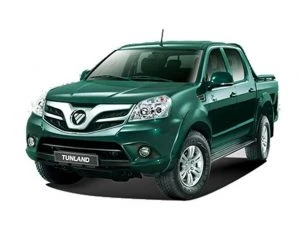
Foton Tunland
With an imposing stance, the new Great Wall Steed ute is a strong performer. Diesel, petrol, 2WD and 4WD options make this a versatile and useful addition to your working fleet. Equipped with all the modern safety features, the Great Wall Steed ute is set to impress.
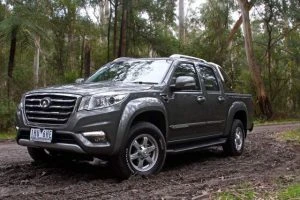
Great Wall Steed
Low cost Chery cars are easy to live with, and are principally popular to those who are on a slight budget. Chery J1 offers a small car in a neat package. Chery J3 cars are a little larger and offer comfortable space in the form of a small hatchback. The Chery J11 SUV offers superior value for money and a full three year/100,000 kilometre warranty.
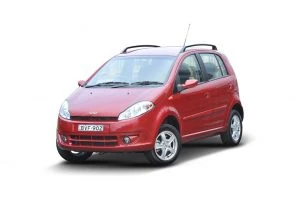
Chery J1

Chery J3
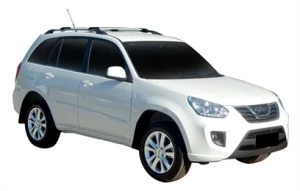
Chery J11
Little known in Australia, but hugely popular in other parts of the world, are vehicles from Haval. Haval is the newest SUV player in the Australian SUV market, coming to these shores after dominating the Chinese SUV market for the best part of 10 years. Haval is an offshoot of Great Wall, much in the same way that Lexus is an offshoot of Toyota, FPV is an offshoot of Ford and Arbarth is an offshoot of Mini. However, Haval specialises in SUVs only, and you won’t find any other type of vehicle wearing the Haval badge. They may come in different sizes, but they’re all SUVs. What’s more, Haval makes classy SUVs – vehicles that combine serious off-roading ability with precision engineering and style.
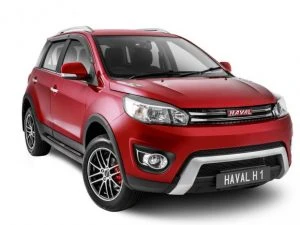
Haval H1
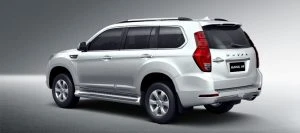
Haval H9
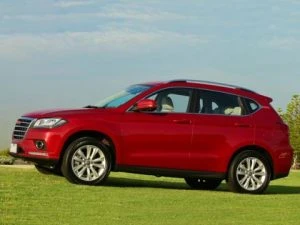
Haval H2

Haval H6

Haval H8
While parent company Great Wall tends towards producing reliable no-frills vehicles, Haval throws in a lot more bells and whistles, plus extra luxury – while still keeping the price towards the lower end. In creating these vehicles, the Haval design team has benefited from the knowledge and flair of the former head of the BMW design team, Pierre LeClerq. Haval vehicles are firstly practical and secondly beautiful.
Models from Malaysia
Proton is Malaysia’s national new-car producer. Having produced cars since the early eighties, Proton, in the last decade, has really kicked on to produce some excellent new models that are well-built and modern competing directly with the best low-cost models the world over.
Proton’s Suprima is a stylish small hatch with six airbags, reverse sensors, Bluetooth, iPod connectivity, steering wheel audio and telephone controls, and a sprightly 1.6-litre turbo engine. The car has five-star ANCAP safety and a five year warranty.

Proton Suprima
Proton’s new Preve is a saloon version of the Suprima and has a responsive naturally aspirated 1.6-litre petrol engine with 80 kW of power and 150 Nm of torque. A large boot, good legroom and comfortable seats make the Preve a great buy for those on a budget. Again five-star safety and a five-year warranty sets up an attractive package that asks well under $20k.

Proton Preve
Proton’s Exora is a well thought-out seven-seater wagon that has the family in mind with a DVD player available, MP3 connectivity, Bluetooth, cupholders, plenty of room and air vents for each row of seats. A four-star ANCAP safety test result with a five-year warranty sets this new model apart.
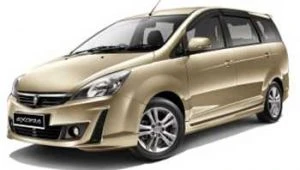
Proton Exora
Models from South Korea
Currently boasting the fifth largest automotive industry in the world, South Korea has some superb new models that have grown in popularity throughout the world almost as fast as PSY’s viral “Gangnam Style” video. The three main car manufacturing names we’ve all heard about are Kia, Ssangyong and Hyundai. Both Kia and Hyundai have some of the sharpest modern design teams in the business, and Ssangyong continues to offer some very good utility and SUV type vehicles.
Kia produces some nicely designed cars for the small-to-large car buyer. People movers are available, while the Sorento and Sportage are really popular SUV models. High-end models are very well equipped, safe and capable vehicles with loads of style. Watch out for the new Kia Stinger with its fastback styling and sleek lines. Longer and wider than a BMW 4 Gran Coupe and boasting a longer wheelbase than the Lexus GS, the Stinger means business and ensures you will have a commanding presence on the road. A twin-turbo V6 motor puts out around 270 kW and is matched to a slick eight-speed auto gearbox. The RWD chassis delivers exhilarating road holding and will be a delight to drive. There will be a 2.0-litre turbo performance model available as well.

Kia Stinger
Hyundai, like Kia, offer very stylish vehicles that cater for all shapes and sizes, purposes and performance. Hyundai are pushing the boundaries in the fields of styling and safety, and with solid engines and drivetrains these are a sound new-car buy. Hyundai’s latest Genesis is a luxury car that competes very well with the best of European luxury cars. Tucson and Santa Fe models are exceptionally popular SUVs, while Hyundai know how to make a stylish and practical large work van or people mover – known as the iLoad and iMax respectively. Watch out for the latest i30, promising clean lines and even more performance.
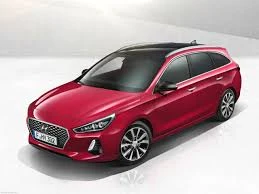
Hyundai i30
Sadly, Ssangyong has declined in sales across Australia, though the fashionable brand of SUVs and utes are sure to make a come-back in late 2017 with SsangYong marketing the new Y400 large SUV, based on the LIV-2 concept revealed at the recent Paris motor show, and the Tivoli compact crossover. The Tivoli is a compact SUV with nice lines and excellent features. With around 95 kW of power, the 1.6-litre petrol engine is powerful and efficient, while torque peaks at 160 Nm. Korean crash testing has given the new Tivoli a five-star rating.
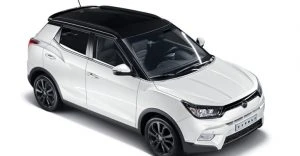
Ssangyong Tivoli
The new Y400 is a big Ssangyong Rexton SUV replacement that offers strong diesel turbo power and efficiency with loads of seating comfort and space. And, if you need a stylish new ute for work and recreation, the Actyon Sport ute is a tough unit with good looks and plenty of power.

Ssangyong Rexton Y400
Here in Australia we’re going to see more cars from Mainland Asia driving on our roads. Embracing the changing automotive landscape includes accepting the attractive Hyundai, Kia and Ssangyong drives. They’re great cars that are really well designed and competitively priced
Shock Absorbers And the Boing-Oing-Oing-Oing Factor
We kind of take our suspension systems and our shock absorbers for granted. We don’t tend to think about them too much until that time that the mechanic sucks in his cheeks, shakes his head and says “Your shocks are just about gone, mate and you’re going to replace them at a cost of $oodles a pop.” (Apologies for inadvertent sexism but where are all the female grease monkeys?)
However, if you remember back to the days of riding home-made go-karts, a basic skateboard or (I won’t tell on you) the trailer, you probably know why cars and vehicles in general are fitted with suspension systems. Without suspension, you feel all the bumps in the road. Every. Single. One. While this is great fun when you’re a kid riding in the trailer and getting bumped up and down, it’s not so much fun for longer trips and certainly doesn’t do your spine any good at all. It doesn’t do any good to anything delicate you’re transporting, such as eggs, or if you’re trying to take a blancmange or sloppy chili con carne to a potluck dinner.
 The full suspension system involves the wheels (pneumatic tyres), the springs, the shock absorbers and the links. Describing all of this and all of its variations would take ages and could take up several posts, so we’re going to talk about the part that does a lot of work that you might not realise: the shock absorbers.
Contrary to what you might think from the name, a shock absorber doesn’t have the job of soaking up the jolting, bouncing and jouncing that comes from hitting a bump. That’s the job of the springs. What the shock absorbers do is control the harmonic oscillation. That’s a long and rather technical term for what we’re going to call the boing-oing-oing-oing factor.
Although some of the springs in your vehicle’s suspension don’t look like Slinky Springs, mattress springs or trampoline springs, they are still springs and behave like any other spring. (For those interested, the weird ones we see in vehicles are usually leaf springs.) Now, when you stretch a spring then let it recoil, which is what happens when your car goes over a bump, what happens? If you can find a handy trampoline or Slinky, you can try this out for yourself. (Don’t try this on the hair of a curly-haired person unless you want to absorb the shock of a slap in the face. What’s more, hair tends to be self-damping unless its gelled like crazy.). Subject the spring to a sudden extension then let it compress by tying something to the end of the Slinky then letting it bounce out, or by letting yourself bounce down onto your bottom on the trampoline. What happens?
What happens is that unless you act to stop it (technically known as damping), you get the boing-oing-oing-oing factor. After you’ve bounced down on that trampoline, you’ll get bounced back up again, or the weight on the end of the Slinky will bob up and down. The initial boing will result in lots of oing-oing-oings, with each oing getting smaller.
Now, in a car, you want the initial boing as you go over a bump. What you don’t want is the oing-oing-oing, as this is downright uncomfortable as well as terrible for the handling. Vibrations aren’t good for the human body if they go on for some time (stop sniggering!). To stop the oing-oing-oing as the spring continues to vibrate after the initial shock, the vibration needs to be damped. This is the job of the shock absorbers. They’re actually dampers, which is nothing to do with that bush barbecue favourite consisting of flour and water wrapped around a stick and baked over hot coal.
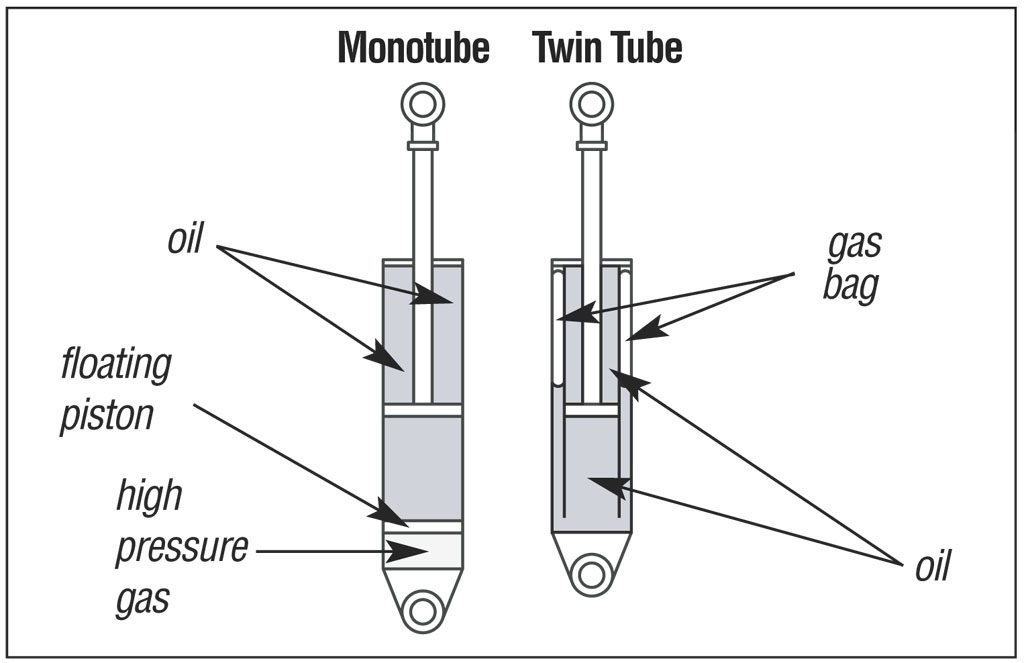 Shock absorbers take the kinetic energy of the oing-oing-oing and turn it into some other form, usually heat energy, via friction. This is usually done by using the force of the oing-oing-oing to shove oil from one compartment to another through tiny holes either between an inner tube and an outer tube (the twin-tube system) or from one end of a tube to another (the monotube system). This sounds weird but it works. Think of a syringe or a cake icing gizmo.
Of course, there’s a price to be paid for anything and I don’t just mean what you fork over to the mechanic every once in a while. With any system of shock absorbers and suspension, you have to trade off comfort versus handling. On the one hand, a super soft and completely damped suspension irons out all the bumps beautifully but handling is compromised – too soft and the wheels start dancing all over the place and lose grip. On the other hand, if you want the handling to be crisp and a bit of extra grip and road feel during cornering, you pay for this with extra bouncing. The stickier the liquid inside the shocks and the smaller the hole it has to go through, the stiffer it is. To use the cake icing analogy again, think of the effort it takes to push really sticky icing through a narrow nozzle for a very fine line. This takes a lot of force on your part, and if this was your damper (shock absorber), you would have super stiff, sporty suspension. Use a wider nozzle (for fancy star shapes) or make the icing runnier, and it splurts out really quickly. That’s comfort suspension.
The designers of modern cars are smart enough to know that you can’t please all the people all the time, and that people are not likely to buy one car for when they want to have a smooth ride and another for when they want performance. This is why they’ve now come up with adjustable suspension systems that allow you, the driver, to pick what you want when you want it.
The older systems of adjustable suspension did this by allowing you to make the holes (which are called apertures or orifices to make them sound fancy) in the damper tube big or small. Not a bad system as far as it went. These got fancier as time went by with sensors that adjusted the hole size depending on how bumpy the road was and how stiff you needed the handling.
The one drawback of the hole-size-based systems is that they were comparatively slow to react to the situation. After all, the signal had to get from the road to the sensor to the apertures, which then had to move from A to B. The designers decided it would be much quicker and better for handling and comfort combined if you could somehow make the liquid inside the shocks thinner or thicker depending on what you want. Although heating would make the liquid thinner (it does this anyway), this would be even slower and cooling for a stiffer suspension would take longer still.
Enter magnetorheological fluid (called MRF by designers). This combines oil with easily magnetised particles. OK, it’s oil chock full of iron filings because iron, as we all know, is attracted by magnets. This is fun stuff – even iron filings by themselves are a lot of fun to play with if you have a magnet, and the more powerful the magnet, the thicker and stickier the clump of iron filings gets. This video explains how it works:
And that’s exactly what happens in a magnetic shock absorber. If you remember your high school physics, which is probably where you got to play with magnets and iron filings, you may recall that any suitable iron rod wrapped with enough twists of copper wire becomes a magnet when current goes through the wires. The more current, the stronger the magnetic field.
Now, how quickly does it take electrical impulses to go from A to B? Hardly any time at all. This means that an active magnetic suspension system will detect what’s going on with the road surface, the speed, how fast and hard you’re cornering and all those other factors that contribute to handling, and will increase or reduce the current going through the coils in a magnetic shock system almost instantaneously. This means that the fluid in the shocks becomes hard or soft as needed.
Designs for magnetic dampers are being worked on all over the globe and should be able to move from more luxury vehicles (such as the Cadillacs and Ferraris that had it early on in the picture) to common everyday vehicles. The boffins will have to work out how the increased energy needs will work in electrical vehicles, but regenerative braking and harvesting the energy absorbed by the shocks themselves will go some way towards this.
The response speed isn’t the only advantage that the new magnetic systems have over the hole-based ones. Wires don’t wear out as quickly, whereas moving parts do, as we all know.
Speaking of moving parts wearing out, you can use the boing-oing-oing-oing factor as a test when you are checking out a second-hand car. Shove down as hard as you can on the back end without denting the boot. If you get an oing-oing-oing after your initial boing, the shocks are shot. Walk away and look at another vehicle – or start having a chat to the team here at Private Fleet – if you want to avoid the mechanic with the sucked in cheeks and the shaking head.
Toyota Funds Flying Car Project

Artist’s impression of the Skydrive. Image courtesy of Cartivator.
“Where are all the flying cars?” Those who are either old enough to remember the old movies or retro buffs raise this question from time to time when they look at the technology of the early 21st century (i.e. now). The rest of us shrug our shoulders and may have the attitude that smartphones and the internet – something barely imagined by the majority of sci-fi writers of the 1950s–1970s* – are a fair substitute.
However, not all of us have been shrugging. Earlier today, Toyota announced that it would be backing a project that aims to develop a flying car. The team working on the flying car project, known as Cartivator, is made up of about 30 people who have been working on it for fun with a bit of crowdsourcing help so far. These 30 include several of Toyota’s up-and-coming employees, plus experts in the area of drones and video games. Click Here To Read More
How To Repair A Scratch In The Paintwork

If the scratch is this bad, it’s probably best to take it to a professional.
#$%^&*()$%^&*!!!!!!! You left your car in the supermarket carpark looking perfect with nicely polished paintwork, and when you got back, you found that some clown opened their door and nicked the paintwork. Or the dog was just so pleased to see you and jumped up trying to lick your face through the car window with scrabbling paws and left marks of their affection all over the panelwork. Or (worst case scratching scenario) some pillock (and that’s using mild language) decided it would be funny or appropriate to key your car and leave marks all down the side.
It doesn’t matter how the scratch got there, whether you missed the keyhole with the key or whether your toddler rode a tricycle too close to the car in the driveway: it’s got to be fixed. And yes, despite what dodgy used car sales people will tell you, even a teeny weeny little scratch does matter. It lowers the value of your car and it makes your car’s paintwork look ugly. What’s more, not bothering and not caring about the scratch can lead to a general attitude of neglect and can’t-be-stuffedness about car maintenance, which can lead to you eventually not bothering about or putting off essential maintenance tasks like topping up the fluids and checking the oil.
Most importantly, scratches allow water, chemicals, grit and dirt to get to the metal beneath the paintwork. This means that the metal is going to corrode more quickly, and we all know how once rust starts, it doesn’t stop easily without a lot of hard work, either by you or your local friendly mechanic.
Small scratches, if they’re not associated with dents, are easy enough to fix at home with equipment you may already have or that is easily picked up at your nearest automotive supply shop.
First of all, clean the area on and around the scratch. There’s no point sealing grit and dirt under new paint.
Next, assess how deep the scratch is. If it hasn’t gone all the way through the paint or it has only gone through the top layer, it will take a lot less effort to fix. Did you know that car paint involves four layers? Lightly run the tip of your fingernail across the surface (making sure you don’t scratch the paintwork any further). If the tip of your nail snags a little bit in the scratch, you’ve got a deeper one to deal with. If you can’t feel it, you’ve got a surface-only scratch.
We’ll assume that you’ve already washed the area thoroughly, rinsed it and dried it. Now you need to roughen the surface so that it will take the new paint or filler. Small scratches that have just taken off the top coat or so can be prepped with toothpaste – apply whatever’s in the bathroom cabinet to a soft damp cloth and buff away. Rinse thoroughly after you’ve enjoyed the nice minty smell and dry the area. If you’ve got a deeper scratch, use very fine sandpaper (2000 grit) to work gently over the area. Then wash and dry the area like heck to get all the dust away.
Now the road divides. If you’re dealing with a more serious scratch that gets into the colour layer, the base coat or even (horrors!) the metal of the vehicle body, you need to go to the next paragraph. If you’ve got a small scratch, then just read on. With a small scratch, you get rubbing compound and wax from your local automotive supplies shop, apply a little bit of the rubbing compound and buff it like heck in small surfaces. If you’ve ever buffed a floor or your nails, you know how this is done. After this, apply wax and you should be all good.
With a deeper scratch, you’re going to have to replace the coloured paint and possibly the primer below it as well. Here, you’ll have to spend a bit of time doing your homework, as you will need to get the right sort of paint or you will have an odd patchwork spot on your vehicle that looks worse than the scratch. If you know where to look on your car body (it varies from marque to marque), you can find the code number for the paint type. Try the door jamb, the glove box, in the bonnet by the VIN sticker, in the boot by the spare tyre, the owner’s manual… Yes, there are websites that have databases of the codes, but you have to be sure that you search on an Australian site (US and UK ones don’t have some Aussie favourites like the Ford Falcon). It also pays to know the name of your paint colour – there’s a lot more than 50 shades of grey out there… Do your homework, get that number and march down to the automotive supplies shop with it and ask for it (or you can try ordering it online).
Use a scuffing pad to roughen up the surface immediately on and around the scratch so it will take new paint. Don’t do too wide an area. After brushing surface dust away (blow on it), apply the primer and let it dry.
Once the primer has dried, it’s painting time. You can apply it with a brush, a pen or as a spray. A spray gives the nicest finish, but you’ll need to mask off things like headlights and bumpers. Let it dry for at least 15 minutes, then apply another layer. You may need to apply several layers until the scratch area looks like the undamaged paint around it.
Finish off with a spray-on clear coat, then a good waxing after the clear coat has dried. Wax the whole car while you’re at it so you don’t get funny looking patches of dull and shiny.
More extensive scratches, such as those inflicted by pillocks keying your car, may be better dealt with by a professional. It’ll certainly be less hassle.
 Level 2, 9 Help Street