

Author archive
Private Fleet Book Review: How To Drive. The Ultimate Guide From The Man Who Was The Stig by Ben Collins
 As we’re less than 100 days away from Christmas, it might be time to start dropping some hints as to what you’d like your nearest and dearest to get you. For most of us, a new car is out of the question in the Christmas stocking, but a new book is probably much more feasible as a present for the typical Australian.
How To Drive by Ben Collins is a book that satisfies a number of appetites whetted by the BBC TV show Top Gear – and I’m talking about the old version with the Unholy Trinity of Jezza, Richard and James. Firstly, you finally get to find out who The Stig really is: the author of this book, former racing driver and movie stunt driver Ben Collins. Secondly, this is the closest you’re likely to get to being taught how to drive by The Stig like those Stars In Reasonably Priced Cars.
To say that this rather chunky book (269 pages, not counting the index) is comprehensive is something of an understatement. It is packed with tips and facts to make you a better driver, starting with some historical bits and pieces, such as the development of the tyre, and goes from the basics through to advanced stunt driving as you work your way through the book. And when I say “the basics”, I really do mean the basics: starting with the importance of good seating position and holding the wheel correctly. In the final section, you get all the really fun stuff you don’t want to do anywhere apart from a proper track or else a deserted field (with permission of the farmer, of course): doughnuts, burnouts, drifting and the J-turn… and the “don’t try this at home” 180-degree and 90-degree stunt turns into a parking space.
As most of us want to know more about The Stig and who he really is, the book is peppered with anecdotes, not just about Stiggy’s time with Top Gear but also the movie driving and race driving he’s done. For the record, Ben Collins has been a stunt driver in Fast and Furious, Spiderman 2 and Quantum of Solace… at the very least. Those are the movies cited in the index, anyway. And yes, he’s body-doubled James Bond for these stunts. There are photos to prove it. You also get glimpses of behind the scenes at Le Mans and NASCAR, etc. The stories aren’t all “look at how good I am” showing off: there are a few “how I got it wrong” tales in there as well.
It’s also not just a how-to book, although there are tons and tons of step-by-step instructions and handy diagrams. The physics of what’s going on is explained, as well as the psychology, and plenty of it. Again and again, the importance of having being in the right headspace is emphasised, and it’s not all testosterone-fuelled drive and competition, which will come as something of a relief for those of us whom Nature didn’t give loads of testosterone, aka 50% of the population. Collins provides tips not just from the motor racing world but also from Samurai warriors and jet pilots. There’s even a diet to help you stay alert when expecting a long day’s driving. The physics and the psychology – and the instructions – are all presented in a very readable way with a sense of humour. It’s hard to forget the mnemonic for correcting oversteer, for example: Steer, Hold It, Turn (the initial letters are probably what you’re saying…). The ebook version would certainly be great when you’re waiting in the doctor’s surgery and would pass the time very pleasantly (the hardcover is a bit hard to cart about in your pocket).
It’s a British book, so some of the explanations and complaints about roundabouts, give way rules, motorways and the licensing system may not (and in many cases do not) apply to Australia. However, the majority of what’s in there does apply (including, hooray, hooray, the keep-left rule).
This is a book that will keep plenty of drivers happy, as there’s something for everyone in there, whether the reader’s on their L-Plates or whether he/she has been driving for decades. It’s a goldmine of motoring trivia that will make you chuckle as well as being a great practical tome that ought to be standard issue along with a copy of the Road Code to learner drivers.
How To Drive. The Ultimate Guide – From The Man Who Was The Stig
Ben Collins
Published 2014 by Pan Macmillan, ISBN 978-1-4472-7283-0 (hardback), 978-1-4472-7285-4 (paperback). 272 pages. Ebook available.
Clearing Up The Myths About Biodiesel
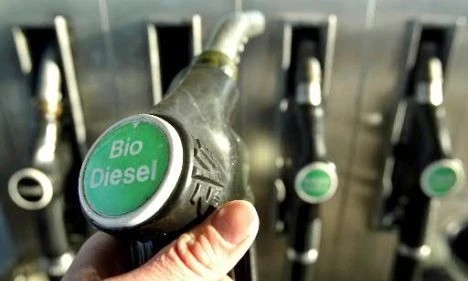 Biofuels are widely touted as being a solution to the dual problems of (1) limited fossil fuel supplies and (2) too many carbon emissions. In a nutshell, biodiesel is produced by taking crude oil from a source that isn’t a fossil fuel (i.e. not rock oil or petroleum oil) and doing all the chemical this and that to refine it so it can be used in our cars… or at least our diesel-fuelled cars.
However, there are a few rumours out there about biodiesel that are putting off a few people from giving it a go or adopting it.
Myth #1: Biodiesel will drive up food prices.
Facts: The thinking is like this: if we use, say, corn or sunflower oil to make biodiesel, this means that land that is currently used for growing food will be used to grow biodiesel feedstocks, which means there will be less food around, which means that food prices will go up. Even if crops aren’t competing for land, they may have to compete for fertiliser and water. This is a valid concern but we don’t have to choose between growing corn for our cornflakes and growing corn for oil. This is because biodiesel comes from a variety of sources. The good oil can be produced by algae that grow in septic tanks using grotty water that you’d never use on food crops. It can be harvested from the nuts of jatropha trees that grow on land that is no good for food crops. Waste oil and grease from fast food outlets (yep – all the oil from frying Kentucky Fried Chicken is good for making biodiesel) can be turned into biodiesel. They also use tallow sourced from animals – all the fatty bits that the butchers and slaughterhouse folk chop off a carcass because we don’t want to eat them can go for biodiesel as well as soap. I dare say that they could use the oils from the “fatbergs” found in sewers if they wanted to. It’s a case of being clever and using a range of sources to source the feedstocks for biodiesel, not just a few.
Just to throw a new twist into the food versus fuel debate, a lot of the corn grown in the US ends up as the ghastly corn syrup used to sweeten soft drinks and add to the obesity problem (corn syrup is also used to make the fake blood used in movies). Speaking for myself, perhaps it wouldn’t be a bad thing if we used less corn for making us fat and more for powering our cars!
Myth #2: Biofuel is still just an experimental fuel and hasn’t been tested properly.
Facts: There are whole scientific journals dedicated to biodiesel and biofuel research, covering everything from test cases looking at how well putting a fleet of buses onto biodiesel cuts emissions through to finding great new strains of algae that produce more biodiesel-suitable oil. So it’s certainly been tested and isn’t experimental. Of course research is ongoing – the same applies to methods of agriculture and medicine. Regarding whether it’s still a bit dodgy and uncertain whether you can put it in your vehicle, biodiesel had been tried out and it works just fine.
As a matter of fact, when Herr Diesel first invented the type of internal combustion engine that bears his name, he ran it on what we’d call biodiesel sourced from peanut oil. The engines had to be modified a little to take fossil fuel-sources diesel instead. So biodiesel is actually the older option and isn’t as new as you think.
Myth #3: You can only put biodiesel in a specially designed diesel engine.
Facts: While some car manufacturers – notably Mercedes-Benz about 10 years ago – trumpeted the fact that some of their models could run on biodiesel, the fact is that any diesel engine can run on biodiesel. However, it is true that because biodiesel is more of a solvent, it will loosen old deposits from the tank and pipes inside your engine, which means that you’ll have to check and change the filters more often at first if you make the switch to biodiesel. Apart from this initial clogging issue, any diesel engine can run on biodiesel. You can use biodiesel straight (known as B100) or a blend, depending on what’s available and what takes your fancy.
Cars that were made before 1993 can have problems with biodiesel, as the rubber pipes can’t handle this. If you like the idea of biodiesel and have an older model vehicle (and don’t want to take the opportunity to upgrade to a new car), then replacing the rubber hoses will do the job.
Obviously, you can’t run a petrol engine on biodiesel. Owners of petrol-powered cars should look at ethanol and ethanol blends if they want a biofuel alternative to fossil fuels.
Myth # 4: Using biodiesel puts out just as much exhaust and pollution as regular diesel, so you’re not actually cutting down on emissions by using biodiesel.
Facts: For a start off, when it comes to cutting down on carbon dioxide emissions and other greenhouse gases, remember that producing the oils for biodiesel tend to come from plants and algae (and some animal fats in the case of waste oil from food outlets). While the algae or the corn plants or the jatropha trees are growing the oil-bearing seeds, they are quietly using the carbon dioxide in the atmosphere, so across the whole lifecycle of the biodiesel, this does mean fewer emissions and a smaller carbon footprint than fossil fuel-based biodiesel.
Secondly, a few tests run in the USA found that biodiesel exhaust doesn’t contain as many nasties so it burns cleaner. As far as I can make out, it’s kind of like the difference between wood smoke and coal smoke. Biodiesel exhaust doesn’t have as many sulphates, hydrocarbons or carbon monoxide, or as much particulate matter. This means that biodiesel reduces the amount of black smoke coming out of your diesel engine.
Some people claim that the exhaust fuel from cars running on biodiesel smells like hot chips and makes them feel hungry, especially if the biodiesel in question has been recycled from the stuff from fast food deep frying vats.
Myth #5: Biodiesel lowers your car’s performance.
Fact: OK, this one does have some basis in truth. If you put in 100% biodiesel into your engine, it won’t perform quite as well as if you used 100% petrodiesel or a petro-bio diesel blend. However, we’re only talking a 5–10% reduction in performance. This means that you will notice a difference out on the race track or if you’re pushing your car to the limit – or possibly towing a very heavy load. However, for the average run about town picking up the groceries, dropping off the kids and going to work, you won’t really notice the difference.
My suggestion for a compromise here would be to use a petro-bio blend when towing but straight biodiesel for everyday driving.
AWD v FWD v RWD

Traction
When it comes to buying your new vehicle, should it be FWD (Front Wheel Drive), RWD (Rear Wheel Drive) or AWD (All Wheel Drive)? How the car gets shoved along might not matter to many drivers, however there are some differences between the driving layouts that are worth pointing out. There are some changes occurring where car manufacturers are adopting a new layout for certain key reasons, and we’ll see why shortly. What type of drive system you prefer really depends on what kind of a driver you are and the conditions you usually find yourself drive in.
Let’s take a look at the three types for drive trains and note the differences.
Firstly we’ll start with RWD, mainly because this can be lots of fun to drive. A RWD car has a simple design where the drive shaft runs the length of the vehicle: from the engine to the rear wheels. The design is generally simple and rugged. It’s less likely to break when running over a curb or large pothole. FWD vehicles are more complex, and with the added weight over the front axle the chances you’re going to break something in the FWD design is more likely. FWD set-ups incorporate half-shafts and constant velocity (CV) joints that are more susceptible to damage than a RWD car’s solid axle.
RWD cars usually have a slightly better weight distribution (not as heavy at the front end compared with a FWD car), creating better handling because of this. A RWD car spreads the weight of its drivetrain more evenly front-to-rear. But an issue with the RWD layout can arise when the road conditions get slippery. Rain, snow and ice create scenarios where loss of traction at the rear becomes more likely in a RWD car.
FWD cars do, however, provide better economy – not only in fuel consumption but also in manufacturing costs. With fewer parts the drivetrain is easier and cheaper to mount into the car as it progresses down the assembly line. FWD cars are often lighter than RWD equivalents thanks to the design not having to use separate transmission and axle assemblies used in a RWD car. Reduction in weight leads to better fuel economy on the road, and this is a big draw card for new car buyers.
In certain conditions FWD offers better traction compared with a RWD car. In the rain and snow, FWD gets better traction on the driving wheels because the front wheels have the extra engine and transaxle weight sitting on top of the front driving wheels – which helps to get better grip in slippery conditions. Also, the front wheels are pulling rather than pushing the car along, aiding steering control in poor road conditions.
Being nose heavy, FWD cars aren’t usually quite as nimble and fast through the corners as RWD cars. When road conditions allow for higher speeds to be attained, FWD cars have to steer and drive the car with extra weight at the front. This is why very few “serious” performance cars are FWD. Maintenance costs are higher compared with RWD, so new bits like CV joints and boots will need to be replaced as the kilometres pass by.
This leaves us with AWD, and the best thing about AWD is that it gives some of the advantages of both RWD and FWD. The number one advantage of AWD is excellent traction in dry and wet road conditions. Some AWD designs lean slightly toward the front wheels doing more work, while others lean more toward the rear wheels doing more of the work. The RWD-based versions are usually more performance-oriented but any of the AWD cars will do a top job of balancing the car’s handling and driving dynamics.
AWD cars do cost more to buy compared with RWD and FWD cousins. This is because they cost more to produce with all the extra drive train components. The extra running gear also costs more to maintain. AWD systems are also heavier drive systems which makes for higher fuel consumption. The higher fuel consumption, higher production costs and higher maintenance costs will put some buyers off, however a die-hard Subaru fan will have you think otherwise. For ultimate performance, the AWD system can’t be beaten.
There are electronic traction control systems and driver aids that are getting better-and-better which do aid both the car’s handling and performance characteristics, as well as safety. And, particularly in variable road conditions that might be wet and slippery, these extra electronic control systems can’t be beat. These systems are widely used in many FWD, RWD and AWD cars.
The trend is that new car buyers are looking for more SUV and all-purpose vehicles to buy. It has become simpler for automakers to reconfigure FWD models into AWD formulas where the AWD system is front-wheel power biased. We are seeing more of these vehicle types on our road, which also means there is a decline in new RWD cars being bought.
Just for interest sake: Holden are still keeping the Commodore name, however the new Commodore won’t have a rear-wheel drive variant. Instead, it’ll be offered in a front-wheel drive configuration for mainstream models, while a naturally aspirated 3.6-litre V6 AWD model will be the performance model in the line-up. With a nine-speed automatic gearbox, no differential with dual-clutch control systems controlling front and rear wheels independently, and torque vectoring the AWD model will be a performer.

Holden Commodore AWD
Also interesting is that BMW Motorsport engineers are looking to produce M-badged cars with an AWD model as well as a RWD variant. With BMW’s M cars getting so powerful, the boss of BMW’s M Division, Frank van Meel, said that it’s getting hard to sell M cars without AWD in markets like Canada and Switzerland where conditions are slippery.
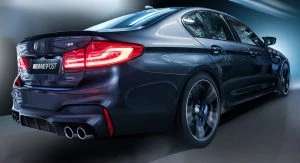
BMW M5 AWD
There is only so much horsepower you can put through two wheels before obtaining the grip needed to accelerate fast is compromised. Even with the best traction and launch control aids, 2WD systems are beaten by AWD systems, and when engines have such immense power now, AWD is the only logical step forward for performance car manufacturers like BMW. Audi, Porsche and Nissan already have plenty of experience with AWD performance models.
The Splatometer.

Some of us might be familiar with the car care product “Bugger Off” – a really useful product that cleans insect splatter off the front of your car with ease. In Australia there still seems to be plenty of insect life around but wildlife experts have been warning about the decline in insects for decades. I’m not sure if you’ve noticed any decline in bug splatter on your windscreen over the last decade or so?
In areas of intensive agriculture, more-so cropping, the use of wide scale insecticides has diminished insect numbers. Vast areas of the Australian Outback doesn’t have this problem, with little cropping present in remote areas. But, where crop farming is intense, the use of insecticides is definitely reducing the total insect population. The fall in insect numbers in Britain has reached troubling numbers that even motorists are noticing that their windscreens are clear of squashed beetles, flies, moths etc. In Britain, a trip in the middle of summer once required the cleaning of the front window regularly, but now the glass is largely clear. Richard Acland, of Chepstow, in Monmouthshire, Britain said he believed insecticides on crops were wiping out the world’s insect life, adding: “This is why cars are not bug-splattered anymore.” Entomologists actually call it ‘the windscreen phenomenon,’ and statistical surveys reveal that the phenomenon has been noticed across Europe.
After extrapolating data from a mile of highway in Ontario, a researcher from Laurentian University, Canada calculated that hundreds of billions of pollinating insects were probably being killed by vehicles each year in North America. She suggested that the increase in vehicle numbers is also contributing to the decline in worldwide insect populations.
Another research institute in Harpenden, England, has monitored insect populations using traps across the UK for more than 50 years and there has been evidence that insect numbers have really declined. Experts mostly blame intensive agriculture and the use of pesticides over the past 50 years being attributed to this occurrence. They did point out, however, that the loss of insects from vehicle windscreens is well-noted but actually demonstrating it is tricky.
In 2004 motorists were asked to attach a ‘splatometer’ to the front of their cars – a piece of PVC film to collect insects, to see if they were declining. The results showed that there were 324,814 ‘splats’ recorded, which worked out to be an average of one squashed insect every five miles. It would be beneficial to run another of these experiments to see if numbers have declined further or not. One thing that might throw the data, however, is the increased aerodynamic shapes of new cars travelling the roads. The reality that cars have changed shape over time, and are now far more aerodynamic, would also result in fewer insects actually being hit squarely on the windscreen and causing a splat.
Cars and insecticides are an insect’s nightmare. Less insecticides and more shapely cars has to be a good thing for life on planet earth! Have you noticed less insect splats?
 Level 2, 9 Help Street