

Author archive
Is Your Car Winter-Ready?
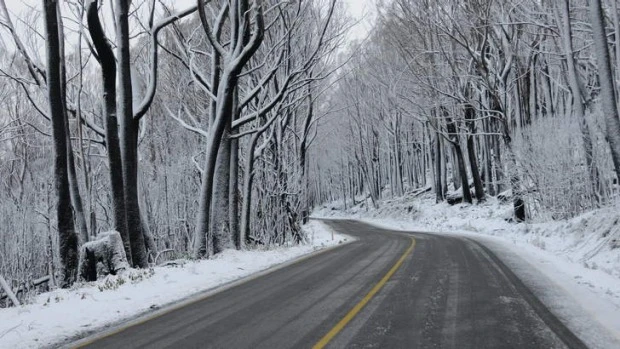
Lake Mountain Road, Vic.
It might not quite be winter yet, but we have passed the autumn Equinox, which means that the time when the sun is up is shorter than the time when it’s down. This means that it’s time to think ahead and get your car ready for winter. Because there’s no point in getting ready for something if it’s already come and too late, right?
One thing we can be thankful for is that we don’t have to go through quite so extensive preparations for winter as they do in, say, Sweden or Canada… especially if you live in the northern bits of Australia when winter comes as welcome relief from the intense summer heat. However, the southern states and territories can get problems with frost and snow from time to time, and everybody gets things wetter and rainier (except in the very far north in places like Darwin, who have their rainy monsoon period during the summer).
As things are going to get wetter, the most important thing you need to do to get your car winter-ready is to check your tyres. First of all, they need to have plenty of tread on them, as it’s the tread that channels out the water so you still get plenty of grip. When it comes to tyre styles, there’s a bit of a trade-off, as having lots and lots of channels means that you can pump lots of water out – and a tyre needs to shift about 6 litres per second in average rainfall at open road speeds – but the problem is that lots of little raised bits wear out more quickly when it’s dry… and nobody wants the hassle of changing tyres every time the weather goes from wet to dry and back again. The best tyres for driving in the wet are the ones with the directional treads (lots of stacked V shapes) and asymmetrical tyres, although you can’t rotate asymmetrical tyres like you can with the directional ones. Directional ones look nicer, too!
Tyre pressure is also important to check when the weather goes from hot to cold. This is because air temperature affects tyre pressure, so when the mercury goes down, a tyre that was just right may now be underinflated. If you remember your high school physics, the hotter a gas gets, the more it expands and the greater the pressure. When the gas cools, then the gas contracts and the pressure decreases. It’s important to check your tyre pressure at all times, but if the temperature’s changed (or if we’ve had a cold snap), then it pays to check.
The next thing that’s important to deal with is to check the windscreen wipers. Winter means more rain for everybody except the far north folk, and this means that your wipers are going to see a lot of action. They won’t shift the water and keep your visibility decent if they are in bad condition. New wiper blades don’t cost the earth and changing them is a job that you can easily do yourself, so there’s no excuses.
While you’re looking at the windscreen and the wipers, this might be a good time to ensure that your windscreen is nice and clean. The angle of the sun will be that little bit lower in the evenings and the mornings, especially the further south you go, so sunstrike and glare can be a problem, especially if your windscreen is filthy. Give it a good clean and top up the fluid for your window wiper fluid.
The next thing is your lights. It’s going to be darker, especially if your state does the Daylight Savings thing (and consider yourself lucky if it doesn’t because it’s a pain). Make sure that all of your lights are working well, including the fog lights. Check that the angles of your headlights on dip and on full beam are angled correctly.
The last thing to get the car mechanically ready for winter is to check the battery. Your battery is going to get more of a workout, what with the extra demands of heating and lighting. Top it up with distilled water if needed (tap water is often chlorinated or have other minerals that don’t play nicely with battery acid, so don’t use this). Check the terminals for corrosion and clean off any greenish bits around the terminals caused by the acid. The best way to do this is with baking soda (which neutralises the acid and will fizz), an old toothbrush and rubber gloves to protect your hands, followed by a good rinse with warm water. If your battery is getting on the ancient side, then change it. Few things are as miserable as waiting in a freezing cold car on a nasty day for the breakdown guys to come and jump-start your battery.
These steps will help keep your car winter-ready, but don’t forget you and your passengers when preparing your car for winter. Having the right items stashed away can make a real difference, especially if you have to wait in a parked car for ages for any reason on a nasty cold day, or if some idiot who DIDN’T check their tyre condition skids into your rear end, meaning you have to wait for the breakdown team. Most modern cars have plenty of useful storage space for all sorts of odds and ends – one particularly useful one is found on the Skoda Superb , which has a special compartment for an umbrella that allows it to drain when wet. If you own one of these sedans, make the most of this feature!
Here’s the list of things that I’d have in my car to make sure that I can cope, even when the weather swings wildly or gets nasty and cold (on top of other staples like hand sanitiser, snacks and a first aid kit).
- A chamois leather or microfibre cloth for wiping down the inside of the windscreen. Sometimes, the demister just doesn’t work fast enough or there’s grime on the inside of the windscreen that is causing visibility problems with the lower angle of the sun. Rather than using your sleeve and getting wet (which I have done in emergencies), use a nice soft cloth kept for the purpose.
- Something to keep the rain off. This could be an umbrella or a raincoat – you can get some nice little compact ones that tuck away in a little bag. This stops you getting all soggy if a downpour decides to descend just as you’re pulling up at the petrol pump and there’s no shelter between your car, the pump and/or where you have to pay (been there, done that).
- It can take the heaters a while to get going on a cold morning, as they use excess engine heat to heat the cabin. Cold fingers are stiffer and less responsive, so keep your little pinkies warm until the heater sorts its life out. The obvious place to keep them is… the glovebox.
- A polar fleece or jumper. It was a nice day when you started out but a southerly buster has roared in. Or you have to turn the heaters off thanks to that flat battery (or to avoid flattening it). Keeping half your wardrobe in your car like my husband did when I first met him probably isn’t ideal, but having something to pull on often comes in handy.
- A blanket or throw. If you have to take kids or passengers who have to wear thinner clothes (formal gowns, dance gear) or who are a bit damp (after sports practice) and cranking up the heater would make things far too hot for you even with a dual-zone climate control, then having a blanket handy for bare knees or off-the-shoulder tops is a nice touch. A blanket is also more easily washed than your car upholstery in the case of muddy people. Plus you can use it for impromptu picnics.
Safe and happy driving, no matter what the weather is!
The Top Seven Things Autonomous Cars Can’t Handle
My last post had some rather grim news to do with autonomous cars (aka driverless cars) not quite doing what they are supposed to do. That was an example of things going badly wrong with the sensor systems that are supposed to make driverless cars so much safer and better than real live humans. However, on a slightly lighter note, there are quite a few things that most of us drivers handle sometimes daily without much fuss that send autonomous cars into a full-on wobbly.
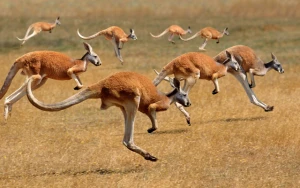
#1. Kangaroos
OK, so the design teams working with Volvo’s autonomous cars in Sweden had it all sorted for the sort of large animals that are likely to hang around on roads in Scandinavia. The sensors can handle moose, elk and deer, detecting the beasties and stopping the car in time. However, it’s a different story down here in Australia. The system just can’t cope with kangaroos, which are large animals that we’re likely to get on country roads – they’re certainly the large animals involved in most animal-related crashes. You see, the system doesn’t see an animal, recognise it and estimate the distance and take appropriate action the way a human does. The system uses the ground as a reference point to estimate the distance between the animal and the machine… and roos don’t stay on the ground when they’re on the move. The sensors also have trouble recognizing a kangaroo as a kangaroo because from the perspective of a computer, a kangaroo in motion and a roo resting quietly beside the road are completely different shapes and look like totally different things. Then you’ve got the problem with roos that human drivers have to cope with: the fact that they can get a top speed of 70 km/h and can seemingly explode out of nowhere right into your path. If the roo has been behind a bush or something, then the sensors can’t see it and you can’t see it, so you’d better have roo bars fitted.
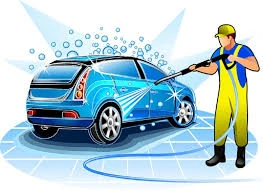 #2 Car Washes
Some people get a little bit phobic about those automated car washes, although others enjoy them. There’s always that little moment when you see the big whirling brushes descend and you hope like mad that the sensors telling them when to stop aren’t going to fail, crushing the top of your vehicle, shattering your windscreen and thrashing you with hundreds of little rubber whips. But what happens when an automatic car wash meets an autonomous car?
Well, an autonomous car can get into the car wash without any problems. However, the vigorous action of the washer plus all the soapy foam don’t agree well with the sensors, so getting out of the car wash and driving on may be another story. You see, the sensors have to be clear of any grime or debris to work properly and if there’s soap left on them, they can’t see. And there is soap left on them afterwards. At worst, the car wash knocks the sensors off or damages them, which makes for a very, very expensive fix.
You have to take your pick: is washing your car by hand every time worth the convenience of a car that drives itself?
 #3 Bad Weather
Self-driving tech works nicely in fine, sunny weather. However, put it in heavy rain, snow or ice and it throws a very, very big wobbly. Humans know – or ought to know – that when it’s raining, you take it nice and slow around the corners, watch out for pools of water that could get you aquaplaning and to keep the speed down. Now, you’d think that because we have rain-sensing wipers, an autonomous car should be able to recognise that it’s raining and adjust itself accordingly. Unfortunately, it can’t. It probably can’t tell the difference between a light shower and a tropical monsoon. Google hasn’t even put its self-driving cars through tests in heavy rains yet, but they already know that snow is a big problem for autonomous cars because they can’t see the road markings that help them stay in their lanes and get around corners. As for ice, they have problems detecting this as well. Even if humans have trouble spotting black ice and frost on the road, we know that on a nippy day when you have to put on a nice woolly jersey, there’s likely to be a bit of ice on that corner there where the trees cast a shadow on the road all day.
#4 Potholes
Apparently, the only holes in the road that a self-driving car can detect are the big ones made by your local road repair crew that have cones around them. The little blips that are hard on your tyres and suspension aren’t picked up – they are below the surface of the road and they’re not on any of the mapping systems that these cars use. So an autonomous car won’t dodge potholes. Ouch.
#5 Newly Altered Road Layouts
Self-driving cars, especially the ones being worked on by Google, rely on really good maps to know (a) where in the world they are and (b) what the road is supposed to look like. Don’t underestimate the latter bit – this is one way that driverless cars can pick obstacles: some systems scan the area around them and compare this with an image of what the road and its surroundings usually look like (letterboxes, lamp posts, etc.) and reacts accordingly. However, if they don’t have these detailed maps, then things get a bit fun. As happened recently in Arizona, if the local supermarket has decided to change the layout of the carpark with its entrances and exits, a driverless car might still think that the best way to get out is via what is now a new set of stairs. Self-drive vehicles also go to pieces with new subdivisions and places where massive road works and new road layouts are going on: drivers from Christchurch, New Zealand, report that your common or garden GPS throws a wobbly about all the new roads and other bits resulting from the post-earthquake reconstruction.
#6 Shared Areas
Shared areas – places where pedestrians can go on the road at the same time as cars – are touted as being a way forward for cities of the future. The trouble is that driverless cars are very rule-based, and when it comes to shared areas, there are no set rules. Each interaction between driver and pedestrian, or between driver and driver, is a new situation. Nobody’s got official right of way, so we use our social knowledge to ensure that everyone gets where they want to go without anyone getting hurt. A human driver can see that the pair of pedestrians chatting with coffee in hand staring at each other aren’t about to try crossing the road. A robot/computer/self-driving car just sees human shapes and can’t see what they’re doing or predict what they’re about to do. Similarly, there are tons and tons of ways that drivers and pedestrians go through the whole “After you” “No, after you,” exchange. How we conduct these wordless conversations can be anything from a large Italian-style gesticulation to a simple jerk of the head or a raised eyebrow. It involves hands, arms, heads, facial expressions and mouthing words on the part of both parties – or just the driver, if he/she spots a mum struggling with a pram and a cantankerous toddler plus a bunch of shopping bags. Our gestures and our decisions depend on how we’re feeling, our stress levels, the other party involved (the puzzled looking tourist versus the businessperson talking on the phone while striding forward in a rush versus the bunch of teenage girls fooling around). And in some places, a human driver can recognise a familiar face, stop, wind down the window and have a wee chat. And all these variables are simply too complex, too individual and too unpredictable to be programmed into a machine.
 #7 Pesky Human Beings
As an old road safety campaign stated, humans are unpredictable (and so are some animals, like the idiot dogs who stand there all dopey in the middle of the road staring at you as you brake and yell at them). A computer system relies on the situations and courses of appropriate action that have been programmed into it. The trouble is that not everything that people do goes according to the rules – and don’t we just know it!
Here are a few examples of pesky human behaviours and situations – all of which a human driver can recognise and deal with – that would throw a driverless car:
- A cop on point duty directing traffic because of an accident on the road ahead or similar – a person standing there waving arms is not something a computer system is used to
- A ball bouncing out into the road: if a human sees this, he/she knows that some child might dash onto the road to retrieve it, but a computer sensor can’t tell a ball from a plastic bag flying loose and won’t react… it certainly won’t start keeping an extra look out for kids.
- Kids coming out from school: they’re supposed to be sensible on the roads and not do anything silly, but there’s that occasional child who rushes across the road shouting “Mummy!” unexpectedly. Most of us should know that one should slow down and keep an extra lookout at certain times around schools.
- Hitchhikers: We know what the backpack, the extended thumb and the cardboard sign reading “Gold Coast” means, and we can also make split-second decisions regarding how dodgy the hitchhiker looks, how much space we’ve got in the car, where we’re going and how urgent our journey is, and use all this to decide whether or not to pick up the hitchhiker.
- Situational ethics: it doesn’t happen very often, but what about when you’ve got a choice between two evils? This comes down to morals, ethics and the value of life. Sometimes, for a human, the choice is comparatively easy: in a choice between hitting Granny and hitting the stray dog, most of us would swerve to take the dog out. Similarly, if you have to negotiate a flock of sheep, the farmer and his/her sheepdog, we know that if things get really bad, you avoid the dog and the farmer at all costs but you can hit the sheep. At the moment, sensors have trouble getting beyond “Obstacle A” versus “Obstacle B”. Even if they can tell people from animals, can they go further? Can they distinguish one human from another? And if so, how do they decide who not to hit?
Driverless Car Causes Fatal Accident In Arizona
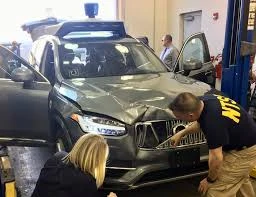
Photo courtesy of Reuters
On 18th March – that’s just over a week ago – driverless car technology received a major blow. The horrible truth is that the blow struck to the technology by this particular vehicle being road-tested by the Uber taxi service wasn’t as nasty as the blow it delivered to a 49-year-old Arizona woman named Elaine Herzberg who was crossing the road one evening, like you do. The car hit her and killed her. Dashcam on the autonomous car captured the moment before the car ran her down. I’ve decided not to embed it in this post in case you’ve got autoplay or something on, because it’s decidedly disturbing. Find it online yourself if you must, but personally, I’d rather not watch the tragic and completely avoidable death of a woman about my age who probably has a partner and children and friends who thought she was great fun – someone just like me and you.
The reaction has been exactly what you would expect: Arizona has called a halt to on-road real-life testing of autonomous cars, Uber and a few other companies like Toyota have stopped all testing in North America, and shares in companies that have been investing heavily into driverless car technology such as Tesla have dropped. In addition, Ms Herzberg’s family have been coping with the shock and loss of losing a mother, daughter, sister, wife, cousin… There’s also one Uber driver who trusted the technology to take care of things the way they told her it would who is going to live with a lifetime of questions and guilt, and who is probably in the hands of a good therapist right now – or at least ought to be.
We can ask the same questions as that Uber driver and the Herzberg family are probably asking over and over again: why did this happen? What went wrong? Aren’t driverless cars supposed to get rid of the human error factor that is responsible for the majority of fatal accidents?
Without actually looking at the chilling dashcam footage personally and based on other people’s reports, it appears that what happened was this. The Uber vehicle was cruising along a road on a normal spring night in Tempe, Arizona, on a Sunday night. It was dark and the driver, who was probably on a tight schedule and having to manage half a billion things at once – like you do – looked away from the road for about five seconds. The car was in autonomous mode and it had the full fleet of sensors that are available in even regular cars that aren’t driverless cars, such as automatic braking, pedestrian detection, cross-traffic detection and collision avoidance mode. The driver thought that all would be well – after all, the car was supposed to take care of itself most of the time, wasn’t it?
Then along came Ms Herzberg, wheeling her bicycle. Probably she was a bit too careless and didn’t pick a big enough gap in the traffic to cross in – but haven’t we all done that when trying to cross a busy road when there’s no pedestrian crossing or traffic lights in sight? Most of us take it for granted that the humans behind the wheels don’t want to hit us and they’ll slow down a fraction if we’re cutting it a bit fine (this is something that I don’t assume – call me paranoid but maybe it’s an assumption we need to start questioning). To make matters worse, Ms Herzberg was wearing black at night, which would have made her hard to see even if the driver hadn’t looked away.
The sensors and the system didn’t see or recognize Ms Herzberg, so the collision avoidance systems weren’t triggered. The vehicle kept going straight ahead at normal road speeds. The driver, trusting the autonomous system, didn’t see her either until the last moment when the car ploughed full-speed into her and there was no time for the human driver to do anything to stop it. Ms Herzberg died later that night in hospital.
This is the first time that a driverless car has been involved in a fatal accident involving a pedestrian – hang on, let’s call a spade a spade. The car wasn’t just “involved”: it knocked her down and killed her.
Naturally, all the tech companies and car manufacturers involved are properly horrified and are wondering what on earth went wrong. The sensors were supposed to work without being “distracted” like a human driver could be. They were supposed to be able to see in the dark, so to speak, and therefore be better than a human driver would be. Autonomous systems are supposed to be so much safer because they don’t get drunk, tired or distracted, but stay focussed and on the job all the time. So what went wrong? Why didn’t the car see Ms. Herzberg and brake in time?
Naturally, as the questions are still being answered and the accident only happened about a week ago, they don’t have answers yet. A few fingers are being pointed, especially as different companies make different bits of the tech. Did the Lidar sensor plus artificial intelligence system fail to distinguish the pedestrian with a bicycle from a power pole or a bush? (These systems do have trouble with this – in Australia, they have real trouble recognizing how close kangaroos on the road actually are, because the jumping motion of a roo fools the sensor into thinking that there’s more road between the car and the roo than there really is.) Robotic systems and computers follow the rules and keep to the rules no matter what – and something unexpected that’s out of the box and not included in the rules really throws them. Possibly, someone crossing the road with a bike without looking properly or allowing a big enough gap is a novel concept for them.
I guess that at this early stage, there are a few lessons that all of us can learn from this tragedy:
- Driver assistance packages and sensors are there to help you be a better driver, not do it all for you. As a driver, you need to stay alert and do the job of driving at all times, whether you’ve got a back-to-basics trade vehicle like a Great Wall , or a luxury sedan or SUV with all the safety gadgets like a Mercedes or Volvo .
- A lot can happen in a few seconds, so keep your eyes on the road as much as possible. No checking texts, changing the radio station or fiddling with the air con.
- Be careful when crossing the road. These days, you can’t assume that drivers are looking ahead of them because there are idiots who insist on checking their phones while driving, and in the future, you might not even be able to assume that there’s a human with a heart in control of the wheel. The stop, look and listen rule still applies – so take those headphones out of your ear.
- Wearing black at night when crossing the road always has been and still is a dumb idea.
- People are unpredictable, so keep your eyes open for them when you’re driving.
And I hope we do learn these lessons. After all, nobody really grieves for a car that gets written off. However, real live humans have friends and families who will always miss them if they die – and that’s something that a computer or robot system can’t fully understand or experience.
Race Weekend
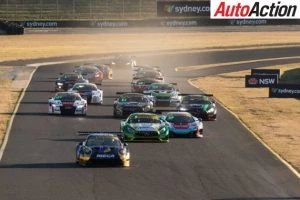
Australian GT Racing
It’s a grand weekend of motorsport in Australia this weekend when the 2018 Formula 1 season kicks off at Albert Park’s Rolex Australian Grand Prix. There will be loads to see and enjoy, with new racing machinery to get the heart rate up.
The Ferrari Challenge Trofeo Pirelli Asia Pacific Series starts off at Albert Park this weekend. Thirty-three beautiful Ferrari 488 racing cars will be battling it out in an international series that spans three continents: Europe, North America, Asia Pacific. These Ferraris are powered by a 3.9-litre turbo-charged V8 and quicker times are promised with this new fleet of race cars which replace the outgoing Ferrari 458 models.

Ferrari 488 Challenge Race Car
Also at Albert Park this weekend the Porsche Wilson Security Carrera Cup Australia returns to Melbourne. A new generation of Porsche 911s will be racing with the new rear-mounted 4.0-litre naturally aspirated engines packing 375 kW of power and 480 Nm of torque. This is always a great series to watch with super competitive racing always on the cards.
The Coates Hire Supercars Melbourne 400 starts its races as well, where a 13-lap, 30-minute Supercar battle commences. It’s going to be anybody’s guess as to who will take the race, but Shane van Gisbergen has to be front runner.
One race series that has plenty of exciting race cars to watch will be the new Australian GT series, boasting a festivity of expensive exotic flavour, with the likes of Mercedes-AMG, Lamborghini, Aston Martin, McLaren, Audi and more fighting for that coveted spot on the podium. With a group value of around $30-million this race will be automotive toffee for those lucky enough to see the race unfold.
The final day of the four-day Rolex F1 festival starts with a historic parade featuring classic racers from Brabham, Ferrari, Alfa Romeo, Austin Healey, Allard, McLaren and several other Australian specialist vehicles. There will be a Legends Lane area located behind the main straight Fangio stand where you can look at them close-up and personal.
Other amazing stuff to experience at the weekend will be Lamborghini and Ferrari parades, an Ultimate Speed Comparison test, Aston Martin hot laps, an RAAF Roulettes show and the stunning F/A18 jet display. Albert Park will be the place to be this weekend – just giving you the heads-up!
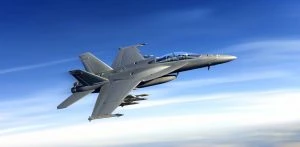
F/A18 Jet
 Level 2, 9 Help Street