

Author archive
EV Ponderings
EV Networking
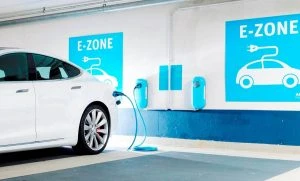
With all the fuss and excitement of electric vehicles paving the way of the future it’s worth pondering what sort of new electric-vehicle technology could be part of our automotive future. Interesting current discussion regarding what sort of electric-vehicle (EV) fuel stations, networking and technology Australia might employ is necessary for keeping the Australian EV fleet ready for the road. Plenty of excellent EV and EV-infrastructure planning and management has to happen now for us to get the best EV product rolled out for our country.
EVs need a simple and accessible recharging station that’s always handy – whether it be at home or on the move. If we have too few power-up stations available, then the incentive to buy an EV becomes less appealing to the public. At present the best EV technology manages to get some of the EV cars travelling around 300-to-400 km in ideal conditions before they require a recharge of their batteries. Many cars, in real life, can hardly make it to 200 km before they require a top-up. This makes country folk who travel large distances unlikely to want to buy a new EV – particularly if there is no handy recharge stations on-route.
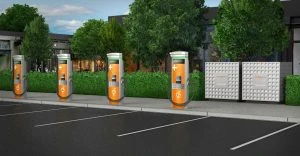
Is it feasible to place powering-up stations every 100 km – or so – along a main arterial route between cities? The answer is yes, and it is happening in places like Germany where German carmakers hope a network of high-power charging stations they are rolling out with Ford will set an industry standard for plugs and protocols that will give them the edge over other electric car rivals and manufacturers. This competition is encouraging EV charging stations to be put in quickly across some of their main roads, making it easier to top-up the batteries on longer drives. EV station points are slowly growing inside Australia’s main cities, but little is being done with regards to connecting the main centres with additional intercity recharging stations. The sooner this is done, then the sooner we’ll see a big growth in Australian EV sales.
Connecting the EV power stations to the main grid is relatively straight forward. However, it would be even better to have isolated EV micro grids where each EV power station can generate its own power for recharging vehicles so that any looming main-grid power outages are isolated from the micro grids. When everybody and every-business in Australia switches to buying themselves a new EV, then it would seem a great doorway to causing nationwide havoc if some unseemly group takes out the major power stations across Australia! Having a micro-grid that sources Australia’s abundant solar and wind energy could also tick the right boxes.
An interesting EV progression in Sweden is the creation of an electrified road (the world’s first) that can charge EVs as they drive along, potentially helping to cut the high cost of electric cars. An electrified rail embedded in the tarmac of the 2 km road charges an EV truck automatically as it travels above it. A movable arm attached to the truck detects the rail’s location in the road, and charging stops when the vehicle is overtaking or coming to a halt. The system also calculates the vehicle’s energy consumption, which enables electricity costs to be debited per vehicle and per user. Could Australia embrace this type of innovation and join Sweden in leading the way forward, allowing electric cars to be even cheaper than fossil fuel ones?
The new BMW i3 and i3s, Hyundai IONIQ, Jaguar I-PACE, Nissan LEAF and Renault Kangoo ZE are some of the latest EVs arriving in Australia. I would encourage Australia to think outside the square and get onto the EV and power station new wave of technology for powering our nations new fleet of EVs. Australia could even create their own unique plug-in technology and high-output stations for the best environmentally-friendly Australian EV system.
Are you an EV driver? If you are, or even if you are taken by this new breed of vehicle, are there any items and processes you would like to see put in place so as we can all enjoy a premium Australia EV network?
EV Networking
Why We Shouldn’t Phase Out ICE Vehicles Yet

Hello, I’m a mule – the very first hybrid form of transport.
In certain parts of the world – Europe, to be specific – governments have pledge to stop the sales of new cars that are powered by internal combustion engines only (aka ICE vehicles, where ICE stands for internal combustion engine). This means that any new cars sold in these countries will be hybrids or pure electrics.
First, before we all panic and start stockpiling petrol and diesel because we aren’t ready to ditch our favourite sets of wheels yet, let’s clarify a few things. Firstly, Australia hasn’t made any such pledge yet, although certain political parties are starting to talk about it. Secondly, what will be phased out is the sale of NEW cars only. Presumably, second-hand car dealers will still have ICE vehicles sitting out in the yards (possibly quite a few of them if all the ones that have been kicked off UK roads make it over here). And they’ll still have to sell petrol and diesel to run (a) the older cars, (b) the diesel or petrol parts of the hybrids and (c) things like motorbikes that haven’t really caught onto the whole electric thing yet.
Nevertheless, I don’t really want to jump on the “let’s phase out ICE cars” bandwagon. I don’t think we’re quite ready for that yet.
First of all, there’s the issue of range in pure EVs. Mercifully, we now have enough charging points along the A1 highway so you won’t get stranded in the middle of the Nullabor, but even so, it takes at least half an hour to fully charge an EV. This means that your Great Australian Road Trip is going to take even longer than it would otherwise. Plan accordingly. However, although the main highways around the perimeter are pretty well provided with charging points, there are bits of the country where the charging points are spaced out further than the typical range of an EV. This is not good news for, say, park rangers, farmers and rural nurses. The developers are going to have to really, really work hard to get better range for EVs before these groups are going to even think about buying one. I keep getting this mental picture of some rural midwife trying to head out to some rural woman going into labour but being held up by (a) detouring to the nearest charging point and (b) waiting for half an hour to charge her vehicle. Don’t even think about what would happen with emergency service vehicles.
I kind of hope that the Powers That Be who are going to make the decisions about our national vehicle fleet go out and spend a day riding shotgun with some of the folk in our rural communities to get an idea of the distances they drive… and at least put in a few more charging points before they decide to kit out all the nurses with EVs. Not sure what they’ll be able to do for the park rangers. Carrying about a diesel generator to power up a vehicle in the middle of nowhere kind of seems to defeat the purpose of promoting EVs in the first place.
Anyway, there’s another issue, and it’s one that affect those in cities as well. Now, the majority of EVs and hybrids are smaller vehicles. When it comes to practical commercial vehicles that your typical tradie can use, it’s a different story. Yes, there are some great hybrid SUVs available, such as the Volvo XC90 and the BMW X5 , but these aren’t your typical choice for a tradie. As for the Tesla X SUV… I, for one, would start wondering how much my plumber or electrician charges per hour if I saw him/her driving around in a high-end SUV. At least Mitsubishi and Nissan have some offerings, including a 2WD version of the Nissan Pathfinder and the Mitsubishi Outlander PHEV (which is reported to be the most popular hybrid/EV in Australia).
Your typical electrician, plumber, builder or landscape gardener usually prefers to drive a ute or van, preferably one with lots of torque to tow a massive trailer as well as lots of load space. I know this all too well, as the other half is a landscape gardener and I’ve seen the amount of gear he carries in the trailer and carts around in various bits of the trusty dual-cab Navara ute. Given what your typical tradie charges per hour – which has to be affordable in order to be competitive – new cars aren’t usually on the cards. A phase-out of ICE vehicles would mean that second-hand vehicles would still be an option for your tradies… but what happens further down the track? If nobody’s bought brand new hybrid/EV utes and vans then there won’t be any second-hand ones for your small-scale tradies to purchase. Let’s hope that if the phase-out happens, larger operators will get themselves a fleet of hybrid utes and vans that can then go on down the line. Either that or the banks are going to have to be nicer to owner-operator tradies so they can finance something brand new.
 Tradies also clock up quite a few kilometres just around town, which means that even if pure EV commercial vehicles were available yet, your tradies would have to spend ages charging up possibly at least once a day. This means that you could be left waiting for the plumber (assuming he or she does emergency call-outs) for that little bit longer while your toilet refuses to flush and/or overflows. Half an hour can be a long time when you’re waiting for the dunny…
At the moment, there aren’t a whole lot of hybrid or electric vans and utes out there on the roads – at least not yet. Renault has one electric van that’s going to arrive very soon, Haval has plans for a hybrid ute and there’s even talk about a hybrid version of my favourite tradie’s beloved Nissan Navara. But they’re still in the future (we’ll let you know when they arrive). Even if a big construction company wanted to kit all of its builders out with hybrid or electric commercial vehicles as soon as they hit these shores, this would still be some way off.
There’s also the issue of all the investment and research into biofuels, but that’s worth taking another whole post to discuss.
In short, it’s too soon to talk seriously about phasing out ICE vehicles in Australia simply because we don’t have enough suitable new replacements for the current vehicle fleet that have the range and the practical ability of the petrol and diesel units currently available. Although your Green Party members living in the city could probably make the switch to purely electric vehicles tomorrow and not be affected (and I hope they’ve already made the switch and put their money where their mouth is), there’s a significant proportion of typical Aussies who can’t make the switch yet and will have to stick with ICE vehicles for a while yet. Be patient, folks. Although there may come a day when hybrid vehicles and EVs triumph, today is not that day.
The Race To Zero Emissions
Once upon a time, we were all whispering about a possible conspiracy that someone had invented a car that ran on something that wasn’t fossil fuel but the Big Oil companies resorted to various forms of skulduggery ranging from buying out the patents or technology through to murder to ensure that petrol and diesel continued to reign supreme in the motoring world. Fast forward to nearly 2020 (i.e. today) and there’s a new rumour on the block: the rumour that petrol and diesel powered cars are going to be phased out.
In fact, this is more than just a rumour. They’re starting to do it already in the UK. The famous university city of Oxford is going to ban fossil fuel powered cars from the city centre by 2020, meaning that only electric vehicles (and probably hydrogen powered vehicles) will be allowed to buzz around in the heart of the city. Looks like the complaint made by JRR Tolkien back in the day about “the roar of self-obstructive mechanical traffic” in the streets of inner Oxford is going to be dealt with… well, at least the roaring bit. The idea is to make the city centre the world’s first Zero Emissions Zone. (OK, to be picky, it will be Zero Emissions as far as car exhausts go – there will still be carbon dioxide and methane emissions as long as human beings breathe, burp and fart.)
This move to ban petrol-based cars is not unique to places as notoriously academic and ivory-towerish as Oxford. In fact, the Government of Scotland has announced that it will phase out petrol and diesel vehicles by 2023. Ms Nicola Sturgeon, the First Minister of Scotland, has acknowledged in her statement (which covers other topics – the bit in question is about one-third of a way down if you want to find it) that it’s an ambitious project and is going to need a lot of infrastructure established.
This move by Scotland to be the first to phase out new petrol and diesel cars is ambitious, but it looks as though it’s part of a race between the old rivals England and Scotland to be the greenest. Apparently, the UK government has announced that it wants all new vans and cars on the roads to be zero emission vehicles (which is not a bad term for lumping electric, hydrogen and ethanol vehicles together – although it probably doesn’t include biodiesel vehicles). Because the UK has rules about the age of cars that they allow on the roads, this means that all their vehicles are slated to be zero-emissions vehicles by 2050.
What this means for the owners of vintage and classic vehicles, I don’t know. I guess they’ll have some sort of exemption or they’ll only be allowed out on special occasions. Or maybe they’ll have to be retrofitted to take biodiesel or ethanol. I suspect that even the royal Rolls-Royces and Daimlers aren’t going to be exempt.
Naturally, if there’s rivalry between England and Scotland to do something first, you can bet like anything that the other ancient rivalry will flame up and indeed it has: France has also announced that it won’t be selling any new petrol or diesel cars after 2040. Happily, the French government has also said that it will provide some sort of subsidy for poorer households so they can get an upgrade. And yes, this puts the pressure on all those French marques like Citroën , Renault and Peugeot to up their game and make sure that they’re only making hydrogen and electric vehicles by this stage.
Naturally, Scandinavia is already in on the game (and, incidentally, they’re old rivals of Scotland’s as well – which is why the north of Scotland likes to keeps up a few Viking traditions). Norway is already smugly announcing that half of its new vehicle registrations are electric or at least hybrid, and it says the Norwegian target is to end sales of fossil-fuel-only cars by 2025. Norway has been handing out tax breaks and concession for electrics and hybrids for ages, and it’s got the geography and rainfall needed to sustain the hydroelectric plants that are necessary to charge all those batteries. The Netherlands and Germany are also in on the act. This means, of course, that all the German and Swedish car marques we love are going to concentrate on electrics and hybrids. My beloved Volvo announced that every new Volvo car and SUV from 2019 onwards will be electric in some way: full-time electric, plug-in hybrid or at least a little bit hybrid.
However, if governments can live up to their promises (IF!!!), then it looks as though Scotland wants to win the zero-emissions race. I feel a song coming on, to be sung to the tune of Loch Lomond:
Oh ye’ll take the low road, and I’ll take the high road
And I’ll phase out petrol cars before ye
And me and my diesel will never drive again
On the bonny, bonny banks of Loch Lomond.
In fact, it seems as though Australia is a little bit behind here, as we’ve been slower to embrace electrics, although they are becoming more and more common. I’ve seen a few new charging points popping up near where I live, so people are starting to get on board. The Green Party has asked the Australian government to jump on board, but the Powers That Be are hesitant.
And I think they’re right to be hesitant. I’ve still got a ton of questions about the whole thing, though, as I guess many of us do. What happens to old classics and collectors’ items? Do electric vehicles and hybrids have the range to tackle our long Outback roads without stranding people in the middle of nowhere? What if we can’t afford a new car? How are we going to charge all those vehicles – are we going to just burn petrol and diesel in electric power plants instead of car engines (which seems pretty pointless)? Where do ethanol (which we’re already using in Australia) and biodiesel fit into this picture? Do we have enough charging points and can our electricity system handle all the new demand? What will happen to all those old vehicles internal combustion engines? Do they go to the landfill? Is there a way to recycle the metal and plastics used to make them? And what if we LIKE the cars we’ve got and what they can do??? Does the average Aussie driver get a say in all this?
However, we can certainly expect to be including a lot more electric vehicles in our car reviews, and it’s certainly an exciting time of change for the motoring industry, so we’ll do our best to keep you updated.
The Most Frustrating Driving Habits
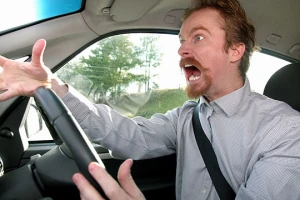 It would be so much easier if we all drove perfectly all the time, but not even a robot (aka an autonomous car) can do that. The best that most of us can do is to try to avoid mistakes and try to be considerate of other people. However, there are some people out there on our roads who have the most tooth-grindingly annoying bad habits behind the wheel, and I don’t mean that they pick their noses at red lights. Not only are these habits annoying to other drivers (and pedestrians and cyclists and motorcyclists and…), they’re also a bit dangerous.
Here’s a list of some of the habits that really get up people’s noses. Which of these get your blood boiling – and which ones are you guilty of and need to stop?
- Not indicating. This one’s my pet hate. Quite frankly, I’d prefer to be behind a driver who indicates when going around a sharp bend than anywhere near one who doesn’t indicate. Not indicating is particularly annoying and dangerous at intersections, especially roundabouts. There’s always that one person who comes up to the roundabout where you have to give way, doesn’t indicate but turns left. By the time they’ve made their move, you’ve stopped to give way and lost your chance to enter the intersection. Even worse is the person who comes up to the roundabout, indicates left and then goes straight ahead – now, that’s an accident waiting to happen.
- Schizophrenic speed. This one gets my husband’s blood boiling every time. Schizophrenic speed happens when a driver goes very slowly around bends and the like. Nothing wrong with that and it’s probably a safe thing to do. However, these people let a long line of cars build up behind them and never pull over when they have a chance. In fact, when they get to a straight bit or even a bit of road with a passing lane, they speed up full bore and even pass the speed limit, meaning that you’re going to have to take all kinds of risks to overtake them… and they don’t want to be overtaken. If you’re a slow and steady type who doesn’t like to corner fast, fine, but stay comparatively slow when the straights come so others can overtake you safely.
- Phone addicts. Come on, we all know that it’s illegal to use a handheld phone when you’re driving, but how many people do you see driving around with a phone clamped to their ear with one hand. Get a handsfree kit, for goodness’ sake! Even worse are the ones who have just a little look at that wee text that just came in because it might be important. We’ve all had those close calls with phone addict drivers. JUST LEAVE THE PHONE ALONE!
- Tailgating. Emergency stops happen. You never know when a cat or a kid will run out on the road ahead. Driving too close to the car ahead is crazy, as you might miss their brake lights going on and not jam your own brakes on in time. Even worse, if it’s rainy or if the road is slippery, then even if you hit the brakes in time, you’ll still ding the person ahead. Honestly, dropping back to a decent following distance won’t make you late for work!
- Red light running and failing to give way. There are no excuses for running a red light or ploughing through a Stop sign unless you’ve got flashing lights and a siren on your vehicle – and even then you have to be careful at intersections just in case.
- Parking where you shouldn’t. We’ve all seen perfectly healthy people walking out of cars parked in the disabled parks, and we’ve probably also all seen cars parked over driveways, on yellow lines, in bus stops… If this is you, what makes you think that the rules can be bent for you? It’s illegal, folks, even if you’re just nipping in for a loaf of bread or to post a few letters.
- Look at my lights! This one mostly gets seen on rural roads at night, but can also be found around town at times. This sort of driver wants to see the road ahead when its dark and only dips the lights at the last moment… by which time, the oncoming drivers are blinking and blinded. The other variations on this theme are the driver who takes the headlights off dip a fraction of a second too soon, and the driver who doesn’t dip the lights for pedestrians and cyclists… who still get dazzled like other people.
- Ignoring things with fewer wheels. Motorbikes, bikes and horses are all legitimate and legal road users, and have as much right to be on the road as you do, even if they are smaller, have fewer wheels and a smaller engine. This means that you have to give them the same courtesy and consideration that you’d give another car. This means not cutting them off, not opening doors suddenly and not getting mad when they have to get in front of you because they want to turn right at the next intersection. Pedestrians also have the right to cross the road, although they do have to give way to you… except at a pedestrian crossing, where you have to give way. You have to give way to them for the whole time that they’re crossing the road, with no waiting until they’ve got to nearly halfway, then going. Wait until the pedestrian has got to the other side or to a traffic island before you go on. And you did check that pedestrian crossing ahead to see that nobody was waiting, didn’t you?
- Open top trailers. I don’t know how many chips in the windscreen we’ve picked up thanks to things flying off the trailer ahead of us and whacking the windscreen. The trailer in question may be hooked to a truck or to a smaller vehicle, but the end result is still annoying. Even if it’s not a stone flying off and chipping windscreens, other debris getting off a trailer is hazardous and annoying (lawn clippings, leaves, dust…). If you’re a gardening contractor or if you’re taking a load of garden rubbish to the tip, then cover that load or at least put it in a bag so it doesn’t blow everywhere.
- Merging morons. When two lanes merge into one, the idea is that Car A, which is in the right-hand lane and is slightly ahead goes into the merged lane first, then Car B, which is in the left-hand lane. Then Car C, which was immediately behind Car A in the right-hand lane gets to go in. If Car C is a merging moron, then he/she will push ahead and force Car B over to one side out of the stream of traffic until someone sensible(Car D in the right lane) comes along. Car B can also sometimes be a moron, racing ahead to try to get to the merged lane ahead of Car A. In all these scenarios, be Car D – the one that’s courteous and keeps an eye out for other drivers rather than having a Me First attitude.
- Litterbugs. Technically, you shouldn’t dispose of any rubbish out of the window of a car. However, I’m willing to wink at organic rubbish that will feed wildlife and break down naturally or grow a new tree, such as apple cores, banana peels and apricot stones. Hey, in 10 years’ time, a forager for wild fruit might thank you! However, there’s an art to chucking biodegradable fruit bits out of the window, the most important part of which is to wait until (a) there’s nobody behind you and (b) your apple core will land in long grass. There is no excuse for throwing out drink cans, papers, plastic bits, or fast food packaging. Cigarette stubs – which are less common these days, thank goodness – are even worse, as they can set fire to dry grass in summer or burn that cyclist you didn’t see (I’ve been the cyclist in this situation).
Any terrible driving habits that enrage you that I’ve missed? And which ones are your pet peeves? Have a good rant in the comments about them!
 Level 2, 9 Help Street