

Author archive
EVs, Power Bills and Emissions

How do we change a system employed by government? If we went cold turkey on many of our traditional national policies the flow on effects throughout the public and business sectors would be ruinous. If you believe the headlines which state that traditional motor vehicles are heading for a cliff edge where there will be no more fossil fuels available to power them, and that the environment will be so much the better without vehicles that are powered by conventional fossil fuels, then things look pretty dismal. But is this actually so?
There are numerous countries around the world that have their special governmental team of policymakers pushing for electric vehicles (EVs) to be subsidised and made easier for those who can afford an expensive EV to buy one. Across the ditch the New Zealand Labour/Green government are creating a fast track for EV purchase in the hopes to lessen greenhouse emissions and keep NZ green. And in America they have recently brought in policy that reduces the initial purchase price of an EV by up to $7500 USD. Of course, the subsidizing is paid for by the tax payer. Those who cannot afford to buy a new electric vehicle pay for the privileges that the wealthier EV owners enjoy – like free use of public charging stations and preferential access to carpool lanes. What about the grand schemes and plans of making some American States totally EV and thus pronouncing the ban of all internal combustion vehicles by 2040 (California). Is this really fair?
Could this thinking and ideology be the motivation behind EVs in Australia? How could the typical Australian on an average wage manage a law that states that you must drive a new and expensive EV by 2040? By the way, we’ll also use your current taxes to help the wealthy buy an EV quickly (and enjoy its benefits) while you struggle to put the food on the table, let alone by an EV!
Let’s also remember that most of Australia’s electricity is made by coal and other natural resource plants. A large fleet of EVs across Australia will draw down on the current available power supplies very heavily. But wait, I know, we could use people’s current taxes to build more expensive cleaner power plants and provide bigger, better power networks! That will make Australia a better place. Power companies will enjoy the profits and will be sure to put the price of power up once electricity comes in short supply.
Hang on! Are electric vehicles really as great as they claim to be? Supporters of the EV suggest that EVs will reduce air pollution and tackle climate change. But will they? (Climate change is another issue – and one that many can make plenty of money, too) It’s evident that a new vehicle powered by the modern conventional internal combustion engine is, in fact, way more pollutant-free than one might tend to think. Extracting Lithium and other materials for batteries has an environmental impact of its own.
The appropriate comparison at governmental levels for evaluating the benefits of all those new electric vehicle subsidies, mandates and ideologies should be the difference between an electric car and a new petrol-or-diesel-car. New internal combustion engines are very clean and emit only about 1 percent of the pollution that older vehicles did back in the 1960s. New innovations on internal combustion engines continue to improve these engines and their efficiency and cleanliness.
When we consider EVs, and their large appetite for electricity, the energy to power them has to come from somewhere. Cars are charged from the nation’s electrical grid, which will mean that they’re only as “clean” as Australia’s mix of power sources. An environmental impact in the mining of the lithium, cobalt, and nickel that go into car batteries is evident. Extracting Lithium is actually not so bad; most of it is extracted from brines that are evaporated by the sun, but it has a sizeable carbon and physical footprint. We have a long, long way to go before the production of electricity for the main grid looks as green and as clean as an EV appears.
What’s the inexpensive answer?
Tips When Buying a New Car
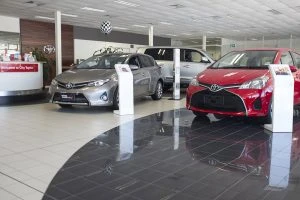
When it comes to buying a new car it can potentially be one of the top financial decisions you will ever have to make. For some, hunting for a new car can be a daunting prospect, but for others the process is fun. Here are some tips for you to consider when you are on the hunt for a brand new car.
Size
Firstly you will need to think about what exactly you will be using your car for. Are you going to be carrying passengers or travelling alone? What about the luggage – will you carry lots of items and therefore require a large boot space? If you’re going to be mostly travelling around the city then a small car like a VW Polo will be a great little car for you. A Corolla will happily accommodate four people and some luggage. You might consider a an SUV-type vehicle like a Volvo XC60 or an MPV like the Honda Odyssey if you want to carry elderly people about as there is plenty of space to climb in-and-out of the car. If you will be touring with the family, then a large estate like the Holden Commodore Tourer is superbly comfortable and spacious over the long open-road haul.
Number of Doors
SUVs, hatchbacks and station wagons with four doors and a big opening tailgate are all classed as having five-doors because the rear gate is a massive door that opens wide to access the boot space. There are three-door hatchbacks with two doors to access the seats and one big door at the rear to access the luggage space. Then there is the saloon car like a Honda Accord which has a smaller boot opening at the rear and four doors for access to the seating area – so it’s known as a four-door. A two-door car like a Mazda MX-5 has two doors to access the seats and a smaller boot opening at the rear. I’m sure once you’ve checked out a few cars with hands-on experience then you’ll form a good picture of the style of car you’ll want to buy.
Space
You’re going to need to consider the amount of space that passengers are going to either enjoy or hate. The freedom of occupant space and the number of doors – or lack thereof – will affect the enjoyment levels of the occupants while travelling. Even some three-door cars like the Renault Megane can accommodate passengers quite happily in the rear seats, however getting in and out of the back seats does require having to move the front seats forward in order for the rear seat occupant to get out of the car. And if you’re sitting nice and snug in the front seat when the rear seat passenger needs to get out for a leak, then I’m sorry but you’ll firstly need to get out of your front seat for them to be able to get out of their rear seat space. Not much fun! Accessibility into the seats of a five-door or four-door car is easy. Some SUVs like a Holden Trailblazer and MPVs like a Citroen C4 Picasso have three rows of seats and can carry seven occupants with ease. Those sitting in the third row will usually require a second row seat to be folded for them to get out – but the access and occupant space is usually quite good in one of these types of vehicles.
Luggage Capacity
Most cars have their luggage space at the rear of the vehicle and this area is known as the boot. Boot space, volume or capacity is given in the car’s specifications and is usually given in litres for us “down under”. If you talk American then then boot space will be given in cubic feet – just to be annoying! If you’re going to be carrying occupants and luggage regularly then it would be wise that you check out how much boot space your potential new car can offer. Most hatchbacks, SUVs, MPVs and station wagons have rear seats that can be folded down to provide more luggage space when required. Generally, the bigger the car – the bigger the boot space.
Fuel efficiency
It’s worth considering how economical a new car will be before handing over the cash. If you’re on a budget, then definitely check out the fuel efficiency of the particular vehicle you’re interested in. Most vehicles under 2.0-litre engine capacity will be quite economical with all of the latest engine technology like stop/start and more gears being standard on most new cars. Turbo diesels – particularly small ones – can be quite efficient, but do remember that fuel taxes are heavier for diesel vehicles. Hybrids like the Honda Insight are very efficient around town when they usually require most of the travel to be done by the electric motor. They get thirstier when performing open road driving because the car will require its petrol or diesel engine over the electric motor. There are purely electric vehicles which you can buy like the Nissan LEAF, but these are suited for city environments.
Warranty
All new cars come with a warranty. Most manufacturers offer a three year warranty and some offer five years like Mitsubishi, Hyundai and Toyota. Kia vehicles offer seven year warranties. Having a good warranty on the car you’re going to buy is ‘peace of mind’, really.
Outgoing models
When a manufacturer is about to release a brand new model, the outgoing model is often offered at a great price. So do keep this in mind when buying new. If having the very latest isn’t such a big deal, then buying an outgoing model is a great way of knocking a few thousand off the purchase price.
BMW's EV Wireless Charging
BMW’s Wireless Charging
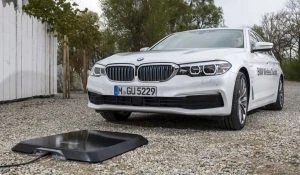
The new BMW 5-Series iPerformance models boast some very cool ‘world-first’ technology. Available factory-fitted with a fully integrated inductive charging facility means that you can arrive home, park over a ground pad (the inductive charging facility/station) and hey-presto your car charges up, ready for your next trip away.
BMW’s Wireless Charging consists of the GroundPad (an inductive charging station), that can be installed either in a garage or outdoors, and the CarPad, which is fixed to the underside of the vehicle will connect to the GroundPad once parked appropriately. This technology is available as an option on the new BMW 530e iPerformance model. The GroundPad generates a magnetic field that induces an electric current in the CarPad, which then charges the battery in the car.
BMW’s 530e iPerformance model has the parking systems that help the driver to manoeuvre into the correct parking position over the GroundPad using a WiFi connection between the charging station and the vehicle. Once the connection has been made, an overhead view of the car and its surroundings then appears in the car’s display screen with coloured lines that help guide the driver into position. An icon shows up on the screen when the correct parking position is reached for the process of inductive charging. BMW say the position for parking over the top of the GroundPad isn’t difficult to locate as the position can deviate by up to 7 cm longitudinally and up to 14 cm laterally – so it has plenty of buffering for getting a good connection. To easy!
We already are becoming familiar with the wireless charging systems inside many new cars from different manufacturers where mobile phones and electric toothbrushes can be wirelessly charged inside the car. BMW says its wireless charging uses the same inductive charging technology already widely used for supplying power to devices such as these.
BMW has unveiled a wireless charging system that will be available in Germany, followed shortly by the UK, the US, Japan and China. It’s nice to be able to boast this technology and do away with cords and manual contraptions for charging your hybrid. Germany and Europe seem to be leading the way with cutting edge EV technology, and this inductive charging system, created by BMW, will set the ball rolling for other manufacturers to follow suit.
I can imagine, like BMW, a world where you just pull up to your car park in the city, and the wireless inductive charging facility that’s set in place, in the road, underneath your EV will charge up your car while you duck into the café for a coffee or buy the necessary office equipment for your business. This is all pretty cool technology!
Car Sales Top 10

New car sales are still buoyant in Australia, with many buyers happily spending on an upgrade. According to the Federal Chamber of Automotive Industries (FCAI), the total vehicles sold in April, including passenger cars, SUVs, light and heavy commercial vehicles and the national government fleet was 82,930 units. Of these units the Toyota Hilux re-claimed first place as the top-selling vehicle, with 3596 sales in April. How much of the car sales pie do Electric Vehicles take out? Let’s have a look at Australia’s top 10 models sold in April 2017:
- Toyota HiLux (3,596 units)
- Toyota Corolla (2,979 units)
- Ford Ranger (2,796 units)
- Mazda3 (2,261 units)
- Toyota Land Cruiser (2,018 units)
- Hyundai i30 (1,903 units)
- Hyundai Tucson (1,816 units)
- Mazda CX5 (1,725 units)
- Mitsubishi ASX (1,706 units)
- Toyota Prado (1,699 units)
Across the Tasman, our New Zealand friends are seeing that their Top 10 car sales list is weighted toward the ute, and it looks more like this:
- Ford Ranger (2,360 units)
- Toyota Hilux (2,251 units)
- Toyota Corolla (1,501 units)
- Holden Colorado (1,164 units)
- Mitsubishi Triton (1,068 units)
- Nissan Navara (980 units)
- Toyota Rav4 (893 units)
- Mazda CX-5 (883 units)
- Suzuki Swift (825 units)
- Kia Sportage (795 units)
I couldn’t stop myself and I had to check out how Australia’s top selling models compared to the top ten models sold in the UK for April 2018. Our UK friends are opting to buy smaller cars, I guess to cater for more congestion and greater intensities of city driving. And this is how it looks for the UK top 10 models:
- Ford Fiesta (40,619 units)
- Volkswagen Golf (26,685 units)
- Nissan Qashqai (21,171 units)
- Ford Focus (19,344 units)
- Vauxhall Corsa (17,995 units)
- Ford Kuga (15,865 units)
- Mercedes A-Class (14,849 units)
- MINI (14,297 units)
- Vauxhall Mokka X (13,579 units)
- Mercedes C-Class (13,495 units)
And just for another take on car sales I decided to take a look at how the new car sales are tracking in ‘The Land Of The Free’. Over in the States “Big is still better”, so the top 10 selling cars for the USA in March 2018 were:
- Ford F-Series (87,011 units)
- Chevrolet Silverado (52,547 units)
- Nissan Rogue (42,151 units)
- Ram Pick-up ( 41,307 units)
- Toyota RAV4 (34,937 units)
- Toyota Camry (35,264 units)
- Chevrolet Equinox (31,940 units)
- Honda Civic (32,584 units)
- Honda CR-V (31,868 units)
- Toyota Corolla (31,392 units)
It’s a funny thing considering people’s perceptions on what the best car might be to buy new. In Australia we have a need for the 4×4, particularly when heading Outback.
New Zealander’s obviously love the ute – often with 4×4 capability. The ute does give a flexibility to motoring that you just can’t find anywhere else on the car sales yard.
In the UK, owning a car that has an ability to park in tight spaces and remain frugal on a commute seems to stay at the forefront of why certain cars are purchased over others.
America continues to love their big rigs, and that’s why we still see the awesome Ford F-Series truck, Chevrolet Silverado and the Ram Pick-up in the top 4 buys.
For Australia in 2017 just 0.09% of the total new cars sold were Electric Vehicles. For the USA in 2017 just 1.18% of the total new cars sold were Electric Vehicles. UK figures show that in 2017 Electric Vehicles made up 1.9% of all new cars sold in the UK. Across the ditch, Kiwis purchased 546 fully electric cars in New Zealand 2017, and this equates to 0.16% of the total new cars bought. Electric Vehicles and their attributes have a ways to go before changing a car buyer’s mind-set to buy ‘plug-in’ over ‘combustion’. The ball has started to roll, however, and we are seeing more plug-in stations becoming available in main Australian cities.
 Level 2, 9 Help Street