

Author archive
Throwing Some Light On The Subject Of Lights
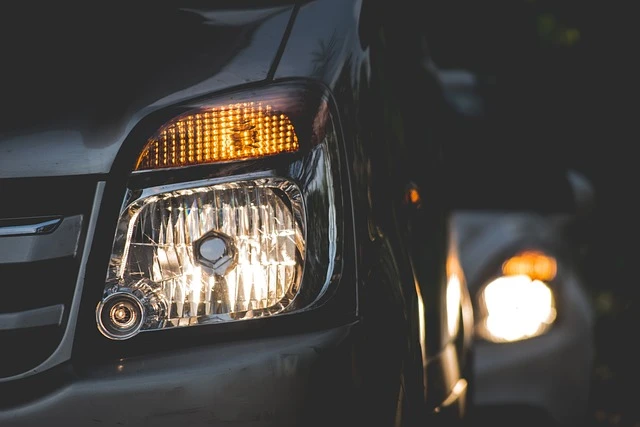
Once upon a time, cars were fitted with carbide lights, practically identical to the sort old-school miners wore on their helmets. These had to be lit with a match, a cigarette lighter or, if you were lucky, a built in flint and steel striking mechanism. They weren’t in the business long, as electric lights were put on cars in around 1912 or so. We’ve certainly come a long way since then and we’ve got more than a pair of carbide lanterns. If you’ve thought about adding some aftermarket tweaks to your vehicle, lights are some of the first things that we can try adjusting or adding. However, it pays to know what you’re talking about, so let’s look at what’s what.
Headlights
These are your bread and butter basics. They are there to stop you running into things at night and see where the road goes. They probably don’t need any introduction, but we’ll touch on them briefly. They are at the front and they’re white. The idea is that they illuminate as far as possible when on full beam and are dipped when another vehicle comes the other way. We know how they work. However, please remember the following: (1) you turn them on when there’s not enough light to see a person in dark clothing 100 m away, i.e., when the sun is below the horizon; (2) don’t play Headlight Chicken where you see who dips first.
Auxiliary Lights
Auxiliary lights are the ones that aren’t the bog-standard headlights, indicators and taillights. Not all cars have them when they roll off the factory floor, but many of them can be fitted as after-market mods. They’re particularly popular on off-roading vehicles, and for good reason. If you’re going out into the middle of nowhere, you really need to see all the rocks, holes and wandering animals, so more lights are needed (doubly so if you go spotlighting for rabbits).
Let’s have a look at the different sorts and what they’re for.
Fog Lights
Fog lights are for moments when something’s blurring visibility rather than for when it’s dark. Fog lights tend to keep the beam of light low so that it lights up the road but doesn’t hit the fog or dust and make the problem worse. If the light hits the dust or fog, then it will be scattered and make visibility worse.
Fog lights can be either amber or white. They have to turn off and on separately from the headlights. You’re not supposed to use them at night time as auxiliary lights, and you’re not supposed to use them at all unless the conditions warrant it.
Daytime Running Lights
Daytime running lights, commonly abbreviated DRLs, are lights fitted to the front of a vehicle that aren’t there so the driver can see but so that they can be seen. They’re supposed to be wired so that they go off when the headlights go on (unless you’re flashing your headlights temporarily to alert another driver about something, like the fact that their boot is open).
In some places, DRLs are required by law on all new vehicles. I’m not sure whether I agree with this or not. Certainly, out on the open road on an overcast day, DRLs have alerted me to a grey car on a grey road under a grey sky that would otherwise be hard to pick. However, around town, when every vehicle has DRLs and everything around them seems to have lights or at least be reflective, DRLs fall victim to the “if everyone’s special, then nobody’s special” syndrome and they don’t act as a warning of the presence of another vehicle more than the big metal box on wheels they’re mounted on.
Additional Driving Lights
Additional driving lights are like your headlights but they’re in addition to your headlights. Instead of having two headlights (or, in quite a few cases, four), you can have four (or six). Because they’re not as sophisticated as your main headlights, they only come on when the headlights are on high beam and should go off when you dip the headlights. This is for the simple reason that these auxiliary lights can’t dip, so if they stayed on, they’d dazzle the oncoming driver. They are sometimes called spotlights or spots.
The exact laws about where you can install additional driving lights vary slightly from state to state and they seem to be updated all the time. The general idea is that you are supposed to install them symmetrically about the centre of the vehicle’s bumper and that you can’t put them somewhere that could be dangerous, either because they protrude like horns or because they block the driver’s vision or dazzle the driver. In general, if you put lights on the front of your 4×4 so that they are surrounded by the bull bars rather than sticking out from them in front or on the side, you’re all good.
Light bars are a subcategory of additional driving light. Light bars are made up of a strip of LED lights, all acting in tandem. Legally, they are considered to be one light if they all turn on and off at the same time; if different bits turn on and off at different times, each bit of the light bar is considered to be a separate light. As lights must be mounted symmetrically around the front of the car, you can have a single light bar in the front and centre of your vehicle.
The ultimate in auxiliary lights or spotlights is the roof-mounted rack of lights that you’ll see on some 4x4s and are popular with hunters going out after dark. These are not legal in all states of Australia under all circumstances, with some states allowing them for use by hunting or when the vehicle is stationary or when the vehicle is off-road. These rules also seem to be updated every time you turn around, so check what applies to you before going to the effort and expense of buying or fitting them.
Puddle lights
The sole purpose of a puddle light is to cast a patch of light on the ground beside the door – very useful if you don’t want to put your best shoes into a puddle or a pile of dog poo. Some of the cars that have them as standard have a clever design so as well as throwing a patch of light onto the ground, it can also throw down a logo as a shadow – or even a patch of light thanks to LED tech. Aftermarket puddle lights are also out there, some of which have some quite quirky styles.
Talking Tyre Tech

Wheels, alloys, and tyres are pretty mesmerizing things. My mate’s dog thought they were biteable too, especially when moving. He did manage to learn, eventually, that this wasn’t the smartest thing to do, and rather spent his time running alongside the car to welcome visitors instead.
The wheel has been around for a wee while now, having first been thought to have been applied particularly well by the Sumerian people in 4000 BC, in the lower Mesopotamian regions, or what we know as modern-day Iraq. These folk inserted rotating axles into solid discs of wood to move objects from A to B. In 2000 BC, the discs began to be hollowed out to make a lighter wheel. Nowadays we use wheels for all sorts of applications, not least for rolling ourselves from Point A to Point B in cars.
I’m sure that the thought of using something soft for surrounding a wheel’s rim entered the mind of many an inventor or entrepreneur. However, in 1847, it was the Scottish inventor Robert Thomson who patented the first standard pneumatic tire. It wasn’t until 1888 that the first pneumatic tyre, made by John Dunlop (yes, as in Dunlop tyres), was able to be used as a practical application for bicycles. He found that rubber was able to withstand wear and tear and retain its resilience when being used as a bicycle tyre.
The tyre as we know it now has advanced tremendously in its science, physiology, and even application. Generally, a new tyre that we use on our cars today may contain up to 25 components and have as many as 12 different rubber compounds. Rubber still comes from the rubber tree (Ficus elastica), where the basic component (liquid latex) is extracted from the tree and coagulated with acid. It is then cleaned with water and pressed into bales, ready for all sorts of applications, including the tyre.
New developments in tyre technology have been rather underwhelming recently; that is, until Michelin’s latest invention. This exciting development by Michelin has potentially seen the pneumatic tyre being replaced by this new tyre technology. The new Michelin Uptis tyre technology utilizes a non-pneumatic tyre that relies on modern composites. The Michelin Uptis uses aluminium for the wheel, a combination of rubber for the tread, and a flexible load-bearing structure made from reinforced plastic with glass fibre that is used as the tyre’s substance for cushioning road imperfections on impact and coping with variable weight forces, while also maintaining the tyre’s rigidity when accelerating, braking, and cornering.
This ‘substance’ as we know it in a conventional tyre is known as compressed air and the tyre wall, which all work together to maintain grip and the tyre’s structural strength, and to soften road undulations. It is, however, prone to punctures. So, instead of simply air pressure providing the right mix of stiffness, flexibility, and durability, like on our conventional tyres, the new Michelin Uptis prototype tyre uses clever yet simple new technology that will even eliminate the hassle of having a puncture.

Michelin has recently said that this new tyre technology could also help reduce the cost of tyre replacement by up to 20%. Michelin’s Uptis tyre technology has and is being tested, having been fitted to 50 DHL delivery vans in Singapore last year.
Michelin Uptis tyres look pretty cool, too, because you can see right through the outer sidewall of the tyre to the other side and beyond, thanks to all the vacant spaces between the incredibly tough and elastic plastic pillars holding the integrity of the tyre together.
Some New American Muscle For 2024
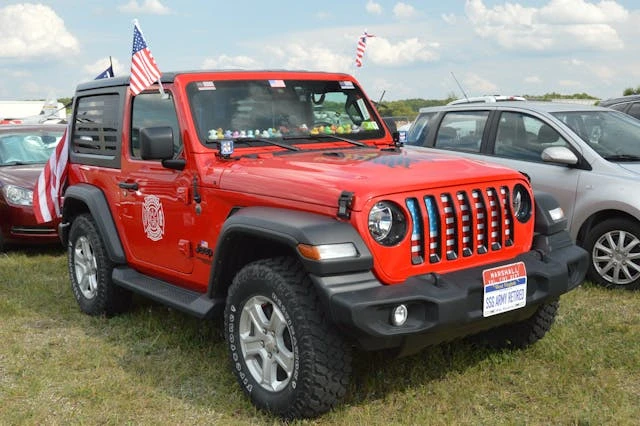
Like American made stuff? You’ll probably like Harleys and a pancake breakfast, follow the NBA, and celebrate Independence Day. This might be a stretched and oversimplified generalisation, but I can see why many people still appreciate an American-made automobile. They are usually large, powerful, and comfortable vehicles to travel in.
Now, there are some current car sale outlets in Australia that specialise in importing and selling a wide range of imported cars from the USA, old and new. The American Car Company and Dazmac are probably the most recognised businesses. The American Car Company’s mainstays of fresh new imports are the latest GMC Sierra (a tough light truck/ute) range, Ford F-150 (another tough light truck/ute), Toyota’s Tundra (yet another tough light truck/ute), and the sensational Dodge Hellcat performance muscle cars.
However, there are also some other mainstream American models you can buy that are easily bought and are available for buyers on the lookout for a brand-new American machine. Chevrolet, Ford, Jeep, RAM Trucks, and Tesla should all ring a bell, and these American icons can be found on numerous showroom floors throughout Australia. Private Fleet’s team members are happy to engage in getting you the right American car for the right price.
Chevrolet
Chevrolet has a superb version of their own tough light truck/ute in the form of the big Chevrolet Silverado HT. This is a big, powerful, and tough truck that has space to burn in the cabin and remains one of the most comfortable and stylish models of its type in its class, and it carries all the modern technology and safety you’ll need for serious work and play.
Ford
Ford F-150
Like the Chevrolet Silverado, Ford’s F-150 is a big, classy tough light truck/ute that comes in two variants. Its strong underpinnings and rugged powertrain make this a perfect workhorse and prime business statement.
A true American legend is the Ford Mustang. Now onto the seventh-generation model, the Mustang is Ford’s longest standing model name, with the very first Mustang starting off its production a long way back in 1964. Currently, in 2024, you can buy yourself a sensational wind in the hair experience with a brand-new Ford Mustang Convertible GT. This performance car brand also offers the Ford Mustang as three variants of the 2024 Ford Mustang Coupe.
Jeep
A big global American player and a longstanding brand, Jeep still champions a range of comfortable, spacious SUVs and utes, all of them delivering formidable off-road capability when the occasion demands itself.
Jeep’s flagship model, the Jeep Grand Cherokee, is a spacious, powerful, luxurious 4×4 SUV that can happily spend time in a city environment. Shake off the shackles of the urban jungle and head out to the wild blue yonder, and this vehicle provides some of the most serious off-roading ability you can find.
Just look at the Jeep Wrangler, and all three of the current models will trumpet “I’m a serious off-road, 4×4 machine!” A Wrangler is a load of fun, too!
Jeep Compass is another great SUV from Jeep with all the goodies, 4×4 ability, and a great size for the family.
The Jeep Gladiator is a model perfect for the builder and tradie who needs to get a long way off the beaten track to commence work. It’s also fun for recreational use and a good tow machine.
RAM
RAM Trucks are the other American-made tough light truck/ute brand you can look to for your seriously good King of the Road experience. The RAM 1500, RAM 2500, and RAM 3500 models are all available.
- RAM 1500. There are six versions you can buy in Oz. In America, the 1500 is considered to be the “light duty” version, but it still delivers up to 295 kW of power and 558 Nm of torque, plus up to 5783 kg of towing capacity and a 953 kg maximum payload.
- RAM 2500. There are two versions of the RAM 2500 available here in Australia. The RAM 2500 harnesses up to 306 kW of power and 582 Nm of torque. The mighty 6.7-litre Cummins turbodiesel engine gives drivers an 8972 kg tow rating.
- RAM 3500. The RAM 3500 Laramie is the top of the range. Offering 306 kW of power and 582 Nm of torque, with this version it has been built to cope with a jaw-dropping tow capacity of almost 16 tonnes (16,000 kg). Being a Laramie model, it also gets all the luxury and comfort features.
Tesla
Here is the battery electric vehicle (BEV) with American roots. You are sure to have heard about Tesla, so, if you are wanting to buy a new Tesla in 2024, there are three models of the Tesla Model 3 Sedan and three models of the Tesla Model Y SUV available.
Kei Cars: The Little Cars That Can
In the Western world, cars seem to have been getting bigger. For example, my early 2000 Volvo S70, a generous sedan when it came out, is shorter than the more modern “little” hatchbacks in the supermarket car park beside it. However, this isn’t the case around the world. In Japan, congestion is a problem in busy cities such as Tokyo and Kyoto, so one of the solutions was to introduce what are known as kei cars, also known as compact cars. Some people call these K-cars, as this is approximately the way the word “kei” is pronounced.
The concept of kei cars isn’t new; in fact, the Japanese government introduced the general idea and legislation related to these vehicles in the late 1940s as part of the post-WWII recovery efforts. Back then, it was more about encouraging car ownership and stimulating the local automotive industry (and you can see for yourself how well that worked, given the number of Japanese makes on Australia’s roads). Today, however, it’s more about congestion and fuel consumption.
What is a kei car? As the Japanese name suggests (in full, it’s kei-jidōsha), it’s a small car. Specifically, it’s one that has restrictions on its size, both in terms of its dimensions and its engine displacement. To qualify as a kei car, an automobile has to be no taller than 2 metres, no wider than 1.45 metres and no longer than 3.4 metres. In terms of engine displacement, the maximum allowed is 660 cc. There’s no official limit on engine power, but it’s very unusual for a factory kei car to have more than 47 kW. Not that tuning and tweaking to get a bit more power is out of the question for those interested… Most of them are speed-limited to 140 km/h, which makes sense, given that these are designed for crowded city streets, not open road rural running. The width means that they don’t handle quite as well at high speeds, so that’s another reason why their top speed isn’t as high as what you’d find with the average Toyota Corolla.
Needless to say, electric kei cars are out there as well.
To encourage the adoption of kei cars, the Japanese government has a few incentives set up. If a car qualifies to have the distinctive yellow kei plates, it’s exempt from the need to buy parking space (apparently, to buy a car in Japan, you first have to buy street space to park it). Various on-road taxes are reduced with kei cars, as these taxes are based on things such as the engine displacement and the weight.
Now, we all know that where there are large numbers of people, there are houses to fix and goods to be transported, which require vans and trucks. Your typical kei car has the sort of cargo space that would suit a minimalist (Marie Kondo would love these, if she doesn’t already). However, kei vans and kei trucks are a thing – although we’d call latter kei utes, as they’re “pickup truck” rather than a miniature version of a big old Scania. The kei vans or microvans are allowed to be taller than the kei cars, which allows the to carry more of a load and has earned them the nickname of “miàn bāo chē” (meaning “bread loaf cars” in nearby China. The kei trucks have the same basic wheelbase but a cab-chassis layout.
Because of their low fuel consumption, suitability for urban settings, kei cars and their relatives are growing in popularity in other parts of the world outside Japan. Their general cuteness relates to another Japanese concept, namely the kawaii (cute) aesthetic. Although many customers in Australia are leery about very small cars, given that physics says that they’re not going to come off well in a collision with an SUV, some popular kei marks are found in the Aussie market. Do any of these sound familiar?
- Suzuki Alto
- Suzuki Jimny
- Misubishi i-Miev
- Smart ForTwo (this one is unusual, as it’s a kei car that’s not from a Japanese marque).
These are all “regular” cars that meet the criteria for kei cars that you can find down at your local dealer (which is why we have them in our reviews page). Plenty of people also arrange for private imports of popular kei cars such as various Daihatsu models, the stylish Honda Beat coupe convertible, the Suzuki Every van, the Toyota Copen sports car and the Subaru Sambar, just to name a few. There’s even a kei version of the Mitsubishi Pajero, the Pajero Mini.
 Level 2, 9 Help Street