

Author archive
Why Would You Wear Driving Gloves?

Take a look around the cabin of your car – or a new car – and check out all the different storage compartments. One of the most important ones you’ll spot is the glovebox. You’ll find many things in a glovebox – mine has a mileage logbook, a paper map, several CDs, the driver’s manual, several paper serviettes, some compostable teaspoons and a half-eaten packet of nuts. What you’re less likely to find in just about any driver’s glovebox is… a pair of gloves.
So why is this compartment called a glovebox rather than, say, a mapbox or just a plain old cubbyhole? Well, the reason is that in the early days of motoring, wearing driving gloves was de rigueur, so one needed a place to put them when one wasn’t driving. Hence the need for, and the name of the glovebox.
For the most part, driving gloves seem to have gone the way of driving goggles and leather helmets and similar motoring garb of the late 1800s and the first half of the 20th century. After all, we don’t need to keep our hands warm no matter what the weather (but see below!), bees and fast air out of our eyes, and dust from gravel roads off our clothes (in an era when clothes had to be washed by hand). However, there are some advantages to wearing driving gloves and keeping a pair stashed in the glovebox.
First of all, what are driving gloves? If you’ve never come across them before, you can get the idea of thick ski gloves or even motorbiking gloves out of your mind. Instead, think of something more along the lines of a golfing glove – something lightweight and supple. Driving gloves are usually made of leather or faux leather and are not padded. Some are fingerless (so you can use the touchscreen) and others have full fingers, and they usually stop at the wrist. Some, especially the sort made from synthetic materials, have ventilation holes to allow breathability.
So why would you or should you wear driving gloves?
- They keep leather steering wheels, gear knobs and the like in good condition for longer. The skin naturally produces oils and sweat, and the palms of your hands are particularly prone to this sort of behaviour, especially if we get a bit nervous, stressed or het up. If you don’t have gloves, then this sweat, etc. goes onto the wood or leather, and gunge builds up on them. Over time, this can spoil the leather or wood. Even on plastic or synthetic steering wheels, that gunge can build up and look pretty horrible. Gloves are a lot easier to clean than a steering wheel.
- They keep your hands comfy. If things are a bit nippy outside, your fingers are some of the first parts of your body to get cold and are among the last bits to warm up. Fingers that are cold are clumsy and less responsive, so keeping them warm when you’re driving is a smart idea. However, most car heating systems, whether it’s the warm air blowing through the vents or a heated seat, don’t quite target your hands, especially if you need that warm air to demist your windscreen on a chilly morning. Gloves help your hands stay warm, even if they’re only thin leather.
- They improve your grip. Sweaty hands, chilly hands, and hands with super-dry skin don’t grip as well. However, a good leather driving glove will keep on gripping and grip well. This is one of the reasons why racing drivers wear them.
- They reduce fatigue. Vibration from the engine (in an ICE or mild hybrid) and from running on the road is transmitted to the driver’s hands and wrists via the steering wheel. On a short trip, this isn’t a problem, but if you’re driving for a longer period, this can increase your fatigue. The mild cushioning provided by leather gloves will dampen this vibration. If you have a harder steering wheel and you drive a lot, then wearing driving gloves will make things more softer and easier for your hands, rather like socks inside your shoes. That’s why long-haul truckies often wear them.
- Sun protection. If you drive a topless car a lot, you may have remembered to protect your face and arms from getting too much UV, but you probably wash your hands a fair bit, which means that you’ve washed off the sunscreen. Gloves make up for this by shielding your hands.
- They’ve got style. Last but not least, driving gloves have got style. It’s not just that they cover up the fact that you bite your nails or haven’t quite got rid of the traces of paint on your fingers. They have a look of their own that naked hands just don’t have. And there’s something about the act of pulling on your gloves before you drive that makes the drive seem like more of an occasion, even if it’s just the school run. You can opt for elegant white for the princess or police officer vibe, brown for a touch of steampunk, or black for your wilder side – and other colours are available if you look.
Let’s make driving gloves fashionable again!
Get More Life Out Of Your Tyres
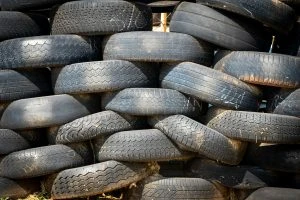
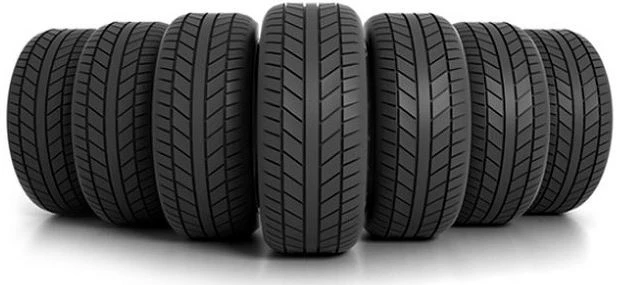
We’re all facing rising costs for this, that and the other thing, and tyres aren’t cheap. I think that the car wears more expensive “shoes” than I do. You should never, ever skimp on tyres and get about on rubber with a barely legal tread depth. However, nobody wants to spend more than they have to, so how can you extend the life of your tyres so you get the most out of them and they last as long as possible?
Rotate your tyres regularly. This means every 10,000–13,000 or thereabouts. How do you rotate your tyres? This depends on your drivetrain, and whether or not you use directional tyres (i.e., left-hand and right-hand tyres). The instructions sound like dance steps but they’re a lot easier. If you get easily muddled, then mark your tyres with chalk before you start (e.g., FL for front left, etc.).
- For a front wheel drive vehicle, the front tyres go to the back on the same side. Then the back tyres go to the front and the opposite side (i.e., they swap diagonally).
- For a rear wheel drive vehicle, the rear tyres go to the front on the same side. Then the front tyres go to the back on the opposite side (i.e., a diagonal swap).
- For a 4×4, front left swaps places with rear right, and front right swaps with rear left (everything swaps diagonally)
- With directional tyres, the left-hand tyres swap places with each other. The same happens on the right.
Get your wheels aligned if you notice problems. The problem usually shows up in two main ways. The first is if you spot irregular wear on your tyres. You’ll only spot this if you check your tyres regularly, which is something we should all do. The other way that poor alignment shows up is if your car pulls to one side. To test this, find a nice straight bit of road that’s fairly empty, position yourself in the middle of your lane and let go of the steering wheel (you may want to disable any driver aids such as lane keeping assistance). If your car pulls to one side, rather like my dog catching a sniff of a dropped fast food wrapper on the side of the road, then your alignment is out of whack and needs tweaking.
Use the right tyre pressure. The right pressure will depend on the individual tyre, your type of vehicle, whether or not you’re towing and even the temperature. Get to know what your car needs – you’ll probably find this in the driver’s handbook that came with your car, probably in the glovebox – and check it on a regular basis. Maybe not every time you stop to top up, but more often than you get the oil changed.
Don’t drive aggressively. OK, when you were in your late teens or early twenties, it might have seemed super cool to rev off and screech to a halt in a way that left black marks on the road, but you know what those black marks are made of, don’t you? That’s bits of your tyres left on the surface of the road, meaning that your tyre won’t have lasted as long as it would have. Enjoy your driving by all means, but grow up a bit and don’t be so forceful in how you start and stop. It’s easier on your car as a whole and also helps with your fuel bill (something we can all do a bit more of these days).
If stuck, don’t keep spinning. We’ve all been there now and again, especially if you like a bit of off-road driving. You get a wheel into somewhere it loses traction and it starts spinning. If you’re like most people, you’ll put your foot down and spin it some more just in case it grabs and moves this time. Unfortunately, slipping is slipping, and the only things you’ll do are (a) wear your tyres down a bit more than you would have and (b) dig yourself in deeper. Instead, get out, have a look at how you’re stuck and see what you can do.
If your car is parked up for a long time, or if you have a set of tyres in storage, keep them at the right temperature (i.e., not too hot) and out of the direct sunlight, as UV breaks down the rubber compounds in the tyres, leading to what is known as dry rot.
Don’t carry too much in your car. The more weight your tyres have to support, the quicker they’ll wear out. Although we all need to take big loads now and then, the less you can cart about on a regular basis, the better it will be for your tyres and for your fuel bill (these two often go together). For those of you who drive BEVs, don’t get too smug about the fuel bill thing – reducing the weight you cart about will also get you more range from a single change. It’s simple physics, folks!
Avoid the rough stuff. In some cases, you can’t avoid rough roads simply because of where you live. However, if you can avoid potholes, ruts, etc., this will help your tyres last longer. It would be nice if there were fewer of these potholes, etc. but that’s another story. At best, the rough stuff can wear at your tyres more; at worst, going into a pothole can slash the side of your tyre (ask me how I know this…).
However, even if you do all these things, the Second Law of Thermodynamics decrees that your tyres will eventually wear out and need replacing. When that time comes, as stated above, don’t skimp or try driving on worn tyres. It’s just not worth it.
Introducing The Jetour
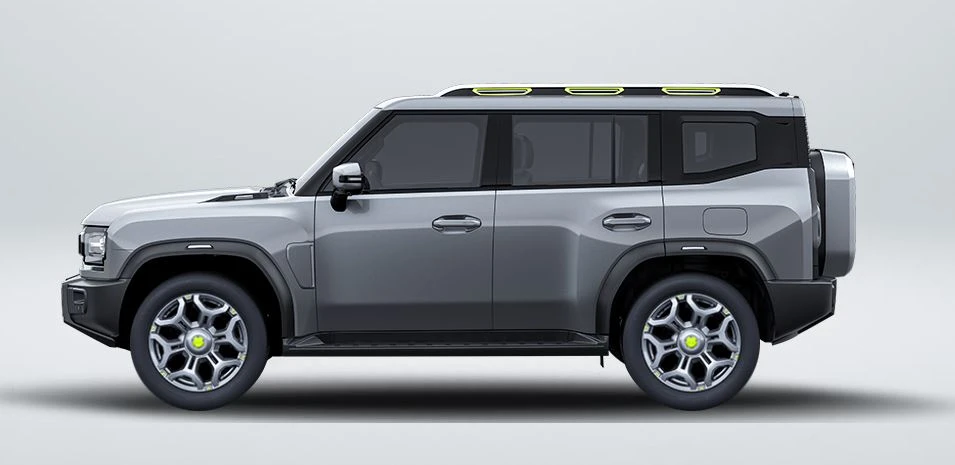
I’ve always loved the exterior of the Land Rover Defender, whether old or new. Its boxy shape and rugged appearance are perfectly crafted for off-roading. The short front and rear overhangs are just perfect for clearing steep entry and exit points on a slope. Of course, there is also the legendary Defender’s 4WD powertrain that is the rock of what makes this an immensely capable 4×4 off-road machine. However, there is another vehicle coming to Australia with that same chunky, boxy shape and talented off-road skills. This new machine comes to us from China and will be available to buy down under in 2025. Let’s take a closer look, and by this, I mean you’ll need to look really closely to make sure it is a Jetour and not a Defender. A big hint is to read the brand name that runs across the front of the bonnet!
It is said that we all have a double of ourselves somewhere in the world (I know I do). This double basically looks like us. Land Rover Defender’s double or doppelganger (German for “double walker”) would surely have to be the new Jetour. The Jetour is a vehicle that was designed to be a luxury crossover brand in 2018 and is the creation born from the Chery Holding Group, often known simply as Chery. Chery is an automotive group currently based in the eastern Chinese city of Wuhu. Born in 1997, Chery has grown and developed in a diversified manner with automobiles as its primary business. Over time, Chery have created automobiles, gotten involved in automotive parts, finance, property and modern services. Chery now has over 300 member-enterprises; these include Chery Automobile, Chery Commercial Vehicle, Chery Jaguar Land Rover, Chery Finance and Chery Technology.
The Jetour T2 large off-roader does look really good in the metal, with its square boxy body shape, bold wheel arches and big rubber, high ground clearance, a swinging tailgate with a spare tyre on the outside, big solid bumpers, and an interior that won’t mind getting dirty from an adventure Outback.
Similar again to how Land Rover has designed its latest Defender, the 2024 Jetour T2 is built around a monocoque body, which is a design that offers loads of structural rigidity and stiffness for tackling the rigours of serious off-roading. The monocoque body is the perfect solid foundation for the Jetour T2 4×4’s advanced all-independent chassis. An independent suspension means that all four wheels can drop and ride over large obstacles individually and independently of what the other three wheels are doing at the same time. This enhances the ability to obtain maximum traction at each wheel, perfect for progressing through tricky and slippery terrain.
The new Jetour will come with the option of either a 1.5-litre or a 2.0-litre turbo petrol engine to power the 4×4, and the engine’s power is sent through a seven-speed dual-clutch automatic transmission for ensuring optimum engine torque is harnessed at all times. Having a ground clearance rated at 220 mm, and with the engine’s drive sent to all four wheels via the full-time 4×4 system, this is an exciting new off-road SUV for the Adventurer needing a new vehicle to get them to a remote location.
We’re looking forward to it, and be sure that we’ll review it fully when it makes it over here.
Celebrating Women In Motorsport

It wasn’t that long ago that we celebrated International Women’s Day. This got me thinking about the number of women involved in motorsport. Are there any at present? If so, who are they? After a little research, it was revealed that there are some amazing female stars.
It’s great to see that there are many women enjoying motorsport trackside as well as women competing in racing, and they are having loads of fun along the way. Women are actively involved in various roles as motor racing volunteers, as motor racing mechanics and engineers, and as racers; in fact, you name it, and there will be women involved.
My recent experience of watching motorsport live brought me to the South Island of New Zealand in early February 2024. Yep, it was cold, but watching motorcycle racing at Teretonga Park Raceway near Invercargill was a blast. I can highly recommend the Burt Munroe as a great way to enjoy all things with two wheels, meeting heaps of great people while doing so. Yes, the rain did play a role in the day’s proceedings, but there was still a full day’s racing enjoyed by all. Winning her race in the motorcycling NZ Supersport 300, Billee Fuller, showed the boys how it gets done, covering the distance with precision and lightning quick times in the damp conditions.
Very much a level playing field, motorsport does enable men and women to compete together. Back here in Australia, Brianna Barker races on the drag strip in her own AMC Rambler Hornet. She grew up in the drag racing scene and wanted to jump in and give it a go herself. She loves the sensation of going fast over the quarter mile in around 12 seconds or less.

Erebus Motorsport’s Betty Klimenko in Australian’s V8 Supercars has had a lot of racing success. Last year, she became the first female majority team owner to win the Supercars drivers’ and teams’ championship. This followed her team’s memorable Bathurst 1000 win in 2017.
Renee Gracie has been racing cars ever since 2013. Last year, Renee raced in the Fanatec GT World Challenge Australia series held at the 2023 Perth SuperSprint meet. Renee raced in an Audi R8 GT3 LMS Ultra car and finished top of the racing board. She was first in the GT Trophy Class, where in all of the 7 races that she contested she won.

Now on to something a little different. Not all of us have the talent to race a car over all types of road surfaces, but this is Molly Taylor’s playground. Molly has been racing in rally cars for quite some time, where she debuted proper in the Australian Rally Championship in 2007. She won the F16 class, a feat she repeated in 2008.
In 2016, Molly Taylor, with co-driver Bill Hayes, became the first female driver to win the Australian Rally Championship, also being the youngest driver to do so at the time.
Mid-2020, Molly joined the Extreme E international electric rally car series. The Extreme E racing series commenced in 2021, and since then she has partnered with Johan Kristoffersson with the Rosberg X Racing team. The pair won 3 of the 5 rounds of the season, on their way to becoming the overall series champions.
In 2022, Molly Taylor joined JBXE and raced in the 2022 Desert X-Prix series.
Even at last month’s Thrifty Bathurst 500, women made up 65 of the full-time staff working on the ground between V8 Supercars and the Supercars’ teams alone. Among the foremost women in the Australian Supercars is Romy Mayer, a key player in PremiAir Nulon Racing’s rapid ascent of the ladder. Romy is one of the sport’s leading race engineers.
Driving a car is most definitely not just a man’s game!
 Level 2, 9 Help Street