

Author archive
The Fine Art of Waving
Well, I hope that 2019 has started well for you. If you are reading this while still out on a road trip, good for you!
I also covered a few miles over the holiday season, driving to visit relatives as well as to get a bit of R & R. While toddling around the place and occasionally zooming around the place, it came to my attention that when you’re driving in rural areas, it seems to be the done thing to wave to other drivers… but not if the traffic’s heavy. There seems to be some sort of unwritten code about waving at other drivers. Well, it’s about time that this code got written down!
 The first rule seems to be that like waves to like. You don’t see car drivers waving to truckers, truckers waving to motorcyclists or motorcyclists waving to car drivers. However, truckers wave to truckers, car drivers to car drivers, and motorcyclists to other motorcyclists. There are a few exceptions to this rule. Small children riding as passengers are allowed to wave at anybody and should be waved back to because it’s a nice thing to do and provides a bit of a human connection during a long boring trip in the back of the car while visiting Grandma. Truckers and motorcyclists are also allowed to wave back to children on the side of the road who wave to them. The other exceptions to the “like waves to like” rule are (a) if someone has pulled over to let you pass or done something else nice and (b) if you recognize the other driver. Actually, these last two exceptions always apply: one always acknowledges friends and extra courteous behaviour.
Waving is also only done to oncoming vehicles. You do not wave to vehicles that you’re overtaking or who are overtaking you. You also do not wave to stationary vehicles or to vehicles in the lane beside you. Only oncoming drivers count.
The next rule for waving as a car driver is that it only really takes place in rural areas and in places where the traffic isn’t heavy. We don’t wave to each oncoming vehicle in the city – in the city, we tend to see other cars as impersonal things coming towards us as we travel along in our little metal bubbles. In the country, however, another driver is another human in a large and mostly empty landscape. If rural traffic is heavy for whatever reason – congested interstate highways and the roads leading to music festivals, for example – then waving is optional.
Thinking about this, it would be kind of fun to extend the “like waves to like” rule to city driving as well, just to add a bit more of a personal side to things. After all, driving is becoming more and more automated these days, and we spend so much time connecting with others via screens, so a bit more contact with real humans is always welcome. However, you don’t want to spend half your driving time waving. I therefore propose the following: in the city, you can wave to other cars with the same make, model and colour as yours. Like calling “Snap!” This kind of happens already in the case of classic cars and in the case of somewhat less common vehicles. But let’s all give it a go!
In fact, Nissan had a campaign a few years back (in 2011, in fact) trying to come up with an official wave for drivers of the LEAF hybrid to give other LEAF drivers. A hunt through the Nissan Electric Facebook page suggests that the results were inconclusive but at least they tried… Maybe they tried too hard.
Let us now turn back to the typical wave from driver to driver on a rural road. How does one do it? Fully taking one hand off the wheel and sticking it out the window while waving frantically is only saved for when you see a friend driving the other way. If you do it at a stranger, you’re a bit of a weirdo and you’ve transgressed the code of behaviour.
There seem to be different types of wave. All of them are considered polite acknowledgements of fellow drivers and you are free to choose any style that suits you. If you are particularly bored and want to keep the passengers amused, get them to keep a score and see which one is the most popular.
- The nod: This is the most basic acknowledgement of the humanity of another driver. This is done by quickly bowing one’s head forward or in the direction of the other driver (i.e. on a slight diagonal). Used by more introverted people, staunch silent types and those who like to have both hands on the wheel at all times.
- The single finger: No, not THAT single finger salute! This is the polite version and is a bit more visible than the nod. This involves straightening the index finger (pointer) of one hand or the other (usually the right hand – but I’m right-handed. Do lefties raise the pointer of their left hands?). All other fingers stay curled around the steering wheel.
- The flap: This is an extension of the single finger wave. Instead of just one finger uncurling and leaving the wheel, all fingers plus the thumb open up while the heel of the hand rests on the steering wheel, giving the oncoming driver a brief flash of palm.
- The full hand: The whole hand leaves the steering wheel and is raised no further than head height. The palm faces the oncoming driver.
- The karate chop: Here, the hand leaves the wheel can be lifted as high as high as the head or even slightly above it, but only the side of the hand is presented to the oncoming driver rather than the palm. It’s kind of like a sloppy military salute.
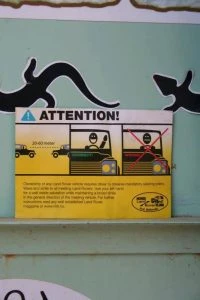 What about not waving? Is this acceptable? The code here states that if the other person doesn’t wave to you, you don’t have to wave back. However, if someone waves to you, it’s polite to wave back. If you fail to wave back, you will be judged, often according to what you drive. If you are driving a new(ish) luxury model, you will be perceived as a stuck-up snob who sees themselves as better than anybody else on the road. If you are in a muscle car, you’re considered a power-obsessed jerk who thinks they own the road. If you’re in a battered old vehicle, you’re considered to be a bum and a lout with no manners. If you own a small hatchback, you’re considered to be a selfish millennial/old fogy. If you drive none of the above, you’re just considered to be rude. Children (or possibly other passengers if you’re bored enough) are then permitted to poke out tongues or do other rude hand signs at the non-wavers, preferably once they’ve passed out of sight or just as you’re passing each other.
Have a great summer of driving and always be courteous. Including waving.
Best In Class: Euro NCAP Releases The Safest Cars In Each Class For 2018
It’s that time of year when a lot of us are making like Chris Rea (driving home for Christmas) and thinking about the year that’s been. The boys and girls in blue are also starting to ramp up the usual Christmas and New Year clampdown on drunk driving (fair enough) and speeding (sometimes getting a bit too picky). News announcers are going to dampen our festive mood by letting us know what the holiday road toll is for this year. In keeping with this combination of wrapping up 2018 and keeping our minds on safety in a way that isn’t quite such a buzzkill, let’s take a look at the stars that Euro NCAP rated as being the safest new cars in each class for 2018.
Euro NCAP puts out its list of Best in Class vehicles (sounds like a dog show). This list shows you who came out top out of the new vehicles in each vehicle class for that year. It’s based on a bunch of different aspects of safety: protection of adult occupants, protection of child occupants, pedestrian safety and safety assistance. These four factors have different weightings when they’re added together to get the final score. Tests are carried out on the vehicles with standard safety equipment.
Some categories of vehicle don’t have a Best in Class for the year. This happens when Euro NCAP hasn’t tested enough in that particular category to really make it a contest. They only tested one in the Fleet category and none in the Vans category this year, for example.
And now (drum roll), here’s the winners for 2018:
Large Off-Road Vehicle: Hyundai Nexo
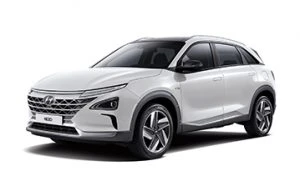
This one’s not currently available in Australia but it should come in a limited edition in 2019, according to Hyundai Australia. This 5-door SUV (which isn’t exactly a big brute but was classed as a large off-roader by Euro NCAP) used hydrogen fuel cell technology plus electric, making it a hybrid among hybrids. Looks pretty nice, too, so it’s going to be worth the wait! It scored 94% for Adult Occupant, 87% for Child Occupant, 97% for Pedestrian and 80% for Safety Assistance.
Large Family Car: Lexus ES
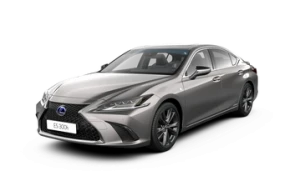
Euro NCAP is talking about a large car for families, not a car for large families, and this luxury hybrid sedan will certainly carry your family in style. It got a score of 91% for Adult Occupant, 87% for Child Occupant, 90% for Pedestrian and 77% for Safety Assistance.
Small Family Car: Mercedes-Benz A-Class
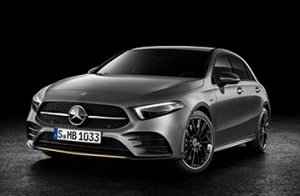
This snappy little 5-door hatch scored 96% for Adult Occupant, 91% for Child Occupant, 92% for Pedestrian and 75% for Safety Assistance. Its automatic brake assistance scooped it a whopping 11.8 out of a possible 12 in the safety features category.
Euro NCAP also has a separate class for electric and hybrid vehicles. This year, the Best in Class in this category was the Lexus ES. Something tells me that as Europe phases out straight ICE (internal combustion engine) vehicles and brings in more and more hybrids and EVs, this category is going to be scrapped, as they’re all going to fit into it.
According to the official Euro NCAP press release, this year, the safety tests had a particular focus on “vulnerable road users”, namely pedestrians and cyclists. And yes, they use crash test dummy pedestrians and cyclists for these tests, especially for the AEB (automatic emergency braking) systems. (Can some bright psychologist tell me why the walking pedestrian dummies they use in the AEB tests always make me want to laugh?).
Here’s the A-Class going through its paces at the Euro NCAP facility so you can see exactly what they do to these cars. Part of me thinks that these tests waste a nice car but then, to ensure great safety, you need to make some sacrifices, and it’s better to waste a machine than a human being.
Euro NCAP also puts out lists of the top vehicles in each of the categories. Not all of the ones listed in these rankings are available in Australia yet, but we’ll certainly let you know all about them when they get here. Here’s the ranking for family vehicles (i.e. small and large family vehicles and MPVS), ranked by overall score:
- Mercedes-Benz A-Class
- Lexus ES
- Audi Q3
- Volvo S60
- Volvo V60
- Peugeot 508
- Mazda 6
- Nissan LEAF
- Ford Focus
- Ford Tourneo Connect
- Opel Combo
- Citroën Berlingo
- Peugeot Rifter
Safe and happy driving not only over the Christmas and New Year period but also all through 2019, whether you score yourself one of these super-safe new cars or whether you prefer something else.
The Right Car For Your Dog Part 2
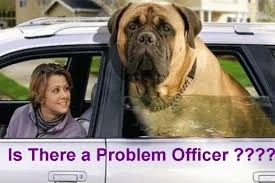 OK, in my previous post on this topic, I covered the legal stuff to do with taking dogs in cars. Now we get to the fun bit: what sort of vehicle suits your furry friend. Or friends, as the case may be.
When I first started thinking about matching dogs to cars, I just about wrote sedans (saloons) off from the start. After all, you don’t really want a dog on the back seat standing up where it can snuffle down the back of your neck while you’re driving. Nor do you want to have scratchy doggy paws on lovely Nappa leather seats, because that would wreck them (the seat upholstery, I mean, not the paws!). However, I remember taking the Staffordshire Bull Terrier we used to have (RIP, old fellow!) in a sedan without any trouble. He was quite happy curling up in the footwell for most trips and didn’t try to sit on people’s laps (unlike the current bitzer). During longer trips, we also put him in one of those doggy carrying crates that sat nicely between my two children in the back seat of the sedan we had back then (probably a Ford Fairmont), which had the added advantage of stopping them hitting each other during long trips. What’s more, if you do have a sedan with leather seats in your possession already when you acquire a new puppy, there’s no need to sell the car – you can put down a nice blanket or doggy bed for Fido to occupy during the trip.
If you do decide that a sedan is the best for you, then I really do recommend one of those doggy carrying crates. They do stop your dog deciding to stretch his or her legs by bouncing all around the place inside the cabin on a long journey, and you can fit a snack for your dog in there. They’re also easier to clean in the case of little accidents – meaning accidents of the canine kind, not car accidents.
It’s obvious where the dog will ride if you have a hatchback, station wagon, 4×4 or ute. But it’s not quite as simple as that. There is a certain style that one has to consider and it’s nice if you can find a harmonious match between the dog(s) and the vehicle. You don’t see poodles or Chihuahuas standing on the deck of a ute (safely leashed, of course), bouncing up and down and yapping squeaky yaps at everybody going past. Jack Russell terriers and fox terriers maybe. But not poodles or Chihuahuas – or anything else small and fluffy (e.g. Bichons) or super-glamorous (Afghan hounds). The sort of dog that looks right on the back of a Toyota Hilux or a Nissan Navara is something rugged and tough and suggestive of the great outdoors – a farm dog (which aren’t an official Kennel Club breed but we all know what they look like) or a Dobermann or even a Labrador. Conversely, although a Great Dane might fit in the back of a little hatchback – if the back seats are folded flat – this is going to be just too much dog in one car. Besides, where are you going to put any passengers or your shopping where they won’t get slobbered on?
To give you an idea of how this works, here’s a list of the 10 most popular breeds in Australia (2017 statistics – the figures aren’t out for 2018 yet) matched the most appropriate general vehicle type:
Labrador Retriever: Your Labs are medium-large dogs and although they can fit in the back of a hatchback or across the back seat, they look best in something larger. It’s a cliché, but the suburban family SUV or MPV is a good match for the suburban family pooch.
Staffordshire Bull Terrier: A smaller dog that fits cosily into the back of even a 3-door hatch but doesn’t look weird tied on the deck of a ute, so a Staffie suits all vehicle types. However, as a short-coated dog that’s a big softy in spite of the tough looks, a Staffie would prefer to be inside the vehicle on a rainy day. A hatchback suits a Staffie just fine.
French Bulldog: Compact, French and a little bit quirky. I have just described one of the smaller Peugeots but it applies to the dog as well. A match made in… France.
German Shepherd: A big tough dog that is probably just about smart enough to drive the car. Something with lots of space would do the job – maybe a nice long station wagon or a 4×4. Put a German Shepherd in the back of a white Commodore or Falcon and you might get mistaken for a K-9 cop.
Border Collie: Working collies go on the back of grubby farm utes. Show-type border collies are better suited to something classy with a hint of the outdoors – say, a Range Rover.
Golden Retriever: See Labrador. However, as this has longer hair, best to keep it out of the back seat of the MPV or any humans who later ride in these seats will be forever trying to get the dog hairs out of their clothes.
Cavalier King Charles Spaniel: Another breed that looks loopy on the back of a ute and is so small that it will get lost in the interior of a big 4×4. They love to snuggle up, so if the little hatchback is too small for you, the Cavalier King Charles Spaniel (big name for little dog) will be happy in a basket in a sedan.
American Staffordshire Bull Terrier (Amstaff): Like the regular Staffie but bigger, like all things American. A muscle dog like the Amstaff looks best in a muscle car like your HSV or FPV.
Miniature Schnauzer: A toy dog with a bit more fizz to it than a Cavalier etc., so not the sedan this time. Go for the hatchback of any type or the station wagon.
Rottweiler: Go big. This breed can cause serious damage to a little hatchback if it decides to jump onto the bonnet. A station wagon at the very least; a 4×4 is even better but your Rotty will settle for an SUV. Rotties were originally bred for pulling carts as well as herding cattle, so make sure your SUV has enough towing power that it can pull more than the dog.
Porsche On A Mission E
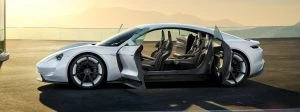
Porsche Mission E
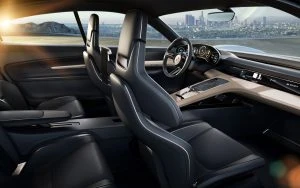
Porsche Mission E Interior
So what have Porsche been up to really recently – and I mean currently working on? They are right into creating a new breed of E-Performance cars: exciting cars that have supercar performance, electric power and boundless attraction. Who’s not going to like a car with the name Porsche Mission E.
The Mission E models are made up of one very quick 4-seater sedan with a height of only 1.3 m and a very special E Cross Turismo – which is basically a Mission E on steroids to tackle a range of terrain and road surfaces you’d come in contact with on any given adventure.
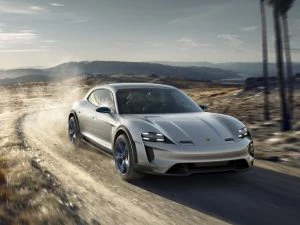
Porsche E Cross Tourismo
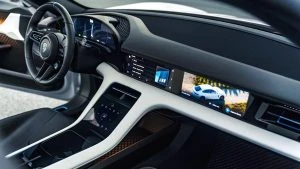
Porsche E Cross Turismo Interior
Porsche’s Mission E is a superbly light car with an architecture that’s very distinctive. The all-electric drive gives the car absence of a transmission tunnel, and this feature opens up cabin space and imparts a lighter, more generously proportioned ambient feeling inside the car. You get four individual seats that are inspired by bucket-type racing seats. So strap yourself inside, and whether you’re driving or an occupant in the back you’ll enjoy all the appropriate lateral support you’ll need to match the driving dynamics of the car.
So they are both go fast cars. Both Mission E vehicles offer a 0-100 km/h sprint time of around the 3.5 second mark. With a range of over 500 km, you can then recharge to a range of 400 km in a mere 15 minutes – thanks to Porsche’s innovative 800-volt technology.
Take a look at the exterior and interior pics. They really are an exciting new breed from Porsche! Looking forward to when we can experience them over here in Australia.
Here are some other special Electric supercars that will be around shortly, all bidding for attention.
Do you know of any other supercar electric models? Of course, there’s already the very cool BMW i8.
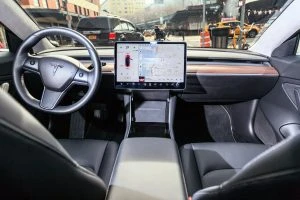
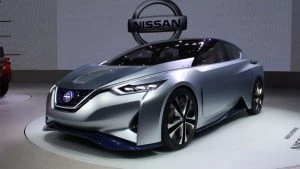
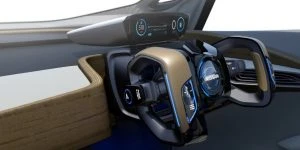
And, here are some of the others to be seen shortly. Still a little hazy on the Nissan IDS but it looks cool! Hopefully not too far away:
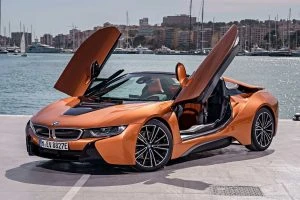
BMW i8
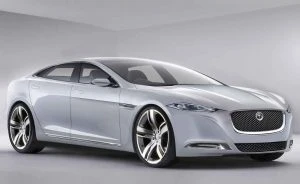
Jaguar XJ
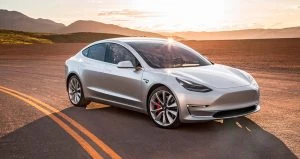
Tesla Model 3
Tesla Model 3 Interior
Nissan IDS
Nissan IDS Interior
 Level 2, 9 Help Street