

Author archive
Why Do They Bash British Leyland?
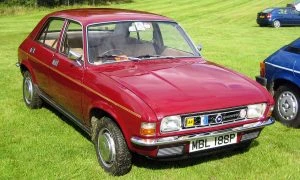
Come on, it’s not that ugly really.
If you, like me, enjoy picking up the odd coffee-table type of book from the motoring section in your local library (it’s in the low 600s in the Dewey system if you can’t find it), you’ve probably come across books that list bad, ugly and weird cars. I love them. However, I have noticed one wee tendency, both in these books and in series such as Top Gear (which my library also helpfully makes available in the motoring section of the library): the tendency to bash British Leyland vehicles.
What have they done to deserve this? I mean, it’s not like other major marques haven’t had their share of absolute dogs. Dishonourable mention is usually made, in this motoring subgenre, of the abysmally ugly Ford Edsel, the notoriously flammable Ford Pinto, and all those Japanese cars with singularly bizarre names like Nissan Cedric, Mazda Bongo Brawny, Mazda Marvie Proceed, Subaru Touring Bruce and Mitsubishi Mini Urban Active Sandal. In fact, nearly every big name turns up somewhere in this book I got from the library. There’s usually a Lada or two in there somewhere as well. But to hear the likes of Clarkson et al. talk, you’d think that British Leyland was an unmitigated disaster that never did anything right.
I mean, if a car company is really, really bad, it won’t last very long. This was the fate of some other motoring horrors, such as Australia’s very own Lightburn Zeta (made by a washing machine company) that had no rear entry but did have an engine that, if you stopped it and restarted it, would work the engine in reverse, allowing you to go through the gears while travelling backwards. That one didn’t last for very long. Nor did Delorean, which is best known for its appearance in Back to the Future, Peel or Messerschmitt (who didn’t quite have the same aeroplane to car success as Saab and BMW).
However, British Leyland was BIG, and not just because it was a government-owned enterprise. You’d think it was a sure-fire recipe for success: take wildly successful brands like Mini, Jaguar and Rover (which are still going strong) and some others that were equally popular like Austin, Triumph and Morris and you’re bound to have a winner, right?
Well, it worked on paper. However, industrial relations in the UK in the 1970s and early 1980s weren’t exactly stellar, though I guess they were a hang of a lot better than what went on at Ford in the 1930s. Throw in a bright spark up the top who decided that it was time to move on from the old classics and along came the vehicles that everybody loves to bash.
The vehicles that are notorious for ruining the reputation of British Leyland are the Austin Allegro and the Morris Marina. So what was so bad about them?
The Austin Allegro made a couple of styling mistakes. In the mid-1970s, vehicle styling was turning to the edgy and linear but the Allegro kept things curvy, earning it the nickname of a “poached egg on wheels”. The steering wheel, however, was what we’d now call a squoval or a square with rounded off corners. Apart from that… well, it’s hard to say exactly why the Allegro has such a bad reputation really. It didn’t come in a hatchback version and the hydroelastic suspension was a bit on the wobbly side. It picked up a reputation for picking up rust easily but it actually wasn’t too bad compared with others of its time. Mechanically, it was adequate enough and that suspension did make it corner pretty well.
As a former owner of an Allegro, I’d have to say that it suffered from the reverse of Kardashian syndrome – instead of being famous for being famous, it was notorious for being notorious. It was, however, one of the top selling cars in the UK all through the 1970s. It was more a case of being the wrong car at the wrong time. These days, that curvy styling and the slightly square wheel would be right on trend.
Then there was the Morris Marina. I’ve owned one of these as well, for all of two weeks until it died. This one did deserve its poor reputation and in many ways, its quality tarnished Leyland as a whole and it took the otherwise reasonable Allegro down with it. The Marina really understeered and it really did have the bad rust problems. It handled atrociously. This is what happens if you try to rush something into the market when you’ve got a bunch of disgruntled employees.
These days, especially for those of us who entered the world at about the same time as the Allegro, the Marina and all the others of that era, they do have a certain charm, in spite of the vinyl seats and lack of safety features. This could be a case of nostalgia, or it could be a case of perspective: after all, is there anything really wrong with unfashionable styling? Or maybe not. Sometimes, ugly is just plain ugly.
But I really don’t think that British Leyland deserves its poor reputation and the Allegro certainly doesn’t. As for the Marina, well, that’s another story!
The book in question, in case you want to get hold of a copy for yourself, is “Total Lemons. One Hundred and Eleven Heroic Failures of Motoring” by Tony Davis, published by ABC Books, ISBN 978-0-7333-3086-5 (paperback) 978-0-7304-9983-1 (ebook). Enjoy.
SUV Favourites
SUVs are popular, and the reason for this is because they offer motorists increased safety, plenty of cargo area, and interior space is good for seating comfort. There is plenty of SUV choice out there and, with diesel, petrol, electric and hybrid options available, a new SUV buyer has plenty to think about before making their final decision on which SUV to buy. Ultimately, their choice will come down to their own individual preferences, their driving habits and on what they can afford to buy. Here are some of the best SUVs you can buy new in Australia. The list is not exhausted, but the following SUVs are popular for good reason.
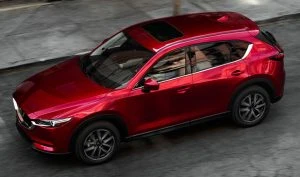
Mazda is the favourite SUV for Australians. Mazda’s popular CX series includes the small CX-3, mid-size CX-5, big CX-8 and largest CX-9 models. They all boast nice clean design which always looks good, and their modern styling has given Mazda an edge. Offering a wide range of SUV sizes in their line-up, Mazda has what you need when it comes to SUVs. Mazda’s CX SUVs all drive very nicely, and are efficient, safe and reliable. Buy one of the new Mazda CX Series vehicles and you can’t go far wrong.
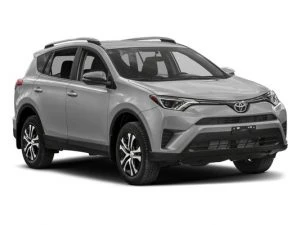
We all know that Toyota is a very strong contender on all vehicle matters. When it comes to a new Toyota SUV you know that you’re going to get a very well built vehicle that lasts the distance. You can get yourself one of the larger well-known Land Cruiser and Prado models that boast very competent off-road ability. However, Toyota’s SUV line-up also includes SUVs with light off-road capabilities in the form of the RAV4 and Kluger models which are surprisingly spacious and nice to drive. For those who like the thought of owning a compact SUV, Toyota offers the chic C-HR which is beautifully stylish and funky. The RAV4 Hybrid is going to be a hit for those who will appreciate its fuel economy and low emissions. Again you can’t fault Toyota reliability, safety and overall value.
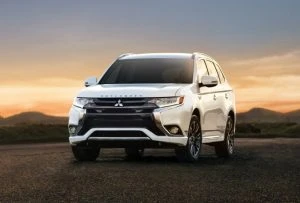
Mitsubishi offers the Outlander, ASX and Eclipse SUVs, and with their highly accomplished Outlander PHEV (Plug-in Hybrid Electric Vehicle). This is definitely a brand worth looking into for your next SUV drive. On all accounts Mitsubishi SUVs are stylish, well-equipped, safe and practical, remaining clockwork reliable for many km after purchase.
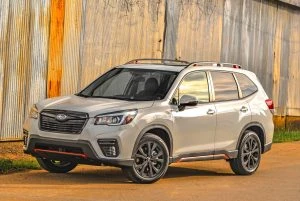
A new Subaru Forester or Outback SUV is always going to look great parked up your driveway, and they do look somewhat sleeker and even sportier than typically chunkier SUV drives. Do check out the spunky little ‘XV’ which is sporty and characterful. For driving satisfaction, safety and new car reliability, Subaru have for a long time been very strong.
Plenty more Kia SUVs are running on our roads, and this is for good reason. Kia Sportage and Sorento SUVs are excellent medium-to-large SUV models that are rugged, reliable and stylish. New Kia SUVs are very well equipped and safe SUVs to drive. They are pleasant to drive, can tackle off-road excursions with AWD, and they remain reliable and practical SUVs throughout their ownership.

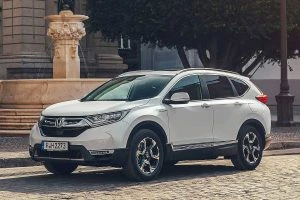
Honda give us their sleek HR-V and CR-V models which look good, remain ever-reliable, and on a practical note sing sweetly with good fuel efficiency to boot. There are many loyal Honda fans out there, and the new SUV models are solid buys. Buy a luxury CR-V and you’re in for a treat. The car has plenty of smooth power, practical space, nice comfort levels and plenty of modern technology.
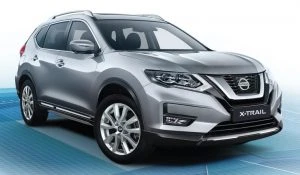
Nissan brings a good level of choice for new SUV buyers. All Nissan SUV models (which include the: smaller Juke, medium-sized Qashqai and X-Trail, and the larger Pathfinder) are very stylish to drive. Their top of the range varieties offer premium luxury and are very well-equipped. Pathfinders and X-Trails do have some clever 4×4 drivetrains which can take you more off-road places than you might expect.
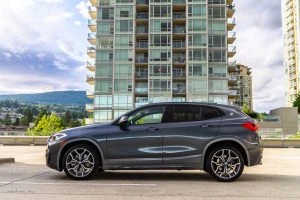
BMW appeals as a luxury SUV choice, and for good reason. BMW ‘X’ SUVs are polished performers that do a whole lot of things very well. Space is good, comfort good, economy can be good, and handling is very good along with performance. With plenty of models available in the ‘X’ series the SUV buyer has loads of choice – large or small and anything in between. And if the standard ‘X’ series variants aren’t exciting enough, you can always upgrade to the ‘M’ versions which are star performers in their field. They boast sportier features, too.
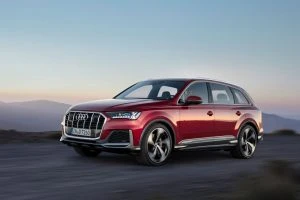
Audi is another premium brand that is selling surprisingly well in the SUV market. The SUV luxury brand offers an extensive range of vehicles that are known as Audi’s Q range. Like BMW, Audi have SUVs that can be of any size – from the small Q2 right through to the big Q7 and Q8. If you’re looking for something with more power, then Audi’s ‘S’ range may set your heart racing. Audi tend to go out of their way to keep their buyers happy over long term ownership, too. Stylish definitely, and if you can stretch to the bigger Audi Q7 or Q8 you’ll drive an SUV that has becoming quite a status symbol in it field.
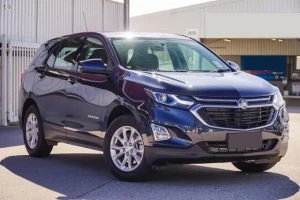
Holden has a few interesting SUV options that are well worth a look, and the range is one of the larger line-ups currently available in Australia. The Acadia, Equinox, Trailblazer and Trax are all available and well equipped vehicles. Ongoing ease of servicing, a nice driving experience and overall satisfaction are what make owning a new Holden SUV a good choice. If you can find yourself a top of the range Holden SUV then you’re going to be driving a very comfortable SUV.
Volvo has some very stylish SUV vehicles that are safe, efficient and easy to drive. Their comfort levels and equipment are hard to beat, and they come in three flavours from the smallest sporty XC40, the mid-size XC60 and the awesome and large XC90.

Hyundai, another Korean brand, is doing really well on a global scale with an ever increasing fan base. You’re sure to find a Hyundai SUV to suit your needs. Three SUV models are available: the Kona, Tucson and Santa Fe. A Hyundai SUV is stylish, easy to live with and rides and performs very well. They are also pretty reliable machines, safe and relatively affordable considering the level of equipment offered.

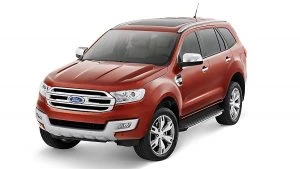
Finally, Ford always has an SUV to suit your tastes. Well made, practical performers, the Ford SUV range is comfortable and well-equipped with loads of goodies and great infotainment technology. Small to large, the range of Ford SUVs is good. The EcoSport, Escape, Endura and Everest will all make a fine companion that will reliably cart your family and gear around.
There are other SUVs out there that haven’t been mentioned, however, if you feel the need to put a good word in for a particular model, please feel free to do so.
Warning Signs I’d Like To See On The Dashboard
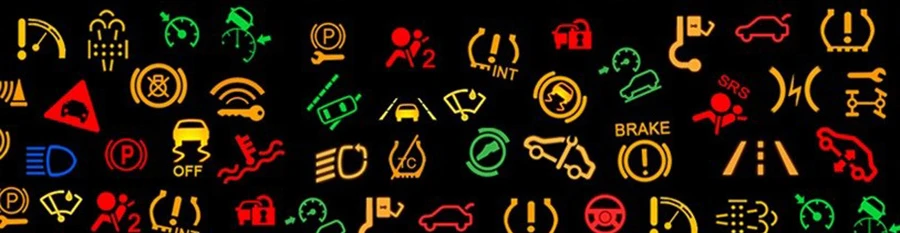
Modern cars and even not-so-modern cars have warning signs on the dashboard that light up like Christmas trees at the slightest provocation. However, unlike Christmas trees or fairy lights, the emotion experienced when one sees a dashboard warning light twinkling away isn’t one of joy but more like one of “Oh, heck!” to put it politely.
There seems to be warning signs for just about anything these days, which is why a few new cars use head-up displays for displaying the really important stuff. Some of the warning signs monitor you, rather than the car, such as the tiredness recognition system in some new Mercedes models. These apparently look at your facial expression and behaviour and can use some fancy algorithm to figure out if you are getting sleepy. The larrikin in me would probably want to mess with one of these systems by pulling faces at the camera, or seeing if I could fake tiredness well enough to fool the system (a challenge for any would-be actor or actress).
However, there are probably a few more warning lights or systems that could be handy to have amid the myriad of other ones. I daresay that someone somewhere has already thought of these, and has possibly created an app for them that will use your phone to talk to a car’s display system.
Seatbelt warning light 2.0. Yes, I know these already exist and have been around for a wee while. However, most of them just say that the driver doesn’t have his/her seat belt plugged in properly. However, the EU is requiring new cars from this year forward to have warning lights and sounds for the front passenger seat and possibly for rear seats as well, although rear seats only get a beep and/or light if the buckle is undone while travelling. I can understand the need for the “buckle undone during travel” trigger, as I’m not the only person who’s put a load on the back seat, and the big bag of dog biscuits, the hefty haul of library books and/or the groceries probably weigh as much as a small child. What I’d like to see in these new and improved warning light systems, speaking from experience as a parent, is a system that lets the driver know WHICH seatbelt is undone, especially in an MPV, to avoid the “OK, which one of you has undone their seatbelt?” “It’s not me, Mum; it’s Jessica!” “Tis not!” arguments.
Cabin air quality sensors. This wouldn’t be so much a warning light as a system. It’s no fun to be stuck in a car with a passenger who has had a meal of beans, onions and eggs with helping of some nice healthy brassica on the side, if you get my drift. A flatulent dog in the luggage compartment of a station wagon or even a hatchback can be bad enough to cause a distraction when you’re driving. In my dreams, this sensor and system would detect when the methane or sulphurous compounds in the air cabin reach a critical level, and would then open the vents a bit wider and get that smell out of there. A warning light would probably be needed so that you don’t wonder what the heck has gone wrong with the climate control system.
Toilet reminder. Related to the previous one, I’m surely not the only person who’s been a passenger on a long car journey who’s politely and quietly asked the driver to stop at the next handy public convenience or large bush, depending on the location, only to have the driver completely forget about it and keep on driving straight past one, leaving you in desperation. You don’t want to sound like a whiny little kid going “I need to pee!” every two minutes but being forced to hang on for far too long isn’t brilliant for the plumbing. If a system can detect that the driver is getting sleepy, it can detect that the passenger (or the driver) is fidgeting about in the seat, jiggling and all those other strategies that we use once we’ve grown out of wetting our pants – and it can take over the job of reminding the driver that somebody is in desperate need of the loo. Or the passenger can activate the warning system so it can do the embarrassing job of reminding the driver. Perhaps this system could work in with the GPS to give directions to the nearest convenience.
Passenger G-force calculator: Another rather irritating habit of drivers, from the passengers’ perspective, is to barrel around corners quite fast. Yes, the car can handle it and is designed to do this. However, as more than one passenger has grumbled, the driver has the steering wheel to hold onto and can anticipate all the upcoming G-forces involved in a corner. A passenger often gets taken unawares and may not be ready for that fast corner, with spilled coffee being the result some of the time. And if we had two other siblings, we probably all remember the game of Squash The Person In The Middle When Cornering on the back seat during trips along winding country roads. If a car can detect that there’s a passenger in the front seat, then it should be able to work out whether he or she will get thrown about during fast cornering and remind the driver of this, or possibly work in with the suspension or even seat positioning to minimise the passenger getting chucked about as much.
I’m sure there could be others invented. What are some that you’d like to have?
Little Maintenance Jobs You Need To Do Right Now
You’re probably quite good at taking care of the big things when it comes to servicing your vehicle, such as keeping up with the regular services and the oil changes and the like. You definitely know not to run out of fuel – or battery charge, depending on whether your drive of choice is an EV or an ICE. I hope you’re in the habit of checking the oil and the water regularly to keep an eye on things. Back when I got my first car, my dad told me that oil and water ought to be checked once a week, which seems a bit over the top now, but I guess that my first car, like yours, was an old thing that’s probably a real collector’s item by now (wonder what happened to it once I sold it).
However, there are probably some little jobs that you don’t really think about doing quite so regularly. There certainly aren’t little red, green or orange lights that light up your dashboard like a Christmas tree for them, with a few exceptions in some models. But they still need to be done to make sure that you drive safely. I know that I need to take care of some of them on my recently acquired Toyota Camry , as the previous owner had neglected to do so. In fact, I probably ought to go and do them as soon as I’ve finished writing this.
- Change the wiper blades. Wipers wear out over time and when they do, they don’t do quite as good a job of removing rain, etc. from your windscreen. You do not want to find out that they aren’t removing everything when you’re driving behind a heavy truck on a rainy day and the truck spins up the contents of a muddy puddle all over your windscreen.

If you can relate to this, you need new wiper blades.
- Top up the fluid in the windscreen washer reservoir. Related to the previous task, if you need to wash a splattered insect off the middle of your field of vision, then you’ll need to have something in that little tank. You can use a proprietary product designed for washing windows, water with a splodge of dishwashing detergent in it or just plain water, depending on your fancy. Just make sure that something is in there.
- Clean the inside of the windscreen. The inside of your windscreen might look clean but it can accumulate a fair amount of grime from whatever mysterious source it comes from. Unlike the outside of your windscreen, which gets regular washes and can be cleaned with the click of your wiper switch, the inside gets overlooked. However, all that mystery gunge will show up very strongly and will interfere with your ability to see the road when the sun strikes it at the right angle, which often happens in winter. The best way to remove that annoying film of whatever-it-is is with a soft cloth, either a proper chamois or a microfibre cloth or even an old cotton T-shirt. Don’t use wet wipes or anything that will leave a residue. Yes, I have made this mistake in the past.
- Make sure the spare tyre is in good condition. So you got a flat tyre a few weeks ago and had to change the tyre. However, what with the demands of daily life, it’s easy to make the mistake of just keeping on driving and forgetting that the tyre you put into the compartment under the boot (or on the back of your 4×4) is flat as a tortilla. Best get it seen to ASAP so you don’t get caught out. Even if you haven’t had to change a tyre recently, then you should still keep an eye on that spare tyre to make sure that it is ready for you if you do get a puncture.
- Put a first aid kit in the glovebox. Even if you don’t get into a ding of some sort, you never want to be without a first aid kit, especially if you do a fair bit of driving on rural roads like I do. If your main driving takes the form of Mum’s Taxi Service, then having a few sticking plasters, bandages, disinfectant, tweezers and paracetamol tablets handy will be useful now and again.
- Take the collection of second-hand clothes to the charity shop. Every kilo of extra clobber in the boot or on the back seat is an extra kilo that your engine has to work to shift. To improve your fuel economy, better actually drop that bag of old shoes and clothes into one of those bins or at the shop door itself. The same principle applies to all the other odds and ends that accumulate inside the luggage compartments.
No procrastination now! These might seem like small jobs but a lot of them are important to ensure that you can drive safely.
Now, where’s that jug that’s got just the right spout for the windscreen wash compartment?
 Level 2, 9 Help Street