

Author archive
Give Me A Brake
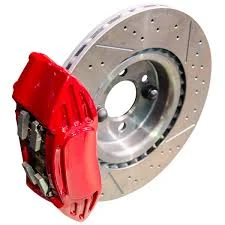 Imagine that you’re driving along a typical suburban street. A movement to the side catches your eye and you spot somebody’s dog off the leash madly rushing full tilt down a driveway, barking madly at the cat across the road. Next thing you know, Doggo is rushing into the road. Without thinking, your right foot darts off the accelerator and hard onto the brake. Your car screeches to a standstill, stopping short of that lunatic of a dog and shoving you hard against your seatbelt. You growl something about idiotic animals and people who can’t control their dogs, then keep on going, barely thinking about the mechanical miracle that has just taken place.
Brakes. We take them for granted, especially after we’ve been driving for a few years. However, they are super-important for safety. Imagine what it would be like without them. You might have had a small taste of this sort of thing as a child if you screamed downhill on a scooter or skateboard (or, in my case, a bike with worn-out brake pads) – that feeling of being out of control and knowing that gravity will accelerate you faster and that there’s no way of checking or slowing that thing down.
Needless to say, brakes pre-date cars. Steam trains needed them and so did stagecoaches, and the basic principle behind all brakes is the same. The vehicle is moving because the wheels are turning, so to stop it moving or to slow that motion down, one needs to slow the wheels down. This is done by clamping something large and hard onto the wheel, which produces friction that soaks up the kinetic energy of the wheels. And this is the first and most important mechanical principle behind any brake: friction. The bigger the surface area applied to the turning wheels and the more force it’s applied with, the more quickly the turning stops.
In your car, the friction is applied by disc brakes, which have been around since Citroën put them on mass produced cars in 1955. Disc brakes consist of a metal disc that’s incorporated into the wheel. You can have a powerful pair of callipers that grab this disc as it spins and slow the turning that way. You can think of it as a more sophisticated adaptation of your old bike brakes: instead of grabbing the whole rim, it grabs something near the centre. The callipers are fitted with brake pads that are usually made of tough rubber, which absorbs heaps of force and can handle heat – and you need to make sure that you replace your brake pads on a regular basis, as they do wear out over time and you’re sunk without them. You’ve also got drum brakes (or disc and drum), where a stationary disk covered with an energy absorbing lining, known as a shoe, presses against the disc, applying the necessary friction.
A lot of kinetic energy and a lot of momentum are involved in a moving car. However, it takes the subtlest bit of pressure to slow a vehicle from, say, 100 km/h to 85 km/h as you approach a corner. If your average mid-sized sedan has a mass of 1600 kg and the equation for velocity is K = (m × v2)/2… you’ll have gone from 617.83 kilojoules to 445.98 kilojoules or a difference of 171 kJ. This is equivalent to roughly the energy expended by a petite woman doing slow dancing for quarter of an hour… and you sure didn’t apply that much with that little twitch of your foot. Obviously, something’s happened to amplify what your feet and legs did or the car wouldn’t have responded one iota.
The next mechanical principle that kicks in is the one discovered by Archimedes and I don’t mean the one that saw him running through the streets in the nude shouting “Eureka!” after his bathtub overflowed. I mean the “Give me a long enough lever and a firm place to stand, and I can move the world.” In other words, the lever principle. One tiny movement on the short end leads to a lot of movement on the long end. This is certainly at play in your brake system but amplification comes in the form of fluid courtesy of the principles of hydraulics. Don’t make me go into the equations for hydraulics, as that’s university-level physics and I didn’t study that.
Fluids can’t be squashed, which is how water pistols work. Actually, a water pistol is a good place to start understanding the principles of hydraulics. You couldn’t throw water with one finger very far or with much force, but by applying pressure to that water, you can get quite a bit of water going a fair distance, preferably onto your big brother’s face. The main force goes from your brake pedal to the master cylinder, which converts the force of your foot into hydraulic pressure, like your finger on the trigger of a water pistol. The brake fluid then exerts pressure on the slave cylinders (one for each wheel that has the brakes) and the slaves apply the brake drum or the callipers, and everything kicks in to slow the vehicle down.
There are a lot of moving parts involved and naturally, given the nature of things, the business end of the brake will wear out over time. And they will need to be replaced, so you really don’t want to try cheating or skipping on this important part of car maintenance.
If, for whatever reason, you’re in the scary situation where any of these systems fails, here’s what you do:
Blowing Hot And Cold: The Role Of The Radiator

When you take a look under the hood of your car, an awful lot of the space in there is taken up with the cooling system – that’s if you’ve got a vehicle that gets its motive power from an internal combustion engine (ICE). In fact, the complexity and the importance of the cooling system in an ICE vehicle – and the consequences for your car engine if something goes wrong with it – is one of the things that makes electric vehicles look very attractive.
The topic is on my mind somewhat, as last week saw me standing around at the mechanic’s garage looking at a faulty radiator and getting the bad news that my old 4×4 was terminally ill. It was at that moment that even though I live in a rural area where the range of electric vehicles isn’t practical, I liked the idea of EVs, as they have none of the radiator-related hassles. (The 4×4 is going to be replaced by a smaller Toyota Camry, as I never took the 4×4 off-road all that much, but that’s another story).
Anyway, enough about me and let’s get onto radiators.
In an ICE vehicle, the rotational motion needed to turn the wheels is produced by a controlled explosion pushing a piston up and down. If you’ve ever used petrol or diesel to get a sluggish bonfire going, then you’ve probably seen just how explosive these fuels are and how much heat is released. In fact, quite a lot of the chemical potential energy contained in these fossil fuels – or their biofuel equivalents – is converted into heat energy rather than kinetic (motion) energy. Actually, probably most of it goes to heat energy, which is why an ICE isn’t a terribly efficient machine, as the amount of energy going in (in the form of chemical potential energy) is nowhere near the amount of kinetic energy going out – and some gets lost as sound energy as well. For your information, the most efficient machine in terms of the ratio of energy out to energy in is a bicycle… and we don’t really mind if it burns a few more kilojoules in this case.
All that heat energy has to go somewhere or before long, it will melt the engine. It was heat that got the metal of the engine out of the rocks it came from and into the shape that it is now, after all. Nobody wants that, so the aim is to get the heat away from the engine and somewhere else where it won’t do any damage. Most modern engines use a liquid cooling system rather than air cooling, as heating up water soaks up a few more joules. It takes more energy to heat water than to heat air, as we’ve all found out on sunny days in spring when the air is warm but if you try taking a dip in an outdoor swimming pool or the sea, the water still feels like ice. The solution is to have a bunch of pipes running through and around the engine and these will take the heat away from the engine and somewhere else. Add in coolant that has an even higher boiling point than water and you can soak up even more heat.
There’s one small problem, and that’s the fact that if water boils, it turns to steam, which, as Isaac Watt noticed with his mother’s kettle all those years ago, expands and exerts a force on what’s around it. This is how a steam engine works (and makes you wonder if an ICE–steam hybrid is possible: something that relies on the ICE driving the pistons until it builds up a good head of steam and then uses the steam). However, putting water under pressure increases the boiling point, which is why water boils at low temperatures at altitude. Of course, too much pressure will blow the hoses as well, so there’s a little regulator that keeps it just right.
If the water stayed put, it would boil quickly, so an extra trick is to keep the water moving. This is what the job of the water pump is: it moves the water through the system so the water has a chance to shed that heat energy somewhere once it’s away from the business department of the engine.
Once the water has moved away from the explosive part of the engine carrying the excess heat energy, it needs to get rid of that heat before it’s pumped around again. This is where the radiator comes in. The radiator has the important job of dissipating the heat energy to the atmosphere. The core of the radiator consists of a honeycomb of little tubes, usually made of aluminium, which has good heat transfer properties. The aim of the game is to have lots of surface area to maximise the amount of air that can be exposed to the heat and take it away into the general atmosphere. To ensure that the air in question goes away from the engine rather than towards it, there’s a fan or two in place to whirr it in the right direction; pretty amazing when you think of the speed at which the car’s travelling.
If the weather is a bit chilly, then the people inside the cabin of the car would actually like to have a bit of that hot air, thank you very much. This is where the car’s heating system comes in. This takes a bit of the water from the system and puts it through another core – the radiator’s mini-me – and blows it through the vents into the cabin so you can warm up your cold pinkies and toesies – and get the mist off the windscreen so you can see where you’re going. It’s all interconnected, reminding me somewhat of how your blood circulates. In the case of my poor old 4×4, the heater suddenly deciding not to blow hot air was the equivalent of a nasty pain in the left shoulder radiating down the arm…
Actually, using your blood circulation system isn’t a bad analogy. In either case, if there’s a blockage or if something blows because the pressure isn’t right, you’ve got serious, serious trouble. Blood does indeed help your human engine regulate its temperature and it does this by restricting the flow to extremities when the thermometer does down, which is why it’s your fingers and toes that get cold first. To get rid of excess heat, the body also does the “increase the surface area” thing, which is why your face gets red when you’re toasty.
Of course, if the weather cold outside and you’re putting on the hats, thick socks and gloves to stop uncomfortable heat loss into the surrounding air, then there’s a chance that the water inside the system will freeze up inside the radiator – as the laws of thermodynamics tell us, heat goes from the hotter thing to the colder thing, even if the “hotter” thing is at 1°C and the colder thing is at –4°C. Frozen water won’t flow, so you get a blockage in the radiator system, which you don’t want. It gets worse, too: water expands when it freezes (the only substance to do so) and it can bust any part of the cooling system it fancies in this case. The solution is to add antifreeze, which has a lower freezing point than water. Amazingly, the most common antifreeze, ethylene glycol, also acts as the coolant, as it has a higher boiling point and a lower freezing point.
It’s a complicated system – which is why if you haven’t checked the fluids in your engine lately or given the system a proper flush out as part of servicing, then you won’t get as much out of your ICE as you ought to. Don’t ever neglect this part of car maintenance and don’t say I didn’t warn you!
EV Vs HV


It’s time for the big showdown between the two rivals hoping to knock internal combustion engines off the top spot in the world of automotive power. (cue drumrolls, flashing lights blaring heavy metal music and a hyperventilating commentator). In the green corner, we have… Electricity! In the other green corner, we have… Hydrogen! Which of these two mighty rivals will win the title for best engine type and come out champion and win the Green Energy title?
OK, settle down. Deep breath and time for me to stop channelling the pro wrestling I watched the other night when I was in need of a good laugh. Right, that’s better. Now to continue with a discussion of whether hydrogen-powered vehicles or EVs are the best.
Of course, one has to look at all aspects of motoring to decide what’s best. What’s more, when it comes to individual decisions as to what car you want to buy and drive, your personal priorities will come into play. So, without further ado, let the contest begin…
Environmental impact and emissions: On the road from the end-user perspective, it’s a draw. Running EVs and hydrogen doesn’t pump out pollution or greenhouse gases. However, the way that the electricity is generated or the hydrogen gas is produced may have to be taken into account. If the widespread uptake of EVs means that power companies have to fire up otherwise disused old coal- or gas-fired generators, EVs might not be all that green. If the power comes from hydro, wind or solar, then it’s all good. Similarly with hydrogen: if the process of getting said hydrogen into a fuel form can be done without chewing through non-renewables or pumping out nasties, then it’s all good – and we’re working on that, as we’ve discussed in an earlier post.
Maintenance: Assuming that you can find a mechanic that can deal with EVs (there are more of these knocking around these days) and/or hydrogen vehicles (we need a nice little abbreviation for these: what about HVs?), this is another draw. Both types of vehicle have fewer moving parts than what’s needed in an ICE (internal combustion engine) – both involve electric motors that create rotational motion directly rather than relying on a controlled explosion to push a piston that turns into rotational motion. Fewer moving parts means less friction, which means less wear and tear. However, to be fair, EVs and HVs haven’t been around quite as long, so we will have to wait a bit and see what happens as they get older.
Accessibility: OK, here EVs win hands down. Charging points can be found in all sorts of places and every time I go to my favourite holiday spot, I come across a new charger where there wasn’t one before. You can also get charging points for your home so you can charge an EV overnight. Although our very own CSIRO are working on ways to make transportation and storage of hydrogen easier, we still don’t have very many hydrogen bowsers out there… or at least not yet.
Cost: At the moment, electricity is cheaper to get than hydrogen fuel, so this is another win for EVs.
Time: As a lot of you have already discovered, it can take quite a while to charge the battery of an EV up to full, kind of like it does with your phone or laptop. Even the very fastest superchargers take half an hour to get a battery to 100%. However, hydrogen pumps as easily as petrol or diesel, and you all know how quick that is, so HVs win here.
Range: Another very clear win for hydrogen. In 2017, the Toyota Mirai clocked up 502 km, while a test version of a Tesla picked up somewhere between 397 and 506 km. In practice and with everyday people driving, the range of HVs tends to be a lot longer than that of EVs.
Specs:
The Telsa Roadster (due for release in 2020) boasts some specs that make all the other supercars, muscle cars and hypercars look like Granny’s little runabout: 0–62 mph (that’s about the same as 100 km/h)) in 1.9 seconds, a top speed of 250 MILES per hour and a reputed 10,000 Nm of torque according to Elon Musk. Yes, I’m counting those zeroes as well and wondering if that’s for real. A nice nerd has explained how this figure might be a wee bit misleading, as Tesla’s talking about wheel torque, not engine torque:
On the HV front, the Pininfarina H2 Speed racing machine claims to do the 0–62 mph sprint in 3.4 seconds and has a top speed of 300 km/h and a maximum power output (from four engines combined) of 480 kW; torque figures are hard to come by.
Actually, I would quite like to see a real head-to-head race between the Pininfarina H2 Speed and the Tesla Roadster, and not just because it would be cool to see the Tesla’s acceleration in action. One of the things that puts me off traditional motor racing a bit is the engine noise and the smell of the fumes, but when electricity and hydrogen compete, these would be totally gone and that’s the whole point of EVs and HVs. We can probably say now that the Tesla would win the sprint, but over a longer race, the quicker refuelling time of the H2 Speed might make up for this.
* Credit where credit is due. Some of these stats and comparisons have been taken from a 2017 issue of How It Works magazine (issue 105); there have been some developments in both corners since then!
Wacky Concepts From The 2019 Geneva Motor Show
Motor shows have a number of attractions. The most important part of them is the introduction and the unveiling of new models by all the big manufacturers. This is where we get to see what’s going to be hitting the roads at some point in the near future. It’s where we see where the future of motoring is going.
However, as well as all the sensible new suggestions, there are always the offbeat contributions. And you’ve got to admit that having a look at the weird stuff that designers have proposed is part of the fun of any good motor show worth its salt. One needs a bit of comic relief, after all!
Geneva 2019 didn’t disappoint in either regard, even though some of the big names like Ford, Jaguar and Volvo didn’t put in an appearance. There were plenty of good practical offerings up for the viewers, most of which fell into the EV category, as this is the way that Europe is going (here’s hoping that they have the capacity to generate electricity to match). The ones that are slated for release in Australia will eventually make it onto our reviews page for those who want to know more and would like to own them – and I hope that the Audi Q4 e-tron makes it down here, for one.
There were also hot sports cars galore from all the big names. Ferrari and Bugatti did not disappoint, showcasing a couple of hot hypercars that looked every bit as cool as they ought to be.
Naturally, there were the more entertaining elements and concepts as well. Here’s some of the beauties that raised eyebrows for their quirkiness.
GFG Kangaroo
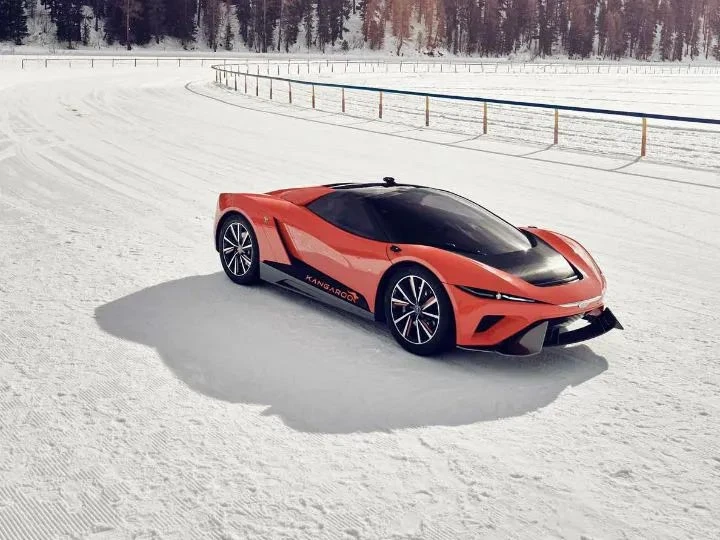
This is an SUV. No, honestly; that’s what the designers say that it is, which shows you just how flexible the term “SUV” is these days. The GFG Kangaroo concept SUV might look like a sports car but it’s got flexible suspension to give it extra ground clearance whenever you want it, and those cool front splitters that look like a boy racer’s favourite dream are retractable, which improves the approach angle so you can drive this up a slope. This isn’t just some mock-up idea – the manufacturers actually made a driveable prototype and got it to do what it’s supposed to do. Well, bonus points to them for actually giving it a go and who knows?
Citroen Ami One
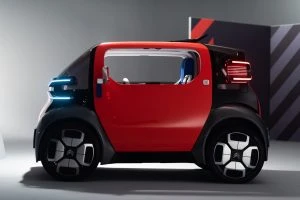
Designed with the legendary 2CV in mind as well as hip young Parisians who don’t want to ride the local equivalent of a Lime scooter on a cold rainy day, the Citroen Ami One might look like a car but is technically classified as a quadricycle. This means that one doesn’t need a proper driver’s license to drive it – though you’d think that the ability to parallel park, obey the give way rules and indicate properly would still be needed. It’s got two seats, the display panel and sound system require you to drop your smartphone into the special slot, and its top speed is 28 mph (that’s about 45 km/h).
Fiat Centoventi
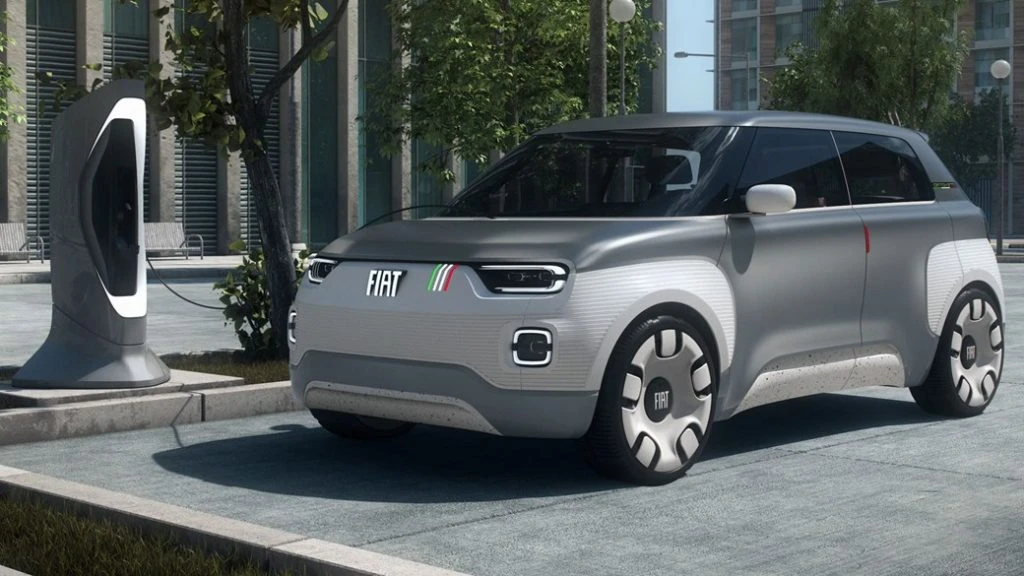
Named after the Italian word for 120 (the number of years that Fiat has been in business), the Centroventi is a vehicle that aims to be as customisable and modular as a computer if not more so. The best idea with the modular concept would have to be the extra battery slots so you can extend the range by dropping in another battery if you want to (apparently, the idea was inspired by the way that you can add extra memory cards or drives to your computer for more data if you want to). The general idea is that you start with the basic all-white idea, then order the customizable accessories you want to personalise it… and you fit the accessories yourself. It also has a big display on the rear so you can send messages to those behind you.
Nissan IMQ
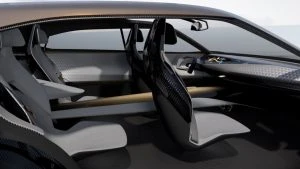
I wasn’t sure whether to leave this one off the list of weird offerings or whether to wait and see if it made it into production for the Aussie market, but came down on the side of weirdness. The word the designers had in mind in this potential replacement for the Qashqai was “kabuku”,which, so I am told, means “to embrace the unusual”. Looks-wise, it is weird, especially in the interior. The outside is something that looks vaguely familiar in outline but with lots of angular features but inside? What’s with those seats? They don’t look like the usual armchair styles but have gone in for minimalist things that look like they’re floating. They look like something from a classic sci-fi movie. One would definitely want to give it the bum-on-seat test to see if they’re comfy or not, because they don’t look all that inviting even if they have been properly ergonomically designed. The interior also features textures galore. Most bizarre is the steering wheel, if you can call something that’s shaped like the side view of a wonky loaf of bread a wheel. I’m sure it all works but… it’s a lot to wrap the mind around.
SEAT Minimo
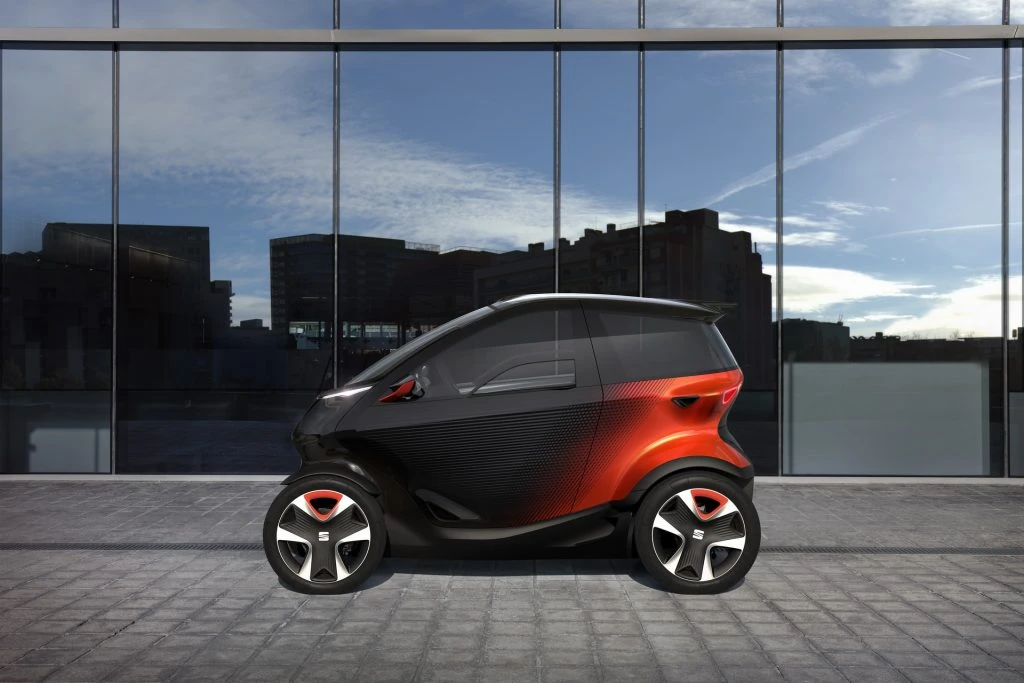
Continuing the theme of little dinky-wees, the Minimo also can’t make up its mind whether it’s a car or a glorified bicycle. It seats two but the passenger goes behind rather than beside the driver. The idea is to reduce congestion by having a vehicle that takes up less space. But where do you put your groceries?
 Level 2, 9 Help Street