

Author archive
Building Beasts Through Biomimicry

Inspired by a fish
Right from the beginning of automotive history, car makers have named their creations after animals. The reasoning behind this is simple: by giving the vehicle the name of a creature that’s fast, powerful, graceful or dangerous, the user will, at least subconsciously, feel that the vehicle shares those attributes. We want our cars to have the sheer speed of the peregrine falcon (top speed in a stoop = over 300 km/h, which is faster than what your common or garden Aussie Ford Falcon can do) or the aggression of a bighorn ram (Dodge) or the agility and elegance of a jaguar.
However, what if the makers could take things a little further and actually give a car some of the actual attributes of a swift, agile animal? Not things like actual predatory behaviour, of course; otherwise, we’d see Nissan Bluebirds eating Alfa Romeo Spyders, Jaguars and Porsche Caymans competing to devour Isuzu Bighorns, and Hyundai Tiburon (that’s Spanish for shark) giving Corvette Stingrays serious grief. However, what if we could find out what it is that gives speedy creatures like the blue marlin and the peregrine falcon their seriously low drag coefficients so we can get better and more efficient speedy vehicles?
This is where the concept of biomimicry comes in. Biomimicry is the design concept that looks to the natural world to get ideas and inspiration for more than just names and colours.
The classic example of biomimicry in the automotive world comes from McLaren supercars and involves one of the designers being inspired by a stuffed fish. This stuffed fish wasn’t your ordinary trout trophy but a sailfish, which is one of the fastest fish in the sea. The designer was so struck with this sailfish that he studied it to find out some of the features that made it so fast and if it would be possible to apply these to the supercar.
Two features from the sailfish made it into the design of the McLaren P1. The first was the scales. On the fish, the scales create vortices that push a bubble of air around the fish, meaning that it’s slipping through less dense air rather than water so it can go faster. In the car –which is already going through air – the features of the scales that generate these little vortices were applied to the engine to increase the flow of air for keeping things cool and for adding extra oomph. And it worked: the sailfish scale inspired design increased airflow by 17%. The other design was the curve of the fish’s body just before the tail fin, which straightens out air and water pockets to improve aerodynamics; it works just as well on the hypercar, minus the water, of course.
Nissan has also got a bit fishy, although they were considering safety features instead. The designers were looking at how schools of fish act. If you, like me, have watched one of those nature documentaries on marine life, you’ve probably seen footage of those huge schools of fish that seem to have the synchronized swimming thing down to perfection. They stop, start, swirl and turn almost simultaneously – and they never seem to collide with each other. The team at Nissan asked how this was possible. It turned out that each fish monitors its position relative to the fish in front of it, and makes adjustments so it can keep the right following distance. This idea was what led to the development of forward collision detection and autonomous braking systems, which is now a very common active safety feature on a lot of new cars and not just Nissans, either.
However, care is always needed when attempting to mimic the natural world, as it can be very easy to overlook the big picture. Mercedes Benz famously attempted to look to nature for inspiration when developing a very stable car – the Bionic concept car. The idea seemed fantastic: the boxfish may look weird but it’s extremely stable and can’t tip over, no matter how turbulent the water is, but it’s still got low drag. Mercedes thought this was great and set about putting together a concept car based on the shape of the fish.
However, one thing the Mercedes design team forgot to think about was the fact that although the boxfish was stable but was still able to turn around easily, it wasn’t quite as slick and fast as most other tropical fish. The aerodynamics (or, more accurately, hydrodynamics) that stop it from going belly-up in the roughest of seas also make turning very hard. Boxfish have two other design features in place to help them survive the jungle of the coral reef that the Mercedes Benz doesn’t have. The first makes up for the lack of manoeuvrability by having one heck of a defence system: it puts off minute amounts of poison into the water around it to deter predators – which is why it’s bright yellow to send the message Toxic: Do Not Eat. The second feature is the way it moves its fins, which is what gives it the turning ability as well as adding to the stability. Just in case you haven’t noticed, cars don’t have fins and definitely don’t use them for turning. This explains why the much-hyped Mercedes boxfish car didn’t get beyond concept stage.
Nevertheless, biomimicry is still a very hot topic in the world of design in general, as we look for ways to make cars safer and more efficient. Maybe it’s time to insist that all automotive designers need to have tropical fish tanks in their offices.
The Perfect Form of Transport???
 Here at Private Fleet, we keep an eye on trends in car design and the way things are shaping up. At the moment, I reckon there are three biggies: fuelling systems, autonomous vehicles and sensors.
Let’s start with fuel. We all know that the supplies of crude oil aren’t as big as they used to be and the ones that are left are frequently in places that are very hard to get at or are located in politically volatile countries. This means that if we can cut down our dependence on non-renewable fuels, we’ll be able to keep on trucking the way we’re accustomed to. We’ll also help cut down on greenhouse gases, which is supposed to stop global warming or climate change.
In our quest to reduce our dependence on fossil fuels, we’re trying a bunch of different things, all of which are getting a lot of attention in the automotive world. Electricity is the hottest one at the moment, with a major push towards EVs and hybrids that use both electricity and petrol. However, that’s only one of the three. Just as well, as one has to ask where the electricity is coming from and how it’s being generated. If it’s being pumped out by coal- or gas-fuelled power stations, then EVs aren’t the perfect green solution. The other hot topic in fuel is to look for other things that can be used to make diesel and petrol that are renewable – biofuels. The trick here is to find something that can be grown without taking land and water resources away from what we need to feed a hungry world. Lastly, there’s the hydrogen fuel cell option, which doesn’t produce much in the way of waste but is a little on the fiddly side to produce and transport, although they’re working on that.
All in all, this suggests that the perfect transport of the future should be able to run on something sustainable that’s easy to get hold of, and that it should produce minimal waste, or at least waste that can be useful for another purpose.
The second hot topic is the all the innovations being added as active safety features and driver aids. There seems to be a new one out every time I turn around. Temperature sensors for automatic climate control, 360° vision and reverse parking sensors are old hat. Now we’ve got side impact detection and avoidance, lane change assistance, autonomous braking, even systems that detect when the driver is getting tired or annoyed. They’re working on getting the car to listen to you, with voice activated commands for all sorts of things.
This suggests that the perfect transport of the future should have a ton of sensors for all sorts of things, should be able to react according to the input of those sensors without the driver having to do anything, and should be able to interface with the moods of the driver.
Lastly, we’ve got the topic of autonomous cars: ones that will steer themselves, pick the right speed, pick the right part of the road and all the rest of it all by themselves. This is closely related to the improvements in sensors and driver aids. If autonomous cars reached their full perfection, you’d be able to hop in when well and truly under the influence, tell it to go home and then nod off until you find yourself parked outside the front door.
If we all of these factors together, we can get an idea of what the designers are trying to come up with. Let’s imagine what it would look like: something that runs on plant-sourced fuels and produces biodegradable waste that can be converted to fertilizer; has ultra-sensitive sensors for temperature, mood and upcoming hazards in practically a full circle; is voice activated and even does voice-activated acceleration and parking; and can think for itself even when the driver is exhausted or drunk. Natural materials for the upholstery and a cheap production method would be an advantage as well. It already exists: when I was a child in a rural town, we called this a HORSE.
A Few Snags With Voice Control Systems
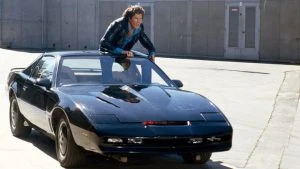
Michael, I don’t think these modern cars are quite up to my standard yet.
Ever since at least the 1960s or possibly earlier, technologically minded geeky sorts have dreamed of having machines that will hear your voice and carry out your commands and popped this sort of tech into sci-fi stories. Kind of like having a very obedient slave who will do whatever is asked but without any of the nasty ethical implications. Possibly the dream of voice-activated machines is even older – if you look hard enough in old books, robot-type things have been turning up since the 1600s. Certainly, in the 1970s and early 80s when the way you got a computer to do something was by feeding in a punch card, the idea of just being able to tell it what to do would have seemed like the ultimate. The people with these fantasies were probably the ones who dreamed up Knight Rider and the intelligent car named KITT… and the ones who are designing cars and in-car tech grew up watching this show.
Fast forward to today and we’ve got quite a few computerized systems inside our vehicles, It’s likely that if you pick up, say, a brand new Mercedes-Benz, it will have far more electronics and computer bits and pieces than the Apollo that reached the moon. Even better: a lot of bits and pieces inside a new car are voice activated. We’ve got to the point that if you watch a rerun of Knight Rider with a teenager, their response to KITT’s cool functions is likely to be “So what?”
These bits and pieces tend to be related to things like navigation, music and the phone; in other words, the sorts of things that you do on your phone anyway. The idea behind it is a compromise between safety and connectedness. Instead of having to take your eyes off the road and your hands off the wheel to poke around with your playlists or to call the boss and say you’ll be late because you’re stuck in traffic when you actually are stuck in traffic, you can do this just with your voice. Both Apple and Android allow you to do this, and a few marques have their own systems – Ford, BMW and Fiat, to name a few. In some vehicles, you can also control the temperature settings via voice control, though those who have used them report that you have to be specific and keep it simple. I guess the people developing the tech didn’t really want the climate control system to suddenly add a bit of chill when the sound system is playing “Feeling Hot, Hot, Hot”.
There are more ideas in the pipeline and have just been introduced. If you’ve got the right apps and the right devices (hello, Alexa!), you can check if the boot and the sunroof are closed properly and what the battery status in an EV is (BMW); lock and unlock the doors remotely (Ford Chrysler) and more. There’s talk that BMW is thinking of introducing a feature that will allow you to dictate and send an email entirely by voice. I mean, what could possibly go wrong with that? I keep getting mental pictures of someone trying to write something really important having a near miss on the road (caused by somebody or something else) so that in the middle of the formal apology or job application, the reader encounters the words “Stupid mutt – get out of the way!” (That’s the polite version – insert unprintable adjectives if desired.)
Which leads me nicely to the couple of existing snags with voice recognition software in vehicles – and outside of the vehicle that a number of people have picked up on.
The first relates to getting the voice recognition system to actually pick up on what you’re saying. The interior of your vehicle tends to be noisier than, say, your living room. Even if you’re in a nice quiet EV or hybrid running on the electric motor, there is noise from the ambient traffic around you, bumps in the road and fans. The noise increases if you’re in an ICE (internal combustion engine) vehicle or if your hybrid is running on the non-electric motor. This makes it hard for those voice recognition systems to make out what you’re saying. Heck, it can sometimes be hard for another human to make out what you’re saying in these conditions, as quite a few married couples probably already know.
The system also has trouble distinguishing the voice of the driver from the voices of the passengers, so if there are kids in the back trying to chatter away while you try to tell the navigation system to find you the nearest petrol station (or EV charging station) or call your mother, it won’t understand you.
Then there’s the problem with different voices. I remember the first time I came across some voice recognition telephone system and trying a number of times to get the stupid machine to recognize me, only succeeding when I faked a really, really cheesy American accent. Voice recognition systems are a whole lot better than they used to be but they still have problems. They like what they consider to be a “normal” voice. The trouble is that what a lot of these systems consider to be a “normal” voice is one with a standard accent. Introduce a very broad regional accent (Scottish and Irish drivers, for example, have real problems) or a non-native speaker accent and voice recognition systems throw a wobbly. A few researchers have also discovered that in-car voice recognitions systems have more problems with female voices than male voices. Which explains why my Brazilian sister-in-law doesn’t use these features.
Navigation systems are the main place that people notice these glitches. If you’ve programmed your system to go somewhere and it’s reading the directions out to you, it has to “guess” how to read the street names out, sometimes with hilarious results. Or you try saying the name of some restaurant you want to find the way to but it fails to pick it up; these systems are fine with mainstream outlets like Starbucks but they go to pieces on niche and boutique places – think English pub names like The Goat and Compasses or French restaurants like Mon Petit Escargot (I made that one up).
These problems often mean that the users get frustrated and end up picking up the phone to do the dialling or the searching manually, which defeats the purpose of having the hands-free voice activated in-car tech in the first place. Add in the fact that the users are probably getting frustrated by this stage and you’ll probably find that they’re driving less safely than they would if they just pressed a touchscreen in the first place.
However, the problems with voice recognition systems, in cars and out of them, have their funny side, so on that note I’ll leave you with this little clip…
It’s A Man’s World In The Crash Test Facility
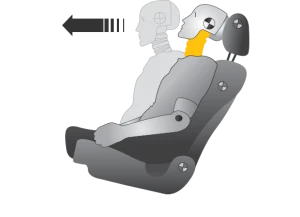
Notice the design of the chest, biceps, neck and jaw…
Take a look at your typical crash dummy – the sort they use in the ANCAP and similar tests (see the photo, sourced from ANCAP). Notice anything about them and what they’ve got in common? Ten points (or should that be five stars?) for you if you noticed that a crash test dummy tends to look like a guy. I don’t know if you can really refer to a crash test dummy as a male but it (he?) is definitely masculine.
Yes, indeed. Skipping the whole thing about gender identity and all that, there are only two basic human skeleton and tissue types: the male sort and the female sort. And, in case you haven’t been paying attention, they aren’t the same. Women (in general) have wider pelvises, narrower chins, a higher proportion of body fat, smaller hands and feet and thinner necks than men. They’ve also got their centre of gravity in a different place. When guys get a bit chubbier, they put it on their tummies; when women do the same, it goes on the butt and thighs. Men have flat chests and even my A-cup sisters have boobs. Women are, on average, shorter (yes, we’re talking typical and average here and I know perfectly well that there are tall women and short men). Male bones are denser and have a higher proportion of muscle mass. Women have a larger lumbar lordosis (the curve in the lower spine that lumbar support in the driver’s seat is supposed to fit snugly into), which means that their pelvis tilts at a slightly different angle, which affects the walk. In fact, high heels are designed to increase that lumbar lordosis, the tilt and the swaying walk. And the list goes on.
Unfortunately, in spite of the key role of my heroine Bertha Benz in getting the whole horseless carriage thing started, car designers have used “standard” or “typical” human figures when designing cars. Unfortunately, as most car designers up until now have been guys, guess what they see as being “standard” or “typical”: the others sitting with them around the drawing board, who are all guys.
Surely, I’m not the only woman driver who has sat there fiddling with the lumbar support control and wondered why the heck it doesn’t come out any further because it’s not quite getting into the right place, and why the seat angle is never exactly right. We tend to start playing around with cushions at this point. As for the problems that crop up when you’re a female driver in the second and third trimesters of pregnancy, trying to negotiate a seat belt around the baby bump and the set of Pamela Andersons you’ve picked up… don’t even get me started! Apparently, women sit in the “wrong” driving position when they’re behind the wheel.
However, the safety systems that have been put in place by car designers have been developed and tested with the standard crash test dummy. Which is based on the average male. The smaller size, the different shape, the different centre of gravity, the different tissue density and all the rest of it means that a female body does not behave like a male body during a collision. OK, they did try during the 1980s to introduce a feminine crash test dummy, but this (1) had the same proportions as the male ones but just scaled down rather than having curves and (2) is usually put in the passenger seat during crash tests.
Can we just pause and think about that for a second? When they do crash tests, they mostly put the female dummy in the passenger seat. This was pointed out just last year by a pair of (female) Swedish road safety researchers*. Crash tests, in general, assume that women don’t drive. These tests weren’t being carried out in Saudi Arabia, for goodness sake! What were they thinking?
A truth that’s even more inconvenient than Al Gore’s is that women have a much higher rate of being injured in a car crash than men. Given the same speed and impact type, women get hurt worse. The simple reason for this is because the cars’ safety features have been engineered and tested with the average male body in mind.
To take just one example, think of whiplash. A lot of new cars have active head restraints that are designed to cradle the head and neck to prevent whiplash. However, you can guess what these have been tested on most of the time. In fact, when the NHTSA started using “female” crash dummies (which they started doing in 2003), they used them for the side impact tests… which aren’t quite such a problem for whiplash, given the vectors of the forces involved. Now, no woman is Barbie but we do have thinner necks than guys. In fact, if you’re an artist or cartoonist, one of the quickest ways to make a head and shoulders to look masculine or feminine is to adjust the proportions of the neck.
Women’s necks don’t have the muscle and sinew there that guys do, so our heads and necks don’t behave the same way during the sort of crash that is most likely to lead to whiplash. Add in the fact that women aren’t “sitting right” in the driver’s seat because we’ve got different pelvises, plus the fact that seatbelts are hard to get right if you’ve got anything on your chest bigger than a B cup, which is the case for most women. Heck, we all know that fitted T-shirts and jeans for men and women are cut differently, for goodness sake! Given all these differences, and it’s no wonder that women’s rate of getting whiplash is much, much higher than that of guys.
I’m going to be charitable here and put forward the notion that the guys designing cars and doing the crash tests are nice guys at heart rather than a bunch of sexist pigs. Perhaps the idea of using a crash test dummy that looks more like a real woman jars with their inner knights in shining armour and a plan to put even a replica of a damsel fitted with lots of sensors so you can see just how much distress she gets into is upsetting. If this is the case, well, that’s sweet of you guys, but you’re actually not doing us any favours.
However, change is afoot and more and more women are getting into car design and the safety side of things, although anything like a 50–50 proportion in the workplace is a long way off. Yet another (female) vehicle safety researcher from Sweden has looked at the stats and is developing a proper female crash test dummy with female proportions. Known as EvaRID, this dummy is designed with the whiplash issue in mind. You can hear Dr. Astrid Linder introduce this dummy in her TEDx talk (in English, don’t panic!):
As you can expect with those safety-minded Swedes, Volvo is getting on board with the E.V.A. initiative (which stands for Equal Vehicles for All as well as cleverly echoing the name of the dummy, which is the Swedish for Eve, the first woman). The senior technical specialist at Volvo Cars Safety Centre, Dr. Lotta Jakobsson (yes, another Swedish woman), is doing her bit by collecting real world crash data and heading a design team to make cars just as safe for women as they are for men. In fact, Volvo’s existing WHIPS design was tested on the EvaRID dummy as well as on the male one (the name of the most recent one is Thor, continuing the Nordic theme), and Volvo’s getting right behind the initiative. This makes me want to run out an buy a new Volvo right away. However, as we saw many years ago with the invention of seatbelts, where Volvo goes, others are soon to follow.
The fact that the designers, modellers, engineers, researchers and analysts focusing on the gender differences happen to be mostly women is also noticeable, which is also an argument for encouraging just as many girls as guys to get into the field of engineering. We don’t need to go to the extremes of having a vehicle that is designed solely to fit a woman’s body – although it sure would be a best-seller – but making sure that we don’t forget 50% of the population (and let’s not even get started on ethnic differences in body size and type) by ensuring that some of said 50% knows their stuff with engineering will make better cars for all humans.
And, gals, you’ve still got no excuse for not wearing a seatbelt even if sits badly on your chest, so buckle up!
* Linder, A., & Svedberg, W. (2018). Occupant safety assessment in European regulatory tests : review of occupant models, gaps and suggestion for bridging any gaps. Presented at the 18th International Conference Road Safety on Five Continents (RS5C 2018), Jeju Island, South Korea, May 16-18, 2018, Linköping. Retrieved from http://urn.kb.se/resolve?urn=urn:nbn:se:vti:diva-12886
 Level 2, 9 Help Street