

Author archive
Will Driving Faster Really Get You There Quicker?
 (Warning – contains maths!)
It seems ingrained in our human mentality. If you go faster, you get there more quickly, right? After all, we’ve all seen this in childhood. When you walked to school, let’s say it usually took you 15 minutes. I am possibly showing my age here with the assumption that you walked 15 minutes to school – although a 15-minute walk is pretty reasonable and there’s no reason why kids these days (that’s really showing my age) can’t do it as well. Anyway, back to the topic. When you were a kid walking to school, if you realized that you’d forgotten your homework and had to double back for it, you pretty soon found out that if you jogged or ran, you’d still make it to the school gate before the bell rang.
When we grew up and got cars, we applied the same logic. If we overslept the alarm or had some sort of household emergency before setting off to work, we believe that if we step on the accelerator a little bit harder, we’ll make up for lost time. Or will we?
We’ll leave aside the issue that speeding is illegal and that you will get pinged for it if you get caught. Yes, that means you, even if you’re going only a teeny weeny 10 km/h over the legal limit. Let’s do the maths instead.
Let’s say your commute takes about 30 minutes and you usually drive at 50 km/h, which is the signed speed limit on the road you take. This means that, at least on paper, you’re covering about 25 km. The equation is Distance (in km) ÷ Your Speed (in km/h) = Travel Time (in hours). What happens if we plug your sneaky wee attempt at speeding into this equation, with the assumption that you’re going to try driving to work at 60 km/h to make up the time spent cleaning up after the cat had vomited in the middle of the living room? We’ve got 25 ÷ 60 = 0.416667. To turn 0.416667 hours into the equivalent in minutes, multiply it by 60 and you get (drum roll; the smart cookies reading this will have already clicked) 25 minutes. So what you’ve saved – in theory – by speeding 10 km/h faster is 5 minutes. Which isn’t much.
Of course, your average travel speed probably never was your target speed, whether that was 50 km/h or 60 km/h. We all know that in peak travel hours, you have to slow down at intersections, wait at Give Way signs, wait at pedestrian crossings for the kids who are walking to school and wait at traffic lights. This means that the amount of your journey spent actually going faster will only be a few minutes out of your commute, so you won’t actually be saving 5 minutes at all. You’ll be saving more like 1 or 2 minutes and you will end up being late for work – and you’ll probably try blaming it on the traffic rather than that cat.
However, while you’ve been pressing down the accelerator in that attempt to get to work on time, you’ve been revving your engine that little bit harder, and you’ve probably had to brake harder. That extra bit of accelerator means more fuel consumption – or more drain on the battery, so those of you with EVs can wipe that smug smile off your faces because this applies across the board. That extra stress on the brake also means more wear and tear, so in the long run, although you may have saved a couple of minutes on your commute, you’ll have put a bit more on your fuel bill and/or your maintenance bill. You have to ask yourself if it’s really worth it.
So why did travelling faster work so well when you were a kid running to school instead of walking after forgetting your homework? And is there ever a time when going faster will actually get you there quicker.
Let’s start with that first question. When you were a kid walking to school, you probably went there more or less non-stop, with maybe the odd pause if you had to cross the road. Walking speed varies by age and sex, but let’s say that you could walk at about 3 km/h. A child’s maximum running speed at the age of 2 is about 9 km/h but you were older than that if you were walking to school and you probably weren’t running at your maximum, so we’ll say that your running to school speed was about 6 km/h. This is double your walking speed (a 100% increase), whereas increasing your driving speed from 50 km/h to 60 km/h is a 20% increase.
Lastly, is there ever a time when going faster helps you make up lost time? The answer is probably yes, but only if (a) you’re covering a long distance so small changes add up and (b) your route is free-flowing without need to stop or slow down for significant portions of the time. Think rural roads and well-designed motorways. Even then, your gain in time won’t be all that much. Perhaps, on a rural road, you might be able to shave 5 minutes off what would have been a 20-min trip by travelling at an average speed of 100 km/h rather than the average of 80 km/h. Longer trips will get more savings in time but this may be off-set by increased fuel consumption – and it’s up to you if you think this is worth it!
Ute Buyers Spoilt For Choice
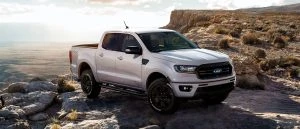
2020 Ford Ranger
Most of us will know the popularity of the ute in Australia. It’s an awesome type of vehicle for mixing work, play and family duties all together and so easily. Some utes even scrub up so well that they look stylish enough parked up next to a luxury Mercedes, so it is little wonder as to why we’re seeing the Hilux, Ranger or even Triton being very popular new car buys.
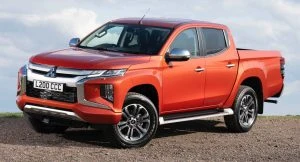
2020 Mitsubishi Triton
Australia’s top-selling modern utes need to be able to tow big weights, carry close to 1000 kg on the tray out the back, be capable 4x4s, drive with premium levels of comfort and refinement, look cool and have the latest technology, infotainment and safety aids. Tick all these boxes and, if you’re a new ute manufacturer, you can be sure that you’re going to get some foot traffic onto your showroom floors – which will then, hopefully, transfer into those feet driving one of your utes out of your dealership after just having sold the ute.
There are some pretty special new utes available already in Australia, but there will also be some new utes coming in the not-too-distant future. Hyundai, with joint interest and input from sister company Kia, are poised to bring an exciting ute to Australia. A team of experts from Hyundai recently visited Australia. They piloted a detailed ute market research project here in Australia, while also visiting other Asian countries as well as the Middle East. Hyundai Australia’s CEO, Mr Lee, commented that the new ute would be subject to its extensive local tuning program to tailor it to Australian conditions and consumer tastes. It sounds like Hyundai are doing their homework very well indeed. According to Kia Australia, the ute will be offered in a range of single-cab and double-cab body styles with both petrol and diesel engine options.
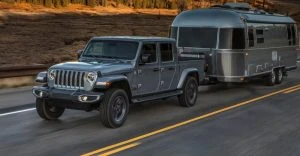
2020 Jeep Gladiator
The Jeep Gladiator is set to make an entry, and this really is a light truck/ute that imposes itself with immense on-road presence. It’s big, bold and capable both on and off the road and, essentially, it is a Jeep Wrangler with a big tray out the back. It will offer Sport, Sport S, Overland and Rubicon trims, and it offers two engine choices: a 3.6-litre Pentaster V6 that delivers 209 kW and 353 Nm, and a torquey 3.0-litre diesel V6 to launch a little further down the track. The Gladiator stretches 5.54 m in length, 1.88 m wide and up to 1.90 m in height. A 3.5 tonnes towing weight is no problem.
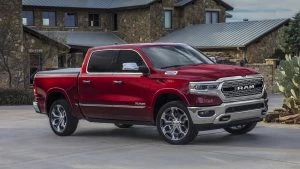
2020 Ram 1500
In the same vein as the Gladiator, but with even more hulk, is the new Ram 1500, a model that has been birthed out of the Ram Truck Division. Big on grunt the Ram 1500 comes with an updated 3.0-litre turbo-diesel V6 engine which should prove more fuel efficient than previous engines. The new engine is used in the newest Jeep Grand Cherokee and will sit above the entry-level Hemi V8 models. Taking a look at the 184 kW and 570 Nm figures for the Grand Cherokee, the same engine in the Ram 1500 should be a thumper – providing up to 4.5-tonnes of pulling capability. So, if you need one of the best tow vehicles then this will be one of them.
Mazda’s new BT-50 will become available next year, and it’s a ute that is being jointly developed with Isuzu. Tough and strong with masculine looks is what has been indicated.
All the recently updated Toyota HiLux, Mitsubishi Triton, Ford Ranger, Holden Colorado, Nissan Navara, Isuzu D-Max and Mazda BT-50 are still available. And don’t forget the powerful VW and Mercedes options that are growing in popularity as well. Ssangyong ‘s new Musso looks the real deal and delivers on rugged reliability and affordability, and will be well worth a look if you’re about to purchase a new ute for yourself.
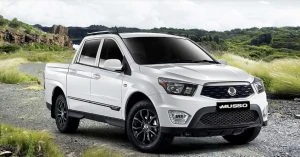
2020 Ssangyong Musso
Ute buyers are spoilt for choice!
New Direction For Global Car Sales

A recent inventory on who the top passenger car manufacturers were worldwide showed that Volkswagen, Toyota, Hyundai and GM are the three leading passenger car manufacturers in the world. Where are most of our new cars made? The highly competitive nature of the global vehicle production industry reveals that most of the companies are based in Europe, Japan, South Korea, and the US. Interestingly, the world’s largest producers of automobiles are China, the US, and Japan.
With this in mind, the four biggest passenger car manufacturers in the world in 2017 were: Toyota, Volkswagen, Hyundai and General Motors. Both Toyota and VW produced close to 10.5 million vehicles in 2017, with Toyota only just nudging out VW from the top spot. Hyundai produced a little over 7 million while GM produced just fewer than 7 million vehicles.
Since I’ve got you interested, have a guess as to who you think would be next. Well, another US manufacturer, Ford, takes fifth place with 6.4 million cars produced. Nissan is next on 5.8 million, closely followed by Honda on 5.2 million.
Fiat Chrysler Automobiles N.V., known as FCA, is an Italian-American multinational corporation and is the world’s eighth largest auto maker with 4.6 million units produced.
Two French car manufacturing groups finish out the top ten. So in at ninth and tenth respectively are Renault with 4.2 million and Groupe PSA with 3.6 million. Groupe PSA is a French multinational manufacturer of vehicles sold under the Peugeot, Citroën, DS, Opel and Vauxhall brands.
After some really big growth in 2017, there are a few signs that the car manufacturing industry is struggling a little. Some of the recent news has been that Ford plans to close its Bridgend plant next year. In February, Honda said it would close its Swindon plant by 2021. It comes as car-makers around the globe struggle with a range of challenges, and it appears that consumers are buying fewer cars.
A few possible reasons why global car sales in 2018 experienced falling demand are:
- Because China, the world’s biggest market, has experienced a slump in demand.
- Stricter emission controls are making the development of new cars that will meet emissions regulations a lot more difficult. The need for new technology to meet these higher standards makes it more expensive to build cars.
- The big movement to make electric vehicles (EVs) requires new investment. While it would also be fair to say that many countries just aren’t ready with the infrastructure to handle millions of new EVs. Global sales of battery electric cars surged by 73% in 2018 to 1.3 million units, but 1.3 million is still just a fraction of the 86 million cars sold worldwide. China is making great strides in creating plenty of EV infrastructures. The other difficulty with EVs is they have very limited driving range.
- As more and more driverless cars become mainstream it is conceivable that car ownership habits may change. If one driverless car drives as safely as the next driverless car then it might be that people would be happier to share or group-rent a vehicle rather than buy one outright just for themselves.
Women and Their New Car

According to recent Forbes research, 62% of new car buyers in America are women. They also suggest that 85% of new car buys are influenced by women. Australia can’t be too far behind these stats, either. But when it comes to spending habits, men and women are still vastly different, with very different priorities for their money. Research shows that men are more likely to splash out and buy big, whereas women focus more on lifestyle which also means being comfortable with spending money on a new car without the guilt. These spending habits and goal orientations do also align with what sort of cars women and men generally buy.
Think about this for an example. Just over 90% of those purchasing a Ferrari are men. Men tend to love big, fast cars more and are image conscious, like to focus on style and are more likely to be turned on by a car’s technology. On the other hand, generally speaking, most women tend to be more concerned with how reliable and safe their new car will be, the car’s style and colour, and whether it will fit her needs.
A few years ago Autogenie did a bit of research from a random sampling of around 6000 brand new vehicles that were purchased back in 2013, and it was consistently divided between male and female buyers. The study noted that women bought small cars and SUVs, while men preferred to buy sedans and ute’s. Interestingly, the most popular vehicles that were purchased by male buyers were the Ford Mondeo, the Ford Ranger ute and the Toyota Hilux ute. Women new car buyers preferred buying the Mazda6, Toyota Kluger SUV and Holden Barina city car.
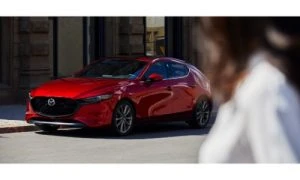
Mazda3 a Winner With Women
The study also revealed that both male and female new car buyers liked the Mazda3. Both the Mazda CX-5 and Volkswagen Golf made it to the best five most accepted models that men and women liked equally. Among the male buyers, the larger Holden Commodore was well-accepted, finishing as the 4th most wanted model. On the other hand, female customers preferred to buy smaller cars, and these were the Mazda3, Hyundai i30 and VW Golf.
But let’s, for moment, take the gender comparison out of what drives a buyer to buy a particular type of new car, and we find that everyone has different priorities for purchasing a new car. The car’s fuel economy, purchase price, looks, interior space, and the number of luxury items and gadgets will all be factors which will tip the scales toward buying one new car from the other.
The ways people are buying new cars are also changing. A lot more people now use online reviews and online guidelines to get an idea about vehicles they would, or might like to, buy. Particularly women are turning to their social networks — both online and offline — for vehicle recommendations, according to Cars.com research. Women like to turn to their friends and family for recommendations of what new car to buy because they don’t have a specific car in mind that they want to get.

Hatch, Sedan or SUV?
Women are looking for a vehicle that will fit their lifestyle, so they will need something for hauling their big dogs to the beach or something for traveling safely on back roads or something that’ll make the city traffic and tight spaces less stressful. Women focus on safety, reliability and comfort. They’re also less brand loyal than male new car buyers. These findings have been backed up by J.D. Power research. Men will be more common to place performance and style on their car want list, as well as the latest technology like panoramic moonroofs and multimedia systems.
Buying a new car is always exciting. During August, in Australia, the top-selling cars (in order from most bought to least) were: Toyota Hilux, Ford Ranger, Toyota Corolla, Hyundai i30, Toyota RAV4, Mazda3, Toyota LandCruiser, Mazda CX-5, Mitsubishi Triton and the Nissan X-Trail. I wonder which ones were bought most by women?
 Level 2, 9 Help Street