

Author archive
For All Mobile Phone Users
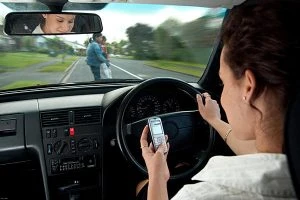
At last a serious move has been taken to nab the drivers using mobile phones illegally while driving. New South Wales, Australia is the first place in the world to introduce mobile phone detection cameras, and these will be mounted without any warning signs saying that they are operating in the area. The technology was invented by a University of Melbourne engineering graduate, Alexander Jannink, after a cyclist friend of his was killed in late 2013 by a driver suspected of being on a mobile phone.
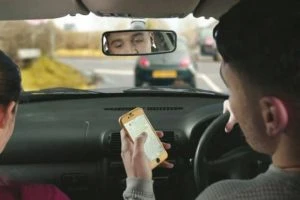
During a three-month trial of the new camera at two locations in Sydney, 100,000 drivers were detected using a mobile phone illegally. These motoring offences valued more than $34 million in fines. Those caught in the trial were found to be browsing Facebook, text messaging and one driver was also caught allowing his passenger to steer the wheel. Distracted drivers are very much a factor in motoring accidents, and placing the high-tech mounted cameras on our roads is a wonderful way to combat the habitual mobile phone actions of those who just can’t seem to leave their phone alone when behind the wheel.
It’s unsettling to notice drivers coming in the opposite direction with their eyes downward while on their phones. The new cameras have been developed with sophisticated software that automatically detects if a driver is handling a phone. The filtered images are then checked by a human eye before the weighty fine is issued.
I totally get what the NSW minister for roads and transport, Andrew Constance, recently remarked while on radio: “We want to create the same environment that we have around [random breath testing] because quite frankly using a mobile phone is equivalent to driving drunk behind the wheel.” Other Australian states are to follow the NSW lead.
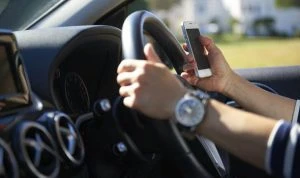
The law states that fully licenced drivers are not allowed to use any physical function of the phone while driving. Making or receiving a call, playing audio, or using navigation maps can be done while the vehicle is parked and the engine not running. Voice controlled smartphone mirroring apps such as Apple Car Play and Android Auto, which uses the vehicle’s infotainment technology makes things a little safer.
The reality is that nobody wants to share the road with a driver who isn’t paying attention. When we’re driving, our focus should be on the road and getting everybody in the car to the destination safely.
Here are the mobile phone fines currently enforced in Australia:
NSW mobile phone fines: $344 and five demerit points, $457 and five demerit points in school zones, points doubled during double demerit periods.
Queensland mobile phone fines: $1000 and four demerit points from 1 February 2020, currently $400 and three points. Repeat offenders receive double demerit points if caught again within 12 months from the previous offence.
Victoria mobile phone fines: $496 and four demerit points.
Australian Capital Territory mobile phone fines: $480 three demerit points for handheld phone use, $589 and four demerit points for driver using mobile device for messaging, social networking, mobile application or accessing internet.
South Australia mobile phone fines: $554 and three demerit points.
Western Australia mobile phone fines: $400 and three demerit points.
Northern Territory mobile phone fines: $500 and three demerit points.
Tasmania mobile phone fine: $336 and three demerit points.
How To Be A Polite Driver
 You’ll hear a lot of people complaining about the rudeness of other drivers – the hoon who cut you off, the moron who nearly opened the car door right into you as you drove past, etc. etc. I could rant for ages about examples of plain old rudeness on the roads. So could you, I dare say. However, instead of simply having a grizzle about the level of rudeness on the roads, let’s flip the script. If more and more of us concentrated on being polite drivers with good on-road manners, then the happier we’ll all be.
Yes, I’m going to sound like your mother in this post and I’m going to remind you about good manners. However, I’m allowed to, as I might be old enough to be your mother (if you’re under 25). As for the rest of us, we could all do with a reminder, couldn’t we?
Courtesy To Other Drivers
- Don’t be in such a rush to be first or ahead of everybody else. It’s barely going to save you a second on your commute, so why bother taking a risk as well as being annoying to others? This means that you don’t push in and cut people off.
- Stay alert at the lights. Nobody likes being behind that person who checks their phone at a red light (which is, incidentally, illegal) who fails to see the light change to green for a couple of seconds. Stay alert, leave that phone alone and be ready to move.
- Let people in. If the traffic’s busy and you’ve come to a standstill, and you see someone waiting at the exit from the supermarket, let them in before you take off. This is done by a simple wave of the hand and a smile. It’s also a very human thing to do, as this sort of courtesy is something that an autonomous car can’t do.
- Wave and smile if someone does something nice like letting you in. This is how you say thank you in an urban driving setting.
- On the open road, if you can’t go at the full road speed for some reason, pull over onto the shoulder of the road to let people go past.
- Thank slower drivers who pull over to let you past by tooting the horn cheerfully and waving.
- Dip your lights in plenty of time rather than playing Headlight Chicken at night. This is good for safety as well as courtesy, as having two dazzled drivers for the sake of pride is stupid and dangerous.
- If you have been going at just below the speed limit most of the time, don’t suddenly speed up to full speed or more when you get to the parts of the road that have passing lanes provided, forcing those who want to go faster to really put their foot down to possibly a dangerous degree.
- Stay in your lane, even when the traffic is slow, rather than hopping from one to another. If you wouldn’t do it in the supermarket or in the queue for the loo during half-time at the rugby, don’t do it on the road.
- Even if you have a fantastic sound system, you don’t need to let the world know about it by turning it up to full blast and winding the windows down. Not everybody shares your taste in music. The only exception is if you’re a contractor and you have your vehicle parked off the road where you’re working, and you want to listen while you work.
- On rural roads where the traffic is sparse, wave, nod or raise a finger (no, not THAT finger) to salute oncoming drivers.
- Use your indicators. Enough said.
Courtesy To Other Road Users
- Check for cyclists before opening your car doors.
- Wait until pedestrians are completely off the crossing before you move off (this is the law as well as good manners).
- Give cyclists plenty of room, especially if they’re coping with a hill or a stiff headwind or even a blisteringly hot day. Refrain from honking your horn at them if the road is narrow and they’re doing all they can – just wait until you have enough space to pass.
- Stop for animals on the roads, from ducklings to kangaroos.
- Be sensitive around horses, as they are wired instinctively to run away from things that make loud roaring noises at them. This means that you don’t rev your engine, honk your horn or shout at them.
- Stay out of the bike lane. It is there to keep cyclists from holding motorized traffic up, not as an extra turning lane or passing lane.
Courtesy To Passengers
- Open the door for whoever’s in the front passenger seat. Traditionally, the guy is the driver and the lady is the passenger, but these days, the rule should be that whoever has the keys should unlock and open for the person without, regardless of how many X chromosomes each one has.
- Wait until everybody has made their seatbelt click before moving off.
- Your car might be able to corner hard, but your passengers do not have the steering wheel to hold onto. Don’t throw your passengers around; save the rally driver behaviour for when you are alone or actually in a rally.
- Ensure that the music volume and temperature are comfortable for everybody (dual zone climate control is a wonderful invention).
- Refrain from making snarky or belittling comments about other road users. Double that if your passengers are children. This rule also applies to those other road users known as cops.
Other Situations Where Courtesy Is Important
- If you are ticketed, accept it as a fair cop, no matter what the reason is. Don’t rage at the cop or the parking warden, who is simply doing his/her job and might hate being assigned to this duty as much as you hate being ticketed. Take it on the chin and take that ticket. Refrain from throwing an adult tantrum about it at your passengers once the uniformed figure has gone – it’s not their fault. It’s your fault, so suck it up, buttercup.
- Revving your engine loudly so that all the world can hear it is bad manners. Small exceptions can be made if you have a beautifully tuned V8 or V12 (or any other exhaust system that’s been tweaked to produce that deep, throaty growl). This motoring music often draws a smile from fellow motoring enthusiasts. Even so, don’t overdo it, especially late at night.
- Avoid back seat driving. You may give directions if requested to or call the driver to attention if he/she hasn’t noticed that the truck ahead has slammed on the brakes or if the light has changed. However, nobody needs a full-time driving instructor once they’re off their learner’s licence and even P-platers don’t need nonstop instructions.
- If you’ve got a very nice sports car (or a well-kept old classic) that attracts attention, don’t get disgruntled about people taking selfies with it, snapping pictures of it or asking questions about it. Bask in the adulation – this is part of the pleasure of owning something rare and beautiful.
What Makes A Road Not Just Good But Great?
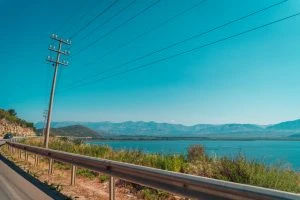 During a relaxed evening, I like to dig out DVDs of the old classic Top Gear show and watch an episode (bonus points if they decide to feature something I’ve written up for Private Fleet’s reviews). Now and then, the Terrible Trinity of May, Clarkson and Hammond take whatever gorgeous piece of metal and/or carbon fibre they’re talking about onto some road somewhere in the world and they start talking not just about the car but about the road and what a great road it is.
This got me thinking: what is it that makes a road not just good but great? Obviously, to be a good road, it has to be in good condition. Anything with potholes just doesn’t cut the mustard, no matter what other features it has. It has to be safe as well, which rules out the notorious Camino del Muerte in Bolivia from Yungas to La Paz (this has now ruled itself out – the government has now shut it to motor traffic and it’s a very, very popular mountain bike trail).
A bit of poking and prodding around online produced quite a few top ten and top twenty lists of what are considered by various bloggers and authorities to be the best roads in the world to drive. Rather than simply re-hashing what these others have said, I got all analytical on them to work out which characteristics made a good road into a great road. After all, few of us are able to travel the entire world to find the great roads, but maybe there’s some little hidden treasure not too far away from you that could have qualified for these lists, if only the writers (or the tourism promoters paying the writers) knew about them. Having said that, the Great Ocean Road in Victoria makes it onto a lot of these lists, so if you’re in Melbourne, you’re not that far away from an officially great road anyway.
Hallmarks Of A Great Road
- Amazing Scenery. Just about all of the famous roads on the various lists seem to feature spectacular scenery of some kind, preferably the sort that can be described as “dramatic”. Mountains and cliffs seem to feature heavily in most, but not all, cases. However, the scenery would still be just as dramatic if it was viewed from the window of a tour bus, so there must be more to what makes a great road great than just the views. What’s more, if you are driving on a road that qualifies as having great scenery, make sure that you pull over in a sensible place for your photo opportunities rather than trying to take something while standing in the middle of the road.
- Non-Metropolitan. I don’t know if “non-metropolitan” is officially a dictionary word but how else do you describe routes that include small to medium towns and villages as well as plenty of rural scenery? However, this seems to be another feature of the great roads. Probably, the ability to travel at full open road speed is something to do with it, punctuated by the chance to fill up with fuel, recharge, have a coffee and go to the loo somewhere civilized.
- Bends. Roads that are dead straight the whole way do not qualify as great roads, although long and epic roads that have significant straight sections do make it onto these lists (Ruta 40 in Argentina and the Ocean Highway in Florida being the main examples here). However, to be a great road for a driver, a road has to have a few bends in it, preferably large, looping ones. Where else would you get to see what the handling of your vehicle can really do? One thing to bear in mind, though, is that spectacular scenery often means big drop-offs and/or idiots taking selfies in dumb places, and being non-metropolitan means that it can take some time for the emergency services to arrive and cellphone coverage may be dodgy. Getting the exact quality and quantity of bends in the road to make it great is a fine balancing act. Too many and the road becomes risky and you miss out on the scenery. Too few and it’s not enough of a challenge for a driver. If you’re interested in taking a mathematical approach to this sort of thing, rental car company Avis has got a formula it uses for creating its list of best roads that looks at the ratio of time spent going around bends to time spent on a straight. Exactly how many bends there are and how sharp they need to be to make a road great or perfect will vary from driver to driver. Some people like to have more hairpins than a busy hairdresser (Stelvio Pass, I’m looking at you); others prefer wide sweeps and gentle undulations. But bends are a must.
If you are lucky enough to get the chance to travel the world and try out some of the great roads beyond what we’ve got here, then one thing to remember is that although the piccies posted by travel websites and the footage on motor shows make it look as though you will have the road to yourself, you probably won’t. So enjoy the drive, by all means, but share the love and share the road.
If you have been lucky enough to drive a road you consider to be great, then let us know all about in the comments… unless you want to keep a delightful secret all to yourself.
Things You Need To Know About Hydrogen As A Fuel
 In the quest to achieve more sustainable motoring, there are three main players: biofuels (i.e. producing petrol and diesel that will run in conventional internal combustion engine (ICE) vehicles from renewable sources rather than fossil fuels), electric vehicles (we’ve heard heaps about these) and hydrogen fuel cell vehicles (HFCV). Electrical vehicles seem to be the hottest of the hot at the moment and they grab quite a lot of the attention from the media and from the government. To take one hot off the press example, they’ve just given the Nobel Prize in Chemistry for this year to the guys who invented the rechargeable lithium-ion battery, even though this tech has been around for a fair few years now and first got onto the market in 1991.
However, let’s not completely overlook the other two members of the sustainability team. If you asked me to take my pick of the three, I’d go for HFCVs. This is because it gives the best of both worlds: the zero-exhaust factor of EVs and the ease of refuelling of ICE vehicles.
Hydrogen is the lightest element on the periodic table and it’s one of the most common elements on earth – actually, make that THE most abundant element in the universe. As we all learned in school, good old water is made up of two hydrogen atoms and one oxygen atom. In fact, you could say that all energy is, technically speaking, hydrogen powered. Our sun is one great big ball of hydrogen undergoing a massive nuclear reaction (fusion rather than fission), and it’s the energy given off by this that is ultimately the source of all energy on Earth – even the fossil fuels, which are ancient forests that once trapped sunlight through photosynthesis.
If we could somehow replicate this process on Earth at a smaller scale, most of the world’s energy problems would be solved and it would generate all the electricity to meet our needs and more. However, the problem would be to stop it getting out of hand or an H-bomb would be the result. Cold fusion is the dream of many a scientist…
 The first thing you need to understand about HFCVs is that when you put hydrogen fuel into the vehicle, the fuel isn’t burned the way that the fuel in an ICE burns. NASA uses this tech in rockets but it’s far, far too explosive for more down to earth uses. Instead, the hydrogen is used to generate electricity, which is released when hydrogen combines with oxygen to produce (you guessed it) water. This takes place in fuel cells, which do the job of converting good old oxygen and hydrogen to water.
Quite a lot of vehicles around the world use hydrogen fuel cell tech already. These are mostly forklifts and buses; however, cars are coming onto the scene and they’re beginning to get a fair bit of interest.
The big question about any sustainable energy source is to ask where it comes from and how one gets it – a question that people aren’t quite asking enough in the case of EVs, if you ask me. In the case of hydrogen, there are two main sources. One is from electrolysis of water and the other is from steam reformation of methane. Of the two methods, electrolysis of water (where the water molecule is split into H2 and O by a current of electricity) is the cleaner of the two – as long as the electricity used comes from a sustainable source, such as wind, solar or hydro (using hydro to produce hydrogen seems appropriate). The other method uses methane – thus busting up and reducing something that is both a waste product and a greenhouse gas – but it also produces a bit of carbon monoxide during the production stage. There are quite a few other methods out there but these are the most common.
Hydrogen is produced for commercial use already on quite a large scale. It’s used quite extensively in, of all things, the petrochemical industry during the process of refining petrol. You could therefore think of a switch to hydrogen fuel cell tech as cutting out the middleman. The other major commercial use of hydrogen gas is in electrical power stations, where it acts as a coolant.
The biggest issue with hydrogen fuel is storage and transport, as hydrogen is a slippery customer that can explode and burn with the ferocity of rocket fuel simply because it is rocket fuel. On the other hand, liquid hydrogen is super-cold (even colder than the liquid nitrogen the doctor uses to remove warts and low-grade skin cancers) and needs to be kept that way. It’s the storage and transport issue that our very own CSIRO is working on. Nevertheless, the potential is out there and is being used in many parts of the world. In the US, for example, there are already 40 retail outlets for refuelling hydrogen cars just in a single state (California), with more in other states and more to come.
Over here, we’ve already got one public hydrogen fuel station in Canberra, with more being planned. As renewable hydrogen is a hot topic (or maybe a cool topic, given that liquid hydrogen has a temperature of about –250°C), there are a ton of hydrogen projects going on at the moment, and there are hopes that renewable hydrogen fuel will become one of Australia’s biggest exports. Just a couple of days ago, there was news out that Siemens was launching a big plant in Western Australia to produce hydrogen fuel, and that’s just the latest one. We’re going to be producing it ourselves, so it makes sense that we should put it on our cars as well.
 Level 2, 9 Help Street