

Author archive
EV vs Hydrogen Vehicle
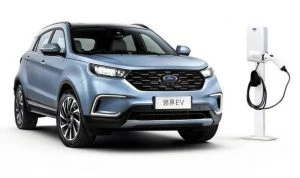
Electric vehicles are becoming more widely available, and better at what they offer. But potential consumers of EVs have a checked enthusiasm towards going out and buying one; and for good reason. The main inquiries lie around how pricey a new EV is to purchase, their fire risk, crash safety risk, their range between top ups being rather poor and subsequent charging times way too long, the lack of charging stations, as well as their candid hidden impact on our environment which is actually very big.
EVs require big, powerful rechargeable batteries that use lead–acid (“flooded”, deep-cycle, and VRLA), NiCd, nickel–metal hydride, lithium-ion, Li-ion polymer, and, less commonly, zinc–air, sodium nickel chloride in their design. It is worth noting that these expensive EV batteries require a bigger carbon footprint in their production and use a finite resource to make them. Then there is the environmental cost of battery disposal when the spent battery needs replacing. So, are we any better off driving EVs? The answer would have to be no.
Actually, no vehicle driven on our road can be classed as purely “green” or “environmentally friendly” for people and their environment. The fact is whatever car we choose, buy and drive; it will have some ecological impact. Perhaps the best way of describing this would be that all vehicles impact on our environment and pollute, while other vehicles do so a lot more, and then some do so a bit less. It is quite false to suggest that EVs are environmentally friendly.
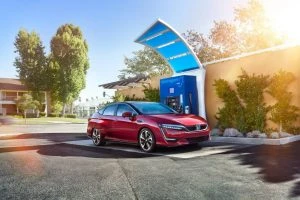
That brings me to the question: What is the most environmentally friendly vehicle? There are some major car manufacturers that are pushing forward with hydrogen power. A hydrogen driven car is powered by a hydrogen fuel cell that produces the electricity that the electric car engines need. Hydrogen vehicles only take five minutes to top-up, and provide much better range. The only emissions are water, because inside the fuel cell hydrogen reacts with oxygen to produce water as a discharge. So, hydrogen vehicles don’t emit pollutants. Hydrogen can be produced from fossil fuels and natural gas, but it can also be produced from renewable energy sources by way of electrolysis.
I think hydrogen is the best way forward, and the Hyundai Nexo is the first vehicle to arrive in Australia that’s available for the Australian government and business fleets to use. The reason for its limited availability is simply because Australia doesn’t have an organised hydrogen refuel station network set up, as yet. But I can see this changing to it becoming common place on all fuel station forecourts across Australia.
Hyundai, Toyota and BMW are some of the key hydrogen vehicle designers and manufacturers.
Turbochargers For Beginners
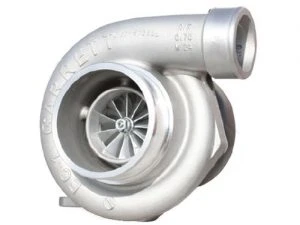
It might look like a snail but with a turbo, your car certainly won’t be.
I could have called this post “Turbochargers for Dummies” but (a) anybody who is curious about how something works and wants to know more is not a dummy and (b) I don’t want to imply that those who want to have a vehicle with a turbocharger are dummies.
In any description or review of a new vehicle that’s got an internal combustion engine (petrol or diesel) or even a hybrid engine, you’ll probably come across the mention of a turbocharger somewhere in there. However, what is the point of a turbocharger and how do they work? Are they just a fancy luxury or do they actually do something useful and valuable? If you’re new to the world of motoring or if turbos have just been something you’ve heard about over the years and never really thought about before, you could well be asking these questions. After all, nobody is born known about how a car works and it’s not something they teach you at school. (Maybe it should be something they teach at school – physics would certainly be a lot more interesting if you could see the practical applications.)
Back To Basics
Let’s start by going back to the basics of how an internal combustion engine (ICE) works. An ICE can be thought of as the offspring of a cannon and a spinning wheel. The cannon (the father of the engine) works by using a spark and a controlled explosion within a small space, which produces a massive amount of force that moves a load (in this case, the cannon ball) in a straight line. Mama Spinning Wheel uses a crankshaft (piston), a drive wheel and a gearing system to turn that linear motion into useful rotational motion.
In your typical four-stroke engine, which was invented in 1867 by Nikolaus Otto, the explosion part of the process involves four main motions, referred to as intake, compression, combustion and exhaust or, more simply, suck, squeeze, bang and blow. Get your mind out of the gutter.
Let’s look more closely at the intake stage of the cycle. During the intake phase, the piston and valves allow a combination of fuel (petrol or diesel) into the chamber. In a naturally aspirated engine, ordinary common or garden atmospheric pressure and suction push the air into the cylinder. However, to make the process go more quickly and use fuel more efficiently, one needs some way of compressing and forcing the air into where you want it rather than relying on, essentially, gravity and air pressure. This was a bit of a burning need when they started flying planes a bit higher than they did in, say, World War 1, and the atmospheric pressure was a lot less at altitude. Compressing the air and forcing it into the business bits of the ICE is what a turbocharger does.
How Turbos Work
The next question is how the turbocharger does the job of compressing air and forcing air into the cylinders? It uses a system originally developed in aeroplanes with turboprop engines. This uses a fan system to slurp and pump air into the cylinder – the shape of the fan does this by altering the air pressure around the blades. Seems ridiculously simple, right?
Bright sparks among you will have wondered what gets the fan moving to do this job of pumping the air in. After all, you don’t get anything for free. However, the original designers came up with a clever solution. After all, during the final phase of the Otto cycle – the exhaust or blow phase – the waste air and other exhaust products (hopefully, there won’t be too many of these) is shoved out of the engine. A basic turbocharger uses this exhaust air to drive the turbine part of the system. This means that a turbocharger has two main parts: the turbine that harnesses the exhaust stream, which is hitched up to the second part: the compressor that takes in clean air.
There is a third part to a basic turbocharger that does more than just hold the two spinning bits together. This is the intercooler. As anybody who’s used a bike pump has noticed, when you compress air, it gets hotter. The problem with this is that as things get hotter, the molecules inside it move more and it expands – meaning it’s less compressed. Cold air is denser than warm air, which means that it’s not just in your head if you find it harder going on the bike or jogging on a cold morning. The intercooler is a kind of miniature radiator system that dissipates the heat energy created by compressing the air to keep it nice and dense.
Why Use Turbochargers?
So why do you need to have a turbocharger and get that extra air into your car engine, given that you don’t have the problems of a fighter jet operating at altitude? Is there any advantage to it for the everyday motorist?
The answer is, of course, a great big yes. By shoving more air into the cylinders, the power delivered by the combustion (bang) part of the cycle is increased. Power is the amount of force delivered every second, so the faster the engine burns, the more powerful it is. This means that an otherwise small engine can get the oomph of something much bigger. Because adding a turbocharger involves less weight than adding another cylinder or increasing the size of the cylinders (the other ways to make an engine more powerful), this improves the power to weight ratio. It’s all about the POWER (I’m hearing Jeremy Clarkson inside my head at this point).
You may hear some people claim that turbochargers are more environmentally friendly than naturally aspirated engines. This is a bit controversial and it’s not as simple as Turbo Good, Natural Aspiration Bad. Quite simply, a 1.2 litre engine that is naturally aspirated will use less fuel than a turbocharged 1.2. However, the turbocharged 1.2 litre will deliver a lot more power than the naturally aspirated 1.2 and will produce the power of a naturally aspirated engine that’s a lot bigger. Because it has delivered the oomph of a bigger engine without the demands of the extra weight that would be involved, the small turbo engine will consume less fuel than the naturally aspirated big one. The turbocharger is a racing greyhound that needs to eat as many doggy bikkies as a big sooky mastiff but will win the race.
Of course, this is only a very basic introduction – for beginners – and turbocharger designs get a lot more complicated that that. You’ve got all kinds of fun variations like twin turbos, which can be in sequence or in parallel, as well as the issue of turbo lag and how to overcome it.
Best And Worst Exterior Paint Colours For Resale
 We’ve all heard those jokes about people who seem to be more concerned about what colour a car is rather than its practical performance (fuel economy, towing ability, safety specs, luggage space, etc.). We’ve also probably tossed out a flip comment about go-faster red and go-faster stripes over the years. Paint colour seems like just a matter of personal choice and preference. However, if you’re buying a brand new car and you know that you are going to sell it off some years down the track, then you may need to bear colour in mind, as some car paint colours are better for resale than others.
Good paint colours are popular ones that don’t go out of style quickly. This means that it’s going to be quicker and easier to sell them in five or ten years’ time because they’ll still be in style. With a bad colour – which might be a fashionable colour – it could be a bit harder to sell the car later on because potential buyers may look at it and go “eww – that’s so 2020”, which may mean that you will have to let the car go for a lower price than you may have got otherwise.
The leading authority on car paint colour is the paint manufacturer Axalta. This company has complied stats on car colours for over 60 years and has tons of resources available (the most recent free annual car stats are from 2016) and there is plenty to keep any motoring trivia enthusiast happy for hours at their website.
By a quick look at some of the material available from Axalta without wasting time down too many rabbit trails, it seems as if good car colours, in terms of resale, are like good suit colours for guys or the little black cocktail dress for gals: simple, basic classics that don’t shock or startle. Honestly, when it comes to car paint colour that hold its value, conservative is the key.
The most recent (freely available!) stats from Axalta show that the most popular car exterior paint colours worldwide (and therefore the ones that are likely to have the best resale value) are as follows:
- White: 37% of new cars sold in 2016 were some shade of white; white has been #1 for quite some time now
- Black: 18%
- Grey: 11%
- Silver: 11%
- Red: 6%
- Navy blue: 6%
- Beige and brown: 6% (apparently, Russian sales made up most of these)
- Yellow and gold: 3%
- Green: 1% (again, mostly Russian sales)
The most popular colour for vehicles in the Asia-Pacific region (which includes us here in Australia) has been either white, silver or grey since 1973 – and it looks like this trend isn’t going to change soon!
(If you want the latest stats, broken down by region and by body style – yes, it makes a difference –then you have to pay to get the download. I’m tempted…)
To find the least popular colours, all that some bloggers and researchers do is to flip this popularity list upside down. However, you, like me, have probably noticed that some colours don’t even feature on this list. Because cars with unpopular colours don’t sell as well, it’s hard to compile meaningful stats on them, as it’s hard to track what isn’t selling because there’s nothing to see or record. Nevertheless, the following have been proposed as the worst car exterior paint colours for resale. They’re not in any particular order, but you may notice that all of them are very distinctive and associated with particular decades!
- orange: any shade of orange; this colour is only popular with die-hard Dukes of Hazzard fans
- turquoise: metallic turquoise in particular is soooo 1990s
- maroon: very 1990s and dated, which is weird for a shade of red
- green (unless you’re Russian): olive or pea green from the 1970s is especially bad, followed by the vivid treefrog greens of the early 2000s
- brown (again, unless you’re Russian): British Leyland. Enough said
- pink: in fact, Ferrari has banned pink from its list of possible car colours coming out of the factory door, even for superstars paying megadollars for a custom paint job (if P!nk wants a pink supercar, she has to get a Lambo, which doesn’t mind what colour you pick if you’re willing to pay).
- purple: I don’t think I’ve ever seen a purple vehicle that wasn’t a commercial tradie vehicle in company colours that had been custom-painted
The only exception I’d make to this list is the case of British Racing Green for Jaguar. This is a tradition and it’s such an iconic colour for Jaguar that it holds its value better than other off-the-wall unique colours. Can you imagine a Burberry in any colour other than beige?
However, if you are in the market for a second-hand car, you can make the car colour thing work in your favour. If you believe that a good horse is never a bad colour and that the same applies to cars, then you may be able to pick up a good reliable set of wheels that’s in an unfashionable colour so is going for a fraction cheaper than something mechanically identical in a “good” colour. I’ll never forget my tradie friend who picked up a metallic rose-pink trade van at a bargain price because of its colour – he downright owned that pink van and it certainly made him stand out from his competitors with ordinary white vans. OK, you need some serious cojones to pull off a pink tradie van, but it certainly worked for my friend!
Medium AWD SUVs You Can Buy in 2020
With an even bigger range of Mid-size SUVs now available, the answer has to be ‘Why Not?’. Getting yourself into a new medium SUV is easier than ever with some good package deals, great warranties and service packages that are comprehensive. Got yourself a small family and like to get out on an adventure? Here is a list of all the medium SUVs on the market offering AWD.
Alfa Romeo
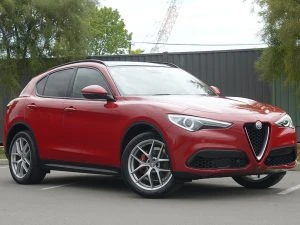
Alfa Romeo Stelvio AWD
Want some style? Alfa Romeo has got loads of ‘bravura’, ‘panache’ and ‘flair’. Three levels of trim are available for the Stelvio and you get to choose either diesel or petrol power. The new Alfa Romeo Stelvio is a smooth drive with great performance, handling and comfort. Want a decent luxury SUV? How about a look at the new Stelvio? Starting off with the Stelvio 2.0 AWD, here you get five seats, auto, petrol, 2.0-litre, 148 kW, 330 Nm, 5-star safety and around 7.0 litres/100 km.
Next comes the Stelvio 2.2 TDi AWD which is similarly priced to the previous model. Here you get the five seats, auto, Diesel, 2.2-litre, 154 kW, 470 Nm, 5-star safety and 4.8 litres/100 km. Style, torque and low fuel bills are a given.
Punchy and fun to drive, the Stelvio 20 Ti AWD delivers five seats, auto, petrol, 2.0-litre, 206 kW, 400 Nm, 5-star safety and 7.0 litres/100 km.
Audi
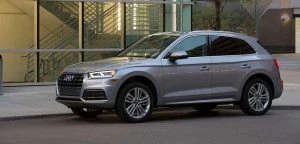
Audi Q5
Three forms of the 2020 Audi Q5 are available. The Audi Q5 TDI Quattro 140 Sport offers five seats, auto, diesel, 2.0-litre, 140 kW, 400 Nm, 5-star safety and a 5.1 litres/100 km figure.
Next is the Audi Q5 TDI Quattro 210 Sport with five seats, auto, Diesel, 3.0-litre, 210 kW, 620 Nm, 5-star safety and 6.0 litres/100 km. This is a phenomenally quick and satisfying SUV drive!
The most expensive new Audi Q5 with AWD is the TFSI Quattro 185 Sport model. Here you get five seats, auto, petrol, 2.0-litre, 185 kW, 370 Nm, 5-star safety and 7.1 litres/100 km efficiency.
Steeping up to the Q5 from the Q3 means more space but without getting into massive territory. Drive a new Audi Q5 AWD and you get the prestigious Quattro underpinnings with clever technology. Luxury is aplenty, while the drive is always satisfying. You’ll also love the digital driver’s display, too.
BMW

BMW X3
The BMW X3 gets into mid-size SUV territory. The 2020 X3 is nice to look at, comfortable and practical. Two models are available with AWD: The BMW X3 xDrive 20d AWD with five seats, an 8-speed auto, diesel power, 2.0-litre, 140 kW, 400 Nm, 5-star safety and around 5.7 litres/100 km economy. The BMW X3 xDrive 30i AWD has five seats, an 8-speed auto, petrol, 2.0-litre, 185 kW, 350 Nm, 5-star safety and around 7.8 litres/100 km economy.
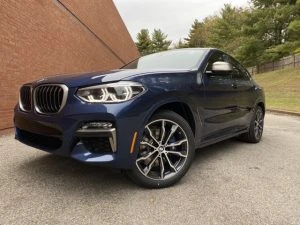
BMW X4
You also get the choice of getting yourself into the sportier BMW X4 AWD models. The X4 has sleek lines and looks good. Practical interiors with nice trim and easy-on-the-eye materials all come together to make the new X4 a stylish and fun drive. The BMW X4 xDrive 20d AWD has five seats, auto, diesel, 2.0-litre, 140 kW, 400 Nm, 5-star safety and 5.8 litres/100 km fuel efficiency.
If you prefer petrol power, then the BMW X4 xDrive 30i AWD has five seats, auto, petrol, 2.0-litre, 185 kW, 400 Nm, 5-star safety and around 7.8 litres/100 km credentials.
Ford
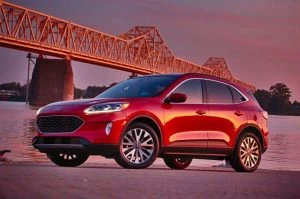
Ford Escape
A very nice medium-size AWD Ford SUV is offered. You are sure to find a model to suit your needs. Safe, practical and comfortable, the 2020 Ford Escape is a trusty companion capable of carrying the small family when needed and delivering crisp handling and great engines. Two engines power the five variants; so one is a 132 kW Diesel with 400 Nm of torque on offer and excellent fuel efficiency. The other engine is an Ecoboost petrol-fed unit that puts out 178 kW and 344 Nm of torque. This is a strong engine that performs very well. All models use a smooth shifting auto gearbox and come with 5-star safety. The models on offer include Trend, ST Line and Titanium trims.
Holden
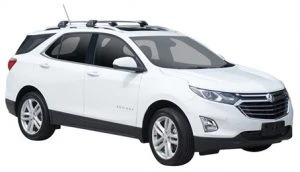
Holden Equinox
Where Ford treads you’ll always find a Holden equivalent nearby, or maybe that should be the other way around!
Holden provides the comfortable and spacious Holden Equinox. Well equipped, loads of options, comfortable seating, plenty of space and 5-star safety are strong Equinox features. The LTZ-V AWD models get all the flashy equipment and are really nice vehicles to drive. Two engines are available; the petrol model uses a 188 kW 2.0-litre engine with 353 Nm of power. Expect around 8.4 litres/ 100 km for this one.
The other Equinox AWD engine is the 100 kW, turbo-diesel unit with 320 Nm of torque and a fuel efficiency figure around the 5.7 litres/100 km mark.
Honda
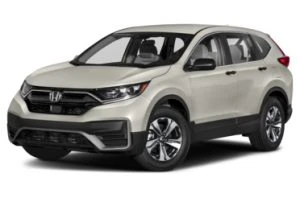
Honda CR-V
Well known and well-loved is the trusty Honda CR-V mid-size SUV. It is one of the original first mid-size SUVs, so it’s been around for a few decades now. Putting it right into the modern market place, the 2020 Honda CR-V AWD models are very roomy, comfortable and practical vehicles boasting loads of high-tech equipment as well as a seven-seat option. Good strong engines and smooth power delivery make the new Honda CR-V a nice drive. With the new Honda CR-V variants you get five/seven seats, auto, petrol, 1.5-litre, 140 kW, 240 Nm, 5-star safety and around 7.4 litres/100 km fuel efficiency.
Hyundai
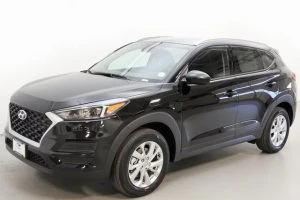
Hyundai Tucson
Stylish new Hyundai Tucson models are available with AWD. Depending on the level of trim, there will be plenty of variants to suit your needs. Hyundai’s latest HTRAC AWD system allows toque to be delivered and distributed on demand to ensure that fuel efficiency is optimized. If you can get yourself into the Limited versions you are loaded to the hilt with modern features that include all the high-tech features some high-end luxury cars offer. The diesel engine is a real gem, while the petrol alternative is smooth and responsive. 1.6T AWD variants offer five seats, auto, petrol, 1.6-litre, 130 kW, 265 Nm, 5-star safety and around 7.7 litres/100 km efficiency. 2.0R AWD variants offer five seats, auto, diesel, 136 kW, 400 Nm, 5-star safety and around 6.8 litres/100 km efficiency.
Jaguar

Jaguar E-Pace
Jaguar enters the medium SUV market place with its highly desirable new range of E-Pace SUVs. Style, luxury and driving dynamics are all part of the special E-Pace package.
E-Pace D150 has 2.0-litre diesel power, 110 kW, 380 Nm and around 5.6 litres/100 km.
E-Pace P200 has 2.0-litre petrol power, 147 kW, 340 Nm and around 8.0 litres/100 km.
E-Pace 250 has 2.0-litre petrol power, 249 kW, 365 Nm and around 7.7 litres/100 km.
E-Pace R-Dynamic D180 has 2.0-litre diesel power, 180 kW, 430 Nm and around 5.6 litres/100 km.
E-Pace R-Dynamic P250 has 2.0-litre petrol power, 184 kW, 365 Nm and around 7.7 litres/100 km.
E-Pace R-Dynamic SE P250 has 2.0-litre petrol power, 184 kW, 365 Nm and around 7.7 litres/100 km.
E-Pace R-Dynamic SE P300 has 2.0-litre petrol power, 221 kW, 400 Nm and around 8.0 litres/100 km.
All models have a nice smooth auto gearbox, 5-star safety and are impressive to drive.
Jeep

Jeep Compass
A new Jeep Compass AWD won’t break the bank but it will tame the terrain. You are always going to look good in the new Jeep Compass which is just as happy scampering off on the school run as it is crossing a stream. Trailhawk models a serious off-road vehicles built for exploring trails and other off-road excursions. Inside a new Compass there is plenty of space with nice seat comfort. Premium safety features and plenty of equipment keep the Compass at the head of the field.
Jeep Compass Limited 4WD delivers five seats, auto, petrol, 2.4-litre, 129 kW, 229 Nm, 5-star safety and around 9.7-litres/100 km efficiency.
Jeep Compass Trailhawk 4WD offers five seats, auto, petrol, 2.4-litre, 129 kW, 229 Nm, 5-star safety and around 9.8-litres/100 km efficiency.

Jeep Cherokee
The Jeep Cherokee is always a winner in the luxury medium SUV class. Recently spruced up and making a statement, both the Limited and Trailhawk models use the same strong 3.2-litre, 200 kW, petrol-fed motor with 315 Nm of torque. There is always plenty of power on tap, and the ride quality is smooth and comfortable. Off-road ability is outstanding. Plenty of space and equipment keep the drive relaxed and in control. A roomy five seats and 5-star safety completes the desirable package.
Kia

Kia Sportage
The good looking Kia Sportage is well appointed, comfortable and nice to drive. With tidy handling and a decent ride, the Sportage is proving popular. Try and get into the higher spec models and you’ll be sitting in an impressively comfortable, classy medium SUV.
The Kia Sportage 2.4-litre petrol variants (EX AWD, GT-Line AWD) use the same responsive 2.4-litre motor with 135 kW and 237 Nm. Expect around 8.5 litres/100 km fuel efficiency.
The Kia Sportage 2.0-litre diesel variants (LX AWD, LX Plus AWD, GT-Line AWD) have great power plants in the form of a 2.0-litre turbo-diesel, 136 kW, 400 Nm motor. Excellent fuel economy sits at around 6.4 litres/100 km.
All models come with AWD, auto gearboxes and 5-star safety.
Land Rover
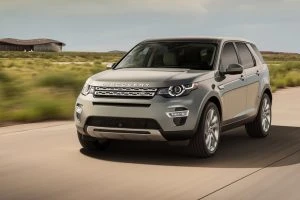
Land Rover Discovery Sport
Off-road kings, Land Rover, offer AWD medium SUV buyers the chance of getting into the legendary Land Rover Discovery Sport. Premium 4×4 technology and formidable off-road prowess has the 2020 Discovery tackling tough terrain in comfort and with ease. On-road ride and comfort is equally impressive, and engine performance is strong whatever the task. You also get the option of having seven seats, too. New infotainment technology and stylish interiors make travelling in a new Discovery very enjoyable.
P200 R-Dynamic S – 5 seats, auto, petrol, 2.0-litre, 147 kW, 320 Nm, 5-star safety, 7.9 l/100 km.
P250 R-Dynamic S – 7 seats, auto, petrol, 2.0-litre, 184 kW, 365 Nm, 5-star safety, 7.9 l/100 km.
D180 R-Dynamic S – 5 seats, auto, diesel, 2.0-litre, 132 kW, 430 Nm, 5-star safety, 5.6 l/100 km.
P250 R-Dynamic SE – 5+2 seats, auto, petrol, 2.0-litre, 184 kW, 365 Nm, 5-star safety, 7.9 l/100 km.
D180 R-Dynamic SE – 5+2 seats, auto, diesel, 2.0-litre, 132 kW, 430 Nm, 5-star safety, 5.7 l/100 km.
Also under the Land Rover name is the very nice Range Rover Evoque. Style, luxury and off-road/onroad prowess makes this vehicle a premium choice.
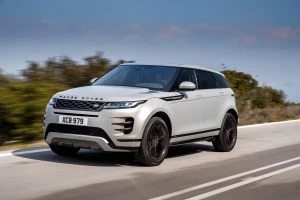
Range Rover Evoque
P200 R-Dynamic S – 5 seats, auto, petrol, 2.0-litre, 147 kW, 340 Nm, 5-star safety, 7.7 l/100 km.
D180 R-Dynamic SE – 5 seats, auto, diesel, 2.0-litre, 132 kW, 430 Nm, 5-star safety, 5.7 l/100 km.
P250 R-Dynamic SE – 5 seats, auto, petrol, 2.0-litre, 184 kW, 365 Nm, 5-star safety, 7.9 l/100 km.
D180 R-Dynamic HSE – 5 seats, auto, diesel, 2.0-litre, 132 kW, 430 Nm, 5-star safety, 5.7 l/100 km.
P250 R-Dynamic SE – 5 seats, auto, petrol, 2.0-litre, 184 kW, 365 Nm, 5-star safety, 7.9 l/100 km.
P300 R-Dynamic HSE – 5 seats, auto, petrol, 2.0-litre, 221 kW, 400 Nm, 5-star safety, 8.1 l/100 km.
Lexus

Lexus NX
Balanced, sleek lines are part of the new 2020 Lexus NX AWD models. It has to be one of the classier looking mid-SUVs on the road, and with Lexus’s latest hybrid technology part of the model’s line-up you can have a luxury SUV ride, comfort and space with a fuel efficiency that brings you relief at the pump. Premium interior infotainment and technology, classy leather materials, and fit-and-finish that are second-to-none are all reasons why this is among the leading luxury SUV variants on the road. Excellent safety features and premium space add to the quality Lexus NX package, so the deal is 5-star safety and 5-seats. A smooth ride comfort and boasting plenty of grip all helps to make the new Lexus NX AWD SUV highly desirable.
One hybrid powertrain powers the NX 300h, NX 300h F-Sport and NX 300h Limited. This powerplant uses a CVT Auto, a 2.5-litre petrol engine with a combined output of 145 kW, 210 Nm and a fuel efficiency of around 5.7 litres/100 km.
The 2.0-litre Turbo petrol engine boasts 175 kW and 350 Nm to give plenty of grunt. Running with the 6-speed automatic gearbox, this set-up returns around 7.9 litres/100 km fuel usage.
Mahindra
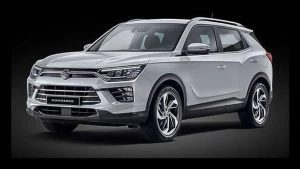
Mahindra XUV500
Available as a highly appointed SUV, the new Mahindra XUV500 is spacious, comfortable and easy to drive. Good turbo-diesel power and economy should appeal to plenty of people after a well appointed AWD medium SUV.
The Mahindra XUV500 AWD W10 has seven seats, auto, diesel, 2.2-litres, 103 kW, 320 Nm, 4-star safety and around 8.1 litres/100 km fuel efficiency.
Mazda
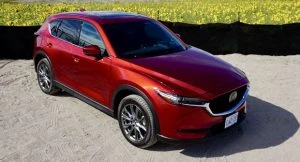
Mazda CX-5
Petrol and diesel alternatives, classy looks and a nice drive to match, the Mazda CX-5 is popular for good reason. Hard to beat with so many pros including a competitive price makes the models in the Mazda CX-5 stable highly desirable.
The Mazda CX-5 GSX AWD Petrol and Limited AWD Petrol use the same engine, the only difference being in equipment levels. Both are five-seater, auto, 2.5-litre petrol, 140 kW, 252 Nm, 5-star safe, 7.4 litre/100 km mid-size SUVs.
The Mazda CX-5 GSX AWD and Limited AWD Diesel variants run with a 2.2 turbo-diesel motor boasting 140 kW, 450 Nm and 5.7 litres/100 km efficiency. These engines are some of the best in this class of vehicle. They are strong performers and very efficient.
The Mazda CX-5 2.5 Turbo has the 170 kW petrol variant with 420 Nm of torque. Smooth, punchy performance makes this a class act too.
Mercedes Benz
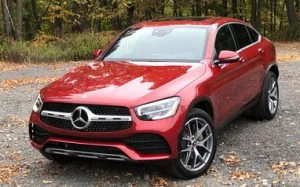
Mercedes Benz GLC
Mid-size Mercedes Benz SUVs are known as the GLC Series of vehicles. Luxurious, desirable, classy, safe and stylish are just some of the words used to describe this nice range of medium SUVs. Coupe styling is also on offer. They are pricey, but then they are very good.
All models seat five in comfort and use 9-speed automatic gearboxes. AMG models use a Speedshift gearbox. One hybrid model is available (300 e). Again, the GLC range of Mercedes Benz SUVs lead the way on the performance front; the AMG models deliver as much as 700 Nm from their 4.0-litre, 8-cylinder engines.
Mercedes Benz GLC models include the: 300 AWD, 300 e AWD, AMG 43 AWD, AMG 63S AWD, Coupe 300 AWD, Coupe AMG GLC 43 AWD, Coupe AMG GLC 63S AWD.
Mitsubishi
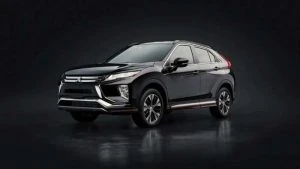
Mitsubishi Eclipse Cross
Two mid-size SUV models with AWD are available to the buyer.
The Mitsubishi Eclipse Cross AWD in XLS and VRX forms offer five seats, auto, petrol, 1.5-litres, 112 kW, 254 Nm, 5-star safety and around 7.7 litres/100 km. The turbo engine and the very good eight step CVT are matched really well for an enjoyable drive while delivering a refined ride and comfortable transport. Loaded with the latest infotainment and safety goodies you’ll enjoy the Eclipse Cross’s nice modern looks and classy cabins.
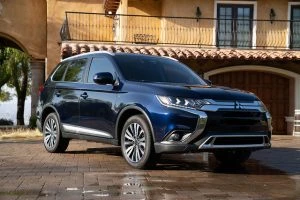
Mitsubishi Outlander
The Mitsubishi Outlander has been a go-to mid-size SUV for quite some time now, and with its latest offering it remains a highly competent medium SUV. Petrol, hybrid and now a new Diesel engine give the Outlander plenty of clout. Underpinning the Outlander is an excellent AWD system that manages slippery conditions with ease. CVT and conventional auto gearboxes are available.
So, LS, XLS, XLS Sport and VRX versions run with a 2.4-litre, 126 kW, 224 Nm petrol powerplant that offers around 7.2 litres/100 km efficiency. All are CVT, however you can choose the VRX with a 6-speed auto if you prefer.
With 366 Nm of torque and a very good all-round fuel efficiency of somewhere in the vicinity of 6.2 litres, the XLS and VRX can be had with this excellent turbo-diesel motor delivering 112 kW of peak power. This makes a strong case for those on the look out for a reasonably priced diesel powered mid-size SUV.
Ready to be blown away? Those in the know, will already be enjoying the Mitsubishi Outlander in PHEV form. Why? Under the hood is probably the best petrol/ev combination for any of the mid-size SUVs in 2020. Luxurious and well appointed, the PHEV also manage to get as low as 1.9 litres/100 km! Enough said…
Nissan
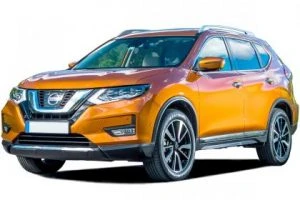
Nissan X-Trail
People are loving the nice curvy styling of the latest Nissan X-Trail. Solid dynamics, decent performance, great 4WD systems with decent off-roading potential, plenty of space, reasonable pricing and plenty of very good equipment all add up to make the new X-Trail another desirable SUV.
Nissan X-Trail 4WD variants start with the ST, step to the ST-L and then top out with the loaded Ti. Each uses the same peppy 2.5-litre petrol with 126 kW and 226 Nm. You can expect around 8.3 litres/100 km fuel efficiency for all the models which come with the auto gearbox as standard. Practical roomy interiors, good luggage space, seating for five and 5-star safe, the X-Trail is to be liked.
Porsche
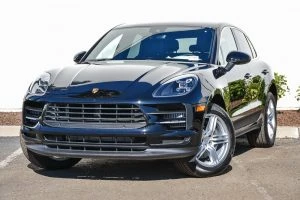
Porsche Macan
Porsche get into the mid-size SUV market place with a variety of premium AWD Macan models. They demand a high price but then, like Mercedes equivalents, they are very good SUVs – more orientated towards sport/luxury than being a true off-roading SUV. Comfortable and very sporty with great road manners for the enthusiast, the AWD Macan is pure driving pleasure.
The Porsche Macan uses a 185 kW petrol engine delivering a top speed nearing 230 km/h. A 0-100 km/h sprint time of 6.5 seconds should be enough to have plenty of fun on the drive to work!
The Porsche Macan S uses a 260 kW petrol engine delivering a top speed nearing 254 km/h, and it has a 0-100 km/h sprint time of 5.1 seconds.
The Porsche Macan GTS uses a 280 kW petrol engine delivering a top speed nearing 261 km/h, and it has a 0-100 km/h sprint time of 4.7 seconds.
The Porsche Macan Turbo uses a 324 kW petrol engine delivering a top speed nearing 270 km/h, and it has a 0-100 km/h sprint time of 4.3 seconds.
Renault
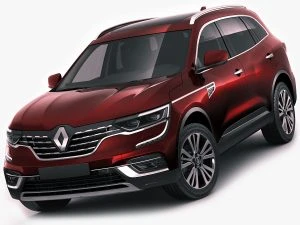
Renault Koleos
Renault has two very decent AWD medium SUVs that are often overlooked in the masses. Don’t forget to check out a new 2020 Koleos 4×4. Riding on the same platform as the Nissan X-Trail you get a very good off-road system that is more than adequate for plenty of adventure. A petrol and diesel are offered both of which are very well equipped, spacious and comfortable. The Koleos looks smart and flowing, boasting striking LED DRLs and a classy set of alloys.
The Renault Koleos Intens/Sport 2.5 4×4 uses the responsive 2.5-litre, petrol engine with 126 kW and 226 Nm. You should get around 8.3 litres/100 km fuel efficiency out of one of these and its linked to the smooth auto gearbox.
The Renault Koleos Intens/Sport 2.0 4×4 offers the turbo-diesel engine in auto with plenty of power (128 kW) and a hefty 380 Nm of torque. This is the one to get if you need a Koleos for towing, but check out the 5.5 litre/100 km fuel efficiency – which you should match pretty closely.
Your new Renault Koleos comes with a comprehensive suite of 5-star safety features, and out on the open road it happily lopes along effortlessly and quietly.
Skoda
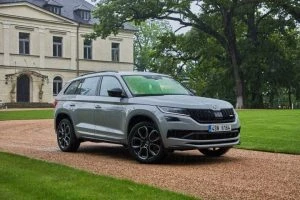
Skoda Kodiaq
For practicality, safety and style, the latest Skoda Kodiaq leads the way. A healthy boot space, sliding and reclining rear seats, seven seats, loads of storage space and a comfortable ride, the Skoda is a perfect mid-size SUV. A diesel and petrol option gives the buyer flexibility. Well equipped, well built and capable off-road, the 4×4 footprint is assured and well balanced for any road surface you care to travel down.
The Kodiaq Style and the Kodiaq Sportline models are offered with a 2.0-litre petrol engine delivering 132 kW and 320 Nm. But you can also get your Kodiaq with the superb 2.0-litre turbo-diesel packing 400 Nm of torque and 140 kW. Both engines are linked to a smooth auto gearbox.
Subaru
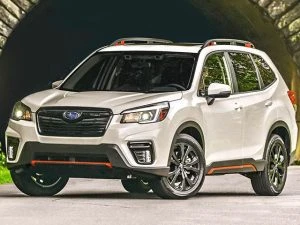
Subaru Forester
Another medium SUV that’s been through plenty of generations – one of the first of its type, in fact – is the 2020 Subaru Forester. This SUV delivers a great package in various trims that all run with the smooth 4-cylinder, 2.5-litre petrol, auto with 136 kW and 239 Nm. You should be able to get around 7.4 litres/100 km on average.
The latest Forester remains a solid buy, built nice and strong with 5-star safety, loads of new technology and X-Mode for its AWD capability. A good drive.
Toyota
Ever reliable, Toyota has a nice new RAV4 for sale for 2020. Only titivated up last year, the new RAV4 is an SUV that, in hybrid format, uses the new E-Four AWD system. Linked to the smooth and free revving 2.5-litre petrol, the combination of petrol/hybrid technology brings an excellent fuel efficient medium-size SUV to this rather large SUV segment of the market. In hybrid form the RAV4 delivers 131 kW of power and 221 Nm of torque, perfect for everyday driving. Fuel consumption can get as low as 4.7 litres/100 km. You’ll find the hybrid is available for the RAV4 GX, GXL and Cruiser models. The hybrids use a CVT gearbox for delivering power down to the AWD system.
The other engine that’s available for the Toyota RAV4 Edge AWD is the 2.5-litre Dynamic Force direct injection petrol engine which is linked to a very nice 8-speed auto. It has a few more horses under the bonnet with 152 kW and 243 Nm at the ready. Fuel consumption for the Edge is around 7.5 litres/100 km.
Safety is 5-star, so you get a loaded mid-size SUV with Toyota Safety Sense that includes active cruise control, a pre-collision safety system with pedestrian and cyclist detection, lane departure alert, lane trace assist, auto high beam and road sign assist.
Seating is spacious and comfortable for the long haul, while the audio and other infotainment systems are all the latest tech. Plenty of options allow you to individualize you RAV4 to your tastes and there is even things like a panoramic roof.
Volkswagen
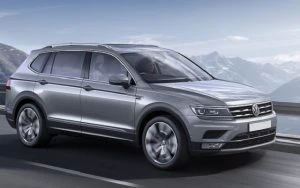
VW Tiguan
No more diesel options for VW’s Tiguan, however the two petrol engines deliver nice, smooth power and decent response. One of the 2.0-litre petrol Turbo units puts out 132 kW and 320 Nm, while the other jumps to 162 kW and 350 Nm. Allspace models add a third row of seats to make it possible to carry seven occupants including the driver.
Handy 4×4 systems make the 2020 VW Tiguan pretty good for going off-road. 5-star safety and decent fuel consumption rates all add up to making the pleasant Tiguan easy to live with and very handy to have when you want to escape for the weekend. The Tiguan interiors are smart and well put together.
Volvo
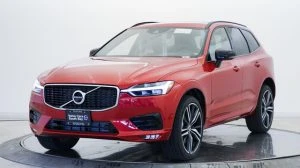
Volvo XC60
Volvo’s XC60 slots into the mid-size SUV segment perfectly. It is one of the most stylish medium SUVs on the market; it looks great from any angle. You also get the Thor hammer DRLs which catch attention instantly.
Out on the road the new Volvo XC60 performs very well with plenty of power and refinement. The ride is very comfortable, aided by the very comfortable seats. Take it off-road and the XC60 handles pretty much anything that comes its way – without being an out-and-out bush basher.
Engines come in the form of petrol, diesel and hybrid – all of which are 2.0-litre capacity. The hybrid is the most powerful engine, with 265 kW maximum combined output and as much as 440 Nm of torque. The hybrid is known as the T8, and with all that power comes an amazing 2.1 litres/100 km of fuel usage –why would you want anything else? It is pricy though…
D4 and D5 XC60 variants pack a tonne of torque from their diesel engines.
The T5 has: 5 seats, auto, petrol, 2.0-litre, 187 kW, 350 Nm, 5-star safety and 7.3 litres/100 km.
The D4 has 5 seats, auto, diesel, 2.0-litre, 140 kW, 400 Nm, 5-star safety and 5.2 litres/100 km.
The D5 R-Design has 5 seats, auto, diesel, 2.0-litre, 173 kW, 480 Nm, 5-star safety and 5.5 litres/100 km.
The T6 has: 5 seats, auto, petrol, 2.0-litre, 235 kW, 400 Nm, 5-star safety and 7.7 litres/100 km.
The T8 R-Design Hybrid has: 5 seats, auto, petrol, 2.0-litre, 265 kW, 440 Nm, 5-star safety and 2.1 litres/100 km.
 Level 2, 9 Help Street