

Author archive
Best People Movers for 2021
There are those of us who would rather avoid being seen in what are technically called ‘People Movers’. By choice, they’re not a car that many would prefer over a roadster or GT. However, they do have their place and the current new people movers are stacked with the latest goodies, are comfortable and work hard to make their cabins a pleasant, safe space for plenty of people to spend time journeying in. Of course, the space and comfort throughout a people mover cabin is, generally, superb, making them ideal at doing what they say they will on the tin. So, if you have been particularly virile and require a decent vehicle for moving your large family about, or you just need those extra seats and space, then here are the newest people movers available on the market in 2021:
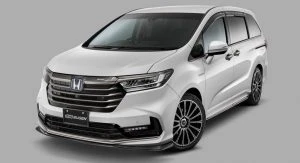
Honda Odyssey
Available in a 2.4-litre ULP, 129 kW, 225 Nm, 7-speed CVT, FWD, combined fuel consumption of around 8-9 litres/100 km, towing 450 kg un-braked and 1000 kg braked, 5-star ANCAP rating, seven seats, Honda Odyssey ViL7 (around $49k) and Honda Odyssey ViLX7 (around $56k), 5 yr/unlimited km warranty.
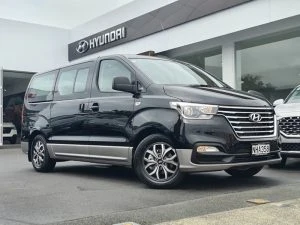
Hyundai iMax
Available in a 2.5-litre Turbo Diesel, 125 kW, 441 Nm, 5-speed automatic, RWD, combined fuel consumption of around 9 litres/100 km, towing 750 kg un-braked and 1500 kg braked, 4-star ANCAP rating, eight seats, Hyundai iMax Active (around $49k) and Hyundai iMax Elite (around $54k), 5 yr/unlimited km warranty with 1yr Roadside assistance.
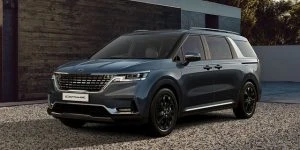
Kia Carnival
Available in a 3.5-litre ULP, 216 kW, 355 Nm, 8-speed automatic, FWD, combined fuel consumption of around 10 litres/100 km, towing 750 kg un-braked and 2000 kg braked, ANCAP rating untested but previous model was 5-star, eight seats, Kia Carnival S (around $51k), Kia Carnival Si (around $56k), Kia Carnival SLi (around $61k), Kia Carnival Platinum (around $68k), 7 yr/unlimited km warranty with 1yr Roadside assistance.
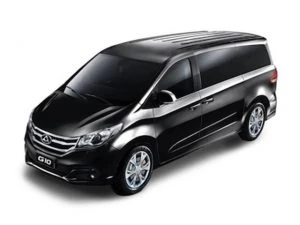
LDV G10
Available in a 1.9-litre Turbo Diesel with 110 kW and 350 Nm or a 2.0-litre ULP with 165 kW and 330 Nm. 6-speed automatic, RWD, combined fuel consumption of around 9 litres/100 km for the Turbo Diesel and 12 litres/100 km for the ULP. Towing 750 kg un-braked and 1750 kg braked for the Turbo Diesel and 750 kg un-braked and 1500 braked for the ULP. 3-star ANCAP rating, seven seats, LDV G10 Turbo Diesel (around $35k) and LDV G10 Executive (around $38k), 3 yr/100,000 km warranty.
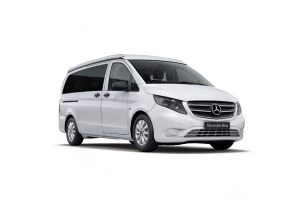
Mercedes-Benz Marco Polo ACTIVITY 220d
Available in a 2.1 Turbo Diesel, 120 kW, 380 Nm, 7-speed automatic, RWD, combined fuel consumption of around 7 litres/100 km, towing 750 kg un-braked and 2500 kg braked, 5-star ANCAP rating, seven seats, Mercedes-Benz Marco Polo ACTIVITY 220d (around $86k), 5 yr/unlimited km warranty and 5 yr roadside assist.
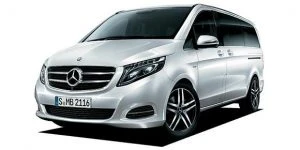
Mercedes-Benz V-Class V220 d
Available in a 2.1 Turbo Diesel, 120 kW, 380 Nm, 7-speed automatic, RWD, combined fuel consumption of around 7 litres/100 km, towing 750 kg un-braked and 2500 kg braked, 5-star ANCAP rating, seven seats, Mercedes-Benz V-Class V220 d (around $94k), Mercedes-Benz V-Class V220 d Avantgarde (around $111k), 5 yr/unlimited km warranty and 5 yr roadside assist.
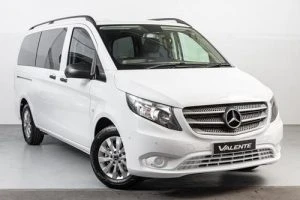
Mercedes-Benz Valente 116CDI
Available in a 2.1 Turbo Diesel, 120 kW, 380 Nm, 7-speed automatic, RWD, combined fuel consumption of around 7 litres/100 km, towing 750 kg un-braked and 2500 kg braked, 5-star ANCAP rating, eight seats, Mercedes-Benz Valente 116CDI (around $72k), 5 yr/250,000 km warranty and 5 yr roadside assist.
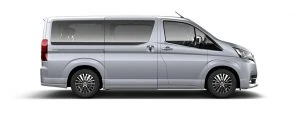
Toyota Granvia
Available in a 2.8-litre Turbo Diesel, 130 kW, 450 Nm, 6-speed automatic, RWD, combined fuel consumption of around 8 litres/100 km, towing 400 kg un-braked and 1500 kg braked, 5-star ANCAP rating, six seats, Toyota Granvia (around $65k) and Toyota Granvia VX (around $76k), 5 yr/unlimited km warranty.
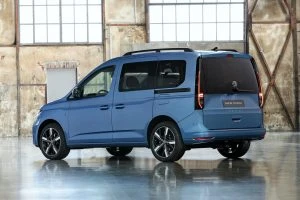
Volkswagen Caddy
Available in a 1.4-litre Premium ULP, 92 kW, 220 Nm, 7-speed automatic, FWD, combined fuel consumption of around 6.5 litres/100 km, towing 630 kg un-braked and 1300 kg braked, 4-star ANCAP rating, 5 or 7 seats, Volkswagen Caddy Trendline 5 seats (around $35k) and Volkswagen Caddy Comfortline 7 seats (around $41k), 5 yr/unlimited km warranty, 1 yr roadside assist.
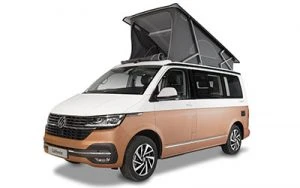
Volkswagen California Beach
Available in a 2.0-litre Turbo Diesel RWD with 110 kW and 340 Nm or a 2.0-litre Twin Turbo Diesel 4WD with 146 kW and 450 Nm. 7-speed automatic, combined fuel consumption of around 7 to 8 litres/100 km, towing 750 kg un-braked and 2500 kg braked, 4-star Euro NCAP rating, 5 or 7 seats, Volkswagen California Beach TDI340 7 seats (around $83k) and Volkswagen California Beach TDI450 4×4 5 seats (around $93k), 5 yr/unlimited km warranty, 1 yr roadside assist.
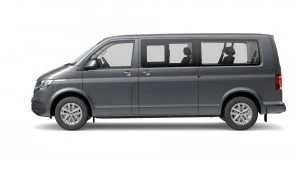
Volkswagen Caravelle TDI340 Trendline
Available in a 2.0-litre Turbo Diesel FWD, 110 kW, 340 Nm, 7-speed automatic, combined fuel consumption of around 7 litres/100 km, towing 750 kg un-braked and 2500 kg braked, 4-star Euro NCAP rating, 9 seats, Volkswagen Caravelle TDI340 Trendline (around $65k) 5 yr/unlimited km warranty, 1 yr roadside assist.
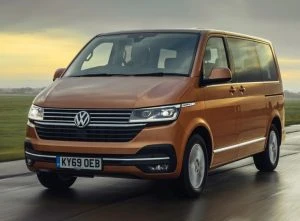
Volkswagen Multivan
Available in a 2.0-litre Turbo Diesel FWD with 110 kW and 340 Nm or a 2.0-litre Twin Turbo Diesel 4WD with 146 kW and 450 Nm. 7-speed automatic, combined fuel consumption of around 7 to 8 litres/100 km, towing 750 kg un-braked and 2500 kg braked, 4-star Euro NCAP rating, 7 seats, Volkswagen Multivan TDI 340 Comfortline (around $62k), Volkswagen Multivan TDI450 Highline (around $85k), Volkswagen Multivan TDI450 Comfortline (around $88k), 5 yr/unlimited km warranty, 1 yr roadside assist.
EV Supercars

Porsche Taycan Turbo S
Porsche has already built their fully electric supercar and it’s called the Taycan. Currently, the quickest Taycan is the Taycan Turbo S, which boasts 560 kW of power, 1,050 N⋅m of torque, a 0-100 km/h sprint time of just 2.8 seconds and a top speed of 260 km/h. We knew it would be fast, but it will also manage around 400 km of travel before a recharge is needed. Of course, that range will be affected by factors like the weather, number of hills in your commute, how heavy your right foot is, how many on-board features you’re running and how much extra weight is on board – all much the same traits that affect combustion consumption…
Tesla is the biggest name in electric vehicles, and their new Roadster sets the supercar performance benchmark. Revealed back in 2017, the second-generation Tesla Roadster will be capable of skipping through the 0-100 km/h in around 2 seconds, the 0-160 km/h dash in 4.2 seconds, the quarter mile in 8.8 seconds and boast a top speed of around 400 km/h. These records are aided by a phenomenal 10,000 Nm combined torque output for the AWD system and a drivable range before recharging of even over 900 km. The new Tesla Roadster sales will likely begin 2022.
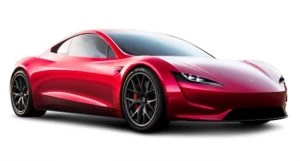
Tesla Roadster
Porsche and Tesla are, perhaps, the more well-known leaders in EV supercar technology.
Ferrari has yet to build a fully electric car. Ferrari is concentrating on their hybrid supercars; the new Ferrari SF90 Stradale being the latest model that incorporates electric motors with the combustion engine layout. Ferrari claims the SF90 Stradale can clean out the 0-100 km/h sprint in well under 3 seconds, the 0-200 km/h dash in less than 7 seconds, while reaching a top speed in excess of 330 km/h. The SF90 Stradale can also travel 12-to-24 km on battery power alone. John Elkann, from Ferrari, says the company will offer its first electric supercar at some stage this decade, but the hybrid models would still form part of its line-up even in 2030. However, that said, Ferrari is looking to sell the Ferrari Purosangue as their first SUV with hybrid engines, along with a fully-electric powertrain for the two following Purosangue models. From the word go, the Purosangue will be designed with the chassis structured to take full electric power. The first hybrid Purosangue should be on sale between 2024 and 2026.
You can’t talk about Ferrari’s electric future without considering Lamborghini’s. Lamborghini has yet to develop an all-electric supercar. Come 2021/2022, Lamborghini is offering a production hybrid supercar called the Lamborghini Sian FKP 37. That sounds like a similar direction to Ferrari; however, Lamborghini did unveil the Terzo Millennio concept car back in 2017.
So, who else is offering fully electric supercars? The following EV supercars have been built up by various entrepreneurs and joint ventures and are, therefore, very rare. Here are some of them to whet your appetite:
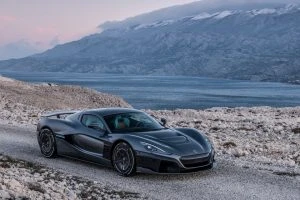
Rimac C_Two
The Rimac C_Two has a 412 km/h top speed backed up with approximately 500 km of electric range.
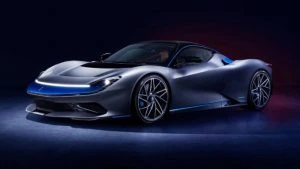
Pininfarina Battista

Lotus Evija
The Lotus Evija has a claimed 1,680 kg weight – pretty light for an EV supercar.
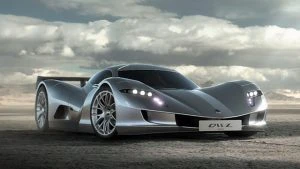
Aspark Owl
Aspark Owl with its 0-100 km/h sprint done and dusted in less than 2 seconds. Top speed over 400 km/h.
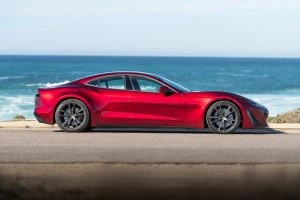
Drako-GTE
The Drako GTE is the brainchild of two Californian-based engineers and entrepreneurs. The car should deliver around 8,880 Nm of torque and a 400 km/h-plus top speed.
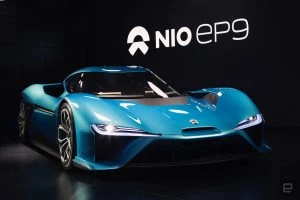
Nio-ep9
The Nio EP9 has actually delivered a 6 m 45.9 sec Nürburgring lap in the hands of Scottish driver Peter Dumbreck. The EV supercar boasts around 6334 Nm of torque and a down-force claimed to be twice that of an F1 car.
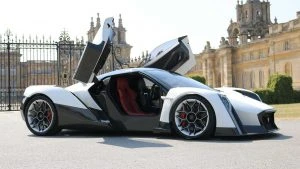
Dendrobium D-1
The Dendrobium has money and inspiration provided to it from Singapore; however it is being engineered and developed in the UK by Williams Advanced Engineering, and with people who were involved in the McLaren F1 design.
The European EV Compass

The best of European engineering and technology has always been considered to be some of the finest the world has to offer (particularly German, Swedish and British engineering). However, with the advancement in microelectronics and electrical know-how that is coming from the Asian parts of the world, there is little time to be had before German, Swedish, Dutch and British (to name a few) technology giants, and automotive and engineering giants, could get swallowed up and placed in the history books.
It might be that to counter the advancement (or even to just keep pace with) of big Chinese, USA, Korean and Japanese automotive, electronics and digital giants, that it’ll likely take a collective pan-European approach in tech-innovation and mobility transformational advancements. The movement is happening in Europe but is it fast enough?
Rather than each country try and do it alone, a pan-European alliance for the electric mobilization of Europe along with the coordination and alignment of national policies would be far more capable of countering the competition from the USA and China. Being able to pool assets, funding, supply chain networks, research and development, battery production, electronic charging point networks, power storage technology, recharging technology and Pan Eurpean policy initiatives that promote market entry for electric vehicles (EVs) will go a long way to keep Europe at the forefront of transport design and innovation.
With the spotlight heavily focusing on environmentally-friendly transport, EVs and driverless cars, and their growing numbers filling the roads up in Asia and in Europe, the rest of the world will also need to catch up with the technology, or change to other manufacturing designs instead. Now and into the future we are seeing how global status, energy and transport are directly linked to each other. Renewable electricity generation and storage at the national level is an assignment across Europe that is a huge task on any given day, but its roll-out also needs to quicken its pace. Politics will play an important role for European countries to pull together to use renewable energy, energy networks and EV and Fuel Cell vehicle technologies.
Demanding logistical changes like this also calls for an adoption of a new social perspective on this new way of doing transport, even new way of life, whether that be in purchasing a new energy efficient car or pooling together to get from A to B or using environmentally friendly public transport. Not everyone can cycle to work! The automotive landscape in Europe is changing, just as it is globally. Government policy will play a leading role in moderating and coordinating the transformation of the automotive industry into new ways of doing transport for the people.
At European local government levels, there also requires the push to implement the urban-transport transformation towards emission-free and fossil-fuel-less transport systems. Urban and development planning needs to promote the electric charging infrastructure, as well as providing big financial benefits and incentives for the public to change from fossil-dependent transport to the use of EVs. Global carbon emission goals are driving the need to steer away from fossil fuels.
In the future, there would seem to be few chances to succeed as a nation if smaller countries choose to go it alone. Then again, maybe that’s what Australia, NZ, UK and Japan might do best; they could be attractive in their own right if they did emission-free transport their own unique way, unconnected with the rest of the world’s EV and driverless vehicle systems.
Aussie’s Rosco aiming for 1000 mph
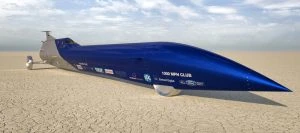
Aussie Invader 5R
It might be a bit hard to call it a conventional car but then it’s not really a conventional car in the sense that the Aussie Invader 5R rocket-car looks more plane/rocket in its appearance. The Aussie Invader 5R rocket-car boasts an insanely long arrow-shaped design with three wheels, large aerodynamic wind deflectors and an engine with close to 150,000 kW! Yes, that’s correct; you did read that figure correctly. To put that in perspective, an Aussie V8 Supercar puts out, on average, around 475 kW of power. Now, if you’ve ever experienced the wonderful roar of these V8s when they blast by around the circuit, then you can understand the aura of such kW potency. But this Aussie Invader 5R rocket-car makes as much power as 316 of these Aussie V8 Supercars put together! The Aussie Invader 5R rocket-car is powered by a single bi-propellant rocket reportedly capable of producing upwards of 62,000 lbf of thrust. That’s over four times more than a Boeing 737 jet!
Founder and designer of the new Aussie Invader 5R rocket-car, Rosco McGlashan, has the world’s fastest land speed record in his sights. He will reportedly be the pilot of the 16-metre long, nine-tonne steel-framed vehicle. And the target? The target top speed of 1609 km/h (1000 mph) would be the fastest of any land-going vehicle, ever. And 1000 mph would see it blitz the current land speed record held by the Noble Thrust SSC on a Nevada salt flat in 1997, which averaged 1223.7 km/h and broke the sound barrier while doing so.
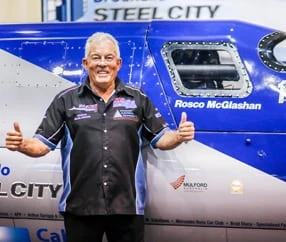
Rosco McGlashan
Rosco McGlashan would like to set the new record next year once all the Covid palaver is over-and-done-with, and it will likely be set somewhere in the Queensland or Western Australian desert. Rosco is no stranger to setting speed records; he is already the holder of the Australian land speed record, where in 1994 he clocked 802.6 km/h behind the wheel of a jet-powered predecessor to the Aussie Invader 5R out on the dry salt flats of Lake Gairdner, near Adelaide. He has, after all, built all of his drag racing, exhibition, and land-speed racing vehicles himself over the years in a shed at his home.
Rosco has accurate computer modelling on the Aussie Invader 5R rocket-car, which suggests that the Aussie Invader 5R rocket-car will have enough power and thrust for launching the car from 0-100 km/h in approximately 1.1 seconds. It should reach its target of 1000 mph in less than 30 seconds. Slowing the Aussie Invader 5R rocket-car down is no mean feat and will thus will require a full 13 km of flat desert just to stop it. A multi-stage deployment of high-speed hydraulic air brakes, mid-speed parachutes, and low-speed disc brakes have been designed to activate progressively to safely bring the vehicle to a halt.
Picking an exact location will depend largely on which organization or individual steps up as the primary sponsor for the effort. As will the practical necessity of having 5 km of flat desert for getting up to speed plus another 13 km to stop it.
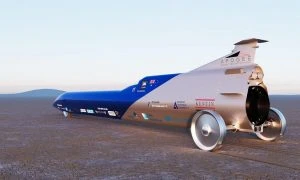
Aussie Invader 5R
 Level 2, 9 Help Street