

Author archive
Farewell To the Queen of the Nürburgring

As a female motoring blogger, I was very sorry to hear that one of my motoring heroines, Sabine Schmitz, passed away recently. It’s particularly poignant when I realized that she was only a few years older than me.
If you aren’t sure who I’m talking about, I’m referring to the German motor show presenter who appeared frequently on the British motoring show Top Gear. We first met her in a 2004 episode, where she became Jeremy Clarkson’s nemesis, as she was a German (groan!) woman (gasp!) who beat Jeremy Clarkson around the Nürburgring (ouch!) in a diesel (eek!) van (aaagh!). I know I definitely loved it when she made it around the Ring in less than 10 minutes. This wasn’t her first appearance on a Top Gear show (she appeared briefly in a 2002 special) and it wasn’t her last, either. In fact, after the ousting of the Unholy Trinity of Clarkson, Hammond and May, she was selected by the BBC as one of the new presenters.
Sabine was one of three daughters of restaurant owners who lived near the famous Nürburgring. She and her sisters all participated in motorsports, but she was the most successful of the three. During her racing career, she won the 24-hour Nürburgring challenge twice (both times in a BMW), as well as placing third, ninth and sixth in Porsches (if you’re looking it up, you’ll find her under her married name of Sabine Reck). She operated a “taxi service” professionally in the Nürburgring, and later added driver training to her company portfolio. It’s probably no exaggeration to say that she knew the Nürburgring ring like I know my neighbourhood roads. The track was her neighbourhood road.
As she was known not only for her driving skills but also for her sparkling personality, she appeared frequently on the German equivalent of Top Gear, a show called D Motor. She also provided commentary for motorsports from time to time, becoming known for her sense of humour.
I always enjoyed watching the episodes of Top Gear when she appeared, and it was fantastic to see a woman succeeding in what has traditionally been a very male-dominated area – which is odd, when you come to think about it, given that it was a German woman, Bertha Benz, who brought the motorcar to public attention in the first place. She was a great role model for girls learning to drive and showed the public that driving well is not necessarily a “boy thing”.
She was, unfortunately, diagnosed with a very aggressive cancer in 2017, although this was not made public until last year. She fought it hard, but lost the battle a few weeks ago. I’m sure I won’t be the only one who misses her and will be disappointed not to see any more of her.
One more time, let’s enjoy one of her iconic Nürburgring laps in a van for Top Gear that we loved so much:
<iframe width=”560″ height=”315″ src=”https://www.youtube.com/embed/5KiC03_wVjc” title=”YouTube video player” frameborder=”0″ allow=”accelerometer; autoplay; clipboard-write; encrypted-media; gyroscope; picture-in-picture” allowfullscreen></iframe>
New Internal Combustion Engine Technology
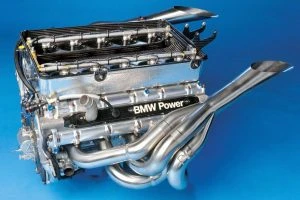
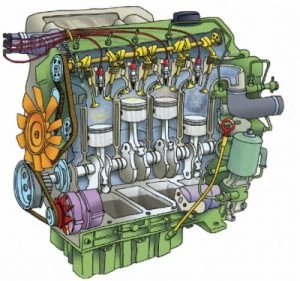
Are the days numbered for the internal combustion engine? With ever stricter emission standards becoming the norm and all the talk about electric vehicles being the current rave, you would have to be forgiven for thinking that the future for the internal combustion engine is looking rather bleak. However, here are some findings that suggest that the internal combustion engine might just be around for quite some time yet.
Let’s start off with one of the world’s biggest automotive manufacturers: Toyota. Toyota continues to employ their hugely effective hybrid technology in many of their current models. Even the little Yaris has just recently had its own special hybrid motor become available to its line-up. Toyota’s hybrid systems are so successful at being efficient and they are proven in everyday, real-world situations to be reliable. You only have to look at the incredibly low fuel consumption figures of the latest Camry Sedans and RAV4 SUVs to get an insight into how effective Toyota hybrid engines are at lowering fuel consumption and reducing pollution levels in and around CBDs.
But there are also other areas of the internal combustion engine that haven’t been pushed quite to the boundaries of exploration and these are in the areas of compression ignition. ‘Engineering Explained’ host Jason Fenske has recently talked about homogeneous charge compression ignition (HCCI) being a big gain area for the internal combustion engine, particularly for the engine’s burning efficiency. The HCCI engine burns gasoline but uses compression ignition like a diesel engine rather than a spark plug. So, in theory, gasoline/petrol HCCI technology provides huge efficiency gains like you find with some of the current diesel motors; however, the huge efficiency gains would be without the soot and high levels of nitrogen-oxide (NOx) emissions. HCCI does require much finer controls in the area of fuel intake temperature, as well as the timing of ignition to get spot on.
Another vicinity that Fenske sees as being a big gain aera for internal combustion engine technology is the area of pre-mix charge compression ignition (PCCI). What PCCI does is inject some of the fuel early to let it mix with air in the combustion chamber, before injecting more fuel later on in the combustion process. This method of combustion provides more control over the engine’s ignition timing than HCCI, however it can also create pockets of unburned hydrocarbons. The key here is to limit the unburned hydrocarbons but access the higher efficiency potential that PCCI offers.
Then there is reactivity-controlled compression ignition (RCCI), where Fenske suggests that this technology uses two fuels, where one fuel is a low-reactivity fuel (like gasoline) that is port injected, and a high-reactivity fuel (like diesel) that is direct injected. “Reactivity” refers to a fuel’s tendency to ignite under compression. RCCI is a method that leads to big gains in fuel efficiency, where Fenske says that some lab research has shown 60% gains in fuel efficiency.
Something else that is being worked on by researchers from Valencia’s Polytechnic University (UPV) is that of a new internal combustion engine that does not generate carbon dioxide and other harmful gases. According to the engine’s designers, it is a “revolutionary” engine that meets the regulation on emissions planned for 2040 and also has excellent efficiency. There master stroke is in using special ceramic membranes in the engine’s design, these membranes enable the selective separation of oxygen from the air to produce ‘oxycombustion’, where pure combustion gas is generated. This pure combustion gas that is composed of water and CO2 can be captured inside the vehicle and stored, without having it expelled from the exhaust system.
Motoring big wigs, Toyota and Ferrari, still have an extensive long-term plan for using internal combustion technology into the future. Hybrid technology is delivering impressive gains in fuel efficiency and emission reduction, particularly in built up, congested areas.
2021 Convertibles with Reasonable Prices
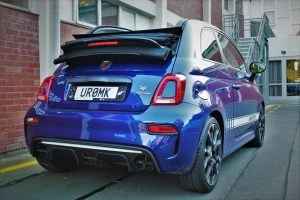
Abarth 595 Convertible
Very cute and not too expensive, the Abarth 595 Convertible has stacks of style and plenty of road presence even though it happens to come in rather small packaging. The Competizione is the more expensive (around $36k) of the two models available but offers more features and more grunt. You have FWD and the weight of the car is only a little over 1000 kg, so the driving experience is dynamic and loads of fun. The 1.4-litre Turbo unleaded petrol engine offers 132 kW and 250 Nm in the Competizione (0-100 km/h in less than 7 seconds, top speed 220k m/h) and 107 kW and 206 Nm in the standard version. Fuel economy sits on average at around 6-to-6.5 litres/100 km. With a 3-year 150,000 km warranty and 3 years roadside assist you are well covered. Expect to pay from around $35k for the base model and $41 k for the Competizione.
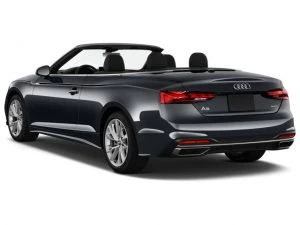
Audi A5 40 TFSI S line
It costs around $96k new, but Audi’s A5 Convertible is top quality and superb to drive. Gorgeous interiors, excellent comfort and technology make this AWD Audi Convertible a very nice ownership prospect. There are two 2.0-litre petrol engines: A very economical mild-hybrid (6.5 litres/100 km) 140 kW/320 Nm version for those who like FWD (0-100 km/h in around 7 seconds), and a smooth and powerful 183 kW/370 Nm version with AWD (0-100 km/h in around 6.5 seconds). Both engines are linked to Audi’s efficient seven-speed S tronic dual-clutch automatic gearbox. To be honest, the AWD version is only a few grand more at a bit over $100k, so I’d be looking to get into this one. Both versions should return between 6 and 7 litres/100km. A 3 year unlimited km warranty is good, as too the 3 year roadside assist package.
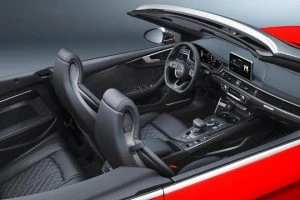
Audi S5 Convertible
Like the Audi A5 convertibles above, the S5 has all the goodies, gorgeous lines and comfortable interiors with all the modern gadgets. The S5 has the awesome 3.0-litre turbo V6 Petrol delivering a potent 260 kW of power and 500 Nm of torque to the AWD system, and it uses an eight-speed Tiptronic transmission. You can scamper from a standstill to 100 km/h in around 5 seconds, while the top speed is limited to 250 km/h. A 3 year unlimited km warranty is good, as too the 3 year roadside assist package. Expect to pay around $135k for a new one of these.

BMW 2 Series Convertible
The BMW 220i Luxury Line and 220i M Sport convertibles use the same 2.0-litre Turbo powerplant with 135 kW of power and 270 Nm of torque. The eight speed sport automatic does a great job of providing quick gear changes while linking the smooth operative action to the optimum power levels. This engine should offer a combined fuel consumption of around 6.5 litres/100 km. The car rides nicely. Those wanting the best in comfort and equipment will go for the Luxury Line, while the M Sport concentrates the suspension more towards sport and the flavour a bit racier. BMW The 220i M Sport uses the performance 3.0-litre Turbo engine with 250 kW of power and 500 Nm of torque. This is a quick car and you can expect a run through the 0-100 dash to take less than 6 seconds. The car’s top speed is limited to 250 km/h, while average fuel consumption will be around 8 litres/100 km. All BMW 2 Series convertibles are RWD and offer premium quality interiors and technology. Prices start at around $65k for the Luxury Line, $68k for the M Sport 2.0-litre and $92k for the 3.0-litre M Sport.
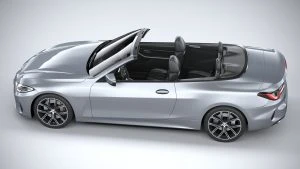
BMW 4 Series Convertible
This is one of the prettiest convertibles available for 2021. The new BMW 4 Series Convertible is offered with a 2.0-litre turbo-petrol four-cylinder producing either 135 kW/300 Nm (420i, around $90k) or 190 kW/400 Nm (430i, around $108k); while the flagship M440i xDrive AWD (around $136k) variant uses a mild-hybrid 3.0-litre inline turbo-six that unleashes 285 kW/500 Nm and is capable of reaching 100km/h in 4.5 seconds. A 3 year unlimited km warranty along with 3 year roadside assist makes life easy. All are well equipped, comfortable and stylish cars.

BMW Z4 Convertible
Another gorgeous looking convertible is the latest Z4 two-seater Convertible Roadster, which has a lower centre of gravity than before and is further helped dynamically by a 50-50 weight distribution. Three engines are available: The BMW Z4 sDrive 20i M Sport has the 145 kW/320 Nm 2.0-litre; the BMW Z4 sDrive 30i M Sport uses the 190 kW/400 Nm upgraded 2.0-litre version; the BMW Z4 40i offers 250 kW and 500 Nm with its 3.0-litre turbo in-line six petrol. Prices are around $98k, $122k and $144k, respectively. Even the 145 kW engine sings sweetly and packs a punch. All handle beautifully, making this the best Z4, yet. This has to be one of the best looking Roadsters on the road, and they are delightful to drive. The Z4 40i can dispatch the 0-100 km/h dash in just 4 seconds. A 3 year unlimited km warranty along with 3 year roadside assist is available to new car buyers.
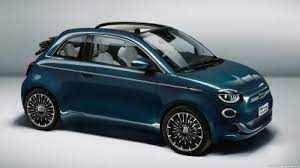
Fiat 500C
For somewhere between $25k and 28k, you could get yourself into a brand new Fiat 500 Convertible. They boast a 5-star ANCAP safety rating for what is a very cute, small car. In case you weren’t aware, the Abarth models, mentioned above, are the performance based versions of the Fiat 500C. You should average even less than 5 litres/100 km at times, and the 1.2-litre ULP motors are free revving, fun and relatively refined. Weighing in at just 935 kg these have a bit of zip about town and will happily hold their own at the legal open road limit. Both the 500C Club and 500C Lounge are well kitted out with modern technology and practicality, so life with a small 500C brings plenty of smiles. A 3 year 150,000 km warranty and 3 year roadside assist is good piece of mind motoring.
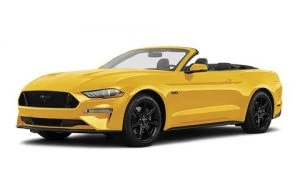
Mustang Convertible
Here would be the coolest convertible on the market. The Mustang’s muscle, sound and power delivery is nothing short of amazing. The GT version (0-100 km/h in around 4.5 seconds) costs around $75k new and boasts a 339 kW/556 Nm 5.0-litre V8. It can be had with either the standard six-speed manual, or the optional 10-speed auto gearbox. For around $61k, the Mustang High Performance 2.3-litre four-cylinder still delivers on performance (0-100 km/h in around 5.5 seconds) and has 236 kW of power and 448 Nm of torque to play with. Manual and auto versions are also available for the 2.3 High Performance. Both versions are RWD and are immensely rewarding to drive with the top up or down. These are hard to beat for value, performance and road presence. You can’t argue with the 5 year/unlimited km warranty, either.
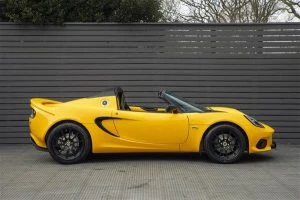
Lotus Elise
Here is another very cool convertible. The strikingly stylish Lotus Elise Convertible offers two models for 2021. The Sport 220 offers a 1.8 litre, 162 kW, 250 Nm ULP engine with RWD and a six-speed manual gearbox. A 0-100 km/h sprint for this version takes around 4.9 seconds. The Lotus Elise Cup 250 offers a 1.8 litre, 183 kW, 250 Nm ULP engine with RWD and a six-speed manual gearbox. A 0-100 km/h sprint for this version takes around 4.7 seconds. Few other convertibles cars can keep up with a Lotus Elise around a tight track as they are so light, agile and fast. A 3 year unlimited km warranty links with a 3 year roadside assist package when you buy a new one of these, which will be a little north of $100k.
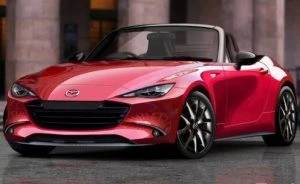
Mazda MX-5
There are two engines available: The 97 kW/152 Nm 1.5-litre and the 135 kW/205 Nm 2.0-litre, both offering the choice of six-speed manual or automatic transmission and RWD. A limited-slip differential and a finely-tuned suspension ensure a superbly balanced and grippy chassis with plenty of fun in the sun a certainty. Expect to pay between $40 and $52k depending on the model and trim. Enjoy! This has become a roadster icon over the years, and the latest model looks sharp and is kitted with all the latest safety gear.
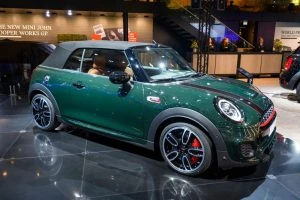
Mini Convertible
You’re paying anywhere around $50k-and-$75k for a new Mini Convertible – it all depends on the model. They can be had with various engines and styles. Three-door models include the base 100 kW/220 Nm 1.5-litre three-cylinder Cooper, the 141 kW/280 Nm four-cylinder Cooper S, and the mighty 225 kW/450 Nm JCW. Always cool and always impressively well-built, Mini’s are a classic. JCW versions are insanely fast and capable, and all come with 3 year/unlimited km warranty and a 3 year roadside assist package.
You could also look at some other marques like Porsche, Jaguar, Mercedes Benz or Lexus when it comes to buying a new convertible but you’ll be paying well north of $100, $200k or even $300k for some of these. Aston Martin, Bentley, Ferrari, Lamborghini, McLaren and Rolls Royce also offer convertible options in Australia, however their prices are for those loaded with money.
Ammonia as a Fuel for Cars
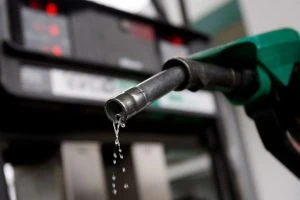
Who would have thought that liquid ammonia might just be that untapped energy source the world needs. All the flimflam around carbon emissions, EVs and hydrogen powered cars pales substantially when you start to grasp how ammonia could well become the biggest driving force for global transportation, given the right technology. All it would take is more clean, green electricity via solar and wind energy and, hey presto, the ability to make more liquid ammonia becomes way easier, less costly and environmentally friendlier. But let’s not stop there; let’s match that new ammonia production methodology with perfected ammonia combustion technology, and we have ourselves a green ammonia-fuelled vehicle.
Ammonia has been around for well over a hundred years and has many uses. The current dated process of making ammonia isn’t green. Combining nitrogen molecules that come from the air with hydrogen molecules that come from natural gas and coal creates huge amounts of greenhouse gases. So to make ammonia the green way has taken scientists to perfect the art of taking hydrogen from water and separating it from oxygen atoms using electricity.
Australia is the place to be for producing liquid ammonia the green way. There is so much practical solar energy available here in Australia for getting electricity from an array of solar panels which feed into the liquid ammonia production plant. Wind energy can equally be harnessed and fed into the production plant.
When this clean electricity gets to the production plant, electro chemical cells use electricity and catalysts to make components of air and water into ammonia. All of this process is clean and is performed without fossil fuels and the extreme heat that is required by older methods of ammonia production.
The older ammonia production plants are also costly to run and produce carbon dioxide emissions. Australia could easily be a world leader in producing cleanly made liquid ammonia via solar and wind energy
Research for perfected ammonia combustion technology for vehicle engines is ongoing and could well be all we’re waiting for. Ammonia (NH3) is made up of 3 hydrogen atoms bonded to a single nitrogen atom; it can serve as a low-carbon fuel, where the only emissions after ammonia combustion would be that of nitrogen and water.
An ammonia-fuelled vehicle would operate in much the same way as our conventional combustion motor designed for running on fossil fuels. The liquid ammonia is burned with oxygen to create energy. Unlike conventional gasoline vehicles, ammonia-powered vehicles would not emit CO2. Here is a win-win scenario that it would seem necessary to mandate.
In a hydrogen-powered car, a hydrogen fuel cell powers the vehicles’ on board electric motor, only giving off heat and water vapour as a result. Likewise, an ammonia fuel cell gives off heat, nitrogen and water vapour.
Researchers in spark-ignition systems are continuing to perfect ammonia combustion technology. The main hurdle that needs to be overcome in an ammonia-fuelled combustion engine is that when ammonia is combusted, the combustion produces a flame with a relatively low propagation speed. This low combustion rate of ammonia causes the combustion to be inconsistent under low engine load and/or high engine speed operating conditions. Scientists are also investigating the possibility for ammonia to be used in fuel cells as a cheap, clean and powerful energy source for vehicles. Researchers have succeeded in developing a new catalyst that burns ammonia (NH3) at a low temperature.
Australia could create solar- and wind-powered ammonia production plants which could then be the tap sources for liquid ammonia. The Australian grown ammonia could be used locally to power large vehicle fleets as well as for exporting around the world for overseas use. This is all very exciting stuff and will be something I’ll continue to follow as information and details become available.
 Level 2, 9 Help Street