

Author archive
China’s Automotive Targets
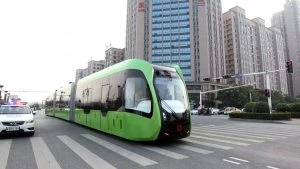
Autonomous Bus Train
Looking at the current landscape of automotive skill, technology and manufacture, China places itself solidly at the forefront. China is a prominent global automotive game changer. The huge growth in vehicle traffic across China has been driven primarily by the country’s economic development. The growth has been immensely rapid (particularly since 2000), where the rate of motorisation of this huge country has been nothing short of phenomenal.
The Chinese government has led a massive revolution towards the urbanizing of its people. Research has shown that about 300 million people are expected to move to the cities over the next few years, where all of the existing – as well as new – cities will grow considerably with the influx of new inhabitants coming in from around the countryside. This massive development plan is scheduled to run through until 2025 and is based on clear goals and the development of good electric mobilization. Being able to integrate electric vehicles into digitised infrastructures and services will soon become a complete Chinese realization.
Currently, in China electric vehicles (EVs) are not subject to any major restrictions; if there are restrictions they are only minor. Compared with the growing costs and restrictions enforced upon combustion engine vehicles, getting yourself into an EV brings massive benefits for Chinese owners of new EVs, and the financial incentives for having an EV are strong. As early as 2013, a change of policy that favoured electric mobilization throughout China’s major cities and infrastructure was initiated. The expanding EV charging infrastructure is continuing to grow rapidly, though it has some way to go before being consistently functional over wider areas.
Big digital companies like Baidu, Alibaba and Tencent are providing the drive and expertise behind the autonomous transport network across China’s major cities. Many big brand car manufacturers from around the world have already linked with huge Chinese automotive companies seeking to use China as a platform and marriage for producing their cars at lower cost, and it would seem logical that, after entering the Western market via European brands, the first imports of premium Chinese vehicles (hybrid, EV and Fuel Cell) from China to other countries around the world can be expected over the next few years. The commercial EV sector and EV buses will likely arrive even sooner.
The Arab, Latin American and African markets are ripe for gaining access by the Chinese automotive manufacturers. Also the Silk Road Project can be perceived as a means for opening up the Asian market to the big Chinese brands of EVs and Fuel Cell vehicles.
China is on target for completely phasing out combustion technology much earlier than was first expected. At the end of 2017, Chinese car manufacturer BAIC announced plans to stop production of non-electric and hybrid cars by the end of 2025.
We see the Chinese brands like Great Wall, Haval, MG and LDV growing here in Australia, and it seems that this Chinese automotive development will continue rapidly into countries who want to take non fossil fuel transport to new levels. China will play a key, dynamically strong role in the future of clean automotive transport. I wonder how soon we’ll see more autonomous and EV transport being rolled out in Australia?
Japan’s Automotive Brilliance

Tokyo, Japan
You can’t go anywhere around Australia without noticing just how many Japanese made vehicles are motoring around our roads (and off them). Since the 1960s, Japan has been among the top 3 automotive manufacturers in the world. The country is home to a number of motor companies, and you’ll be familiar with them: Toyota, Honda, Nissan, Mitsubishi, Suzuki, Subaru, Isuzu. There are, of course, more than these mainstream manufacturers. Japan has around 78 car-manufacturing factories in 22 regions, and these employ over 5.5 million people (more than the entire population of New Zealand).
The strong competition that is happening on a global scale in the automotive industry has forced the manufacturers to come up with a new model design every four to five years. Along with the new models, new innovative designs and new technologies are presented and used by the automakers in their new vehicles. Automotive manufacturing is the prominent manufacturing type in Japan, which takes up 89% of the country’s manufacturing sector. A large amount of time and money are invested into developing and improving the automotive manufacturing process, which, in turn, increases the quality and efficiency of their manufactured automotive products.
Some of the brilliant new developments from Japan automobile manufacturers have led to distinct and innovative new designs for current and future automobiles. In order to control the market dependency on fuels, and in order to design vehicles that are more fuel-efficient, Japanese automakers have invested and built hybrid vehicles and fuel-cell vehicles.
The ideology and popularity of environmentally friendly vehicles is creating a wave of global interest and demand for these sorts of vehicles. More and more automakers around the globe are focusing on creating the types of vehicles that are friendlier on the environment to their production line. Japan’s automotive manufacturers are leaders in this field. Japanese innovations in these technology sectors include autonomous taxi services and airport transportation, high-definition maps and open-source software modules for autonomous vehicles, advanced hydrogen fuel cell and alternating-current battery technology, and silicon carbide (SiC) semiconductor films for EV power electronics. Japanese companies have been developing hydrogen fuel cell technology, which is projected to reach a market size of approximately $43 billion by 2026, growing at a CAGR of 66.9% from 2019 to 2026. Japan’s prowess in creating autonomous vehicles and their resulting cutting edge safety features puts them well ahead of the game.
An electric vehicle is an automobile that produces power from electrical energy stored in batteries instead of from the burning of fossil fuels. Top automakers such as Toyota, Honda, and Nissan are already class leaders.
Hybrid vehicles use two or more distinct power sources to move the car. Typically, electric motors combine with traditional internal combustion engines to produce power. Hybrid vehicles are highly fuel efficient. Again, Japan’s Toyota motor company is one of the automotive industry leaders in hybrid vehicle research and production – with the Toyota Prius model leading the way. Hybrid variants are available on many of Toyota’s collection of new vehicles.
A Fuel Cell Vehicle is equipped with a “Fuel Cell” in which electricity is generated through the chemical reaction between hydrogen and oxygen. This chemical reaction provides the source of power to the motor. Fuel cell systems operate by compressing hydrogen made from natural gas and gasoline, which is then converted to hydrogen by on-board systems. Toyota’s latest fuel cell vehicle, the Mirai II, is sold in Japan. The Mirai II uses a Hydrogen Electrochemical fuel cell that creates 130 kW. The electric motor that is powered by the fuel cell produces 136 kW and 300 Nm. It’s very stylish, too.
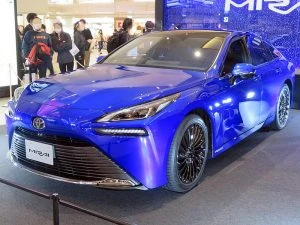
Toyota Mirai II
Top Six Tips For Ending The School Run Motoring Madness
 If you listen carefully, you might hear the sound of parents (and quite a few children) cheering because the long summer holidays are over and it’s time for the school year to start. Or maybe you won’t hear the cheering because all you can hear is the sound of traffic as everybody carts the little nippers to school.
I don’t suppose I’m the only person with grown-up children who avoids certain parts of the road at certain times of day, namely the places nearest the school and the times when school is starting and finishing. We all know that the traffic goes mad at this time of day, with everybody wanting to pick up their kids or drop them off, depending on what the case may be.
I get it, I really do. I’ve brought up kids and got them to school, and I appreciate how you want your children to arrive on time and safely. I can understand how you’re busy and how you need to fit the school run into a hectic day. However, there are things that we can all do to ease the congestion a bit so that there is less chance of an accident. After all, if the road outside the school is madly full of cars of all sizes all trying to get the best parking spots to pick up young Jack and Olivia, then there is more chance of what the traffic analysts will coldly call a “human–vehicle conflict” and what everybody else calls a tragic accident.
So what can we do to make sure that everybody gets their kids to school and back safely? Now that the school year is starting off, here my six best ideas that you might like to apply.
- Do the kids actually need to be dropped off at the gate? This is where I trot out the old “I had to walk to school” speech, although I had to walk along a main road rather than through the snow, barefoot and uphill both ways. If your children are reasonably fit and active, and they have good traffic awareness around driveways and intersections (especially if there are good traffic lights or pedestrian crossings), then consider having the kids walk to school. It’s good exercise for them – and possibly you. If the school is within 2 km of your home and your children are over 10, then there probably isn’t any good reason why they can’t walk themselves to school.

- Can you stay out of the crazy congestion zone? If the school is a bit further away and/or your regular commute takes you near it, then you could consider dropping the kids off outside the crazy zone right outside the school. For example, instead of taking that detour on the way to work to drop the kids at the school gate, why not drop them off where you would have turned off? If they’re too young to walk alone, then park the car and walk with them for those last few blocks to the school gate. If they’re old enough to walk alone… well, they’re probably at the age when having Mummy walk with them to school is embarrassing anyway.
- Try carpooling. If you are not the only person on your street who does the school run, or if your kids go to the same after-school activities as someone else at the same school, then maybe it’s time to organise a car pool. This will be limited by the number of seats in your vehicle, of course. Perhaps it’s time to think about getting a seven-seat MPV? However, car pooling can be a great way to build community and make some connections.
- Don’t double-park. If your only option is to drop the kids off at school yourself, then be a courteous driver. Don’t double park so that you can drop the youngsters off as close as possible to the gate. Double-parking makes things extremely difficult for those who are still learning how to cross the road as well as being supremely annoying for other drivers. It’s also illegal. Even if you’re not technically parked but are just stopping just for a moment to just let the kids out, still don’t do it.
- Keep out of any No Parking zones. Yes, your children are special, valuable and important. So are everybody else’s children. Let’s all respect the No Parking zones and don’t think that the rules don’t apply to you because you’re doing it for your children and they come first.
- If your school drop-off zone has time limits, respect them. Quite a few school have “kiss and run” drop-off points where you can stop for long enough to drop the kids off and say goodbye with a hug or kiss (if your kids are young enough to let you do this). If we all respect the time limits here, then these systems will work. These places are not the time to discuss lost homework, nosebleeds, etc. If an emergency arises, deal with it further down the street, not in the “kiss and run” spot.

Oh yes – if you want to try any of the ideas that involve children walking and there’s a chance that they’ll be late, you can take advantage of the fact that children who are old enough to walk by themselves are also at the age when parents are embarrassing because they exist. Acquire some ghastly piece of clothing and state that if you have to drop them off because they mucked around and are now running late, you will do so wearing said item of clothing IN FRONT OF EVERYBODY. It works.
New Reasonably-Priced Cars (Commodore/Falcon Replacements)
By now you’ve probably recovered from the loss of not being able to purchase a new Falcon or Commodore in Australia. These were lovely, big, spacious cars that could travel long distances in superb comfort. So what other alternatives are there for the buyer looking for a new car with those ‘good-ol’ Commodore and Falcon traits? Well, the good news is there are some potential new vehicles for you.
I’ve had a look at some of the roomier cars with decent performance, decent comfort and reasonable pricing; and when I mean reasonable pricing I mean anywhere up to $60k. There are one-or-two vehicles on the list that are priced beyond the $60k mark, but I’ve added them because I reckon that they would still be worth considering for those of you who have a few more dollars in your back pocket. None on the list run out to much beyond $80k.
The pricing given for each vehicle should be regarded as the estimated standard model price, so if you go for the higher-end models or want more options, then you would expect that these variants will be pricier. Don’t forget to get in touch with our sales team at Private Fleet because often we can get you some great deals!

Alfa Romeo Giulia ($60,900)
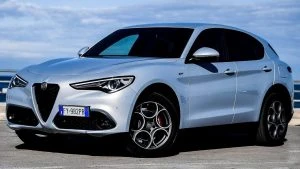
Alfa Romeo Stelvio ($65,900)
Alfa Romeo might just have a car that fixes your Commodore or Falcon withdrawal symptoms. The Giulia is a really nice drive, is quick and gets five-star safety. The Stelvio is the SUV version that’s superbly nice-looking and great to drive. These two Alfas tick all the right boxes for those who are after a great driving experience and something a bit special.

Audi A5 ($71,900)

Audi A6 ($84,900)

Audi Q5 ($66,900)
Three Audis come to mind – all of which are impeccably built, comfortable and high-tech.

BMW 3 Series ($70,900)

BMW 4 Series Coupe ($71,900)
These two Beemers are worth a look. Any of the line-up are dynamic and efficient cars to drive. They’ve just been updated with all the latest new technology. The sexiest car in this list might be the 2021 4-Series Coupe.

Chrysler 300 ($59,950)
Do try one of these! Superbly comfortable and roomy, the 2021 Chrysler 300 is loaded with luxury and style. There is heaps of smooth engine torque and plenty of performance available with the 300. A Chrysler 300 comes with the choice of a V6 or V8 petrol engine, and the pricing is outstanding, too.
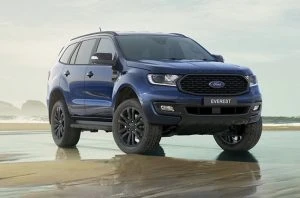
Ford Everest ($50,090)

Ford Mustang ($51,590)

Ford Ranger ($29,190)
Three Fords might do it for you. The Mustang has loads of performance available, but it is a bit tight on rear seat space. The Ranger is a comfortable ute that doubles as a workhorse. The Everest is an SUV Ranger, and is lovely to drive long distance with the family and gear on-board. The Ranger and Everest boast five-star safety, 4×4 capability and come with all the latest technology.
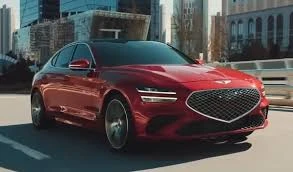
Genesis G70 ($59,300)

Genesis G80 ($68,900)
Here are two very underrated cars, or perhaps just not so well known. The G70 and G80 are smooth, luxury cars built by Hyundai, and come with gobs of style, refinement and high-tech features. They are also superb at covering long distances quickly. Nice lookers, too!

Haval H9 ($40,990)
Thought I’d throw the new Haval H9 into the mix. It’s a stylish, spacious, big SUV that’s loaded, safe and comfortable to drive. Check out the price!

Honda Accord ($51,990)
Honda might be able to tempt you into the fold with their new Accord. There are few spacious FWD sedans that can do everything as nicely as an Accord. Comfort, new technology, new features and reliability go hand-in-hand at Honda.
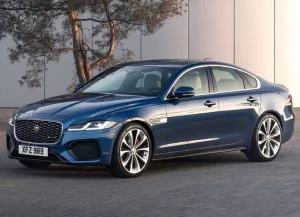
Jaguar XE ($65,670)
It might be a bit small for some, but the Jaguar XE is a pleasant drive.

Jeep Grand Cherokee ($59,950)
Ride high in a well-priced Jeep that can head off-road, is big on space and can cosset you in luxury.
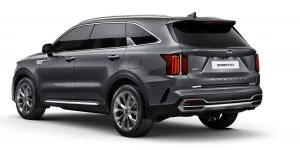
Kia Sorento ($45,850)

Kia Stinger ($49,550)
Kia has these two models that are as different from each other as chalk and cheese. However, they are roomy, good performers and are packed with up-to-date features as standard. The pricing is excellent, and the Stinger goes like a stabbed rat!

Land Rover Discovery Sport ($65,700)
This new Landie might be the right option for you. 4×4 capability, loaded with kit and stylish.

Lexus ES 300h ($62,525)
Lexus GS 300 ($74,838)
Lexus IS 300 ($61,500)
Lexus IS 300h ($64,500)
Lexus IS 350 ($66,500)
Lexus NX 300 ($57,500)
Lexus NX 300h ($60,500)

Lexus RC 300 ($67,990)
Lexus RC 350 ($70,736)
I can count nine Lexus vehicles which might be the right fit for you. Each variant is different, so there is a high chance that one of these will meet your requirements. Lexus vehicles are high-end Toyotas with excellent reliability, performance, luxury and style. Five-star safety comes with each of these machines, while the RC is a quick performer. Hybrid versions are extremely efficient. The NX is an SUV-type vehicle.
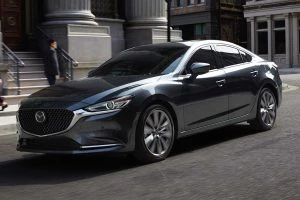
Mazda 6 ($34,490)
Mazda BT-50 ($36,550)
Mazda CX-8 ($39,910)

Mazda CX-9 ($45,990)
Aussie people seem to like Mazdas, and one of these four versions might appeal to you. Mazda vehicles are well-priced, safe, comfortable and reliable performers. The CX-9 is very roomy, and the 6 comes with sedan and wagon variants.
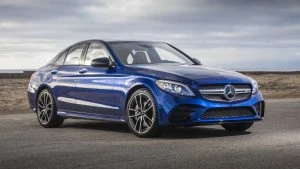
Mercedes-Benz C-Class ($66,300)
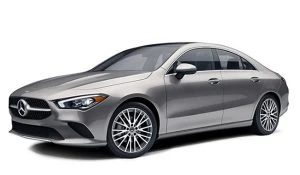
Mercedes-Benz CLA ($62,600)
Owning a new Merc doesn’t come cheap, so I’ve added just the C-Class and CLA as an alternative. These 2 classy cars are excellent to drive, comfortable and safe. They might be a bit small, however.
Mitsubishi Pajero ($54,490)

Mitsubishi Pajero Sport ($46,990)
Don’t forget the Pajero! The latest version is very good at touring long distances, great for towing, spacious and a 4×4 king. All the latest technology is on-board one of these. Again, the pricing is first-rate.

Nissan Pathfinder ($44,240)
Check out the classy new Nissan Pathfinder. It has plenty of space for the family, has five-star safety and it rides nicely on and off the road.

Peugeot 508 ($57,490)
Peugeot 5008 ($51,990)
Two classy Peugeot variants are well worth a look. The new 508 and 5008 are very stylish and safe, and they are possibly some of the nicest cars to look at on this short list (that’s quite long). Seating is spacious and comfortable, and the technology and features are all up-to-the-minute. They cover the ground effortlessly and efficiently, and they are priced very well for what they offer.
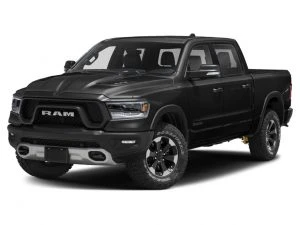
RAM 1500 ($79,950)
I thought I’d add the highly rated RAM 1500. “NZ Four Wheel Drive” magazine has classed this as the best ute for 2021. 4×4 action is a breeze in one of these tough yet comfortable machines, and space is abundant inside the cabin and out on the deck.
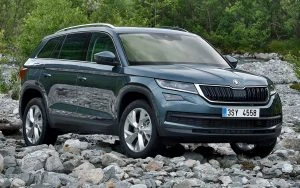
Skoda Kodiaq ($46,390)
The Kodiaq is one of the most practical vehicles you can buy. Off-road ability, space and comfort are all part of the Kodiaq’s repertoire. It also boasts one of the biggest boots.
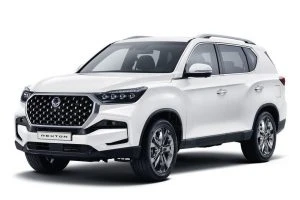
Ssangyong Rexton ($39,990)
Ssangyong’s are tough, reliable and practical. The Rexton is the latest SUV 4×4 variant that has all the latest new technology, comfort and space you’ll need. Pricing is excellent and the styling looks pretty good, especially with big alloys and fat rubber.

Subaru Levorg ($37,240)
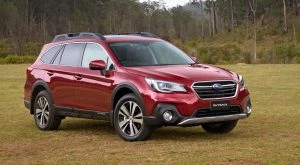
Subaru Outback 3.6R.
Subaru Outback ($37,440)
How about the Levorg or Outback wagons? Safety, AWD, reliability and practicality are all found inside one of these. There are also some quick versions of these, as well.
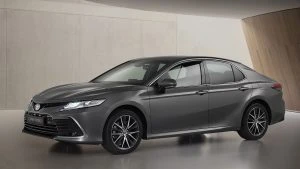
Toyota Camry ($28,990)
This is one of the cheapest cars on the list that starts out at under $30k. A new Camry is very modern, practical, efficient, safe and reliable. What more could you want?
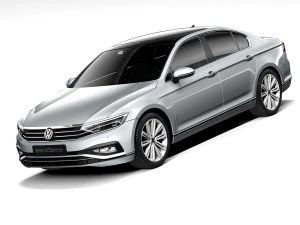
Volkswagen Passat ($46,590)
VW has the Passat. Essentially it’s the European version of the Toyota Camry. These are nice to drive, a bit more luxurious and great on style. Here is a good practical car.

Volvo S60 ($55,990)
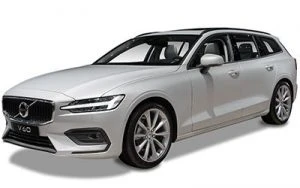
Volvo V60 ($57,990)

Volvo XC60 ($64,990)
Three Volvos slot into the price bracket range that I’ve been looking for – each a bit different from the other – but all built on Volvo’s latest 60 platform. They are very modern, very stylish, very comfortable and very safe. The Volvo XC60 has AWD and some handy off-road ability, while the V60 is a classy wagon. The S60 is the sedan version. Performance models come with hybrid technology, and all are great long-distance tourers.
 Level 2, 9 Help Street