

Author archive
Why Are 20% Of EV Owners In California Switching Back To Petrol?

You’d think that in a US state like California, which always seems to be so progressive, liberal and with-it – and which has a governor who has decreed that by 2035, all new cars sold will be EVs or at least “zero-emissions” cars – you’d see people flocking to taking up EVs left right and centre. After all, if you think about it for a moment, Governor Gavin Newsom’s call would rule out not just your good old-fashioned petrol or diesel vehicle but also hybrids, which have both petrol and electric engines. It also applies to trucks (although the article may mean what we call utes and they call pickup trucks in the US of A), which makes me wonder how they’re going to ship goods about the place, as electric big-rigs are still at the developmental stage.
Anyway, given these points, it was something of a surprise to read a study carried out in California that found that about 20% of those surveyed said that they had gone back to petrol-powered vehicles after having owned an EV. OK, to be more precise, 20% of hybrid owners had gone back and 18% of battery-powered EV owners had switched back. You can read it for yourself here: https://doi.org/10.1038/s41560-021-00814-9 (this will take you to the summary – to read the full thing, you have to pay).
The big question is, of course, why they’re doing this. The answer seems to be the issue of charging speed. The study seemed to find that Tesla owners didn’t seem to want to switch back, given that Tesla provides superfast charging for life for their vehicles – although I dare say that the cost of a Tesla has something to do with the fact that their owners aren’t switching back. However, those with other types of EV are more likely to switch back (compared with Tesla owners).
The people who were most likely to switch back were women, those living in rental homes, those living in high-rise apartments and those who didn’t have access to a Level 2 charger or higher at home or at work.
Some of these factors are easy to understand. If you live in a rental home, you probably don’t want to pay to have a Level 2 EV charger installed in something that you don’t own – if your landlord would let you do this in the first place. Landlords probably don’t want to pay to put in Level 2 EV chargers in rentals – although this might change in future; in the past, they didn’t always put in dishwashers but it’s common enough now. In the case of an apartment, when you think that the garage or other parking space is all the way down there while you live right up there, or if you have to park your vehicle in a shared space and someone else has bagged the charger… well, you can see just how inconvenient it is.
The length of time it takes an EV to charge also probably has something to do with why women were more likely to ditch their EVs. If your EV is parked up and charging in a shared garage in an apartment building, you’ll have to nip down now and again to check how it’s going. In the case of a public charger, you may complete your errands before the car has finished charging and have to wait around. This means that you’ll be hanging around for a while. Unfortunately, it can be a nasty world out there for a woman. Even though 99% of guys are decent blokes, there’s always that 1%. And you never know if that guy on the other garage or looking in your direction or walking towards you is Mr 1% or not. This means that no woman really wants to spend longer than she has to in a public space that may not be all that well lit at night, with her only safe space being a car that isn’t quite charged up. I’m speculating here, but speaking as a woman, that would be a concern I’d have – to say nothing of the hassles of trying to keep kids entertained while the car charges and being held up waiting for the car to charge when there’s a ton of things to do.
The issue seems to be charging time and access to Level 2 chargers. Let’s take a bit of a look at different charger types and you’ll get an idea of what’s involved:
Level 1 chargers: Slow as a wet week – it takes up to 25 hours to charge a typical EV with enough to get 100 km of range. However, it’s good for topping up plug-in hybrids. The advantage of these is that they can plug into the standard Australian power outlet without any need for the services of an electrician.
Level 2 chargers: These are faster than Level 1 chargers, taking up to 5 hours to give a typical EV 100 km of range. However, because of the charge they carry, they need special installation and older homes may need the wiring upgraded to carry the load, and it needs a special plug, which means you’ll need an electrician to come in and do the job of installing them.
Level 3 chargers: These use DC rather than AC power, and they are very expensive to install – putting one of these chargers could cost nearly as much as a brand new car. Your house doesn’t have this type of power supply, so they’re only available commercially. However, they’re faster, giving 70 km of range in 10 mins of charging.
Of course, these times are approximate and will vary from vehicle to vehicle – like charging times for other electrical things vary. However, full charge times are usually measured in hours rather than minutes. If you’ve got grumpy kids in the car, even 10 minutes for a top-up charge at a fast charge station can seem like eternity…
Tips for Teaching a Person Learning to Drive

It’s that time in the life of a Dad or Mum where your daughter or son has got to the age of learning to drive. For some, this is a time where stress levels begin to rise; just the thought of having to go through busy intersections with a rather nervous learner isn’t something for the faint-hearted. However, it can be a very rewarding time where you get to hand that little bit more independence and responsibility over to your teenager. Here are some tips from someone who has gone through this stage in life twice; actually three times, if you include the time when I was at university and gave lessons to a good mate of mine who still hadn’t been behind the wheel of a car by the time he was 21.
First of all, the teenager will need to get a learner permit. For this, your child needs to be 16 years old. The only exception is in the ACT, where the minimum age is 15 years and 9 months. In some states, you just fill in a learner licence application form, while in other states of Australia, your child must also pass a written or computer-based test on the road rules. Some states also have an eyesight test thrown in for good measure.
Once they have their learner permit, then in most Australian states and territories the learner drivers must gain driving experience on the road before they can do the test to get their P plate. They must do their learner driving under the supervision of a driver who holds a full unrestricted licence. The learner will also need to complete the Hazard Perception Test, continue to gain experience, pass the Practical Driving Assessment and then get a Provisional Licence.
To get through these steps, the first hurdle is getting to know the road rules. Reading up on the rules is, obviously, really helpful. This can even be done just before they hit the age of being able to go for their licence. It’s during this learning phase that I found bringing out my old ‘Matchbox’ cars (you can use any toy cars), drawing some roads on a big sheet of cardboard/paper and using them to push through the drawn-up intersections to gain a spatial birds-eye view of who gives way and why. Works a treat!
Out on the road, they’ll learn as a passenger, however, when it comes to them getting behind the wheel, it’s a really good idea to ease them into driving in a place where there is very little traffic, just so they can get used to the car, how it stops and goes, how it sits on the road, what it feels like to control and getting to know where it begins and ends. Even a farmer’s paddock is a nice wide open space where there is nothing close in the vicinity to accidentally hit, but you get the idea, I’m sure.
If you’re not a competent teacher, make sure that you find someone who is. The teacher’s demeanour always influences the learner’s ability, so a firm, soothing and relaxed manner always delivers a positive rub on the learner, helping them to gain confidence and grow quickly in ability. A harsh, scared teacher will make for a nervous learner who will quickly dislike the whole experience. I’ve known some people who struggle to drive even years after they finally got their license, all because of the whole bad experience of learning to drive. You can always bring in the services of a qualified driving instructor if you can’t find someone you know and trust to do the job well or if you know that your skills just won’t cut the mustard.
When it comes to the particular car that the learner will be driving, then my advice is to ensure that the car is a safe choice. Cars with an excellent safety rating are a must for new learners. It is madness to put your own daughter or son in something that won’t provide good protection in an event of a crash. It’s always best that they learn to drive the car that they’ll be sitting the practical tests in. And my advice is that they should continue to drive this car even once they have their licenses and are out on the road by themselves (at least for a year or two).
Only if a learner is a true natural and picks up driving easily would I suggest a manual vehicle for them to drive, though manual cars are getting less and less easy to find, let alone buy these days. An automatic vehicle is so much easier to drive when you are learning, as it takes away the fear of being in the wrong gear at the wrong time, stalling at an intersection; and it’s just one less thing to do and think about while you’re getting used to driving out on the road. I know of one young husband whose wife has been for her learner license three times and failed the practical tests. He still insists that she learns to drive a manual car first, just like he did; because in his eyes if you learn to drive a manual, then you’re going to be a better driver in the long run. Um… no.
Oh, and don’t forget to enjoy the experience of teaching your teenager to drive. Keep being an encourager; it is fun and you can add to the good times by going out for a coffee afterwards.
A Moment of Silence
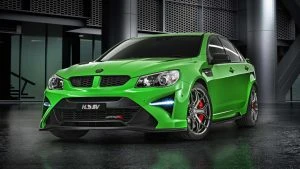
Holden HSV
Over the last decade there have been a few car manufacturers who have pulled out of selling cars in Australia. But, as those leave, there have also been numerous new marques who have arrived on the scene, which is great to see. Let’s not forget the old faithful marques, who are the manufacturers like Toyota, Honda, BMW and Porsche who have been selling cars in Australia for three decades or more. So what’s changed over the last ten years?
Over this last decade we have had to say goodbye to Holden – perhaps the saddest exit. The company was founded in 1856 as a saddlery manufacturer in South Australia, only to be wound up over the last year or so. The Holden roots in Australia have run very deep.
Chery made its arrival in 2011 and stuck around for a few beers and was off again in 2016. Chery once sold Australia’s cheapest new car for under $10k.
During the last decade, Dodge wrapped things up as well, though we still see the RAM logo in the form of the RAM Trucks that are sold new in Australia. A RAM Truck is the king of the Ute/light truck world.
Equally as sad, for some, as the vanishing of Holden has been the cessation of the awesome line of HSV (Holden Special Vehicles) and FPV (Ford Performance Vehicles) muscle cars. Oh how things change when people get a whiff of the climate change spin and big money opportunities with such amazing “clean” vehicles like EVs.
One luxury marque that made a brief appearance was Infiniti. Only recently, we’ve waved goodbye to this very classy and elegant line of cars that for some reason struggled to make their way into a buyer population who were stayed in their buying habits. Some of the Infiniti cars were seriously quick, had unique style and were reliable and comfortable.
2012 saw Opel opening many showrooms across Australia. The new Opel Astra and Opel Insignia cars were quite stylish cars, though they only managed a few sales. They too had a few beers and then folded up a year or two later.
Proton cars also came onto the scene in 2012 and sold a few hundred cars, however the aging models did not sell well in 2017 at all, so they were axed. There are rumours of them making a comeback with a new range of cars under Geely’s ownership.
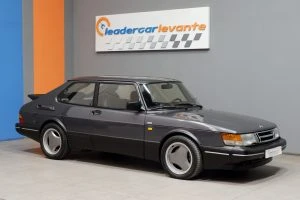
1991 Saab 900 Turbo 16 S
Another very sad day in the last decade of the Australian and global motoring industry was when Saab were forced to wrap up. I miss their individuality and the range of powerful four-cylinder, turbocharged engines. Australia has also said goodbye to Smart cars, a range of tiny city cars that were made by Mercedes. They never sold well.
The new popular car marques that have entered the Australian car market over the last few years has been: Genesis, Great Wall, Haaval, LDV, Mahindra, MG, RAM Trucks and Tesla. Most of these are of Asian origin.
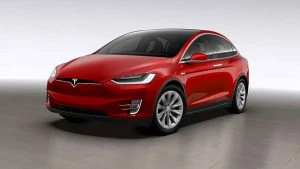
Tesla
Cars For “When you get to my age!”
“When you get to my age…” is a statement commonly made by those of us who may well be getting on in years. Older drivers will likely have more to consider when they come to buying themselves a new car. The need for lots of power may not be such a deciding factor either, and comfort and safety might be the attributes you’d be needing instead. It can also be a fun time buying the new car because you haven’t got all the family commitments to keep in the back of your mind, which would otherwise have swayed your choice of car in the past.
The list of new cars below has been put together with the ‘oldies’ in mind but it by no means is definitive. It is nice to have a practical car which will take the grandkids out to the park or off to the zoo, but these cars also have comfort, reliability, decent space, good safety features, easy infotainment technology and good climate controls. You’ll also find that the following cars are pretty economical and reasonably easy to get in and out of.
The Peugeot non-commercial range of cars are fine cars with style, comfort and practicality. They offer five-star safety and good pricing. Who says motoring has to be boring!
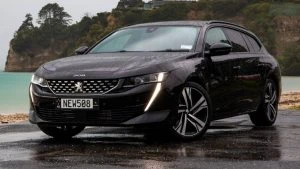
Peugeot 508 Wagon
Toyota’s Camry, Corolla, or RAV4 models are well-priced, safe, efficient and reliable. Lexus models are premium Toyota cars with lavish comfort, excellent reliability, economy and safety.
The Subaru Impreza or Forester are a good go to car for practicality. Maybe you have a dog or need comfort and AWD traction. Their efficiency, safety and reliability have always been good.
Volvo’s new S60, XC60 or XC40 are sensationally comfortable, safe and lovely to drive.

Volvo XC40
Mercedes Benz B-Class range are a great package for comfort and practicality. The style is hard to beat, and they also have the amazing big infotainment screens that wowed the world.
Honda Civic or Accord cars are hugely efficient, reliable and comfortable cars.
Citroen C3, C3 Aircross or C5 Aircross are remarkably comfortable, practical and look cool.
Hyundai Kona has electric power and comfort leading the way, with practicality to boot.
Jaguar’s XE is a lovely car with everything an ‘oldie’ could wish for.
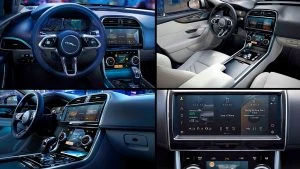
Jaguar XE
Renault has the Captur model range that provides classy SUV looks, outstanding comfort and safety, practicality and nice solid driving dynamics.
Skoda’s entire range of cars are comfortable, well-priced and spacious. Superb models are very stylish and they come in sedan and wagon. There is a model for everyone.
Nissan Qashqai and X-Trail variants are very comfortable, safe and practical; they also offer one of the better SUVs in AWD form with decent go anywhere ability.
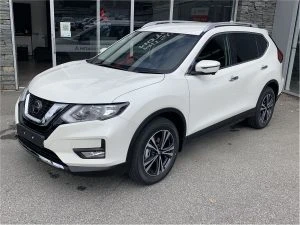
Nissan X-Trail
 Level 2, 9 Help Street