

Author archive
Plugging In A Plug-In
Like anything else with batteries, an EV of the PHEV or BEV type (i.e., plug-in hybrid EVs and full battery EVs), will need to be plugged in and charged. In my previous article, I talked about the different types of charger and the different charging speeds.
However, there’s more to know if you’re new to the world of EVs and plugging in instead of filling up. This is because different vehicles have different types of connectors or plugs. Obviously, you can only plug into something that has a compatible connector. This may sound confusing if you’re used to filling up a petrol or diesel tank, where one size fits all. However, if you’re used to negotiating all those different cables and chargers for Android phones, Apple phones, USB chargers and HDMI cables, then you will easily get the hang of the different connector types used in EVs.
There are a few basic types: Type 1, Type 2, CCS 2 and CHAdeMO. All of these have different pin patterns, meaning that you can’t plug the wrong one in by mistake (kind of makes you wish they had done something similar with ICE vehicles so that nobody put petrol in a diesel tank or vice versa).
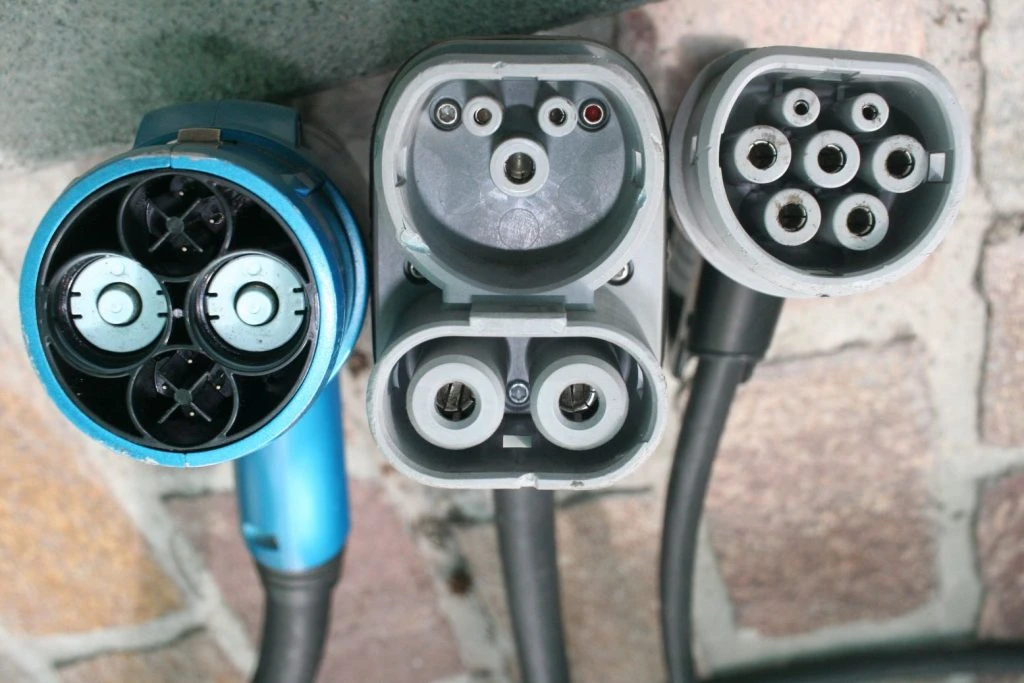
Type 1 AC connectors are also known as J1772 or SAE J1772 connectors, or just J plugs. They are mostly found on older EVs and PHEVs. The connector has five pins that look a bit like a smiley face.
Type 2 AC connectors are also called Mennekes connectors after the German company that invented them. They look a bit like a mutant hair dryer. They are the standard connector in Australia and Europe found on most EVs sold in the country today. Type 2 Mennekes connectors is often found in combination with the CCS connector – if you look carefully, you can see that the “surprised face” circles in the top part of the CCS connector combo is hidden in the seven circles of the Mennekes connector.
Tesla connectors are based on the Type 2 connector to allow you to use it to charge a Tesla at home via AC charging but has a special lock-out design for the DC chargers, meaning that only Teslas can charge up from the dedicated Tesla DC ultrafast charging systems.
CCS stands for combined charging system. The bottom half of a CCS connector allows for fast DC charging from public outlets, while the top half is for AC charging. Although it is possible to find EV models that have Type 1 up the top and the DC connector down the bottom, these are very rare in the Australian market. Most EVs in Australia that have these CCS connectors (technically, these are CCS 2 connectors) will have a Type 2 pin arrangement up the top.
CHAdeMO connectors get their name from the French phrase “Charge de Move” (“movement using charge”). Rumour also has it that it was derived from the Japanese phrase “o cha demo ikaga desuka”, which means “How about a cup of tea?”, as the idea was that charging with a CHAdeMO charger would take as long as having a cup of tea. I don’t know how long it takes you to have a cup of tea, but I don’t think they’re referring to the full Japanese tea ceremony here, which can take up to four hours. However, the CHAdeMO connector is used for DC fast charging, which can take about half an hour. These connectors are mostly found on earlier Japanese models such as the Nissan Leaf.
When you buy an EV, it will probably come with at least one cable so you can plug it in and get started. However, it’s often a good idea to have a range of different cables with different connectors. For example, you can get a cable that can plug into a Type 1 outlet even though you’ve got a Type 2 input in your EV, or one with Type 2 at both ends for public charging stations where BYO cable is the expected way to proceed. If you’re anything like me when it comes to cables and remembering what goes in where, it might be a good idea to attach a label or colour-code the different cables if you have several, and to store them in separate bags.
Ready, Set, Charge!
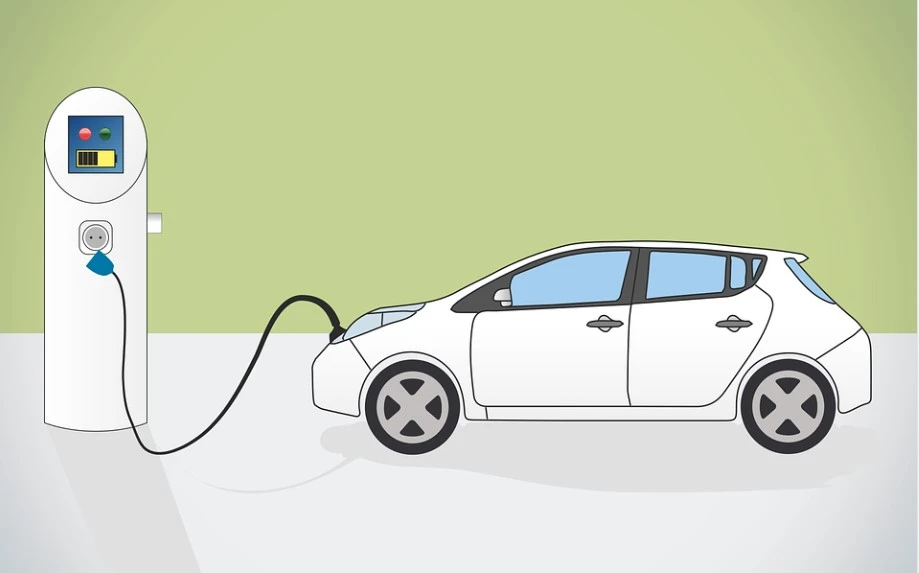
If you are one of the many who has opted for an EV for whatever reason, then the time will come when you have to charge it up – just like you have to charge up your phone, e-reader or laptop. However, charging an EV is not quite the same as filling up a petrol or diesel tank, and if you’ve never done it before, there are a few things that you’ll have to get used to, especially regarding the different charging speeds.
Deep breath required here. There will be maths.
With all types of charging, the exact amount of time you’ll need to charge the battery will depend on the voltage of the outlet and the battery capacity. The formula for working it out is:
E = P × t
Makes you feel a bit like Einstein, saying that. E is energy, P is power and t is time. Rearrange this and you get t = E/P or, in plain language:
Your EV’s battery capacity (in kWh) ÷ power output of the charger (in kW) = hours of charging time

This equation, however, mainly applies to charging to 80% rather than 100% (and this is the charge time figure that you’ll see in specs and stats from the manufacturers of EVs). This is because charging isn’t a linear process and it slows down as the battery gets closer to full charge. It’s a mechanism that helps prevent overheating. If you want to charge to 100%, bear in mind that doing so will take a bit longer.
The thing that most people are concerned about is the charging speed. In fact, the charging times are one factor that can put people off purchasing an EV, especially an all-electric BEV or a PHEV. Here in Australia, we have reasonably sensible names for the different charging speeds, unlike in other countries, where you have to ask a few questions to be sure what you’re talking about during a discussion of fast charging – you’ll hear some people talk about fast charging as something different from rapid charging (I feel sorry for those who don’t speak English as their first language because – well, you try explaining the difference between fast and rapid!). Here, we keep things straightforward, calling the two most common charging speeds Level 1 and Level 2, with only the fastest type being called “DC fast charging”.
Level 1 charging is simplest type of top-up charging that you can do at home or anywhere else you can access a standard common or garden power socket. It seems very simple but the trouble is that this type of charging is very, very slow. Recharging a completely drained battery will take at least a whole day, as in a 24-hour day. It could even take 48 hours, which is fine if you’ve got the whole weekend to recharge your car’s batteries as well as your own and don’t have to go anywhere. On the other hand, if you find yourself at a relative’s place in the country and not enough charge to get you home, you can just plug in and recharge enough to get you home again, or at least to the nearest public charging station (it would be nice if you compensate your relative for the power you’ve used, same as if they let you have a jerrycan of petrol if you’d run out). You may hear this referred to as trickle charging.
Level 2 charging is the sort of charging you do with one of those wall boxes in your home, and Level 2 chargers are what you’ll find in typical public chargers of the kind you’ll see at the supermarket, mall or gym and, if you’re really lucky, at work. Typically, you get around 7.2 km of mileage for every 10 minutes of charging with a 7.2 kW unit, or 22 km of mileage for every 10 minutes with 22 kW charging. (Is anybody else getting flashbacks to the sorts of word problems we had to solve at school?)
However, remember that these mileage figures are approximate and are under ideal conditions. If you have a heavy load, if you have to go into a headwind, or if you want to run the lights or heaters or play music, you’ll reduce the range.
Commercial outlets will often provide chargers not just for their customers’ convenience (although this is certainly part of their motivation) but also as a marketing ploy. If you need to ensure that you’ve got enough charge in your battery to get you home again after work and shopping, then you may need a couple of hours to charge the battery to the right level. However, it may take you only one hour to do your workout at the gym or to pick up your groceries, leaving you with time to kill. Chances are that you’ll spend time in the gym cafeteria or that you’ll spend a bit longer in the supermarket browsing the shelves to fill in the time and will thus spend more money, which is what the commercial outlets are hoping for. Just be aware of this little ploy and budget for it, develop some iron self-discipline and a healthy bit of patience, or take a book. Just don’t make the mistake of sitting in your car doing things on your phone or laptop with your device plugged into the charger in the car!
Speaking of budgets, a home wallbox will have to be bought separately when you buy a new EV. It’s a good idea to buy one, as otherwise you’ll be relying on super-slow trickle charging or public charging stations to top up the battery. It will also need to be installed by a professional electrician, like your oven or hot water cylinder and for the same reasons. You’ll also have to factor the cost of labour in as well. This is something to keep in mind.
DC fast charging (aka rapid and ultra-rapid charging) uses DC electricity, whereas Levels 1 and 2 use AC electricity. The best known DC chargers are the Tesla superchargers even though, ironically, the original Nikola Tesla promoted and popularized the use of AC electricity. How fast this type of charging will be will depend on the battery, but charging can be done in less than an hour, depending on the kW rating and the type of car. Some EVs charge faster than others. It has to be remembered that not all EVs are compatible with DC fast charging; this is often the case with PHEVs. This is something to check and think about when you buy an EV.
It’s also important to understand the different types of connectors or plugs, but that’s another story for another time.
BEVs, MHEVs, HEVs, FCEVs – What?
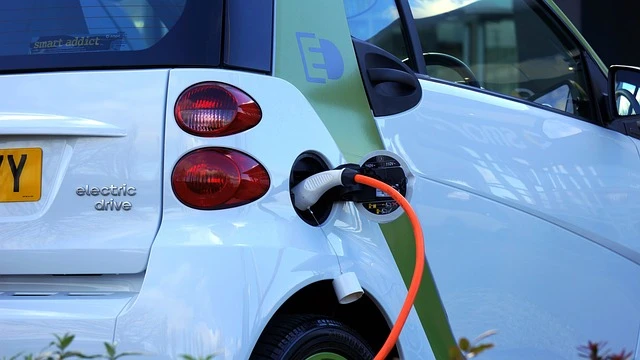
No matter what you think of them, it looks like electric vehicles are going to be with us for some time. Discussions of battery range and charging time are becoming as commonplace in our car reviews as fuel economy and engine size. All the same, you may be feeling a little confused by the welter of new abbreviations and acronyms buzzing around the place. You’ve got the other common terms used in car reviews and the like in your mental dictionary (SUV, EBD, ABS, etc.), but what are all these other terms?
Never fear: here’s a little guide to the most common abbreviations* you’ll find in discussions of electric vehicles and what they all mean.
BEV: Battery electric vehicle or, if you’re picky about grammar, a “battery-operated electrical vehicle”. BEVs are 100% electric and have a battery (as the name suggests) that has to be charged, as well as using regenerative braking.
HEV: Hybrid electrical/electric vehicle. These have an electrical motor and a traditional internal combustion engine. The two motors can run separately or both at once, depending on what you’re asking of the vehicle. The battery is charged by regenerative braking and not by plugging it into a charger. Again, it pays to clarify if someone is talking about HEVs to see if they are referring to all hybrid vehicles or just the sort that don’t plug in to recharge.
EV: This stands for “electric vehicle” and is the catch-all term that covers all vehicles that have an electric motor in them. Technically speaking, E-bikes, electric forklifts and electric trains could all be classed as EVs. However, in practice, the term EV tends to refer to cars. If someone starts talking about EVs, it’s wise to clarify exactly what they mean, as some use the term to cover purely electrical vehicles and hybrids, but others use it to refer to those running purely on electrical power.
MHEV: Mild hybrid electrical vehicle. This is the entry-level hybrid for those just dipping their toes into the waters of EVs (not that EVs and water mix, but that’s another story). Like all hybrid vehicles, an MHEV has an internal combustion engine and an electrical engine. However, the internal combustion engine does most of the work, with the electrical engine only kicking in during coasting, braking and stopping.
FCEV: Fuel cell electrical vehicles (also known as FCVs or fuel cell vehicles) are a different animal from the other EVs. Instead of relying on a battery that has to be charged up at regular intervals, a fuel cell vehicle generates its own electricity, using a fuel to get this electrochemical process going. The fuel in question is usually hydrogen, which is stored in a tank and can be topped up like an internal combustion engine’s petrol or diesel tank. It’s only in its early stages at the moment, but is likely to spread and grow in popularity as the technology improves and the infrastructure is set up. These can also be called HFCEVs or HFCVs, with the H standing for hydrogen.
PHEV: Plug-in hybrid vehicle (it could be abbreviated PIHEV but isn’t). These are the sexy hybrids that are coming out from every manufacturer. Like all hybrid vehicles, a PHEV has both an electrical motor and an internal combustion engine. However, around town or at low speeds, it’s the electrical motor that does the lion’s share (or possibly the Li-ion’s share) of the work, with the other engine kicking in at higher speeds and/or when the battery is drained. Unlike a mild hybrid (MHEV), a PHEV does not rely only on regenerative braking to charge the battery, as the battery needs more charge than braking can give. This means it needs to be plugged in to recharge, like your cellphone or laptop. Charging can be fast or slow, depending on the type of connection. Home charging tends to be slower, so it’s best done overnight.
PV: If you’ve come across this one, you are probably not reading about a car. PV stands for “photovoltaic” and describes the technology used in solar panels. Although people have tried to come up with a car that carries about its own solar panels (PV panels), these are not in production and have not been very successful so far. They are often referred to as “solar cars”.
ICE: This stands for internal combustion engine. Even though hybrid vehicles have an internal combustion engine, they are not called ICE vehicles. That term is reserved only for cars and utes that have the old-fashioned sort of engine.
Li: This isn’t strictly an abbreviation but should be included here. Li is the chemical element symbol for lithium, which is the main element used in rechargeable batteries in EVs and other devices. You’ll sometimes see this written as Li-ion, but there’s no need to put that hyphen in there, as you wouldn’t do it for, say, potassium ions, etc. (yes, I’m with the Grammar Police). Anyway, lithium can lose and gain charge quite readily, so it’s ideal for use in rechargeable batteries. It has its downsides, such as the fact that it can be volatile and because it’s not a renewable resource. Scientists are working on alternatives, including carbon nanotubes (abbreviated CNTs**)
EREV: Extended range electrical vehicle. This is something like the mirror image of the MHEV. It’s mostly an electrical vehicle, but it does have a small internal combustion engine as a backup. However, the internal combustion engine doesn’t power the drivetrain directly. Instead, it operates a generator that produces electricity that feeds into the electrical motor.
*I’ve come across some similar articles referring to these as “acronyms”. The picky part of me that’s a card-carrying member of the Grammar Police word nerds objects. Unless you’ve been pronouncing PHEV as “fevv” and EV as “evv”, it’s not an acronym. Most people I’ve heard have referred to “ee-vees” rather than “evvs”, so these are abbreviations.
** Be glad that this one is an abbreviation pronounced see-en-tee rather than an acronym…
An Anti-Stick Spray To Stop Boy Racers?
 There’s a small part of most drivers that sympathises with boy racers. However, this small part tends to become miniscule to non-existent when you’re kept awake into the wee small hours by screaming engines on what is normally a quiet suburban (or rural) road, when you have to pick up debris left behind after the local boy racers have had a meeting, or when you’ve had a close call with a souped-up Subaru Impreza racing an equally souped-up Nissan Skyline.
However, they may have found a solution to this problem on the other side of the Tasman, where one local council, fed up by complaints, has decided to try spraying the roads with an anti-skid spray surface that increases the traction. This, they hope, will stop boy racers (and girl racers – let’s call them street racers from now on) having their competitions that involve skidding and loss of traction, which, as far as I can tell, tends to cover most of their antics.
Certainly, having a high-traction anti-skid spray on the road will discourage dangerous skidding. It will also help cut down on burnouts (which are usually more annoying than dangerous unless a handbrake gives way unexpectedly). The only snag is that these surfaces will make drag races easier, as all that extra grip would make for better acceleration.
This spray is not some new invention that this town council has dreamed up. Instead, it’s something that’s often used on highways in areas where more traction is needed, like tight corners. These sprays are also used in urban areas on approaches to pedestrian crossings, where cars are likely to stop suddenly. According to Austroads, such sprays and coatings use binders modified by polyurethane and epoxy, and they are best applied to very clean and slightly worn asphalt surfaces. They’re used around the world. The only reason why roading authorities don’t use them on all parts of the road is that they are quite expensive to apply (they require a lot of prep and can only be applied to a perfectly clean and dry surface) and take a long time to cure.
Is there any place that these street racers can go to do fun manoeuvres like doughnuts, snakies and skids without risking their own necks or the necks of others? I’ve come across the solution in rural communities, where paddock racing is fairly popular. Paddock racing is fully legal, although the cars used for this bit of fun are usually ones that have been taken off the road. Ideally, paddock racing should be done on a nice wet field that’s due for ploughing and reseeding. As an added bonus, all those moves tend to spray up mud in a very satisfactory fashion – although attempts at burnouts tend to end up digging holes and getting stuck (and everybody laughs). Perhaps we could make use of vacant sections in towns?
However, many of those in the street racing scene get a buzz out of defying authority and because they tend to trick out their cars to look good – which doesn’t suit the mud. Therefore, we’ll still have to put up with late-night engine revving mixed with heavy bass speakers (at least we get an audible warning to watch out for street racers). It remains to be seen whether the attempt to stop street racing by applying high-traction surface treatments will be successful – but at least it’s less intrusive to the majority of road users than measures such as speed bumps and the like.
 Level 2, 9 Help Street