

Author archive
So You Want To Be An Uber Driver?
Quite a few of you may have considered getting a few extra bucks out of your car by signing up as a driver for the rideshare scheme Uber or one of the similar schemes, such as Ola. But is your car suitable for this? What’s more, if you are seriously considering the possibility, then what do you need to know when you go to buy a new car?
First of all, let’s get the disclaimers out of the way. I’m not affiliated with Uber, have never been an Uber driver, haven’t even been an Uber passenger, and get the urge to spell it the proper German way as Über. My family members aren’t Uber drivers, although my son once thought about it and my brother used to operate a bicycle rickshaw taxi (and he’s not even Chinese). I’m not saying that you should be an Uber driver or that you shouldn’t be an Uber driver, or that you should consider some other rideshare service such as Ola or DiDi, etc. It’s completely up to you whether you should or shouldn’t, and I’m not going to give you any advice in that direction.

However, what I’m hoping to do with this article is to let you know what sort of car you’ll need if you want to sign up to the programme as a driver. Because this company values its reputation – and no wonder, as it involves (a) getting into the car of a stranger (b) who you have only met online – it has strict requirements for the vehicles as well as the people who drive them. So if your car doesn’t meet the grade, you won’t be able to hire yourself out as a driver.
The first requirement is that the vehicle in question has to be no more than 15 years old, with the age limit dropping to no older than 7 years for the Uber Comfort service and no older than 6 years for the Uber Premier service. So if you own an old classic, I’m sorry: Uber isn’t for you. However, if you own a classic car in good condition, you can still get into the car hire game by making your classic available as wedding car – something that really deserves an article of its very own.
The next thing that this rideshare company looks at is the number of doors your car has. Sorry, but if you own a hot three-door hatch or a two-door sports car, it won’t meet the requirements. The minimum number of doors is four.
Seating is also one of the factors that is important, for obvious reasons. Single-cab utes are out of the picture and not just because they usually only have two doors. They’re also out because they can only seat a few people, and the minimum number of passengers that an Uber (or should that be “a Uber”? Depends on whether you pronounce it Oober or Youber) can take is four. Surprisingly, there’s also a maximum number of passengers that eligible cars can have as well, namely seven, meaning that the car can have up to eight seats (one for the driver, of course). If you own one of those minivans that seats up to 12 people, it won’t be eligible.
All cars have to be in proper working order, which includes the windows and the air-conditioning (which would have ruled out one second-hand van I once owned and was very glad to get rid of). It also should not have any cosmetic damage, as nobody wants to turn up to a party in a shabby rustbucket. It also has to pass its roadworthiness inspection, but that’s true of all cars.
Safety, as you can imagine, is very important, so one of the requirements for Uber cars, in Sydney at least, is that they must have a five-star ANCAP rating. If you’re not sure if your vehicle does or doesn’t, you can use the handy search tool provided by ANCAP.
Quite a lot of vehicles meet the criteria, so a wide range of vehicles is part of the Uber “fleet” (you could quite justifiably call that a private fleet, but we’ve bagged that name!). Of the many cars that are part of the system, the most popular are the following:
- Toyota Camry
- Toyota Corolla
- Mitsubishi Outlander
- Mazda 3
- Toyota RAV4
Well done, Sherlock… you’ve probably already figured out that this list of the most popular Uber cars overlaps with the most popular cars in Australia. Which makes sense, statistically speaking.
Different types of Uber service also have other requirements. For example, Uber Premier likes not just late-model four-door saloons, but they also have to have extra legroom for passengers, take no more than four passengers and be what Uber calls “high end” vehicles. What it considers to be “high end” is subjective, but all the usual suspects make the grade: BMW, Mercedes-Benz, Lexus, Porsche, Volvo…
Uber has a list of eligible cars for each category on one of its information pages (you can find it at this link). This list is pretty extensive and quite frankly, if you own a Ferrari, then you probably don’t need to pick up extra cash by joining a rideshare scheme. Unless you want to, of course!
Essential Tools For DIY Car Repairs

Even in modern vehicles with all their electronics, there are still a number of things that you can do yourself, either in terms of maintenance or full-on repairs… not to mention the odd addition of aftermarket gadgets and tweaks! As long as you can do it safely, it’s often a good idea to give it a go. Even if all you want to start with are a few basic maintenance tasks (e.g., changing your oil or filter), you can save yourself quite a bit of money. What’s more, if you have an older vehicle with fewer electronic doodads – and for which spare parts are often easier to find – then there are quite a lot of things that even an amateur mechanic can do successfully.
However, to do any job right, you have to have the right tools for the job. Here, you’ll find a list of the basic tools that any DIY mechanic will need, as well as a few that you can add if you start getting enthusiastic (or if you want ideas for the perfect present for the amateur mechanic in your life).
#1. Screwdrivers
At the very least, you’ll need a Philips (star) screwdriver and a flathead or straight screwdriver, preferably the sort with long, thin handles. If you can add in the closely related square-headed screwdriver (called a Robertson screwdriver) and/or Allen keys (which have hexagonal heads), you’ll be doing well. There are 14 possible types of screwdriver head, so you can start a collection if you’re really keen. Another bonus is that you will end up using them for more than just fixing your car.
#2. A Socket Set
Socket sets are another must if you start poking about under the bonnet of your car. You can start with a basic set that has the ratchet, at least a spark plug socket and an extension bar, and perhaps a few other sockets as well. You can find starter kits with anything from 10 pieces to 40+ pieces. The golden rule to remember with any socket set is ALWAYS PUT IT BACK IN THE RIGHT PLACE. This especially applies to larger kits, as it’s hard to tell minute fractions of an inch apart with the naked eye. Sockets can be measured in Imperial (inches) or in metric units (mm), so be careful which unit yours come in. Just to make things more confusing, the ones measured in parts of inches can use decimals or fractions (the fractions are SAE standards). Unfortunately, the whole numbers for mm don’t exactly match the standard fractions of an inch. This is why good socket sets have one set of sockets measured in fractions of an inch and another in metric – and it’s why you always need to put the heads back exactly where you got them from to avoid muddling them up.
You also need to watch out for the size of the “drive” of the socket set. The drive refers to the hole where the ratchet attaches. These are nearly always measured in fractions of an inch: ¼, ⅜ and ½.
#3 Crescent Spanner AKA Adjustable Wrench AKA Adjustable Spanner
You could buy yourself a set of spanners of different sizes, but it’s much, much simpler to get an adjustable wrench or crescent spanner. (In case you’re wondering, a spanner and a wrench are more or less the same thing, and “crescent” was originally a brand name, so these things get called a number of names). No home should be without one, as they’re very, very useful for more than just tinkering with your car.
#4 Pliers
Pliers, both the needle-nosed and the slip-joint type, are useful things, as long as you don’t make the mistake of trying to loosen nuts and bolts with them – that’s what a spanner is for. Pliers are good for holding little things that you can’t get a grip on properly with your fingers. Look out for pliers with rubber-coated handles if you’re doing anything electrical.
#5 Torque Wrench
Sometimes, you need to tighten something (e.g., spark plugs) in place just enough but not too much. A torque wrench is designed so that you can apply a certain amount of torque (it’s not just engines that have torque) but no more. Some are fancier than others, and I’d recommend getting one if you do a lot of tinkering. Otherwise, you can get away with just a typical wrench, as long as you show some restraint and don’t try to “really do it properly” and give it just one more good hard twist just in case – that’s how things can get broken or damaged.
#6 A Magnet On A String
Everybody drops things, and it’s really annoying if you drop a nut into the depths. As most bits inside the engine are made from steel or iron, a magnet on a string can be lowered in to pick the wretched thing up. You can attach magnets to other long things for greater precision, especially if you’re as fumble-fingered as I am.
#7 A Light
Even if your garage is well lit, shadows cast by all the twists and turns of the workings of your engine may make the bit you want to look at difficult to see. A good light that allows you to keep your hands free (unless you’re a Hindu deity or an octopus with more than two hands) will be very useful. Even a headlamp can do the trick.
#8 Lots Of Rags
You will spill oil and other bits and pieces. You will need to wipe grease and carbon off things so you can read serial numbers. You could use paper towels, but rags are a lot more robust and, if you’re keen, they can be washed and reused (just don’t wash them in with your favourite white work shirt or anything else nice). They can also be used for polishing the car, so you may find yourself acquiring a stash of old sheets, old T-shirts and the like. Make sure that they don’t shed lint and that all buttons and other scratchy bits have been removed first.
One Thing They Don’t Tell You About EVs When The Rubber Meets The Road

The thing that a few of the proponents of EVs don’t often tell you about is about the tyres. They’ll tell you about how EVs produce less in the tailpipe emissions department and about how quiet they are and how much better the range is these days, but if you’re new to the world of electric vehicles, you may be in for a surprise the first time you have to change the tyres.
What they don’t tell you is that EVs need special tyres and fitting the sort of tyre that worked perfectly well for an ICE vehicle of the same size or even the same weight won’t work on an EV. The tyres on an EV have to cope with a number of the characteristics of electrical motors. Specifically, the tyres have to cope with the increased torque, the weight of the battery pack, the need for better energy efficiency and the need to reduce road noise.
Because electric motors behave differently from internal combustion engines, they have much higher torque figures. Torque, as we should remember from our high school physics class, is rotational force (as opposed to linear acceleration), so it bites in where the rubber hits the road – literally. The more torque, the more force is applied. Now, I like a good bit of torque in a motor, but tyres don’t like it as much, and too much can wear them out more quickly. This means that an EV has to have tougher tyres. They also have to have more grip to avoid slipping when accelerating, especially in wet or slippery conditions.
On top of that, the tyre has to handle the increased weight. You might not realise this, given that most EVs tend to be smaller urban vehicles (although this is changing). However, EVs weight more because of the battery pack. In fact, the battery pack can make up to quarter of the weight of an EV – and yes, this outweighs the bits that aren’t in an EV, such as the radiator, the fuel tank, the exhaust system and so forth. The battery pack also needs to be protected against mechanical damage (such damage is very bad news for the battery and is the leading cause of electrical car fires). This extra weight applies to hybrids as well as to purely electric vehicles (battery electric vehicles or BEVs). This means that the sidewalls on the tyres for EVs need to be stronger and heavier to carry the weight.
These two factors alone would be enough to indicate that putting regular tyres on an EV or hybrid vehicle is a bad idea, as the tyres would wear out more quickly – a lot more quickly! In fact, some have argued that if you are concerned about the environment, you should bear in mind that although EVs produce less from the tailpipe, they create more particulate matter from tyre wear. This is why several of the big-name tyre manufacturers have created special tyres for EVs.
If you’ve ever looked at the tyres made specifically for EVs, you may notice that they are taller and thinner. This is to decrease the rolling resistance. Going back to high school physics once more, something that’s heavier has more inertia and thus requires more force to get moving (think about how easy it is to kick a soccer ball rather than a medicine ball). Naturally, a tyre that’s stronger and more resistant to wear will be heavier, which would mean more inertia and thus rolling resistance. Making the tyre narrower will reduce the drag and thus the rolling resistance. This is important, because if you have waited half an hour to charge up your EV from a public charging station, you want that charge to last as long as possible before you have to do it again, so reducing the drag and the rolling resistance will be more energy efficient.
Lastly, there’s the noise issue. In an ICE vehicle, the rumble of the engine drowns out the road noise. In an EV, there is no rumble, so road noise is the only thing you can hear. Road noise isn’t quite as soothing as engine noise (most of the time), and that’s the only thing that you can hear in an EV, especially if you’ve switched off the sound system to save power and extend the battery range.
You can put tyres designed for other cars on EVs and hybrids, but three things need to be borne in mind. Firstly, you have to be sure to get something that can handle the extra weight. Secondly, a regular tyre will reduce the range of the battery. Thirdly, the tyre will wear out a lot more quickly, meaning that you won’t actually save anything by putting regular bog-standard tyres on an EV.
It’s best to put the proper tyres on an EV, as you will get better range and longer tyre life out of them. Admittedly, these tyres are more expensive (like performance tyres on a splashy sports car). They will also wear out more quickly, but not quite as quickly. This is something that tyre manufacturers such as Michelin are working on but you will have to factor in if when deciding if an EV is right for you and your budget. Despite being built tougher, these tyres still need to be maintained correctly – checking the pressure and rotating them regularly.
As with all things, the issue of battery weight and tyre wear are things that researchers are looking into and trying to improve, so we can look for things to get better (and hopefully cheaper) as time passes.
Extending The Life Of EV Batteries

One of the big questions that a lot of people have about making the shift from ICE (internal combustion engine) vehicles to EVs of any sort is the issue of battery life. In this context, battery life doesn’t refer to how many kilometres the batteries will take you (this is technically known as battery range) but the actual lifespan of the battery unit itself. If you’ve had any experience with any kind of rechargeable battery – which most of us have had – then you’ll know that even though you can recharge a battery a certain number of times, you can’t do it forever and eventually the battery will die, never to be recharged again.
Having said that, the lifespan of EV batteries is pretty good. In fact, the manufacturers claim that batteries can last for about 10–12 years, which is longer than the average lifespan of a whole car in some countries (although those who like second-hand cars or who are into classic cars may raise an eyebrow at this statistic). They’ve also got warranties to ensure that they last for a certain amount of time.
However, people researching rechargeable batteries don’t tend to measure the lifespan of batteries in terms of time (partly because no scientist in a rapidly developing field wants to spend 10 years running an experiment). Instead, they measure the lifespan of a rechargeable battery in charge–discharge cycles. To understand why they do this, we need to understand a bit about the science of a rechargeable battery. Don’t panic – I won’t get into too much detail, partly because I don’t have a PhD in it and can’t wrap my head fully around some of the minute details.
In any battery, an electrical current is generated when ions (particle with an electrical charge) move from the negatively charged anode through an electrolyte to the positively charged cathode. This keeps going until everything balances out and the electrochemical reaction stops. You can do this yourself with a copper coin (if you can find one these days), a zinc-coated nail and a lemon. Attach a wire to the coin and the nail, maybe connecting fairy lights in the middle, stick them in a lemon and watch the lights glow. However, in a rechargeable battery, this processed can be reversed, shuttling those ions back to the anode again.
In a rechargeable battery, every time the reaction comes to an end, i.e., complete discharge, that’s considered to be a full cycle. In the lab, to test a battery’s lifespan, researchers charge and drain and charge and drain and… until the material in the anode and/or cathode starts to deteriorate, which all things do over time. They also measure capacity decay. Over time, any rechargeable battery will lose the amount of charge it can store. Again, this is related to the number of charge–discharge cycles.
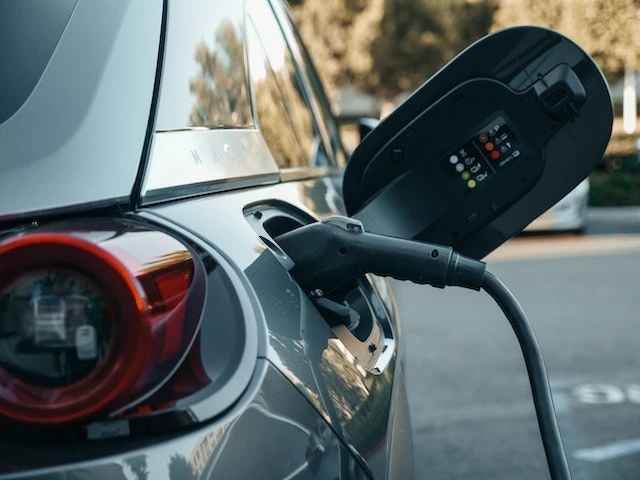
So what does that mean for EV batteries? Although the manufacturers measure lifespan in years, this figure is based the ideal battery user. If you charge your battery the right way and use it in the right way, then you’ll get the maximum lifespan from your EV’s battery pack. However, if you don’t, you’ll shorten the lifespan of the battery.
You can imagine the number of charge–discharge cycles in a battery as kind of like lives in a computer game. You’ve got a lot of them, but every time, you get those hit points down to zero and have to “respawn”, you’ve used up another life. However, unlike a computer game character’s life, hitting either extreme (full charge as well as full discharge) will shorten the lifespan because it puts stress on the battery – kind of like keeping a bow fully strung and at full draw most of the time, which, as any archer will tell you, isn’t good for the bow.
This means that ideally, you should avoid hitting these extremes. This means that exhausting your battery’s charge completely is a bad idea. However, so is topping it up to 100% all the time.
At this point, those of you who are familiar with rechargeable NiCad batteries will be scratching your heads because you’ve heard of “battery memory”. NiCad rechargeables (these are the sort that you buy to put in things that come with the label Batteries Not Included) do have a “memory”, meaning that if you are in the habit of recharging the batteries when they hit 10% charge, they’ll start acting as though 10% is the new zero. However, lithium ion batteries don’t have a battery memory effect, meaning that you won’t reduce their charging capacity if you top up the battery’s charge when it dips below a certain level.
In fact, what manufacturers recommend for preserving the life of a battery sounds rather like the principles used for managing blood sugar in Type 1 (insulin-dependent) diabetes. You don’t want things to drop too low, but you don’t want them to go too high, either. The ideal is to keep batteries between 80% charge (which is why the charging times given by EV manufacturers are usually the time taken to reach 80% charge) and either 20% or 40% charge. On top of that, rapid charges and rapid discharges also stress the battery.
In practice, this means the following:
- Don’t recharge your EV to overnight every night. However, you need to balance this against what you know about how and where you’ll be driving and where the accessible chargers are.
- Don’t let the battery drain too quickly. This means that you have to be very careful when it comes to things like towing, going uphill and running too many things that require electricity at once. In other words, if it’s a freezing cold rainy night when having the lights, wipers and heaters going is a must, then you have to decide if it’s really worth it to use the sound system as well.
- Although DC rapid charging is convenient, it does stress the battery, so reserve this for when you absolutely have to. DC rapid charging isn’t catastrophic for your EV’s battery and you can do it now and then without putting a serious dent in your lifespan, but it does put a bit more stress on it than slower AC charging, so don’t do it all the time.
- Extreme temperatures make the lithium in the batteries do funny things. Getting too hot is the most dramatic, but most modern battery packs (thank goodness!) have cooling systems to ensure that they don’t overheat (these systems use the battery’s own charge to operate). Getting too cold is also a problem, as the electrochemical reaction producing the charge is slowed right down, which translates to reduced range and slower charging times. Some battery packs, notably in Tesla vehicles, have systems that keep them at the ideal temperature – though at the cost of range. However, these can drain the battery more quickly, which shortens the lifespan.
- If your EV has to go into long-term storage, keep it on a trickle charger or a smart charger to ensure that it stays about half charged.
 Level 2, 9 Help Street