

Author archive
Toyota Hybridises The RAV4 And Ditches Diesel.
Toyota‘s RAV4 has been given a hefty whack with the overhaul stick. A hybrid drivetrain, new AWD systems, and a revamp of the exterior, will see the 2019 RAV4 head twoards the third decade of the 21st century with the same verve it brought when first launched a quarter of a century ago.
Currently scheduled to hit Aussie showroom floors in the second quarter of 2019, the Recreational Active Vehicle 4 wheel drive will have both hybrid and non-hybrid drivetrains, new engines, and a new eight speed auto. Engine capacities will be either 2.0L or 2.5L, with the smaller engine producing 127kW and 203Nm. Pick the bigger donk and there is 152kW and 243Nm. The hybrid package is slated to produce 155kW and a as yet unannounced amount of torque. The battery system will be located under the rear seat so no loss of storage space will occur. However, there will be no diesel engine to be made available as Toyota moves across to a hybrid SUV future.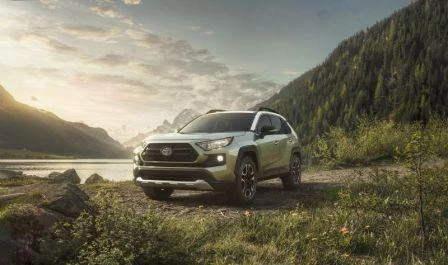
A CVT or “intelligent” six speed manual can be selected for the smaller engine, with the manual said to be able to rev match in order to assist in economy and smoother shifts.The non-hybrid 2.5L is the one that will bolt to the eight speed auto. A lower ratio first gear not dissimilar to that fitted to the hybrid Corolla’s transmission assists in getting the vehicle up and running. This engine and transmission combination will have a mechanical AWD system, with the same size engine and hybrid receiving an electrical AWD setup. It’s smaller, lighter, and more energy efficient that a mechanical system, and coupled with a generator attached to the rear axle with a specific drive ration, will generate more torque at the rear for better driveability. Up to 80% of the torque generated can be rearward directed.
Torque vectoring also comes in and looks to be specific for the 2.5L and mechanical system. This will not only direct up to 50% of torque to the rear but will, as deemed necessary, split torque between the rear left and rear right wheel. If the onboard sensors feel that all is good, then torque and power is primarily aimed towards the front.
Sean Hanley, Toyota Australia’s vice president sales and marketing, said the new drivelines and AWD systems will add to the RAV4’s spirit of adventure and driving pleasure by delivering enhanced performance, capability and control.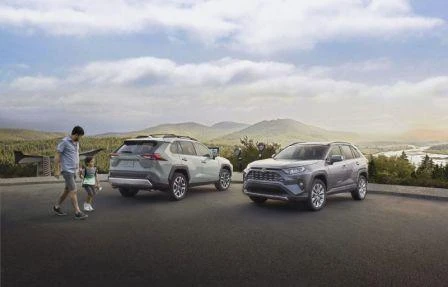
“All-new RAV4 will offer even greater appeal for people looking to re-energise in comfort and luxury, whether on the everyday commute or while enjoying weekend trips away. The new drivetrains deliver confidence-inspiring performance and agility and will result in a new perception of hybrid with electric AWD capability that enhances driving pleasure.”
Extra driving goodness comes from AIM. The AWD Integrated Management automatically adjusts vital vehicle systems, according to the drive mode selected, steering assist, brake and throttle control, shift pattern and drive torque distribution. There’s Eco, Normal, and Sport modes to choose from, with Eco backing off the torque for fuel efficiency. Sport changes the steering assistance level, the throttle control, and the distribution of torque.
Inside the mechanical AWD RAV4 will be a drive mode switch for different terrains; mud and sand, or rock and dirt, can be selected for easy going soft-roading. Go to the hybrid version and Toyota will fit an automatic Limited Slip Differential, which can be activated via a toggle in the cabin, for difficult driving circumstances.
All of this will be packaged in a new body, with final sign-off for Australia yet to be confirmed as which style. Contact your local Toyota dealer to register your intert.
2019 Mitsubishi Triton Is On The Way
Mitsubishi have released details of the forthcoming Triton. Largely unchanged mechanically, the Triton has been given an extensive external makeover. Front and centre is the addition of the “Shield” design, the deletion of the forward angled tail light design in favour of a more conventional design, and a signature crease from front to rear. Also gone is the arcg between the rear doors and tray, replaced by a straighter angled line from side step to tray top.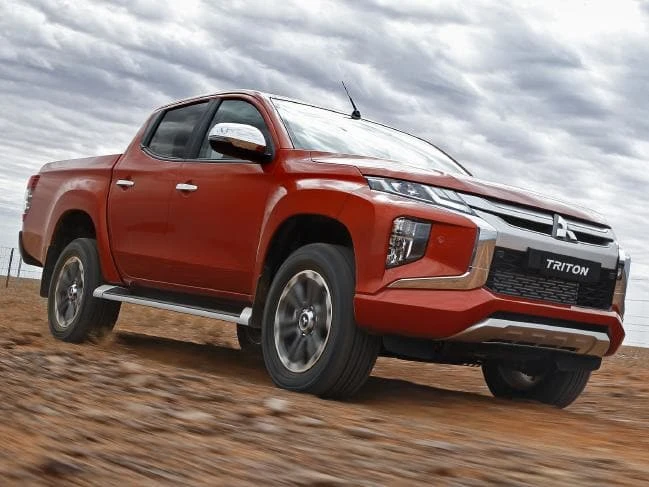
It must be said that the front bumper’s design does bear a similarity to that sported by Toyota’s HiLux, with a rectangular look to the extremities that house globe lit driving lights. However the overall design is closely related to the Pajero Sport, itself based on the Triton.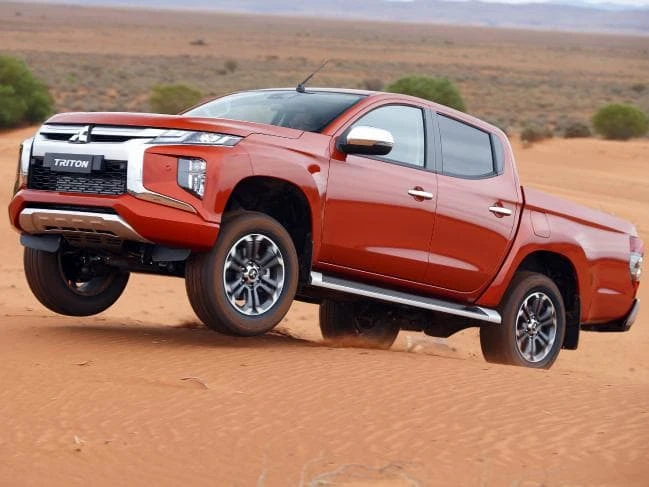
Power comes from a 94kW/194Nm 2.4L petrol four or the diesel with 133kW/430Nm. The entry level GLX still comes with a manual, a dying breed of transmission choice. Manuals are five or six coggers, and Mitsubishi adds a new six speed auto, replacing the archaic five speed. Staying with six is a choice that on the face of it seems to be behind some of the Triton’s opposition, such as Ranger.But where the Triton will stand tall amongst its peers will be in safety. Autonomous Emergency Braking with variable speed speed recognition levels will be fitted, and it will use camera and laser sensors.
Surround view cameras are becoming more common and the Triton will have these. Blind spot detection and rear cross traffic alert will also feature. One unique safety system is also looking be be onboard. Called Ultrasonic Misacceleration Mitigation, it’s designed to read forward and reverse hard acceleration and act appropriately by momentarily cutting engine power. How this works with deliberate hard acceleration in a safe environment is yet to be seen. Ride and handling has also been fettled with 4WD versions of the Trion now getting a drive system selector so off-road work can be better utilised and enjoyed.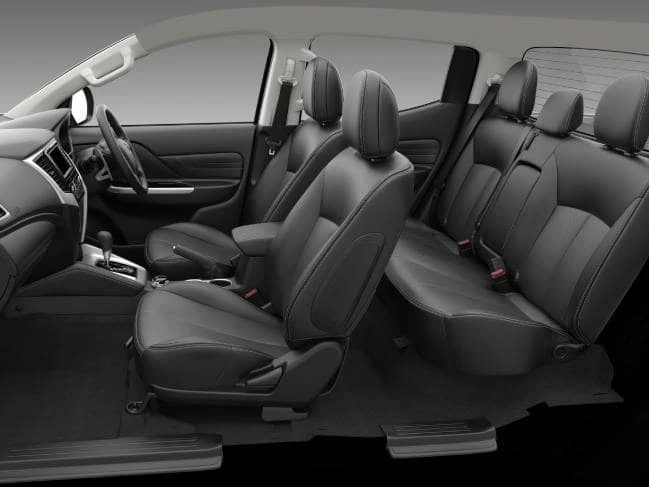
Interior trim levels have been lifted. Soft touch materials, slightly darker in tone, complement higher grade looking silver accents. Rear seat passengers now have a USB socket for charging and there are now aircon vents for the rear, and the upper level models now have smartphone mirroring apps. Hill descent control has also been added, along with sensors front and rear.
Built in Thailand, the Triton is a good seller for Mitsubishi Australia and is the company’s second biggest market ahead of Indonesia, Chile, and the U.K. Full pricing details should be released in December.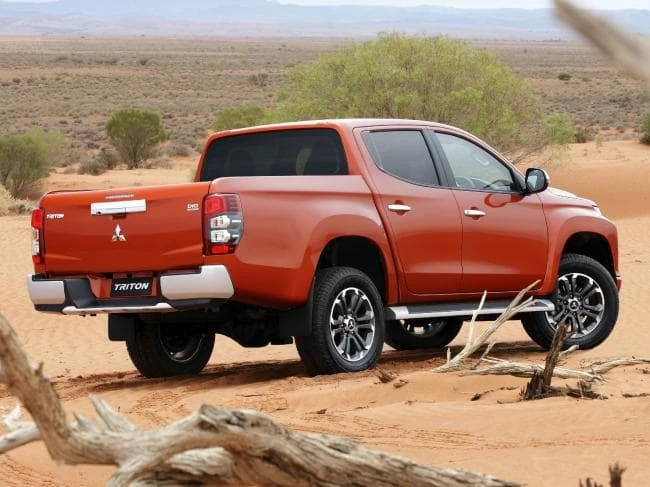
Car Review: 2019 Kia Sportage SLi Petrol & GT-Line Diesel
Kia updated their Sportage range in mid 2018 and although mainly cosmetic in nature, it keeps the range fresh. The new for 2019 Kia Sportage SLi with petrol and the diesel fueled 2019 Kia Sportage GT-Line graced the driveway for a week each and both showed why they are ideally suited for their respective target markets.
 The GT-Line is listed at $48,210 plus on roads, the SLi at $37,310. There is a very well specified equipment list for both, including Autonomous Emergency Braking and Lane Keep Assist now standard across the range, and a suite of GPS linked voice alerts for speed cameras, narrow roads, schools, and more. Apart from the different energy sources there are two different transmissions. Kia has kept the six speed auto for the petrol with its higher rev points for power and torque, The diesel has a new eight speed, and It’s a cracker. The 2.0L diesel has 400Nm of torque and the eight ratios are well spread to take advantage of the power and torque delivery. Torque is on tap from idle with that peak available from 1750 to 2750 rev. Peak power is 136kW and that’s at 4000rpm. The SLi is a front wheel driven unit, the GT-Line an all wheel drive setup and comes with a centre diff lock for soft-roading.
 The Sportage is a four model range, being Si, Si Premium, SLi, and GT-Line. The first three have a choice of 2.0L petrol engine or 2.0L diesel. The GT-Line is 2.4L petrol or 2.0L diesel. The 2.0L is a nice enough performer, with 114kW and 192Nm. This comes standard with the six speed auto. The petrol is a free revving unit and its own power and torque curve has the six speed auto running slick and smooth. Power for the 2.4L petrol is virtually identical to the diesel at 135kW however that’s at 6000rpm. Torque, naturally is a lesser peak figure and higher up the rev range, with 237Nm at 4000rpm. Kia quotes 7.9L/100km for the 2.0L, 8.5L/100km for the 2.4L, and 6.4L/100km in the diesel. The SLi finished on 8.3L/100km and the diesel finishing on 7.1L/100km, with both results from a 98% urban run. All models have a 62L tank.
 Driving the diesel and the new auto sees a new level of refinement from Kia. There is a distinct lack of the agricultural sound, a real feeling of smoothness, and a wave upon wave surge of torque from the engine. Cogs swap swiftly, quietly, and smartly, with the throttle sensor responding instantly to both pedal movement and information from the drive system itself. Kia has stayed with the three mode drive choice which, for both, is superfluous. From a standing start the diesel pulls the 1700kg machine away with minimal effort and minimal noise. Although front drive biased, there’s a noticeable shift of torque to the rear when the go pedal is punched. The result is rocketship acceleration, with a flicker of the needle on the tacho at around 3200 revs for the change. The extra two cogs over the six add so much extra flexibility and helps get the GT-Line to 100kph rapidly. Stopping power comes from 305mm and 302mm discs.
 Inside the SLi the petrol’s sound is a distant thrum, barely audible, and feels smoother than silk on ice. From a standing start it’s quiet and sometimes so inaudible there’s a glance at the tacho to ensure it’s actually spinning. Punched hard enough there’s a chirp from the front, but otherwise it’s a friendly, forgiving, machine to drive, Steering on both is a delight, with a beautiful balance and heft on the pair. There’s the barest hint of torque steer from the diesel and only under load in corners.
 Suspension on both is tuned to suit the audience. The SLi and GT-Line share McPherson struts and a multi-link rear, but the dampers are slightly softer on the GT-Line. Rubber is different at 225/55/18s for the SLi, 245/45/19s on the GT-Line. That extra width on the GT-Line provides a more sure footed and tenacious feel on road too. Not that the SLi is any slouch. It’s a fun car to drive too. Hit it up into a tight corner and speed and it’s flat, composed, almost begging to see more numbers on the speedo as it dares the driver. Both settle even more with a week’s worth of shopping in the 466L cargo space. That increases to 1455L if the superbly comfortable pews are lowered.

There’s a modicum of extra space inside the Sportage, with an increase of wheelbase and overall length. Wheelbase is up, from 2640mm to 2670mm. Length grows by 45mm, to 4485mm but that includes a front overhang increase of 20mm to 905mm and a rear overhang decrease of 10mm to 910mm. Overall internal measurements have headroom up by 5mm to 997mm and 993mm from 977mm front and rear. Front legroom has grown by 19mm to 1129mm, and 7mm to 970mm in the rear.

There are few changes to the exterior, the driving lights in the lower corners of the front bumper now have a horizontal line spanning the insert, and in the case of the GT-Line, splits the LED cluster. The headlight surround in the GT-Line also looks slimmer but that may be down to the LED lights and indicators. The rear of the GT-Line has LED lights, and a powered tailgate, with the tail light cluster on all models freshened up whilst adding extra visibility for safety.

 There is ample leg, shoulder, and head room in the Sportage, even with the full length glass roof as fitted in the Fiery Red painted GT-Line. There are the standard pair of 12V sockets up front plus a USB. The GT-Line adds a wireless charging point for compatible smartphones and a 12V & USB socket for the rear seat passengers. The front windows in each are one touch.Equipment wise there’s little between the two. Or all four, for that matter.
 Consider this: standard across the range is Autonomous Emergency Braking, Lane Keep Assist, Downhill Brake Control, Hill-start Assist Control, Reverse sensors, and rear camera with guidelines. The Si dips out on front sensors, and only the GT-Line gets Intelligent Parking Assist System. Specific to the GT-Line is Blind Spot Detection/Lane Change Assist/Rear Cross Traffic Alert, which complement the Advanced Smart Cruise Control. All four have High Beam Assist, dusk sensing headlights, 2 ISOFIX seat mounts, and six airbags.
Comfort comes with heated and vented front seats for the GT-Line, ten way adjustable seats in both the SLi and GT-Line, an eight inch touchscreen with DAB audio, JBL speakers, Bluetooth, Android Auto, and Apple CarPlay. The latter two have voice recognition to boot. All four models have dual zone aircon systems with Kia’s proprietary CleanAir Module. Trim is soft touch plastics, with an alloy look to door and dash inserts. The SLi and GT-Line also receive a 4.5 inch full colour binnacle display.
 Kia continues to offer its seven year warranty and capped price service. The diesel is marginally more pricy per year for servicing, with the full price over the seven years at $3580 against $2742 for the SLi’s petrol. Premium paint is a $520 option.
At The End of The Drive.
Kia’s growth in the Australian market continues to go from strength to strength on the back of the Stinger, Sorento, and Sportage. the Cerato sedan is due to be joined by a revamped hatch soon, and the recent news of turbo engines for that overseas, and for the Picanto and Rio will add extra spice to the range. In the case of the diesel GT-Line, it’ll happily be welcomed back at any time. They’re both family friendly,, roomy and comfy, and pack plenty of tech. The SLi , perhaps, should have the 2.4L as an option or even as standard, to bring it closer to the GT-Line and separate it just that bit more from the Si pairing. Either way, both are immensely good value but for the win it’s the 2019 Kia Sportage GT-Line diesel.
Private Fleet Car Review: 2018 Holden Trailblazer LTZ
Holden‘s 4WD ute and people mover range has had a chequered history, with the latest incarnation of a ute based people mover now known as the Trailblazer. Once known as the Colorado 7, it’s a curious choice as the front end looks like the current Colorado, the interior looks like the Colorado’s, and the profile is effectively unchanged. Perhaps to separate the two lines more effectively? The Trailblazer comes in seven colours, two and four wheel drive, three trim levels (LT, LTZ, Z71), and seats seven in relative comfort. The Trailblazer LTZ, at the time of writing, is $53,990 driveaway. Premium paint is a $550 option. There’s plenty of standard kit to come with that price, too like auto headlights front fog lights, and powered folding mirrors . Sound wise there is a DAB tuner, and smartphone connectivity via both Android Auto and Apple CarPlay. Holden’s MyLink is a user friendly interface on the eight inch screen. Safety is delivered in the shape of Forward Collision Alert, Lane Departure Warning, Blind Spot Alert, and Rear Cross Traffic Alert are standard on the LTZ. No Autonomous Emergency Braking though. The range also gets seven airbags including the driver’s knee ‘bag. With towing of up to 3,000 kilograms available having Trailer Sway Warning is standard too. However the large tailgate is not a powered version and that’s an item found on cars of similar or lesser value. But there is Remote Engine Start for those that like to pre-cool or pre-warm the interior.
 The front pews are covered in machine made leather and are heated, not vented, again an oversight for Australia’s climate. The driver’s seat is powered but really only adjustable for height and fore/aft. The dash itself is squared off and lacks in visual appeal. A flat fascia, rather than the Euro style wrap around that even the new Forester has adopted leave the Trailblazer’s design well behind. A bright spot is the vibrant and easy to use touchscreen. It responds rapidly to touch, has a sensible layout, and the DAB tuner is sensitive enough but the speakers lack real depth, with a lack of soundstage quite noticeable.
 A mix of dark and light greys and a lustreless alloy look trim around the gear selector and centre vents just don’t pull in the eyeballs. The front seats can see a 12V and USB socket, with the middle row getting just the single 12V. The rear seat passengers have access to cup holders on both sides and in the centre. There is a 12V socket on the left side and there is rear seat aircon as well, with roof vents and a switch in the front centre console for On/Off. The driver’s dash and switchgear are familiar GM in look, feel, and operation, with the multi-function tiller itself sporting simple to use buttons for audio and cruise control.
 Leg room up front is plentiful at 1045mm, as is the mid row seats, thanks to the 2845mm wheelbase. Use all seven seats and cargo space is a relatively small 205L. Use it in the more likely five seater mode and there is 878L in total. With all seats down there is up to 1830L to use. The seat are adequate for most people in size, shape, and support. The squab or the bumrest, seemed a little lacking in support for the thigh towards the front of the seat but a compromise of seat position and angle was sufficient to deal with it.
 Power and torque are courtesy of a 147kW/500Nm diesel of 2.8-L in capacity. Economy came in at 8.6L from the 76-L tank for every 100 suburban kilometres driven. The diesel is more agricultural sounding than others under load but off throttle it’s quiet enough. That 500Nm is rated at being available between 2000 to 2200 rpm but there is oodles on tap both below and above that up to around 3200rpm.
 Standard transmission is a six speed auto which means that Holden is behind the market here by not offering an eight or nine ratio ‘box. The four wheel drive models have a “shift on the fly” selection choice which is available via a centre console dial. With 500 Nm to play with a transmission able to really utilise that amount of torque would be better and just six cogs isn’t enough. Having a kerb weight of just on 2200kg matters too. The six speeder is a slick unit being mostly smooth in its changes, will hold gear nicely on downhill runs, and when the accelerator is punched it’s boom boom boom through the ratios. An eight or nine speed auto though would offer a better spread of ratios, making the Trailblazer more driveable overall, and potentially contribute to an even lower consumption figure.
 On road behaviour is refined enough given its ostensibly ute based origins. The LTZ tested has meaty rubber from Bridgestone at 265/60/18 and on tarmac they provide plenty of grip. It’s a coil sprung front, with a double wishbone design. The rear is a five link “live” or non-independent setup. It has the effect of the Trailblazer feeling noticeably but not unpleasantly tauter than the front. It feels a tad soft at the top of the suspension travel, which given its off-road ability is understandable. With 28 and 25 degree approach and departure angles, it provides a chance for most average drivers the ability to trial the high and low range transmission ability.
Steering on tarmac is not as tight as expected, with a slightly rubbery feel on the straight. Off centre it loads up quite well but never feels as if winding it on actually has the nose just where it feels it should be pointing. On gravel the suspension allows a little more communication to be fed through.
The brakes themselves also lack enough bite to suit the mass and payload. Coming up to red lights or stop signs, it felt as if the Trailblazer wasn’t being hauled up as rapidly and confidently as it possibly could do. The exterior design is not up to the visual appeal that a Santa Fe or Sorento offers. Ford’s Everest is also a better looker, for that matter. The profile is a standard three box design and is somewhat more squared off than the immediate competition in profile. Up front is the sharper looking nose design with plenty in common with the Colorado, with a more integrated grille and LED driving light design. The rear of the Trailblazer has the D pillar forward of the tail gate, with the window almost superfluous as a result.
 Holden now offers a five year warranty and that’s backed by fixed price servicing & 24/7 roadside assist.
At The End Of The Drive.
With the release by Holden of the petrol only Acadia, a stand alone, non ute based seven seater, Holden can offer a choice of bigger people movers. The Acadia is a US sourced machine, and being petrol only hands the economic advantage to the Trailblazer. Having said that, the 2018 Holden Trailblazer LTZ feels old and tired already, in looks, feel, and driveability. It’ll do the job but against Hyundai and Kia, then Audi, Volvo, and the like, it suffers straight away. Make up your own mind by booking a test drive here
 Level 2, 9 Help Street