

Author archive
Private Fleet Car Review: 2019 Subaru Forester 2.5-i
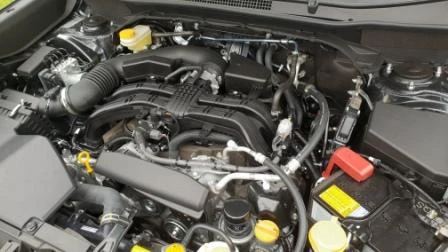
Subaru‘s recently revamped Forester range has four trim levels. There is the 2.5i, 2.5i-L, the Premium recently reviewed, and the top of the range 2.5i-S. Subaru is on a winner with the revamp due to the room inside, the station wagon looks, and the excellent stand list of equipment. We reviewed the entry level 2.5-i version, priced at just over $38K drive-away, directly after the Premium.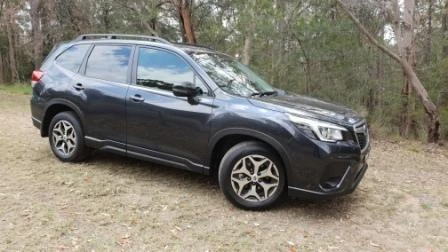 Mechanically the Foresters are identical. Subaru’s much vaunted Symmetrical All Wheel Drive partners with a 90% new 2.5-L petrol engine. Gone is the diesel and at the time of writing there is a hint of late 2019 for anything hybrid. All transmissions are CVTs and come with a very well sorted seven step Lineartronic programming. The engines are all the same and the 2.5-i was driven in a more urban based environment compared to the Premium. Consumption was never over 8.0L/100km with the final figure ticking off 7.9L/100km of standard unleaded from the 63L tank.
 The X-Mode drive system is standard throughout the range. The X-Mode is a system that acts directly on engine power, all-wheel drive, torque sharing at each wheel and on the brakes.With X-Mode activated, traction control becomes more sensitive. The computer will then react faster in the event that a wheel loses adhesion. It will look at which wheel it will be best to transfer the power of the engine to get out of the most difficult situations. The downhill grip control (HDC) analyzes the situation and manages braking below a speed of 20 km / h. By applying wheel-to-wheel braking, the system will allow the driver to release the brake pedal and focus only on the best direction to take.
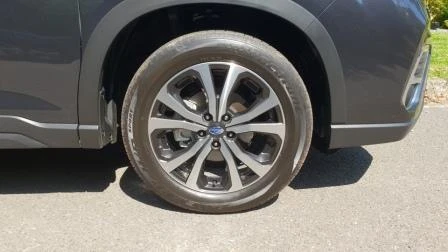
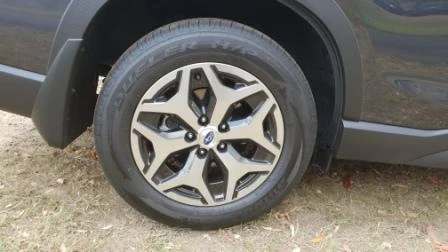 All Foresters ride on a well proven combination of McPherson struts and coil springs up front, with an independent double wishbone rear. The entry level 2.5-i felt slightly softer in tune than the Premium, with a sense of momentarily slower rebound and an ever so slightly plusher ride. But only marginally. The Tyre Pressure Monitoring System that is standard across the range also indicated the rears to be slightly less inflated that the front, oddly enough. The ride feel may have been down to the slightly different wheel and tyre combination, with 225/60/17s.
 Around town the Forester turned out to need a bit more of a poke of the fly-by-wire throttle to get going. In comparison to the country driven Premium, the low end of the rev range was found wanting, This contributed to the higher fuel consumption, as it does for any car driven purely in a suburban environment. There’s a sense of lag, almost like waiting for a large, single, turbo to spool up, before the CVT bites and gets the Forester underway.
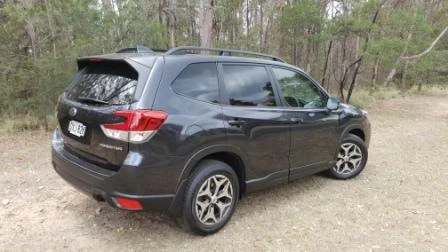 In traffic it’s a well balanced machine, with steering light but not fingertip twirly. It’s weighted just enough to need a small measure of push/pull, body roll in lane changing is minimal, but the tyres chosen from Bridgestone didn’t feel as if their wet weather grip was really up to the task either.
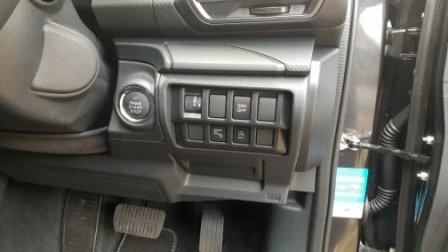 Each of the corners have an independent braking sensor, and the pedal is instantly responsive to the touch. It’s a confident and positive system, pulling up the Forester straight and true consistently. In conjunction with the EyeSight forward monitoring safety system and pedestrian calibrated Autonomous Emergency Braking, it’s a very safe feeling the Forester provides.
Naturally there are the mandated safety systems such as Brakeforce Distribution and Brake Assist, Traction Control and the Active Torque Vectoring. Subaru has fitted Swivelling Headlights to all models and that can be disabled. That’s part of the Vision Assist package which includes Blind Spot Monitor, Lane Change Assist, and Rear Cross Traffic Alert.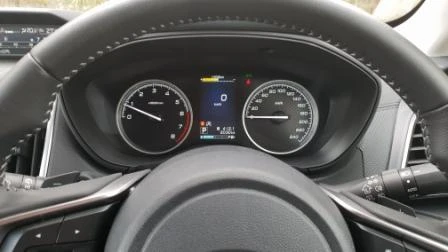 Instrumentation isn’t that different, being largely confined to the smaller 6.3 inch touchscreen in the dash, which is surrounded by high gloss piano black, and missing out on the Driver Monitoring System that the other three receive. That’s an infra-red scanner mounted in the upper centre dash binnacle that scans the driver’s face, looking for signs of inattention and tiredness.
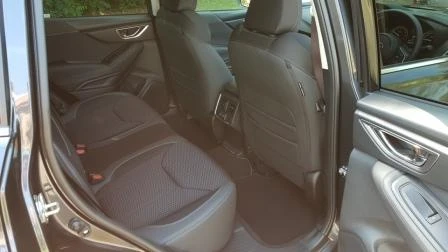
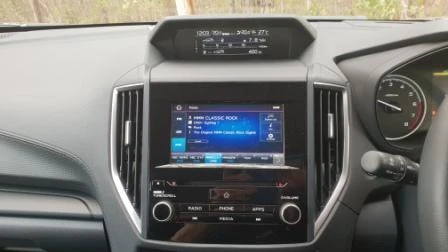 Interior trim is a bit more subdued than the Premium.There is less brightwork in the cabin but that’s balanced by the lighter shade of material used for the roof lining. It’s a shade somewhere between bone and cream, and enhances the otherwise austere look of the varying textures of black plastic. The seats are fully cloth covered, and have a interesting logo style pattern in the weave.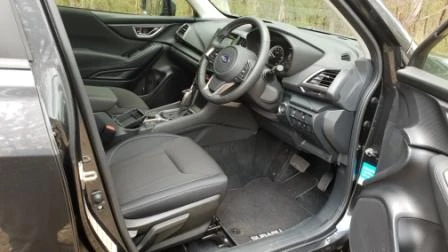
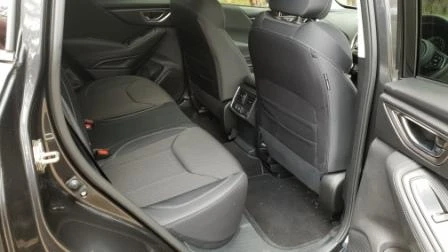 The extra interior room comes courtesy of the subtle pulling and stretching of the chassis and sheet metal. The boot opening has been increased by 134mm, cargo by 78L, and floor width by 58mm. Exterior styling also loses a bit of brightwork, particularly in the lower bumper surrounds for the driving lights.
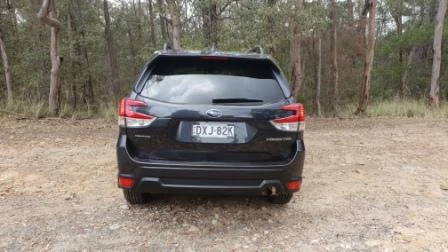
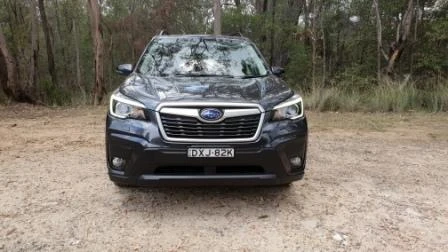
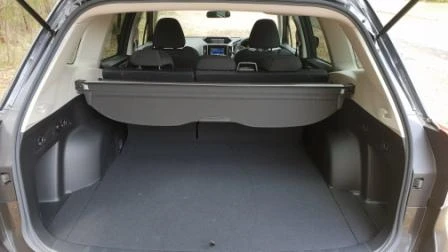 The tail gate is manually operated and houses Euro style “C” shaped lights previously embedded in the outer cluster. Polyurethane wheel arch covers and sill coverings provide both extra protection and a neutral colour to contrast the sheetmetal. Up front Subaru has given the Forester a bluffer, more upright, nose.
Subaru offers a five year warranty. For servicing costs, contact your Subaru dealer directly.
At The End Of The Drive.
If you’re a driver and buyer that doesn’t need bells and whistles then the entry level Forester is for you. There’s enough standard equipment such as the DAB audio, USB ports, and the driving aids. The EyeSight system and associated safety mechanisms are enough for most. To find out more about the 2019 Subaru Forester range, go here.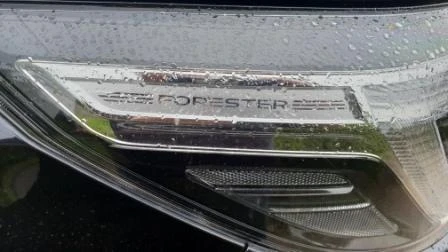
Private Fleet Car Review: 2019 Subaru Forester Premium
Subaru’s Forester is now up to its fourth generation and still manages to be a small to medium SUV that has the uncanny knack of not looking like a small to medium SUV. With a powertrain that is now exclusively a 2.5L petrol fed engine and Constantly Variable Transmission, spread over a four trim level range, the 2019 Forester starts at $33,490 plus on road costs for the 2.5i. The Premium tested is $38,490 plus on roads (Subaru is doing a driveaway price of $43,300 at the time of writing) and it’s shaping up to be a hidden bargain in a crowded landscape full of SUVs. The 2019 range has been given an extensive makeover inside and out, with even the engine 90% new. A Wheel Thing drives the new for 2019 Subaru Forester Premium.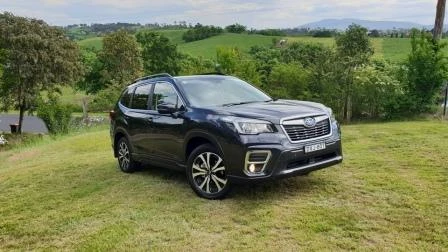 Subaru has loaded the Forester range with a good list of standard equipment across the range, and the Premium really lacks for little in this area. There are the standard electronic drivers aids, a few acronyms such as AVH, and a surprisingly possibly useful feature for those that do long country drives. By the way, AVH is Auto Vehicle Hold.
Power comes from a 2.5L petrol, as mentioned, as Subaru has dropped the diesel. However there are no current plans for a hybrid system. 136kW and 239Nm are the numbers for power and torque, with the rev points being 5800rpm and 4400rpm. The CVT from Subaru is one of the better sorted versions found and rarely did it feel out of sorts. A gentle throttle has the Premium moving away quietly and confidently. There’s then a more traditional auto feel as the CVT moves its way through the seven programmed rations, which are available for manual shifting via the gear selector or column paddles.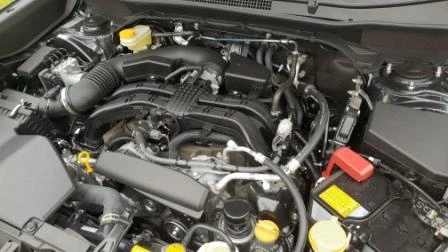 Heavier pressure on the alloy pedal send a signal through the fly by wire throttle and the Premium responds accordingly. There is a more typical CVT whir up the rev range, getting to around 3500rpm before settling momentarily. As the foot lifts or the sensors read that speed is where it needs to be, the revs drop off. The only time the CVT seems a bit off is coming up to a stop and throttle feedback seems to raise a shudder on the downshifts. It also gets uncertain, when cold, shifting between Park and Reverse, Park and Drive, or Reverse and Drive. In pretty much all driving situations otherwise, the combination of quietly throbbing 2.5L boxer four and a truly fine CVT does the job.
Economy for the Premium is rated as 9.3L/6.3L/7.4L (urban, highway, combined) from a 63L tank for every 100 kilometres covered. These are real world achievable figures and the Forester Premium didn’t disappoint. Taken on a sojourn from the Blue Mountains to Bega, on the south coast of NSW, and return, the Premium achieved 6.9L/100km. This was done over 1100 kilometres and with a four human passenger, one canine passenger, and cargo load. Considering this takes the 1546kg (dry) machine to over 1800kg, it’s a better than decent figure.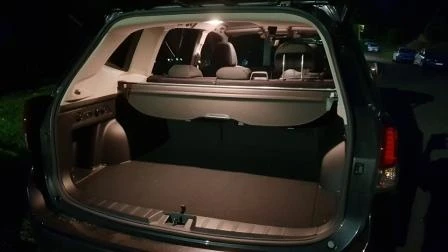 The cargo section itself in the Premium is a minimum of 498L, and this goes to 1768L. Access is via a powered tail gate with height memory function and Subaru have relocated the light to the roof. There are shopping hooks and a 12V socket here also. The loading bay is at an easy to lift and load height. The doors are wide opening for easy access and the front seats are powered, plus a two position memory for the driver is here. Rolling stock for the Premium are 18 inch alloys with Bridgestone 225/55 Dueler rubber.
 What isn’t immediately noticeable is the physical change to the Forester.
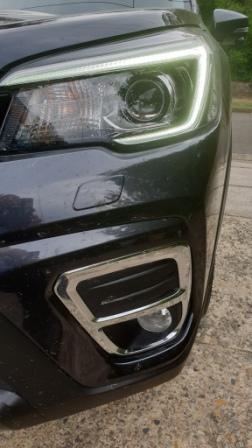 Although looking virtually the same as the preceding style, there’s been growth in all dimensions, from height, width, length, to interior measurements. The headroom for the passengers genuinely feels overdone, with close to what feels like twenty centimetres of headroom. The cargo capacity, for example, has jumped by 78L. The floor width has gone 58mm wider, nearly an inch taller at 22mm, and the opening width has gone up by a massive 134mm to 1300mm. Up front Subaru’s designers have continued the “C” LED look, with splashes of chrome for the lower corner globe driving lights. The rear goes Euro too, with the tail light cluster also a strong “C” motif.
 Inside the Premium it’s almost business as usual with the triple LCD screens and the huge amount of information available. It’s a look that echoes the Europeans, with a sweeping arch that starts and ends in the upper door plastics. the trim in the Premium is classy, with a mix of smooth and rippled plastics, and the seats are cloth with leather bolsters. No heating or venting, though.
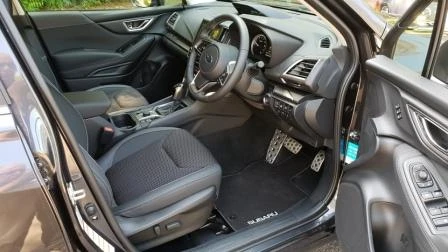 The driver has the small screen in full colour, with variable info accessed via tabs on the lower left quarter of the tiller, whilst the eight inch touchscreen features Subaru’s StarLink setup. Apps such as Apple CarPlay and Android Auto are standard as is satnav in the Premium. Above that is the smaller screen that show information such as average and on the fly fuel economy, car angle relative to the horizontal and it’s in a casing that hides a nifty little feature.
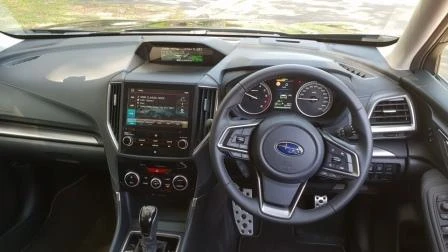 It’s almost invisible but look carefully and a small red rectangle can be espied. It houses an infra-red scanner that reads the driver’s eyes, and will flash a message on the screen if the driver appears to be looking away from forward for too long. It’s an extra safety feature that is intended to monitor for fatigue or inattention, and the scanning feature works very well. It also provides an extra feature as it has a facial recognition basis, meaning that a little bit of personalisation can be added, as Subaru provides a Welcome (insert name) on the screen.
 There are plenty of other safety features in the Premium, such as Subaru’s much vaunted EyeSight camera setup. This provides an excellent stereoscopic forward view and goes hand in hand with the Forward Collision Warning, Adaptive Cruise Control, and the very handy Lead Vehicle Start Alert. Naturally Autonomous Emergency Braking is standard too and comes with Pedestrian Detection. Tyre Pressure Monitoring, DAB radio, and Subaru’s X-Mode drive selector finish off the list of features.
Here’s another acronym. SRH. Steering Responsive Headlights is what that one stands for and that’s self explanatory. It really isn’t until you’ve driven a car at night with this feature that you realise just how handy it is. The car itself looks similar yet different to the previous model. Along with the subtle increases in size, the nose itself is taller, bluffer, more upright. The Forester is like the Outback in one key area as well. Subaru’s design team build in a station wagon look yet it really is as big as other SUVs in its class such as Nissan’s X-Trail.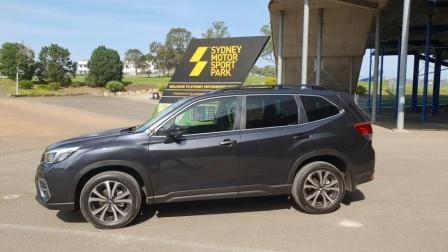 This was important on the drive to Bega and back. With two in the back utilising the pair of USB ports, a few towels down for the pooch, and the cargo area reasonably full, the extra space becomes welcomed. And it’s a fair handler too on the long, sweeping, turns of the Monaro and Snowy Mountain Highways. The steering weights up progressively, with the long and gentle turns needing only miniscule corrective input.
Come into the tighter, closer together, corners just west of Bega after the magnificence that is Brown Mountain, and the ratio in the steering means just a little extra work is required. It’s communicative and subtle in its method. The suspension is well balanced in how it damps down on these roads too. There are some sections where it’s like riding over a gentle swell again and again, and the Premium simply dispatches these to the boundary like Bradman did in his heyday.
Drive into the turns that populate Brown Mountain, around a half hour or so west of Bega, and the Forester’s handling gets tested and found wanting for little. It’s a ten kilometre stretch of road and drops something like eight hundred metres as you drive east. The turns measured at 25 to 30 km/h simply don’t faze the the Premium; there’s a gentle dab of the brakes, a turn, a squirt of the go-pedal, and the Premium eats the road up.
At The End Of The Drive.
Subaru’s dedication to their all wheel drive platform and boxer engine make them unique in the world’s automotive family. They’re still a niche player but it’s become a bloody big niche judging by the number of Foresters seen during the review period.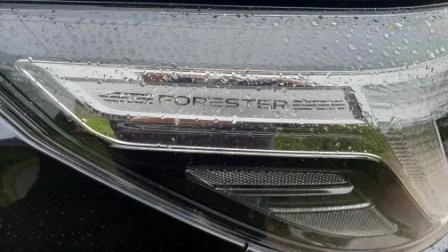 What really wins here is the sheer value of the Premium. Although there is a trim level above, it’s perhaps worth considering what the differences are here. The 2019 Subaru Forester Premium is an impressive car and continues to make Subaru’s once quirky niche presence bigger and bigger.
Doors Opening For New Racers Through Race Academy International
Fangio. Brabham. Schumacher. Senna. Webber. Johnson. Brock. Recognise a few names? They all have one thing in common and no, it’s not the massive talent they displayed in their prime. Each and every driver had training, and lots of it. Some race drivers try and try and try and get nowhere because their talent, as good as it may be, may not be good enough. The few, the lucky few, that do, have that extra special percent that has the right door open.
However, there is a new race door opening and it’s one that will still require talent. Race Academy International is a new operation and staffed by people that, collectively, have more racing experience in the blood than many of us can ever comprehend. Key to its success is the sheer spread of the instructors brought on board to help interested drivers open one of the four doors RAI has available. It’s a genuine, and real, driver’s academy, where scores are weighed up by the instructors after each applicant is put through a stringent series of tests.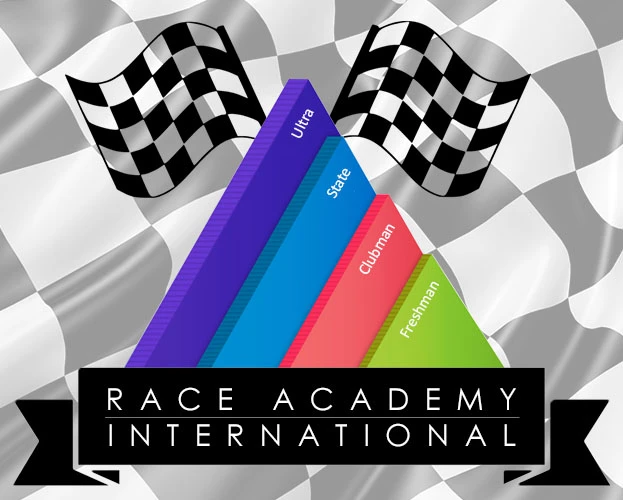 Door one is just $990 and the Freshman level will look at car setup, feedback to the instructors, reviewing and interpreting data, plus a full half day session at Sydney Motorsport Park which includes two 15 minute trackwork tests. Just to add extra spice, a problem solving session with an engineer during a data review will be conducted.
Door 2 is the Clubman, at $1850, and looking at drivers that perhaps already have had some track time and need or want to improve upon that. There will be more intensive scoring and, in addition, a media training session and debrief interview with a motorsport journalist. Finally, any flags that a driver must need to know about on a race track will be covered in a training session.
More experienced drivers can opt for door 3 or 4, with the State and Ultra sessions especially tuned for those that have that, the experience, and the mental drive to win. All sessions in each level are scored and runners up will be formally recognised and awarded. Costs here are just $2850 and $2200.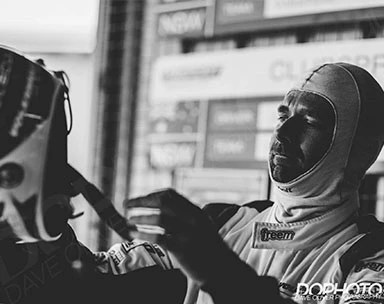 Some of the people doing the training have oil and petrol running in their veins. Matt Shylan, a regular competitor at Sydney Motorsport Park, is a relative late starter, competing in motorkhanas at the age of 12. Highly respected river, team manager, and experienced in motorsport PR, Gary Mennell brings 30 years of experience to RAI. Josh Muggleton was a competitor in the Nissan GT Academy International, has raced at Bathurst, and works with the Trackschool driver training group. Linda Devlin brings an extensive CV to RAI, with endurance racing, historic racing, and numerous class racing wins. Linda started competing at just 8 years of age.
Further information about this exciting initiative can be found here.
BMW Reveals New Models And Updates.
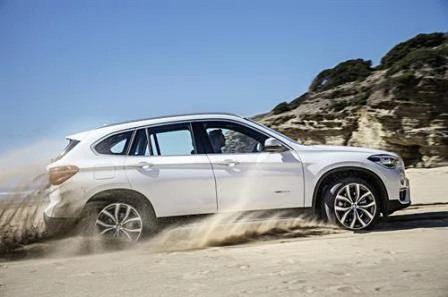
BMW’s popular X1 sports Activity Vehicle and X2 Sports Activity Coupe have received value added updates for the 2019 model year. Apple CarPlay has been added across all models in the X1 range, along with Navigation Plus and Head Up Display. An 8.8 inch touchscreen allows access to an app look interface, plus there is a voice interface called Natural Voice recognition. The X2 range also receives the Head Up Display and the Navigation System Plus. As with the X1, the X2 gets the Apple CarPlay interface as standard across all trim levels. To visually identify the entry level X2, 19 inch diameter wheels, up from 18s, are fitted.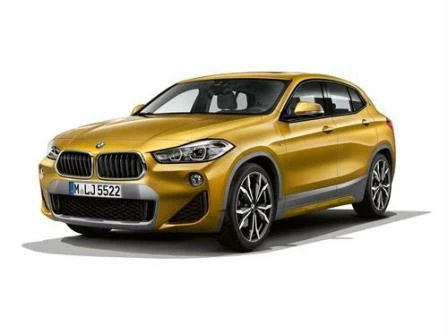 Like any company that does an update in such a broad reach, pencils have been sharpened too. The entry level BMW X1 sDrive18i is $45,900 plus on-roads (price includes GST and where applicable the LCT). The rest of the range is BMW X1 sDrive18d $49,900, BMW X1 sDrive20i $50,900, and BMW X1 xDrive25i $60,900. The X2 also gets the calculator waved over the top. The three trim level range now looks like this: BMW X2 sDrive18i $46,900 (includes GST and LCT where applicable plus on-roads), BMW X2 sDrive20i $55,900, and BMW X2 xDrive20d $59,900.
 The new M2 and M5 Competition models have also been released. The M2 has the grunty straight six from the M3 and M4. The twin turbo powerplant develops 550Nm between 2350rpm and 5200rpm, meaning throttle response is almost instant and brings great driveability. The peak power of 305kW comes in straight after that and runs until 7000rpm. The soundtrack is backed up by a twin exhaust system and electronic flap control. The whole package sees the M2 reach highway speeds in 4.2 or 4.4 seconds, depending on the M-DCT or six speed manual transmission chosen. Top speed is controlled to 250km/h, or 280km/h if the M Driver’s package is added. The price to pay for this is reasonable, with consumption rated at around 9.0L/100km on the combined cycle.
If the M-DCT is optioned in the M2, switches on the centre console provide control of drive characteristics for the engine, steering, and BMW’s Drivelogic functions. Personalisation is the key, allowing the driver to save customised settings.
Outside there are additional body stylings to identify the M2 and M4, with an improved cooling system receiving better airflow from a bigger BMW grille and redesigned front skirt. New double armed wing mirrors are fitted and stopping power is increased with 400mm six pot, and 380mm four pot, discs, front and rear. Fettling of the suspension takes parts from the M3 and M4, with front rigidity and steering precision improved.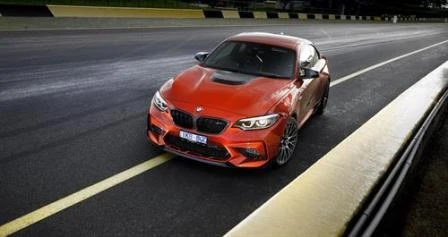 The Dual Clutch Transmission is an option. In Drivelogic there are three drive modes: Comfort, Sport, and Sport+, with manual mode giving the driver full control over changes. In automatic mode the driver can change the gearshift timing, the intensity of the change, and even the blipping on the downshifts.
 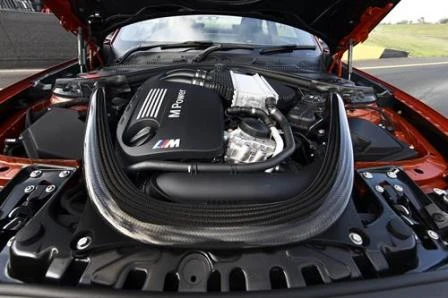 BMW also adds Connected Drive, which brings in optional driver assistance systems such as the Driver Assistant. Lane Departure Warning and Collison warning are just two of the supplementary services available. Check with BMW Australia for further details.
 Level 2, 9 Help Street