

Author archive
Renault Climbs the Mountain Again With The Alpine A110.
Renault and Alpine (pronounced Al-peen) go back well over a half century. Much like AMG, M, or Tickford and HSV, Alpine was an extension for the venerable French brand in regards to the sorts of vehicles manufactured and was originally its own marque. The originals stood out in the World Rally Championships and Le Mans 24 Hours, and were noted for the slimline design, grip, and extra lights up front. Renault officially bought out the name in 1973.
In the early 2010s, Renault put down the plans to revive the name and in 2018, the reborn Alpine A110 saw Australian tarmac for the first time.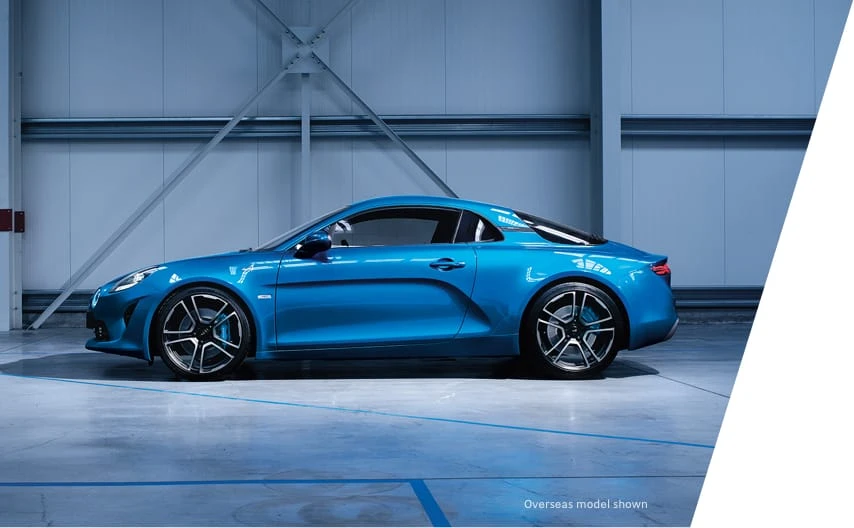 Power comes from a mid-mounted 1.8L four cylinder with 188kW. That’s good enough to see the 1100kg two door to 100kmh in just 4.5 seconds, on its way to a top whack of 250kmh. Peak torque from the lusty turbocharged donk is 320Nm, and those velocities come courtesy of that peak torque being available at 2000rpm, the sweet spot for overtaking when needed. Weight is saved by using aluminuim throughout.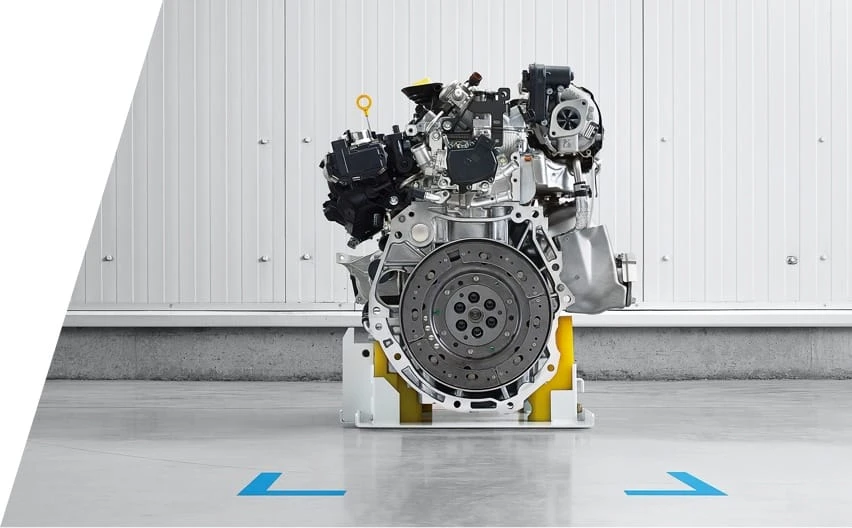
Styling is dramatic. In profile there’s no doubt about the car’s heritage. It’s a teardrop shape, with a slimline A pillar, low roof, and easy to live with B pillar. The doors have a deep set scallop, and the rear end evokes classic European coupes. Rear lights are full LEDs. The rear glass burrows deep into the sides of the Alpine A110 and hide what would be an otherwise conventional coupe shape. Wheels are 18 inches in diameter and have different styles for the three models available, the Australian Premiere Edition, A110 Pure, and A110 Legende.. 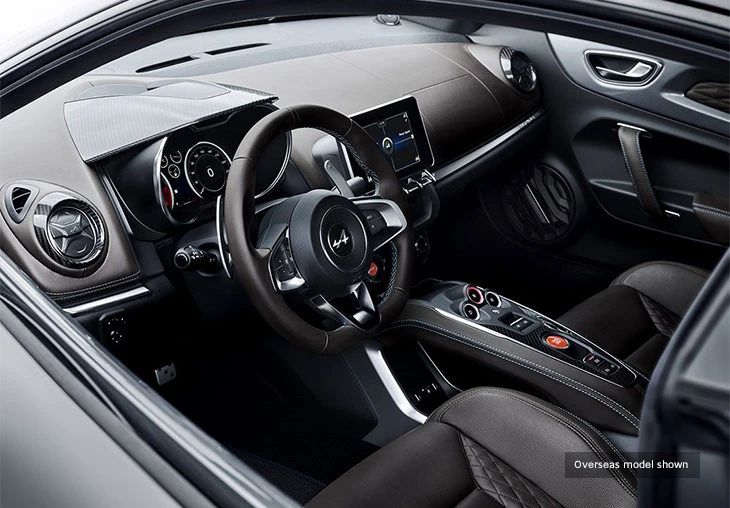 Inside it’s comfortable in a two door, two seater, kind of way. Leather and cloth seats feature a diamond quilt pattern in the material, which is also featured in the doors, and the seats themselves are fitted with strong bolsters. The centre console features three buttons for the gear selection, an unusual design choice, but they mirror the three dials in the binnacle for information. The Alpine also features a telematics screen that allows track day drivers to monitor their on-road and on-track prowess. There’s access to tyre pressures, power and torque display, and other forms of engine information. Pricing starts from $97K plus on-roads. The Australian Premiere Edition is limited to just 60 units and is priced from $106K plus on-roads.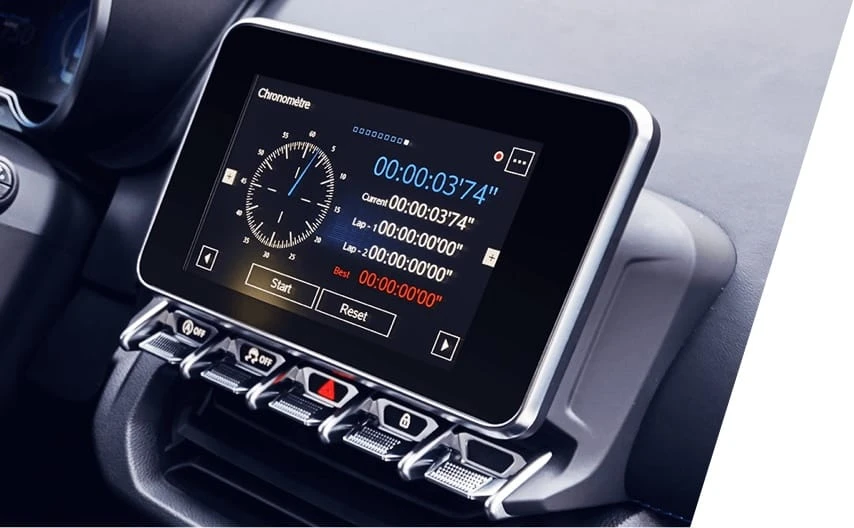
Jaguar Threepeats In Major Awards.
It’s rare, if ever, that one brand and one car takes out more than one major award at one event.The Jaguar I-Pace was a triple winner in three award categories: the overall 2019 World Car of the Year, the 2019 World Green Car and the 2019 World Car Design of the Year. This is the first time in the World Car Awards’ 15-year history that one-car has achieved a win across three categories. It is the second time in 15 years that one company has achieved a triple-win. Mercedes-Benz previously attained this honour in 2015. The World Car Design of the Year category, and the corresponding award, are meant to highlight new vehicles with innovation and style that push established boundaries. This year, the cars eligible for the 2019 World Car Design of the Year award encompassed all the contenders competing in the other five award categories.
In doing so, Jaguar-Land Rover has created history. 2019 marks the third consecutive Design win for the company and the fifth time overall, having won the World Car Design of the Year award in 2018 (Range Rover Velar), in 2017 (Jaguar F-PACE), in 2012 (Range Rover Evoque) and in 2013 (Jaguar F-Type). No other car manufacturer has achieved this number of Design wins in the event’s 15 year history.
The I-Pace itself is garnering accolades where it counts. Sales of the I-Pace have reached in excess of 11,000, with customers in over 60 countries, since it was released.
The I-Pace uses a 90kWh lithium-ion battery. This can deliver a potential range of nearly 500km. There is a charge rate of flat to 80% in just 40 minutes using a 100kW DC system, or takes just over ten hours to achieve the same state of charge when using a domestic wallbox which charges at 7kW AC. This is perfect for overnight home-charging.
In respect to the design awards, The I-Pace’s mix of cab-forward profile, short overhangs and taut, muscular haunches provide a clear visual difference compared to other SUVs. There is a spacious interior thanks to the electric drivetrain, and naturally is finished with beautiful premium details and exacting Jaguar craftsmanship.
And being fully electric brings the Green Award. Prof. Dr. Ralf Speth, Chief Executive Officer, Jaguar Land Rover, said: “It is an honour that the Jaguar I-PACE has received such an accolade from the prestigious World Car jurors. For I-PACE to be awarded 2019 World Green Car gives our first all-electric vehicle the ultimate recognition it deserves. I would like to thank the team who have created I-PACE for their passion in making it so outstanding.”
Upgrades and Updates Makes Tesla Longer Lasting.
Tesla has revealed details on an update to their drive systems. Further development of their latest generation of drive unit technology raises the efficiency level to 93% which improves overall range by over 10%. Part of this comes from pairing a permanent magnet motor in the front with an induction motor in the rear.
In addition to adding range, power and torque increases significantly across all Model S and Model X variants, improving 0-100 kmh times for the Long Range and Standard Range models.
Paired with the new more efficient drivetrain design, V3 Superchargers have improved on power delivery. Model S and Model X are now capable of achieving 200 kW on V3 Superchargers, and 145 kW on V2 Superchargers. Together, these improvements enable our customers to recharge their expected range by up to 50% faster.
The air suspension system has been updated for Model S and Model X with fully-adaptive damping, giving it an ultra-cushioned feel when cruising on the highway. It also applies when using Autopilot. It’s an in-house software package using a predictive model to anticipate how the damping will need to be adjusted based on the road, speed, and other vehicle and driver inputs. The system is fluid in its ability to adapt the suspension for the road conditions, automatically softening for more pronounced road inputs and firming for aggressive driving.
Another improvement is the leveling of the suspension system while cruising, keeping the car low to optimize aerodynamic drag. As with all of Tesla’s in-house software, the adaptive suspension can receive over-the-air updates. This ensures the latest information can be made available as soon as possible.
Wheel bearings and new tyre tread designs are being added to the range to improve range, ride, and steering.
Rivian Electric Ute Confirmed For Down Under.
As companies move to battery powered vehicles, questions are coming out about the recreational side. As most are looking at cars or passenger style SUV body types, it’s a fair question.
United States company Rivian is one that is going outside the standard passenger car box. A dual cab ute, the R1T is the start, with a seven seater Range Rover looking SUV, R1S, are both currently slated for full production in 2020. Brian Gase, the chief engineer for Rivian and a visitor to Australia on a regular basis, says that the brand wants to get these cars to Australia as soon as possible. “Yes we will have an Australian launch,” Gase said. “And I can’t wait to come back to Australia and show this to all of those beautiful people.” The company itself must be doing something right, as there is a US$700 million investment from Amazon, and a recently announced US$500 million injection from Ford. Like Tesla’s Model S and Model X, the pair will share the same underpinnings. Unlike Tesla, they’ll have an engine for each wheel. Rivian quotes 560kW and 1120Nm of torque. A common floorpan also allows simultaneous development of right and left hand drive models. Gase says: “The truck makes sense in the Australian market. We see significant value, particularly with the SUV in right-hand drive markets. And we’ve commonised everything on the vehicles forward of the B-pillar, so by default, getting a right-hand-drive truck is a low barrier, because I’ve got a right-hand-drive SUV.”
The actual timing for release depends on the production schedule at the Illinois factory. Gase says: “The ‘when’ is a tough question. How do you pick the right strategic markets on what’s core to your brand, where you’re going to see sales? And that’s why Australia is so exciting to us because you guys share a lot of the off-road and nature values that I think we have as a company. And you’re not on Italian narrow roads where this vehicle is a harder footprint to fit in.”
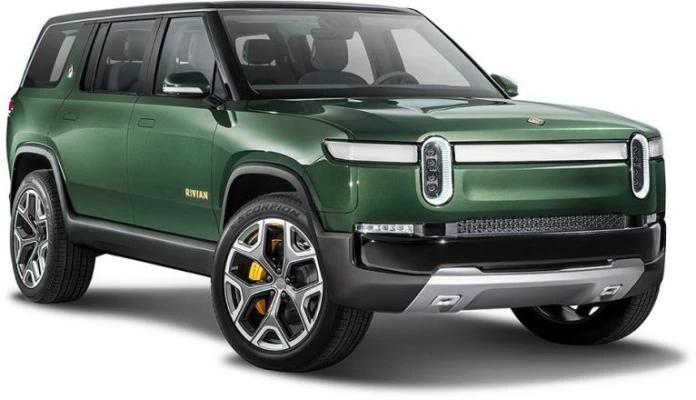
Payload is expected to be 800kg for the four door ute, and should pack a 350mm ride height. All wheel drive means fantastic grip and Gase says 45 degree slops should be driveable. 0 to 100kmh times should be around the 3.0 second bracket. Expected range is currently around 640km. Prices for Australia are yet to be set, however US pricing starts at $69K for the R1T, and US$74K for the R1S.
 Level 2, 9 Help Street