

Author archive
2019 Hyundai Santa Fe Highlander: Car Review.
 This Car Review Is About: The 2019 specification or MY20 Hyundai Santa Fe Highlander. It’s the top of the range and comes with a great equipment list and is definitely a family friendly vehicle. It’s a three model range, with the Active and Elite being the entry and mid-range options.
 Under The Bonnet Is: A recently reintroduced 3.5L V6 or 2.2L diesel available across the range. The Highlander tested comes with the grunty 2.2L diesel and 8 speed automatic. It’s an all wheel drive system complete with diff lock for moderate off-roading. Peak power is a decent 147kW, and torque a stump pulling 440Nm. However, it’s a lightswitch delivery for that twist, with it on tap from 1,750rpm through to 2,750rpm. It’s not a progressive delivery from below 1,750 at all, with a press of the pedal getting that familiar pause before launch. It’s that transition from nothing to go that isn’t gentle.
Economy is superb on the highway for such a big machine. Kerb weight is anywhere between 1,870kg to 1,995kg. Our highway figure saw a best of 6.7L/100km, with an overall final consumption of 7.9L/100km. Hyundai quotes 9.9L/100km for the urban, 7.5L/100km for the combined, and 6.6L/100km on the highway from the 71 litre tank. Towing is rated as 2,000kg and the engine is EURO5 compliant.
How Much Does It Cost?: Hyundai’s website, at the time of writing, indicates a starting price of $62,425 driveaway for the Highlander petrol, $65,575 for the diesel. The test car was clad in an unusual hue named Earthly Bronze and takes the price to a $66,600 region. The range itself starts from around $47,200. That includes a seven year warranty until December 31, 2019 for vehicles delivered before that date. There are option packs available such as the Trek and Tow pack (two different versions) that offer heavy duty spring kits, electronic brake controller, and body additions. There is a price of over $2K for these. The Metro pack is floor mats, a fabric material rear bumper protector and a dashmat. That tickles the wallet at just $286. On The Outside It’s: Undergone a notable change at both ends. Hyundai has gone for a similar look across its SUV range with “eyebrow” LED driving lights sitting above lower set headlights. The Highlander’s are LED powered as well. A pair of halogen globes sit at each corner. The rear lights have been trimmed and look much more streamlined than the previous model. The profile is stylish, and moves away from a blocky, squarish, three box design. Wheels were 19 inches and of a 5×2 spiral design. Rubber is 235/55ContiSport Contact. There is chrome garnish around the windows and along the lower doors and rear bumper. The rear also has the indicator clusters set separately to the tail lights, and they’re low down in the corners. This is a design issue AWT doesn’t subscribe to as they’re not in the driver’s eyeline.
On The Inside It’s: A dark beige colour (almost a light cocoa brown actually) for the seats and a speckled grey above. The fronts eats are both heated and vented (phew), and the steering wheel is also heated. Only the driver’s window is one touch up/down, oddly. The touchscreen is standard Hyundai and has DAB/Bluetooth/apps for connectivity. The sound is slightly off in that the voice stage comes across as centred behind the driver. And that’s with the settings having the stage centred for between the front seats. In the centre console are the switches for the 360 degree camera, diff lock, parking assistance and sensors. Ahead of that is the gear selector with Sports shift and a nook for the wireless charging and connectivity via USB and Aux plus a pair of 12V sockets. These sit at the base of a very stylish looking dash console and a cool looking arch design for the uppermost section that also houses a HUD. The driver’s display changes colour depending on which of the five drive modes, such as Eco or Sport, are selected.
 There are switches high up on the shoulder of the front seat to allow fore and aft movement of the seats, the middle row is 60/40 tilt and fold, and in the review car, there was the cargo cover over the folded down third row. cargo itself is good, ranging from 547L to 1,625L. Rear seats have their own aircon control too. Handy given the full glass roof. There is plenty of vision thanks to a good sized glasshouse.
 On The Road It’s: A mix of confidence inspiring and could have been better. The ride on and off-road is superb, with beautifully balanced damping at both ends, precise steering, easily controllable handling, and a let down in the torque delivery and braking.
Taken onto some mixed grade gravel roads, the all wheel drive Santa Fe Highlander displays adequate manners up to a point. It’s definitely able to hand a good mix of gravel and clay style roads, and with some mild rocky surfaces thrown in for good measure. The centre diff lock is for those that may like a bit of softer surface running such as beach sand or a few inches worth of dragging mud.
The steering across the board is weighted just right, but it’s the light switch bang kapow wham of torque delivery from a standstill that really became irksome. Hit the Start/Stop button, fire up, head to a stop sign. Push the go pedal and there’s the diesel intake and…BAM, the engine is a free-spinner but god almighty the instant delivery of all 440 torques is just so overdone. There is nothing wrong with a flat torque curve, as it is between 1,750 and 2,750 here, however throwing the full bag in straight away is too much.
Highway cruising has the engine ticking over at just under 1,700rpm which means when acceleration is required, the torque coming in isn’t so violent as it does its thing. Because the engine is a free spirit it spins around easily and makes moving the two tonne plus machine down the freeway a smooth and painfree event.
The brakes are at the other end. Pedal travel is soft, spongy, and lacking in real stopping force. It feels even at what would normally be a real sense of the stoppers stopping that more pressure is needed to get bite on the 320mm and 309mm discs. Coming up to traffic lights and stop signs just doesn’t have the Highlander’s brakes feeling as if the required pressure is working. What About Safety?: Hyundai‘s loaded the Highlander with as much as a car can handle. Advanced Smart Parking Assist System (ASPAS) Blind-Spot Collision-Avoidance Assist – Rear (BCA-R) Driver Attention Warning (DAW) Forward Collision-Avoidance Assist (FCA) – City/Urban/Interurban/Pedestrian/Cyclist (camera & radar) High Beam Assist (HBA) Lane Keeping Assist – Line/Road-Edge (LKA-L/R) Rear Cross-Traffic Collision-Avoidance Assist (RCCA) Rear Occupant Alert (ROA) Rear Occupant Alert (ROA) – Advanced Safe Exit Assist (SEA) Smart Cruise Control (SCC) with Stop & Go Surround View Monitor (SVM) . Phew.
What About Warranty And Servicing?: There is a seven year warranty available for vehicles delivered before December 31, 2019. Servicing details can be checked for your car via Hyundai’s website.
At The End Of Drive. Hyundai’s Santa Fe is of the brand’s longer running nameplates. Its grown in size from a mid-sizer to a full sized family SUV. In Highlander spec it wants for nothing in trim and equipment levels, although the look inside is now fading in comparison to the Euro cars of a similar spec. It’s in the driving that the Santa Fe’s issues are exposed, with that wham bam torque delivery from a standing start and the “need more” from the brakes.
Sort those and the Santa Fe easily becomes an absolute standout in its class.
The Commodore To Be No More.
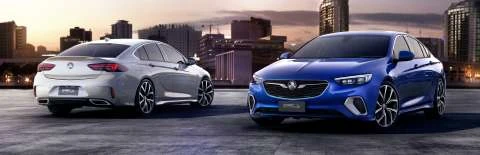 December 10th, 2019, will be the day that Australia was told of the passing of an icon. This is the complete PR release from Holden.
Holden is today announcing a modified portfolio dedicated exclusively to SUVs and light commercial vehicles.
Holden Interim Chairman and Managing Director, Kristian Aquilina, said the focus of the portfolio was consistent with customer preferences, with the Acadia, Trailblazer, Equinox and Trax rounding out a comprehensive SUV portfolio; and the Colorado tackling rivals in the light commercial vehicle (LCV) segment.
“Holden is taking this decisive action to ensure a sharp focus on the largest and most buoyant market segments. So far this year SUVs and Utes have increased to 76 percent of Holden sales, a trend we only see continuing,” he said.
The company has elected to retire the ZB Commodore and the BK Astra in 2020.
At its peak, the large car segment in Australia accounted for 217,882 sales in 1998. This year it is projected to come in at about 8,700 units.
“The SUV segment is approaching half a million units, and LCVs over 200,000 units. That’s where the action is and that’s where we are going to play,” Mr Aquilina said.
The new Holden boss also paid tribute to the Commodore nameplate and its place in the Australian automotive industry over time.
“The decision to retire the Commodore nameplate has not been taken lightly by those who understand and acknowledge its proud heritage,” he said.
“The large sedan was the cornerstone of Australian and New Zealand roads for decades. But now with more choice than ever before, customers are displaying a strong preference for the high driving position, functionality and versatility of SUVs and Utes.”
Sales and deliveries of Commodore and Astra will continue through 2020, albeit with diminishing model availability as part of an orderly runout.
Existing Commodore and Astra customers can be assured that Holden will continue to back warranty and roadside assistance commitments, with spare parts supply guaranteed well into the future.
In addition, all MY19 ZB Commodores and MY19 BK Astras ordered or delivered from today onwards will be subject to Holden’s market leading seven-year free scheduled servicing offer.
All arrangements for accessing warranty, servicing and spare parts for Holden’s entire model line-up via the Holden’s national dealer network remain the same.
Holden will be launching the MY20 Equinox in the first quarter of 2020 followed by a significant MY21 upgrade to the highly regarded Colorado to launch in Spring. Holden will also lodge production orders to GM’s Bowling Green factory for the highly anticipated mid-engine right-hand-drive Corvette next year.
These sentences have sparked furious debate between supporters and detractors, with one common theme being “why didn’t they call the Commodore something else” after local manufacturing ceased in 2017. Then there are comments about a lack of relevant marketing for the ZB, indifferent dealership service, lack of support for just-out-of-warranty issues, balanced against “it’s not a real Commodore” due to the lack of V8, ute and wagon, and the shift to front wheel drive. Toss in a mix of “football, meat pies, kangaroos, and Holden cars” as Australian made before the inexorable slide to very little of the VF actually being manufactured in Australia, and the anger and frustration levels of people becomes ever more evident.
What will remain is also divisive. The ZB Commodore was a bloody good car. But it was also never given a real chance at survival for a number of reasons. Ignorance and bias are two, and more’s the pity as it’s fair to presume detractors that decried its front wheel drive layout would not have taken the time to test drive it, and find out it actually drove like a Commodore.
Holden Commodore. Born 1978. Died painfully in 2020.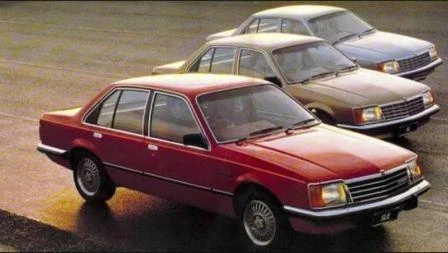
2019 Hyundai i30 N Fastback: Car Review.
 This Car Review Is About: Hyundai’s foray into the hot hatch arena. It’s not quite a hatch though, with its five door liftback/coupe styling, a body shared with Kia’s Cerato range. It’s the N badge that sets it apart from its lesser brethren.
 How Much Does It Cost?: Hyundai’s list price is $41500 plus on roads. The website lists it as $46,133 to $49,781 drive-away, depending on seeing the Luxury Pack (as tested) inside or not.
Under The Bonnet Is: A potent 2.0L petrol fed and turbocharged four cylinder, mated to a super slick six speed manual. In N spec it’s good for 202kW and a hefty 353 torques. There is an overboost facility that provides 378Nm. “Normal” torque is available from 1,450rpm to 4,700rpm. Overboost is 1,750rpm to 4,200rpm. They’re delivered in a very linear fashion, rather than a lightning bolt kapow. It makes for an extremely flexible drivetrain. Economy around town reflects the performance aspect though, with urban assaults seeing numbers north of 10.6/100km. That’s pretty much on the money for our drive. Hyundai quotes 8.0L/100km for the combined cycle. Our lowest figure was on the highway, not unsurprisingly, and clocked 7.5L/100km. That’s still above the 6.4L/100km from Hyundai’s official figures. Final overall was 9.4L/100km. Tank size is 50L and recommended fuel is 95RON.
On The Outside It’s: A somewhat subdued look. There are red painted brake calipers with the N logo clearly visible. A small rear spoiler sits above a curvaceous rump and lights that evoke Mercedes-Benz coupe and fastbacks. The front has a discreet N in the gloss black grille which sits between a pair of swept back headlights. Underneath is a chin spoiler that is perhaps too low. Every care was taken entering and reversing from the drive and it still scraped. Wheels are 19 inches in diameter and have a distinctive spoke design. Rubber is from Pirelli, they’re P-Zero and 235/35 are in size.
Paint is metallic red and highlights the longer than the i30 hatch body. The hatch is 4,335mm with the fastback getting 4,455mm. Maximum height is 1,419mm and that’s lower than the hatch. This means a slipperier, more aerodynamic profile. On The Inside It’s: An opportunity missed to stamp the N as a sports oriented vehicle. The air vents have red piping to the surrounds and that’s largely it in comparison to the largely otherwise unremarkable interior. The steering wheel has red stitching, and there is subtle red stitching in the seats. The look is subdued and dare we say, generic with unremarkable plastics, the standard looking touchscreen interface bar the N tab, and analogue dials where a full width LCD screen would have been better optioned.
The Luxury Pack is comprehensive. Push button Start/Stop, synthetic suede and leather seats (which are bloody comfortable and supportive) that feature a subtly embossed N logo, with both the front pews and steering wheel getting heating. There is a two position memory function for the driver’s seat plus 12 way power adjustment. Both front seats have extendable squabs for extra support available as an option. A wireless charge pad for compatible smartphones is also standard. Front sensors for parking and puddle lamps are part of the package too, as is privacy glass for the rear seats. The wing mirrors are powered and auto-dip for reversing. There is no tab for the central locking. This precludes anyone outside opening the door whilst the engine is running, meaning it has to be powered off to allow someone to get in. It’s a small but noticeable niggle. However Android Auto and Apple CarPlay are standard, as is DAB audio. Curiously, the audio lacked bass, even with the equaliser moved up to full for that part of the sound stage. Mid-range and treble are clear and overtake the bass in in presence.
 The tiller has the drive mode switches; one for Sport/Normal/Eco, and one for the N performance package. The Sport engages the throaty rumble mode for the exhaust whereas the N selection firms up the steering and suspension, and offers a preset or customisable set of settings for exhaust, steering, engine and more via the touchscreen. Standard look is showing power, torque, turbo boost, and g-force readings, plus lap timings for track days.
 Inside the 436L cargo area is a brace bar to provide extra torsional rigidity. The cargo section itself opens up to 1,337L with the rear seats folded. A cargo net is standard, as is a space saver spare. A glass roof is an optionable extra. Shoulder and leg room, is fine and even rear seat leg room is good enough.
 On The Road It’s: A sleeper. Left in Eco and Normal mode it’s…normal. There’s a typical feel to the whole package in acceleration, noise, handling. The clutch is curiously heavier than expected and resulted in more than a few stalls. Hit the Sport mode and there’s a change of attitude. The exhaust suddenly gets more snarl, there’s an extra sense of weight to the steering, and sharper handling.
N mode lights the candle. There’s an extra depth to the anger of the exhaust and especially on up and downshifts. There’s a crackle, a sharp and hard edged note that’s evident on even light throttle. Go hard and the length and volume of the growl becomes longer thanks to some electronic assistance. Launch Control is standard and that’s activated via the disabling of the traction control system. Hold that button down, wait until a couple of lights flash to say things are happening, and then push down the clutch. Floor the throttle and somewhere around six seconds later it’s freeways speeds. There is torque steer but the electronic or “e-diff” makes a great fist of smoothing that out. Although hydralic in nature, the electron brains behind the scenes distrubute torque as per where the sensors say it should. It makes for a pretty much arrow straight line on a hard launch, and keeps both front wheels in contact with the ground. Steering is super precise and is just two turns lock to lock. This means input results in instant response. Rev-matching works on getting the engine to be in a rev range suitable for the cog selected on downshifts.
It’s slick and smooth, and gets the rumble and snarl from the rear happening. The selector itself is light, with Hyundai saying the actual feel was built in for “enthusiastic drivers”. For us, it felt accurate in throw, perhaps a little long, but also disconnected and remote from the driving experience. Braking is the complete opposite, with one of the best sensory experiences available. Think about where the pedal needed to be and it was, with instant response from the lightest of touches.
The N mode makes, as mentioned, for harder suspension. It’s noticeably different in quality and brings forth a benefit. That’s every corner, as firm as they become, being able to provide to the driver a picture of every ripple, every dent and ridge on a 20c coin without a feeling of being overly tight and taut. It’s a superbly tuned package and one honed by 500 laps of The Nurburgring. The torque spread makes for easy freeway driving, and overtaking is as simple as either squeeze and go, or drop a cog or two. There are shift lights and a shift indicator notification in the LCD screen in the driver’s binnacle. What About Safety?: There is no stinting here. The full Hyundai SafetySense package is available, with Forward Collision Avoidance, Driver Attention Warning, and Lane Keep Assist. The DAW in the liftback was overly enthusiastic, saying a break should be taken after just a few minutes worth of travel time. Quad sensors front and rear provide accurate parking measurements as does the clear view from the reverse camera which includes guideline assist. On the passive safety front there are seven airbags including the driver’s kneebag. Hill Start Assist was welcomed due to the vagaries of the clutch point.
 What About Warranty And Service?: Hyundai have done track day drivers a huge service here. Under most warranty guidelines, issues found to be as a result of track days aren’t covered. Hyundai disagree with that and do offer that coverage. Also, cars delivered by December 31, 2019, will have seven years warranty, instead of five. Service costs are capped (check with your Hyundai dealer) and items such as satnav updates can be done when a car is booked in for a service.
At The End Of The Drive. We must thank Hyundai Australia for the opportunity to drive the liftback version of the i30 N. It timed out well in one respect, one not made mention of This is your link for more information.until now. the car had well over twelve thousand kilometres on the clock when picked up, and there’s no doubt many of those would have been hard driven ones. No rattles, no squeaks, no unnecessary noises at all, indicating a very high level of build quality in the tolerances.
It’s an excellent all-rounder, family and enthusiast friendly, and bar the downmarket look and surprising lack of low end in the sound system, provides a wonderful environment in which to spend time in. Outside the liftback looked resplendent in red but didn’t visually yell it was an N spec. A matter of personal taste, one would suggest. This is your source for more info.
2020 Mitsubishi Outlander Exceed: Private Fleet Car Review.
This Car Review Is About: A lightly refreshed for 2020 Mitsubishi Outlander Exceed. There are no external changes although one would suspect a front end revamp to bring it even more into line with the edgier looks now seen on the rest of the family will come deep in 2020. Under The Bonnet Is: The familiar petrol and CVT combination. The CVT is programmed but with only six “steps” as opposed to the more common seven or eight. The diesel engine is largely unavailable save for being inside the Exceed and LS AWD. Only the entry level ES has a manual option and it seems that the PHEV is due for an upgrade in early 2020.
At 2.4L in capacity it’s right in the ballpark for petrol engine’s in this type of vehicle. Peak power of 124kW and peak torque of 220Nm arrive at 6,000rpm and 4,200rpm respectively. Maximum towing is 1,600kg (braked). Economy figures in a driving sense vary thanks to Mitsubishi’s on-the-fly measurements. Our final figure was a very good 6.3L/100km, with Mitsubishi saying 7.2L/100km for the combined. Our figure was on a highway run, with 8.5L/100km seeming the norm in suburbia. Tank size is 60L.
How Much Does It Cost?: At the time of writing, Mitsubishi are offering the petrol version at $45,790 drive-away. That includes 7 years warranty and 2 years free scheduled servicing. It’s also a substantial discount from the $43,290 plus government and dealer charges.
On The Outside It’s: Unchanged. The Outlander is the only vehicle left in the Mitsubishi fleet that doesn’t sport the jut-jawed and squared off at each end design, instead retaining the rounded and ovoid look of the past near decade, even with the shield grille look. Rubber comes from Toyo’s A24 range and were 225/55/18 in configuration. The spare is a space saver. These sit on a 2,670mm wheelbase and allow for a balanced look in the front and rear overhang for the 4,695mm total length. Our test car came clad in metallic red and contrasts nicely with the black urethane wheel arches and side mouldings. Headlights are LED for high and low beam. Rear lights are full LED also except for the fog lights.
On The Inside It’s: Largely unchanged. The highlight here is the revamped interface for the 8.0 inch touchscreen. It’s not as un-user-friendly as the Eclipse Cross but still less so than that found in the Triton. DAB audio is standard but the speaker system let’s it down. There is a bass/midrange/treble equaliser in the settings, but finding the right balance was tricky. The bass was either too boomy or at a level that lacked punch. Vocals, the midrange, lacked cut-through. Android Auto, Apple CarPLay, and Bluetooth connectivity with voice activation are standard as is satnav. Minor quibbles continued with the seats. Powered and leather they may be, but the material was flat in surface texture and lacked eyeball drawing appeal. And again the Australian need for venting in leather seats was overlooked, with heating but not cooling fitted. There was, though, a powered, not manual, lumbar adjustment, and this is great for longer driving stints.
The second row seats are 60/40 foldable, and third row the usual 50/50 split and accessed via the brilliantly simple pullstrap, providing a 1,608 litre cargo section when the powered tailgate was opened. Another minor quibble here; the rear door would self raise from either the key fob or from a driver’s located tab, but not when the exterior button itself was pressed. With the third row down, there’s a more than handy 478L available. The Outlander Exceed supplied didn’t come with a HUD, a Head Up Display. It’s worth pointing out as the Eclipse Cross Exceed does. The S-AWC or Super All Wheel Control is standard here and has Active Yaw Control included.
 Cabin ergonomics are largely ok however some tabs are well below the driver’s eyeline and down near the right knee. It’s worth considering relocating these purely on a safety basis. Rear seat passengers have two USB ports. All windows are one touch up and down, a seeming rarity in some cars and brands. What was noted is the update to the controls for the dual zone climate control. The Outlander has moved to a classier chromed and almost piano black look for the dials, and they’re now relocated and knurled in look.
Otherwise, the look and feel of the cabin is standard Mitsubishi. Visually it’s a mix of pleasing lines and a bone over black colour palette, with a sunroof providing the extra airiness and spaciousness for the passengers. There is also plenty of space thanks to 1,437mm shoulder room up front. the squarish front profile means 1,425mm is available for the second row. Head room is1,014mm for the front, and 944mm for the second row. Leg room front and second row is 1,039mm and 948mm. On The Road It’s: Surprisingly sluggish from a standing start, even allowing for how a CVT drains performance from a normally zippy and peppy petrol engine. And at 1,525kg is no heavyweight and just starting to fringe on a light-heavyweight compared to its competition. Acceleration, what there is of it, is less than adequate with normal foot pressure and requires a solid shove to get anything resembling velocity. It’s truly unusual and one of the worst we’ve experienced in that respect. But flip the drive selector to Sport mode and there’s an instant change in character. It’s more of the zippier and peppier car expected, with far better acceleration and dynamics.
 It also was very light in the steering with a lot of assistance. The ratio is variable with more front wheel movement becoming obvious as the tiller went left and right. It’s also easily affected by crosswinds and that came as a surprise too. The winds that plagued Sydney during the review period also showed how susceptible to cross-winds the Outlander was, with the broad and upright sides catching the wind and moving the SUV around. The suspension is the typical MacPherson strut, coil spring front and multi-link rear. Irrespective of the wind affected drive, it’s very easy to drive, it’s quiet, and the supple suspension is well sorted for varying road conditions. The brakes are good with just the right amount of bite per feeling of travel.
What About Safety?: It’s the supreme pizza here. Forward Collision Mitigation is standard, as is Adaptive Cruise Control. Lane Departure Warning, Blind Spot Alert, Lane Change Assist, and Rear Cross Traffic Alert are also here. Ultrasonic Misacceleration Mitigation System (UMS) is standard and more on the safety package can be found here. What About Warranty And Servicing?: As mentioned, there is a seven year warranty and two year free scheduled servicing offer available. For specific details as they’re subject to change, please contact your Mitsubishi dealer.
At The End Of The Drive. The Outlander nameplate is coming up to two decades old in Australia. It started with a Lancer based small SUV about the size of the ASX. It morphed into a larger SUV with Lancer hints before changing again into the rounded body shape we see now.
It’s served as a capable addition to the Mitsubishi family and as their largest passenger oriented car, as in not also offering dedicated off-road capability such as the Triton based Pajero Sport, it holds its own. In this case the power delivery really lacked urgency, leaving us somewhat bemused as to the disappearance of what normally seems a decent driveline. The fact that Sport mode had to be selected to engender any sense of get up and go has left us pondering why.
On the upside is decent dynamics in the ride and handling, a superb safety package, and still attractive looks. Oh, and the drive-away price is enticing too. The Mitsubishi website can tell you more.
 Level 2, 9 Help Street