

Author archive
Toyota Yaris GR: Potency Is The Middle Name.
Toyota’s city car, the Yaris, has been a solid performer for the Japanese company for some time. For 2020, Toyota has shrugged off the cardigan and given the petite little thing a heart and soul transplant. Called the Yaris GR (Gazoo Racing), it’s due mid 2020 for Australia. The basis for the Yaris GR comes from Toyota’s extensive rallying history, and there’s been substantial input from Gazoo Racing and Tommi Mäkinen Racing, meaning the GR Yaris is to be the homologation model of its next WRC racer. Power is from a three cylinder engine, complete with single scroll turbo. 192kW and 360Nm are the figures quoted, with capacity a huge (for a three potter) 1.6L. Power goes to all four corners via a six speed manual, making it the first Toyota non SUV/4WD to feature all paws being driven since the Celica GT-40 of twenty years ago. A zero to one hundred time is around 5.5 seconds, and top speed is a very decent 230kph.The engine will feature piston cooling via oil jets and the exhaust valves are larger than normal to provide better breathing.
  A restyled body not only provides better aero but a lighter structure, meaning a power to weight ratio of 6.7kg/kilowatt from the 1,280kg (dry) weight. That restyling features larger wheel arches to cope with the 18 inch diameter alloys that will be standard. They’ll wrap 356mm vented brake discs. Dimensions are 3,995mm for length, 1,805mm in width, and 1,465mm in height. The wheelbase is a massive, for the overall size, 2,558mm. The front track is slightly narrower than the rear, at 1,530mm v 1,560mm.
 A 91mm lower roofline helps the Yaris GR slice through the air more effectively, whilst the engine has been moved rearwards for a better weight distribution. Compression moulded carbon-fibre polymer and aluminuim paneling (bonnet, doors, tailgate) for the three door shape are the main contributors to the lower mass. Frameless doors help too, and add a more aggressive look to the profile. Underneath there is a new platform (Toyota’s melded the GA-8 front and GA-C rear) which allows for a wider rear track and new double-wishbone rear suspension system. The development team responsible for the Yaris GR also devised reinforcements beneath the side members to ensure the suspension’s performance potential can be realised.
 Performance for the drive hasn’t been overlooked. Being an all wheel drive hatch, the driveline needs something to help the front and rear work together. Toyota have a “high response coupling” that joins the two but there’s a twist in the twist. This ingenious system uses slightly different gear ratios for the front and rear axles, which are mounted on double wishbone, not torsion beam, suspension components, which allows for a theoretical range of front/rear torque balance from 100:0 (full front-wheel drive) to 0:100 (full rear-wheel drive). This flexibility gives a performance advantage over AWD on-demand systems that use twin-coupling or permanent AWD systems with a centre differential. The GR FOUR system is also considerably lighter in weight.
 The driver has full control over the way the drive system works. An AWD mode dial switch allows: normal mode with the base front/rear torque distribution is at 60:40; in Sport mode the balance shifts more to the rear with a 30:70 distribution to achieve a “fun-to-drive” quality on winding roads and circuits; and in Track mode the base setting is 50:50 for fast, competitive driving on circuits or special stages. In each mode, the torque balance will automatically adjust in response to the driver’s inputs, vehicle behaviour and road or track conditions.
 Toyota Australia’s Vice President of Sales and Marketing, Sean Hanley, said the GR Yaris is the latest in Toyota’s rich heritage of sports cars that include the Toyota 800, 2000GT, Celica, Supra, Corolla AE86, MR2 and 86. “The GR Yaris is an exciting well-rounded vehicle that exemplifies Toyota’s commitment to producing ever-better cars, offering compelling performance that will appeal to a broad range of enthusiasts. It is a rally car for the road that pushes vehicle performance to the limit and will enhance the image of the Toyota and Yaris brands.” he said.
 Pricing for Australia is yet to be finalised.
(Pictures courtesy of Toyota Australia and Motor Magazine.)
2020MY Hyundai Venue Go & Active vs Kia Seltos S & Sport+: Car Review Title Fight.
This Car Review Is About: Four cars that are the same but different. In late 2019 the Korean companies of Hyundai and Kia released their new, small, city aimed SUVs. Hyundai named theirs Venue, Kia chose Seltos.


 Both brands went with a four tiered structure. Hyundai has Go, Active, and Elite plus there is a Launch Edition as well. Kia has S, Sport, and Sport+ sitting under the GT-Line.
Where the two basic exterior designs are obvious in relationship, being a stubby bonnet, steeply raked windscreen, wide opening doors, and pert rears, both have their own distinctive stamp. That carries over to the interior look, engine choice, and suspension tune.
How Much Do They Cost?: Venue Go starts from around $23,630 drive-away. The Active kicks off from $25,200. As of December 2019 Kia is offering the S at $25,990 and with a Safety Pack at $26,990. The Sport+ with 1.6L is $36,490.
Under The Bonnet Is: 1.6L non turbo fours for the Hyundais. Kia starts with a naturally aspirated 2.0L and finishes with a turbo version of the 1.6L in the Sport+ (with 2.0L an option) and GT-Line. Peak power for the 2.0L is 110kW, with the turbo four producing 130kW. Peak torque for Seltos is 180Nm and 265Nm, with the latter available from 1,500rpm to 4,500rpm. Venue’s 1.6L is 90kw and 151Nm at a high 4,850rpm.
Transmission choice for Hyundai is simple with a six speed auto or six speed manual for the Go and Active. Kia has a CVT for all variants bar Sport+ and GT-Line. There’s a dual clutch auto here instead. All Venues are 2WD. The Sport+ with 1.6L is a part time AWD.


 Economy figures were nearly all sub eight litres. The Sport+ saw a best of 5.4L/100km with a final figure of 7.2L/100km. The Go was similar at 5.9L and 7.4L/100km. The Active saw a best of 6.1L/100km and 7.5L/100km, whilst the S saw a best of 7.7L/100km and 8.6L/100km.
Kia quotes for the urban/combined/highway cycle 8.8L/6.8L/5.5L per 100km for the 2.0L, and 9.5L/7.6L/6.3L per 100km for the 1.6L from their 50L tank. The Venue’s figure, for the auto, 7.2L/9.5L/5.9L per 100km respectively.
Towing is rated as 800kg for the Venue automatics, 1,100kg and 1,250kg is available for the CVT and DCT in Seltos.
On The Outside It’s: A more subdued look from Hyundai, whilst Kia goes for more visual pop thanks to a front bar with fins either side of the slimline grille, and light clusters at each end that evoke Evoque thanks to the swept in wings on the top of the clusters running into the fenders . The lower quarters of the front bar have inserts for driving lights.
Hyundai’s design is quietly appealing, with the headlights, like the Seltos, set mid-height in the front bar. These wear LED driving lights as halos and are separate to the LED strip lights under the full length bonnet. The lower section of the front bar has coloured inserts.
Kia’s styling has the headlights and driving lights in one cluster, again with the main lights set at mid-height. The overall design is busy in comparison to the Venue’s design. Kia also has their trademark bonnet design with a leading edge section holding the badge.
The rear roofline separates the two as well. Venue has a thick C-130pillar and the roof leading into the tailgate. Seltos goes for more glass here, and the tailgate reaches up and into the roofline. Both have a slight upwards kink to their respective rear doors.
The colour palette shows more sparkle from Kia too. The S was a bright bronze-green called Starbright Yellow with the Sport+ a deep burgundy hued metallic red called Mars Orange. Both Hyundais had blue, with the Go a rich, almost navy blue called Intense Blue, and the Active a more aquamarine metallic. The name? “The Denim”.
Steel wheels featured on the Go and S, with alloys for the Active and Sport+. The Go rolls on 185/65/15 and Active has the same on alloys. The S with steel wheels has 205/60/16 underneath and the Sport+ 215/55/17s. 4,340mm is the length for the Seltos, which is 300mm longer than the 4,040mm Venue. Height for the Kia is 1,615mm with roofrails. Venue stands 1,592mm. Overall width is 1,800mm for the Seltos, whilst Venue is slightly narrower at 1,770mm. Ride height for the Venue is 170mm. 177mm is the clearance for the Seltos.


 On The Inside Is: A variety of looks. The Hyundai design team has opted for a stripped back presentation for the Go and Active. The Seltos S and Sport+ have an immediately upmarket look and feel.


 The Go and Active have cloth seats, and there are individual looks. The Go has white piping in an almost electrical grid sheet layout and the Active a pair of colour coded GT stripes. The Seltos S has charcoal bolsters and a herringbone grey in the middle, whilst the Sport+ has leather bolsters with a dark grey cloth weave.
Inside the Active and Go is an efficiently laid out dash design. Vents reflect the headlight surrounds with a rounded corner edge shape. There is a dull chrome look on the steering wheel’s lower section and around the dear selector. A drive mode selector is located here, whereas in the Seltos it’s further up and to the side of the selector. The Kia’s feel has more torsion in the twist, the Venue’s lacks any need to apply force. The Venue though offers traction control with Snow, Mud, and Sand, an odd thought given it’s a front wheel drive only vehicle. However the Venue’s spec sheet says there is also variable one touch indicators, at 3, 5, or 7 flashes. For safety’s sake it should be 7 and 7 only.


 It’s the plastics and layout that mark the Seltos as having a more upmarket look. There’s a different sheen, a different hue, a different tactility to the materials used. There’s a grab handle on the left of the gear selector, the touchscreen is the more favourable looking separate to the dash configuration, and the dash dials are a more elegant monochrome look. Even the speaker covers have a different look, with a pyramid motif for the gloss black metal.


 Aircon controls for the Venues are rotary dial. The Seltos S has the same, the Sport+ has push button . The Kia’s console is wider and holds push buttons for Hill Descent and Parking sensors off in the S, a diff lock and camera for the Sport+. The Go misses out on warning sensors for reverse parking at the rear, an odd oversight even with a camera as standard fitment. All four Seltos get rear parking sensors. Audio is AM/FM in the Go and Active, whilst the Seltos S is the same. It’s the orphan in the Seltos range when it comes to DAB but with Bluetooth streaming plus app compatibility, DAB streaming won’t be an issue. The Sport+ also offered a wireless charge pad.
Cargo for the Seltos is rated as 433L to 1,393L. Hyundai lists only the rear seats up figure and it’s smaller than Seltos at 355L. The Venue Go also lacks a centre console storage box, whereas both of the Seltos had it.

 On The Road It’s: A really matter of choice. The Kias run more tautly than the Hyundais, with the Seltos pair feeling more as if the tyres are brought into play to assist in compliance and absorption. The Hyundais have a softer tune, noticeably softer, but not so that they wallow or flop around. It’s actually at times a preferred ride to the Kias, with more give in the ride and therefore somewhat less intrusive.
The 1.6L in the Venue range is a willing and energetic unit. Given the power and torque outputs it has no right to be highly regarded, yet after having the Go and Active autos for two weeks back to back, they showed no sign of underperforming, no indication of being “the little engine that couldn’t”. AWT came away after the review periods more than impressed as the cars slowly grew on us and finished with a positive impression.
The Seltos 2.0L naturally exhibited plenty of spirit as well. It’s a powerplant that shares verve and vitality with the Hyundai’s liveliness. The extra torque provides a more useable drive experience than the still sprightly 1.6L in the Venue, naturally, and didn’t overwhelm the CVT either. The DCT and 1.6L is just as equally well behaved, and the DCT is quite well tuned in the clutch change, at standstill, from Reverse to Drive, with less of a break in transmission engagement. It also has plenty of punch when required, with that flat torque over a 3,000rpm range making highway driving and safety in overtaking efforetless.
The 1.6L Venue requires more of a heavier foot to elicit something approaching similar performance, but it never disappointed. Uphill driving was the only (barely) weakspot with manual downchanges to take advantage of the engine’s willing and revvy nature required. Brakes across the board, as was steering, could not be faulted for both cars.
What About Safety? The Seltos comes with or without a safety pack and in honesty there’s not a lot of difference. AEB (Autonomous Emergency Brake) with FCWS (Forward Collision Warning System)- Cyclist Avoidance is probably the biggest notable change. There is a slightly different Driver Attention Alert for the safety pack in the S, but the S does miss out on BSD (Blind Spot Detection) with RCTA (Rear Cross Traffic Alert) & LCA (Lane Change Assist) plus Rear Cross Traffic Alert. There are also no front sensors.
The Venue Go and Active dip out on Blind Spot Collision Warning and Rear Cross Traffic Alert. They do get the same Driver Alert Warning which beeps to advise the car ahead has moved on. Forward Collision-Avoidance Assist (FCA) – City/Urban/Interurban/Pedestrian (camera type) and Lane Keep Assist are standard though. All four had the usual safety systems including six airbags.
What About Warranty And Service? Kia’s still a class leader with a standard seven year warranty. Hyundai offers five as standard and until December 31, 2019, was offering seven for cars delivered by then. More on the servicing structure for Kia is on their website. Hyundai’s serving information is also on their website.
At The End Of The Drive. One on one, the Seltos outweighs the Venue in all areas bar one. The emotional tie factor. The Seltos has looks and driveability that appealed more yet the Venue never gave up in efforts to gain respect. It’s slightly smaller overall, doesn’t have the same engine flexibility, and could be considered somewhat dowdy to look at inside and out, yet it still gave its considerable all. Although the preference for us would be for the Seltos Sport+ (and probably the GT-Line), the Venue is by no means a loser simply because it does what it does quietly, efficiently, and and at 100%. 


Subaru Joins The Hybrid Family.
Subaru has confirmed its March 2020 launch into the hybrid arena, also revealing it has already achieved significant sales success with its new technology Forester and XV Hybrid e-Boxer All-Wheel Drive (AWD) variants. The innovative Sports Utility Vehicles (SUV) feature identical petrol-electric engines that add a new dimension and choice to Subaru’s range.
XV Hybrid offers over 14% improvement in fuel efficiency over equivalent petrol variants in the urban cycle and over 7% improvement in the combined cycle, while Forester offers improvement of over 9% (compared to 2.5-litre petrol variants) in the combined cycle and over 19% in the urban cycle (when tested in accordance with ADR81/02).
Forester is already Subaru’s best-seller in Australia and the Hybrid AWD variant will launch in February priced from $39,990 (Manufacturer’s List Price), while XV Hybrid, with an exclusive new colour option called Lagoon Blue Pearl, and this will start from $35,580 MLP.
One XV Hybrid AWD variant will be available and two Foresters: Hybrid L AWD and Hybrid S AWD.
Subaru Australia Managing Director, Colin Christie, said: “While we initially see both our e-Boxer mild hybrid system models as niche options in our range, we’ve already got significant interest from fleet customers and also Subaru fans who have long indicated pent-up demand for new technology engine options. “Of course all this new technology is underpinned by our customer must-haves: fun, safety, reliability and great engineering. And we’re confident that the wonderful retained value and whole-of-life cost benefits enjoyed by other new Subarus will also carry over to our hybrids.”
Both hybrid models feature e-Boxer power, which is a 2.0 litre horizontally opposed Boxer engine that’s linked via Motor Assist to a high voltage lithium ion battery, offering fuel economy benefits, particularly in congested city driving. The four cylinder 2.0 litre engine produces 110 Kilowatts of power at 6,000 rpm and 196 Newtonmetres of torque at 4,000 rpm and features the efficient intake/exhaust Active Valve Control System (AVCS).
The electric motor produces 12.3 kW of power and 66 Nm of torque, and is self-charging, via kinetic energy captured by regenerative braking and coasting. The direct injection petrol engine, Motor Assist and battery combination produce smooth, linear and responsive acceleration. The e-Boxer logic adjusts the power split between petrol and electric to match driving conditions.
It automatically changes between three modes: Motor Assist EV driving, Motor Assist electric (EV) + petrol engine driving, and petrol engine driving. From standstill or at low speed, the vehicle is powered by the electric motor only, for quiet, zero-emission driving. Depending upon vehicle and battery condition, it can operate in fully electric mode up to 40 km/h. When driving in fully electric mode (both forward and reverse), the Pedestrian Alert system emits a sound, to alert people in close proximity. The system operates when the vehicle speed is 24 km/h or less.
At medium speeds, combined power from both the electric and petrol engine produce responsive, linear and more fuel efficient acceleration. At high speed, the Boxer petrol engine exclusively powers the vehicle, while regenerative braking or coasting with foot off the accelerator, recharges the lithium ion battery. Depending upon driving style, the e-Boxer hybrid system can offer improved fuel consumption particularly in urban, stop-go traffic. It also eliminates the unnatural braking feel common to electric-only vehicles.
The e-Boxer hybrid system uses kinetic energy by converting it into electricity, delivered to the battery located in the sub cargo floor, together with the drive motor inverter and DC/DC converter. All are installed in a high-strength frame, with sound dampening and moisture-repelling qualities. The electric motor assist and battery pack are aligned longitudinally, with the motor located near the vehicle’s centre of gravity, while the battery and other components are above the rear axle, also contributing to low centre of gravity and optimising front/rear weight distribution.
An unobtrusive cooling system draws air from the cabin to help maintain the battery at operating temperature and to help ensure better longevity. In Forester Hybrid S, driver selectable SI-Drive, Subaru’s powertrain performance management system, allows the driver to tailor throttle characteristics by choosing between “Intelligent” and “Sport” modes, for flexible, convenient and enjoyable driving. Subaru’s smooth and efficient Lineartronic Continuously Variable Transmission (CVT) is mated to the e-Boxer system for ultra-smooth power delivery and torque.
Motor Assist enhances X-Mode off-road capability, through better low speed torque control. X-Mode makes it easier for drivers to safely navigate bad roads, slippery surfaces and steep hills, with just one switch. X-Mode’s status is indicated visually on the Multi-Function Display (MFD) screen. When X-Mode is engaged, at 40 km/h or less, status information is displayed on the MFD and instrument cluster, including Hill Descent Control and Vehicle Dynamics Control. X-Mode centralizes control of the engine, All-Wheel Drive, brakes and other critical components to help ensure safe driving even on poor surfaces. Hill Descent Control helps maintain a constant speed when the vehicle is traveling down hill.
As with the entire Subaru new vehicle range, the hybrid models are anticipated to gain a five-star rating for occupant safety. All Subaru hybrids purchased by private buyers for private use offer a five year unlimited kilometre warranty, plus an eight-year 160,000 km lithium ion battery warranty.
Subaru Hybrid Pricing: XV Hybrid AWD from $35,580 (MLP), Forester Hybrid L AWD from $39,990 (MLP), and Hybrid S AWD from $45,990 (MLP).
In other Subaru news, the brand announced it will not return to the Australian Rally Championship in 2020. After four years of participation under the Subaru do Motorsport banner, the brand has curtailed its domestic rally program while it refocuses its performance car marketing in other areas for the foreseeable future.
The team distinguished itself with a win in the 2016 Championship that made history with driver Molly Taylor becoming the youngest ever (at the time) and first female champion. The 2016-18 seasons were conducted in partnership with Les Walkden Rallying, while Orange Motorsport was the provider in 2019. Despite the end of the current program, Molly Taylor will be retained as a Subaru brand Ambassador and will participate in a variety of events including customer promotions, drive days, dealer network and staff functions.
Subaru returned to the championship in 2016 after a 10 year hiatus.
ANCAP Updates.
ANCAP, the Australasian New Car Assessment Program, has released some findings for a range of new vehicles. The standout performer amongst the latest batch of ratings is the updated Tesla Model X which is available from December 2019. It’s achieved a record-equaling high score of 98% for Adult Occupant Protection and 94% for Safety Assist. These scores closely follow the high scores recorded by its smaller sibling, the Model 3, earlier this year.
Full points were achieved for protection of the driver in all four of the full-scale vehicle crash tests (frontal offset, full width, side impact and oblique pole), full points were achieved for lane support and emergency lane keep functionality, and close to full points were awarded in each of the autonomous emergency braking (AEB) test scenarios.
“Tesla should be commended for providing a vehicle which offers very high levels of safety performance both in its physical protection of occupants as well as its ability to help avoid a crash through its active safety systems,” said ANCAP Chief Executive, James Goodwin.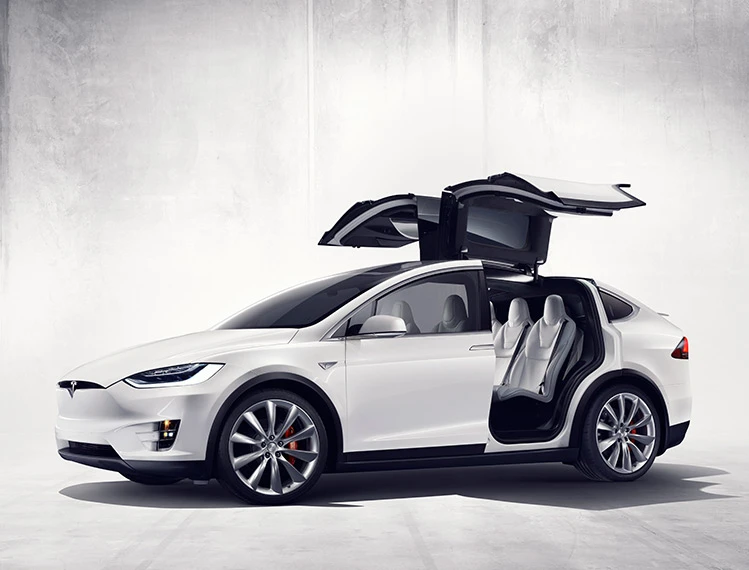
The Audi A7 Sportback and Audi Q8 demonstrated good performance in all assessment areas. New SUV market entrant, the MG HS, also offered good all-round safety however testing revealed a higher risk of injury in side impact crash scenarios.
“Tested to our most stringent criteria, the MG HS scored well, yet concerns were noted for chest protection of the driver in the oblique pole test and head protection for older children in the side impact test.”
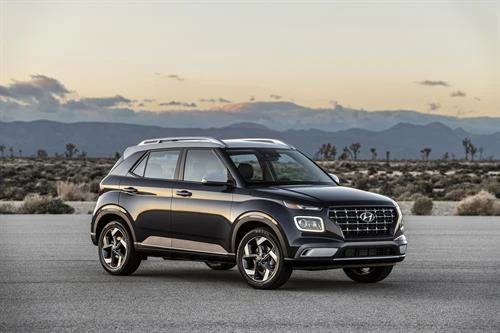
Hyundai’s new small SUV, the Venue, scored 4 stars limited by its less advanced safety assist systems. “The Venue fell shy of the 5 star safety standard we’ve come to expect from Hyundai with Marginal performance levels observed for its ability to avoid a rear-end impact with vehicles in front. This limited the Venue’s Safety Assist score to 62%,” Mr Goodwin said.
“The Venue is the first model to undertake Safety Assist performance testing in Australia, following the commissioning of a new test facility in regional NSW,” he added.
MY20 Jeep Wrangler models see autonomous emergency braking (AEB) and blind spot monitoring (BSM) functionality introduced as standard safety features across the Wrangler model range, with performance testing of these systems undertaken by ANCAP earlier this month.
“These upgrades are welcome, and I commend the local supplier for moving to provide Wrangler buyers in Australia and New Zealand with collision avoidance capability,” said Goodwin. “While a 3 star rating is still somewhat shy of the expected 5 stars, all upgraded models now have the ability to detect and assist with avoiding a crash with another vehicle – both in lower and higher speed scenarios.”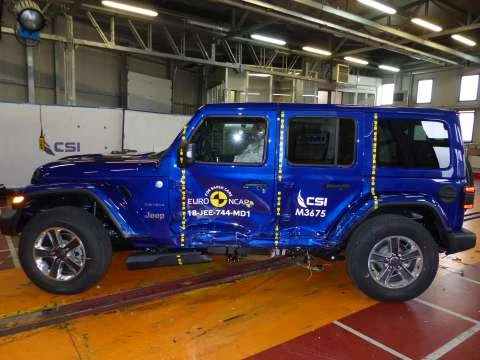 “Unfortunately the upgraded AEB system fitted to updated models is not yet able to detect our most vulnerable road users in pedestrians and cyclists.” he said.
“Consumers should be aware that the structural deficiencies we saw with the originally-tested model such as A-pillar and cross-facia beam failure, footwell intrusion, high seatbelt loads and excessive pedal movement have not been addressed and remain a risk for occupants,” he added. Active lane support functionality is also not available. The 3 star ANCAP safety rating applies to all 2 door and 4 door Wrangler variants supplied to the Australian and New Zealand markets built from November 2019.
The Mercedes-Benz CLA (Medium Car) was the top performer for 2019, achieving an overall weighted score of 90.2%. “Well done to the CLA for being named the standout performer,” said Goodwin.
“It received a healthy five-star score, performing exceptionally well in the areas of Child Occupant Protection (92%) and Vulnerable Road User Protection (91%) where it achieved the highest scores of all vehicles rated this year.”
Top performers by vehicle category:
LIGHT CAR: Audi A1, 86.6%. MEDIUM SUV: Toyota RAV4, 88.6%. SMALL CAR: Mazda 3, 88.4%. LARGE SUV: Tesla Model X, 89.6%.
MEDIUM CAR: Mercedes-Benz CLA, 90.2%. UTILITY: Toyota Hilux, 89.0%. LARGE CAR: Audi A7, 86.0%.
VAN: Toyota HiAce, 87.4%. SMALL SUV: Lexus UX, 89.0%. PEOPLE MOVER: Toyota Granvia, 87.8%
Further details on each of the vehicles rated can be viewed on the ANCAP website:
www.ancap.com.au/safety-ratings
 Level 2, 9 Help Street