

Author archive
2019MY Nissan X-Trail Ti: Private Fleet Car Review.
 This Car Review Is About: The 2019 model year Ti spec X-Trail from Nissan. At the time of writing there is a six tier range which includes the sports themed N-Sport. The Ti sits at the second highest spot under the TL and wants for little in comparison. The car provided comes in a five seater configuration.
How Much Does It Cost?: Nissan says a drive-away price in January 2020 is $44,490 for the Ti. That’s a bargain as the recommended retail is $45,340 before any on road costs.
Under The Bonnet Is: A 2.5L petrol engine and a Constant Variable Transmission. Peak torque of 226Nm spins in at 4,400rpm, whilst top power of 126kW is there at 6,000rpm. Economy is quoted as 8.3L per 100 kilometres on the combined cycle from a 60.0L tank. We saw a best of 7.3L/100km and a final average of 8.7L/100km. Emissions are 192grams/km. Dry weight is 1,562kg. On The Outside It’s: A clear relation to the rest of the Nissan family, something some other brands should take into consideration. Every single Nissan has a relatable to another Nissan look. This starts with the deep Vee shaped nose/grille design before running to a sine wave crease-line along the side from the front to the’s rear muscular flanks. The rear lights are nicely integrated horizontally and the powered tailgate opens to a 565L cargo section. Drop the second row seats and Nissan says there’s 945L available. The Ti comes with a glass roof and incorporates a separate sunroof in this section.
 The styling disguises the fact it’s quite long at 4,640mm and sports a wheelbase of 2,705mm. Height is only noticeable if you stand next to it at 1,740mm. Full width is 1,820mm. Good looking 19 inch alloys are shod with 225/55 Ecopia rubber from Bridgestone.
 On The Inside It’s: Largely a very pleasant office. The immediate downside to the look is the drab and dull touchscreen display. It’s boring to look at, and slow to access DAB stations. the map display looks like a digital version of the now no-longer-available paper map books. That’s the downside. Otherwise there’s superbly supple cloth covered seats, which are heated front AND rear, the aforementioned glass roof, and an ergonomically laid out cabin.
 The driver has a one touch up/down power window, keyless start, and a very efficient climate control system at their fingertips. There’s a decent centre console bin, and a drive select dial just forward of it. This allows two or four wheel drive (on demand) and a locked 4WD for soft-roading. Auto headlights and wipers add to the convenience factor as do the integrated cop holders in the rear seat which fold down and also provide a form of armrest. There’s hints of luxury thanks to the lush carpet mats fitted and the powered tailgate has a position memory. It’ll also automatically stop if a body is detected..
 The dash itself is formed into an elegantly styled design, replete with soft touch materials and a stitched leather look. Button and tab placement follow a logical theme on the gently flattened “M” style layout, with a slightly flat bottomed wheel providing a little extra thigh space as well. Dull looking touchscreen design aside, it’s a pretty place to sit in and look at. That’s assisted by a beautiful Bose sound system with enough low end to please most and a nicely balanced sound stage.
On The Road It’s: A harder ride than expected. In no way was it a bad ride, far from it. There was ample absorbance and it was more the quicker return to a flat ride, and a definite feeling of tautness, that surprised early on. The car’s default drive by choice was the torque-split on demand 4WD. In the driver’s display is a graphic that shows the torque being applied front to rear and the drive is well enough set up to have the front doing most of the work without feeling as such. Steering is well balanced with just the right amount of feedback and heft to ensure an engaging drive in this respect. Where the drive fell down was in the CVT’s unwillingness to deal with an engine that has great numbers and exhibits those when using the manual change via the gear selector or paddle shifters.
Anything other than a gentle push on the accelerator resulted in a sensation of feeling mired in mud. Forward motion felt uninspiring, and indifferent, whereas using the manual options gave a definite change in the liveliness of the drive. The brakes made up for it with confidence and solid stopping time after time. What About Safety?: There’s plenty. Intelligent Cruise Control that adapts to the vehicle ahead, Autonomous Emergency Braking, and Blind Spot Warning with a small LED that lights up in the root of the wing mirror to visually advise. Intelligent Trace Control, a form of torque vectoring, is here, and it unobtrusively applies brakes to the wheels sensors feel need an additional boost, and this works cornering to assist in keeping the X-Trail on the road, rather than venturing to where it shouldn’t.
Intelligent Ride Control works with the engine and transmission, gently backing off torque when the car moves over something like a speed-bump or road ripple. This has the flow on effect of minimising pitch that passengers may feel. Rear Cross Traffic Alert, Lane Departure Warning, and Intelligent Lane Intervention round out the safety package, with what Nissan calls their Intelligent Mobility service incorporating the Lane Intervention, Cruise Control, and Trace Control. What About Warranty And Service?: Five years worth of warranty and unlimited kilometres are a good thing to have in the back pocket. This covers five years of roadside assist and should the vehicle be onsold inside that term, the warranty rolls over with it. Service is the now familiar capped price and varies depending on which level of service is required. This was the pricing structure as of January 2020.
At The End Of The Drive. The Nissan X-Trail Ti is a very featured and equipped vehicle. It rides and handles well enough, has a very good engine but has two things that need improvement. The visually uninspiring touchscreen needs an overhaul and Nissan has plenty of places to look. The other is the CVT. It’s a real negative in what is otherwise a mechanically very well sorted drive-line. More information of the X-Trail’s extensive range and feature set can be found here.
Genesis GV80 Showcases Luxury And Technology.
Genesis, the luxury aimed sub-branch of Hyundai, has launched its first SUV. Named the GV80, with the V standing for versatility, it features a unique headlight design, a mix of aluminium and steel in construction, plus some world first comfort features. William Lee, the Executive Vice President and Global Head for Genesis, says: “GV80 represents the essence of the innovative spirit of Genesis. As we launch GV80, our first luxury flagship SUV, we simultaneously open a new chapter for Genesis.”
Hot-stamped steel is a main component of the body’s structure, whilst aluminium features in the doors, bonnet, and tail-gate. An immediate standout of the exterior is the “Quad Lamp” headlight design. “The Quad Lamp graphic will become the most recognisable, unique signature of Genesis design, as the simplest of lines communicate a distinct identity,” said Luc Donckerwolke, Chief Design Officer of Hyundai Motor Group. “Two lines will come to define Genesis.” Three design studios based in the U.S., Korea, and Germany collaborated on the design. Signature cues are the “Crest Grille”, flanked by the Quad Lamps, and something Genesis call the “G-Matrix”, a pattern in the light fixtures. There is also the Parabolic Line running along each side and complemented by lines over the wheel arches.
There’s no holding back on interior features for luxury either. Slim-line air vents provide a sense of elegance and a broad 14.5 inch touchscreen with a split-screen ability dominates the centre dash console and another simple luxury touch comes from a minimal use of hard texture switches and buttons. The appeal of soft materials extends to covering the door handles and quilted kneepads on the console sides. An electronically powered shift-by-wire dial style gear selector is housed in the elegantly designed centre console. Handwriting recognition, such as that found on smart devices, allows phone number dialling or navigation setting. There’s also a new augmented reality system that works with the navigation, with driving guidelines set over camera-fed real time driving. A front mounted camera displays an optimal driving line on the infotainment screen.
Sound deadening technology goes up a notch with the GV80 showcasing a world first. Road-Noise Active Noise Control or RANC technology uses digital signal processing and analyses road noise. By generating opposing signals within 0.002 seconds, extraneous noise is cancelled out. Another world-first technology is an active motion driver’s seat that contains seven air cells: a feature that reduces fatigue from long hours of driving. One-touch comfort control, adjustable from the front row, allows for limousine-level relaxation in the second-row seats. Heated and ventilated seats are available in the first two rows.
In addition, the GV80 is equipped with an air purification system that automatically operates according to indoor air quality, through an in-vehicle fine dust sensor. Active air purification with dual filters monitors the in-vehicle air quality in real time, and removes 99% of fine particulate matter, which maintains a clean and fresh cabin environment.
A straight six diesel will move the GV80. Peak torque, says Genesis, is 588Nm, with a peak power output of 204kW from the 3.0L capacity engine. Configured as a five seater and rolling on 19 inch diameter wheels, economy is quoted as 8.5L/100km. The Australian market sees the GV80 available with two petrol engines at launch, expected for mid-2020.
Buyers speccing an AWD model will have Multi-Terrain Control for various types of off-roading on surfaces such as Snow or Mud. Comfort in ride and handling will come from an electronically controlled suspension that will work with the front mounted cameras to adjust on the fly for better road holding.
An Advanced Driver Assistance System, ADAS, will feature some unique tech, such as SCC-ML. This is Smart Cruise Control with Machine Learning, an AI package that adapts to individual driving characteristics. The airbag count goes up to 10, with a centre-mounted airbag between the front occupants to mitigate interior impact.
There’s some extra convenience functionality such as Genesis Pay, which will be unique to the South Korean market. This works by linking a credit card to the car’s telematics and enables cashless payments via the navigation screen. Servicing is assisted by remote diagnosis technology and smartphone connectivity allows remote vehicle checking.
The Genesis website is where to find out more and register interest.
Sales Down, Safety Up, Toll Up.
Australians are renowned for being up there in regards to take-up of technology. We expect our cars to come with the latest and greatest when it comes to audio, comfort, and importantly, safety. Items like airbags are commonplace, with even the driver’s workspace seeing more and more of a “kneebag”. Traction control has been in our cars for what feels like forever as has ABS, or anti-lock braking system. Nowadays we see letters such as RCTA, or BSW/BSA as part of a standard safety package, and more and more common is variations on AEB. By the way, that’s Rear Cross Traffic Alert, Blind Spot Warning/Alert, and Autonomous Emergency Braking.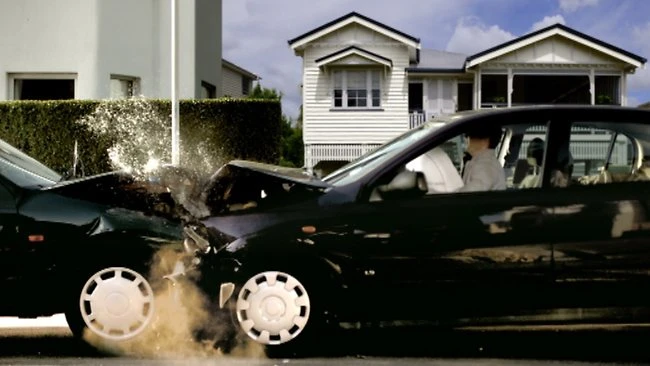
Regardless of all of these and with new car sales (with better safety equipment) consistently exceeding a million in recent years, the Australian road toll increased in 2019. 1182 people lost their lives in 2019, 47 up on the previous year. NSW saw 352, just six more than 2018 and in spite of the extra “safety” measures taken by a government desperately seeking “Towards Zero”. Given the focus on people dying from holding a mobile phone or speeding, and with over 100,000 people pinged in a six month mobile phone camera trial, and a potential removal of signage for mobile and fixed speed cameras, “Towards Zero” has more to do with the few idiots that commit such atrocities or think tailgating is a great game than the numbers reflect.
By the way, the mobile phone trial amnesty has finished and people caught will now get a fine of $344 and a more realistic but still potentially misguided five demerit points. This is in spite of statistics finding mobile phone distractions in crashes accounting for under one percent of causes.
Victoria, in spite of the razor thin tolerances their speed cameras have, went from 213 to 263 in 2019. In context, as of June 2019 Victoria had a population of 6,594,804. South and Western Australia had increases, with S.A. 6 and W.A. 33 to record 113 and 164 respectively. In opposition to that, Queensland, the N.T., Tasmania and the A.C.T. went backwards in their tolls. Queensland dropped by 28 to 217, with just 35 in “the Territory”, whilst the island state had 32. The capital territory? Just 6.
Car sales in 2019 were at the lowest since 2011 but still cracked the million mark. VFACTS said 1,062,867 new vehicles were sold in 2019. Bear in mind that the safety factors in cars is increasing, yet the human element, ignorance and stupidity, cannot be dialled out.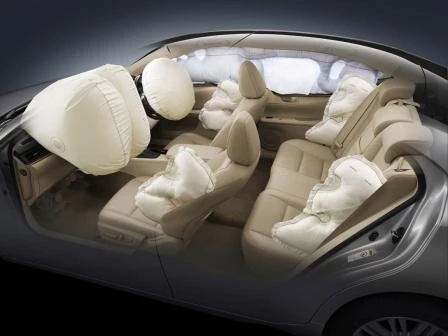
In stark contrast to the road toll is the sharp increase in hospitalisations. Victorian hospitalisations from a result of traffic crashes have risen 38 percent between 2013 and 2019. In the same period the road toll fell 12.3 percent. Australia’s federal Department of Infrastructure, Transport, Cities and Regional Development, says that over the last ten years the toll has fallen whilst road injuries have increased. 2016’s rate of hospitalised injuries per 100,000 people was 35 times the fatality rate. Traffic crashes are the second highest cause of hospitalisations in Australia, accounting for 12 percent, behind falls (41 percent). The 38,945 hospitalisations across the country in 2016 represent a nominal increase of 3.6 percent each year since 2015.
8636 hospitalisations occurred as a result of traffic incidents in 2018, compared to 213 fatalities. Six years before the numbers were 6252 and 243. Nationally in 2018 two thirds of fatalities were in regional areas, with two thirds of hospitalisations coming from urban crashes. The reasons for the disparity are unclear, however it could be postulated that as cars become safer and people feel that their driving standards, or lack of them, will be mitigated by the vehicle safety packages, more trust, as such in items such as AEB and airbags as driving standards lower will see more crashes resulting in people being sent to hospital.
2020 Mitsubishi Pajero Sport Ready To Roll.
Mitsubishi’s progressive update of their range continues. Late in 2019 the freshened ASX was released and now the Triton-based Pajero Sport gets a makeover.
Front and centre is the addition of the now familiar shield nose. It’s a rework of the previous version and now features a reworked grille, the inwards pointing chrome highlights, and the squared off driving light clusters. By giving the front a square look it has the effect of making the Pajero Sport appear wider and more imposing. There’s also been a subtle increase to the height of the bonnet. There’s been some tickling under the bonnet as well. The standard 2.4L diesel remains but some of the internals have been upgraded. The combustion chamber and fuel injection spray system have been given extra work for better optimisation of fuel spray, lowering the diesel’s compression ratio to 15.5:1. Boost from the turbo has gone up slightly to 200MPa, with the engine delivering 133kW @ 3,500rpm, and maximum torque runs at 430Nm. That’s at 2,500rpm. Mitsubishi say throttle response should be more instant and smoother.
 The drive is 2WD and 4WD via Mitsubishi’s SuperSelect-11 system. 4WDLLC locks the centre diff for a more precise spread of torque to each corner, and engages the low range for off-road excursions. Inside the auto is a nifty bit of work too. It’s called Idle Neutral Control and it reduces internal energy losses caused by torque converter drag when the vehicle is stationary in Drive.
There are some subtle changes inside too. A powered tailgate will be standard and likely across all models bar GLX. It’s kick activated too, for those with full hands from shopping. Adaptive Cruise Control will be fitted to all except GLX. The floor console AC Power Outlet on the outgoing model has been moved to the rear end of the floor console to enhance user-convenience. Up front the centre console has been modified in shape and the console forward of the shifter has been changed in profile.
In the Exceed the driver gets a new 8.0 inch full colour driver’s display. On the 8.0 inch screen in the console the all around monitor has been upgraded to show obstacles detected by the ultrasonic sensors. Smartphone connectivity has been upgraded with a “misplaced” vehicle in a carpark now able to activate the headlights remotely via smartphone. It can also show fuel consumption, remaining driving range, Eco score, and consumption history. Apple Watch wearers can also activate the power tailgate remotely, and receive vehicle operation notifications. Safety goes up a notch with driver’s knee airbags now standard across the range, as is Forward Collision Mitigation or FCM. Lane Change Assist, Rear Cross Traffic Alert, and a modified Blind Spot Alert are now standard. The Exceed gains Ultrasonic Misacceleration Mitigation, a system that uses sensors to read around the car and stop automatically if sensors pick up an obstacle.
Outside, White Diamond and Graphite Grey metallic paint have been added.
Pricing starts at $45,900 for the entry level GLX 5 seater, with the GLS 5 seater starting from $52,490. Move up to the 7 seater GLS and there’s $53,990. Exceed starts from $59,990. The 2020 Pajero Sport range is available now.
 Level 2, 9 Help Street